
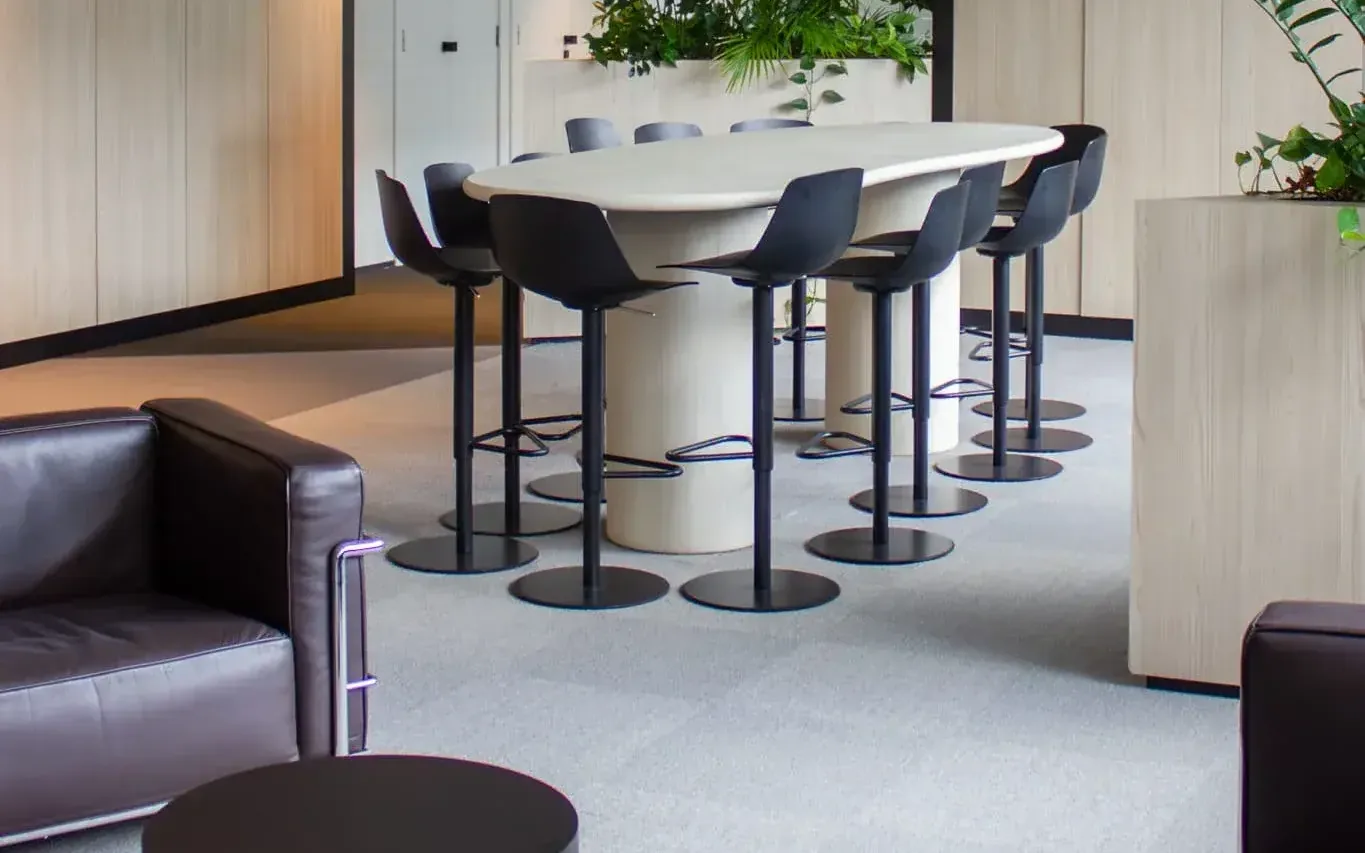
Reclaimed
carpet tiles
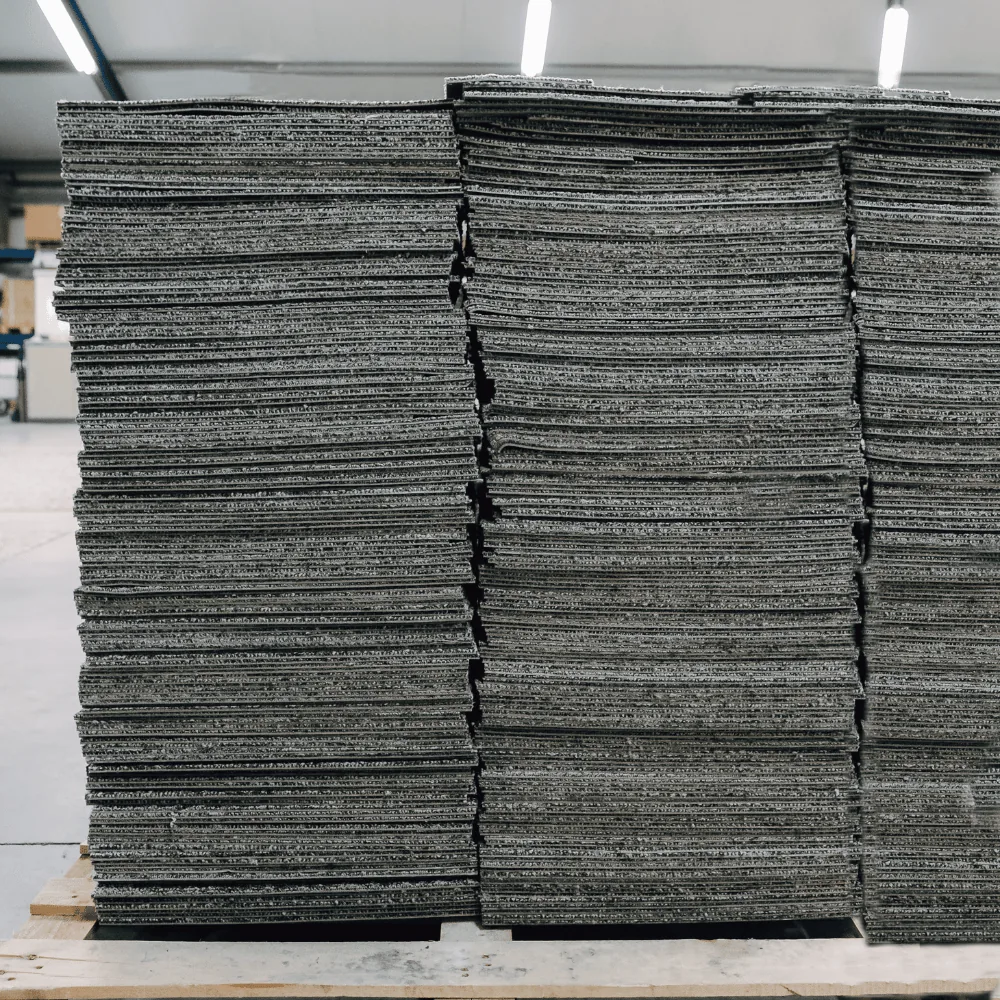
Reclaimed office carpet tiles, lifted on site, then cleaned and refurbished by Composil for a second use. Offered in lots according to stock, to buy or to lease, for offices and other commercial premises.
What are reclaimed carpet tiles?
Composil ReUse carpet tiles are office tiles that have already been laid once, lifted during a move or a renovation, then refurbished for a second use. Each lot comes from a major carpet brand (Interface, Tarkett / DESSO, Modulyss, Balsan, Forbo, Milliken…) and keeps its original construction: the pile provides comfort and absorbs footfall noise, while the backing, in bitumen, PVC or acoustic material depending on the product, keeps the tile stable on the floor.
Refurbishment follows Composil's own method, approved by the main carpet manufacturers: a first sort removes damaged tiles, followed by deep cleaning, raising of the pile, manual spot cleaning and deodorising, and a final check before boxing. The tiles regain a near-new appearance without any new floor covering being manufactured.
This approach keeps the carpet in use instead of sending it for incineration. Composil issues a certificate quantifying the CO₂ avoided and the kilos of carpet diverted from waste.
Based in Wavre, Belgium, Composil then offers the tiles in lots, graded by condition. Colours and formats depend on the stock recovered, so the project is best designed around what is available.
Installation & uses
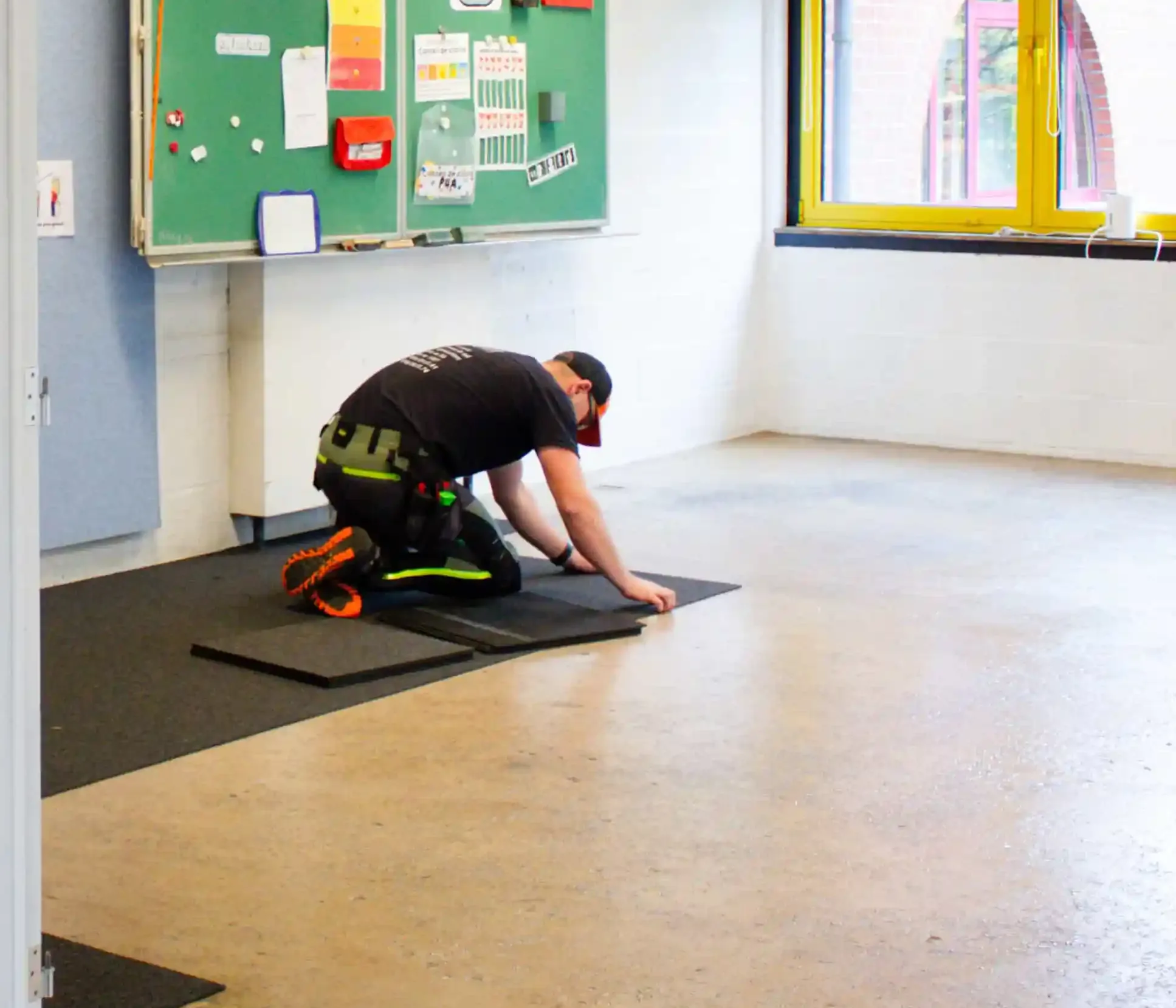
The tiles are laid like new carpet tiles, by a professional installer; Composil can refer clients to installers in its network. The webshop attaches the original manufacturer's technical data sheet to each product listing.
Selection starts from the stock: each product is available in limited quantity, tied to the building it was recovered from. For a large floor plate, it is best to plan the selection early, combine several products in the setting-out or top up with new carpet. Allow 5 to 10% extra tiles for cutting and replacements. Composil offers the tiles to buy or to lease, subject to a quote.
In use, Composil's maintenance programme extends the life of the carpet, and the reclaimed carpet then carries a 5-year guarantee.
At the end of its service life, Composil can lift the carpet. Tiles still in good condition go back into the reuse loop; the others are recycled into raw material or sent for energy recovery, depending on their composition.

About the producer
Composil has been looking after commercial carpets since 1992, from maintenance to reuse and recycling. Through its ReUse programme, the company lifts carpet tiles during office renovations, refurbishes those that can still be used and puts them back on the market; the others are recycled or sent for energy recovery. Based in Belgium, with a Circular Hub in Wavre, Composil is B Corp certified and works in several European countries.
Life cycle
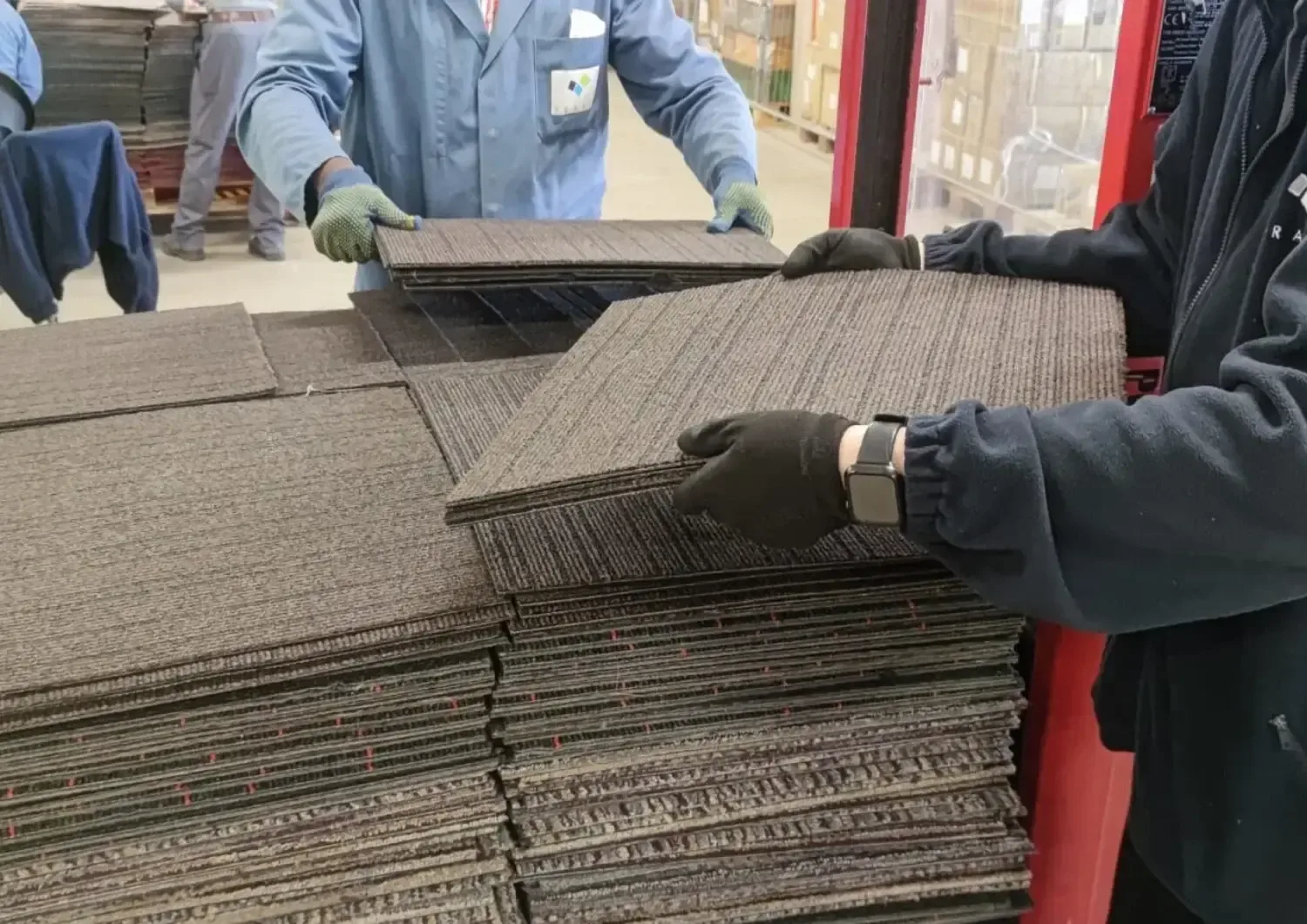
The tiles come from commercial premises that have been renovated or vacated. Composil lifts them, then handles sorting and transport with local partners, including sheltered workshops.
After a first sort, the reusable tiles are deep cleaned, their pile raised, spot cleaned and deodorised using a method approved by the main carpet manufacturers, then checked before boxing.
At the end of its service life, Composil can lift the carpet again: tiles in good condition go back for reuse, the others are recycled into raw material or sent for energy recovery, with partners including Tarkett and Vanheede. A certificate quantifies the CO₂ avoided and the kilos diverted from waste.
FAQ
Where do the tiles come from and how are they refurbished?
They come from commercial premises whose carpet is lifted during a move or a renovation. A first sort removes damaged tiles; the others are deep cleaned, their pile raised, spot cleaned and deodorised, then checked one last time before boxing.
Which brands and formats are in stock?
Tiles from major brands (Interface, Tarkett / DESSO, Modulyss, Balsan, Forbo, Milliken…), in their original format, for example 50 × 50 cm or 60 × 50 cm. Each lot is supplied in a single format and graded by condition, with actual photographs and the quantity available in m².
Which fire classification and VOC emission values apply?
The webshop attaches the original manufacturer's technical data sheet to each product listing. These values were established on the new tile: whether they can be carried over to a reclaimed tile should be confirmed with the project's technical inspection body.
How can a large area be covered from limited stock?
Each product is available in limited quantity. For a large floor plate, the answer is to combine several products or to top up with new carpet to create distinct zones, allowing 5 to 10% extra tiles for cutting and replacements.
What guarantee does reclaimed carpet carry?
Combined with Composil's maintenance programme, reclaimed carpet carries a 5-year guarantee, and this regular maintenance extends its service life.
Alongside
Same layer, same use · materials to compare.
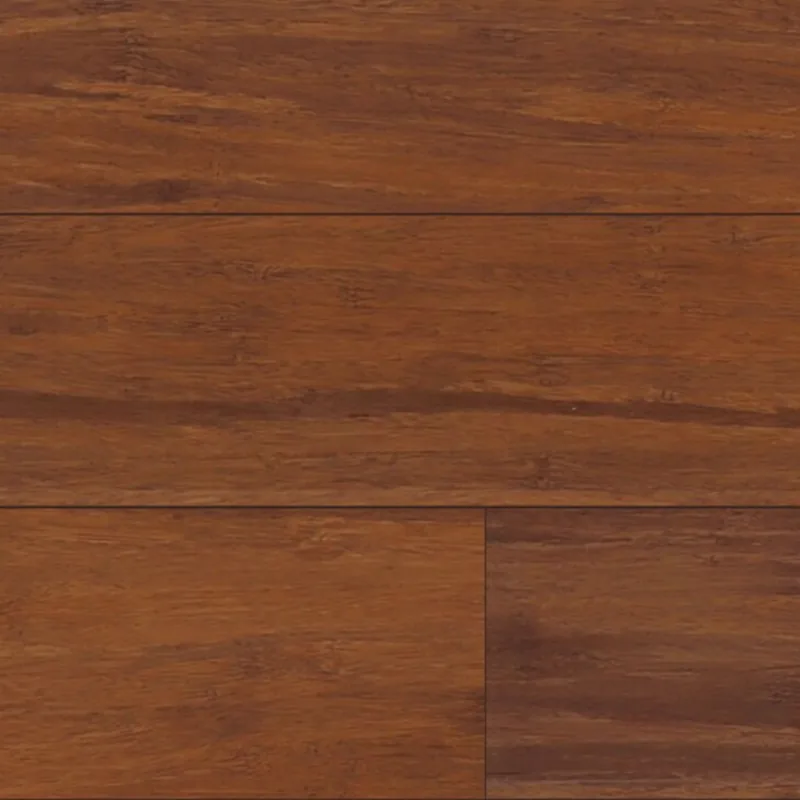
Moso bamboo, strips compressed under high pressure. Ootouch · Braine-l'Alleud.
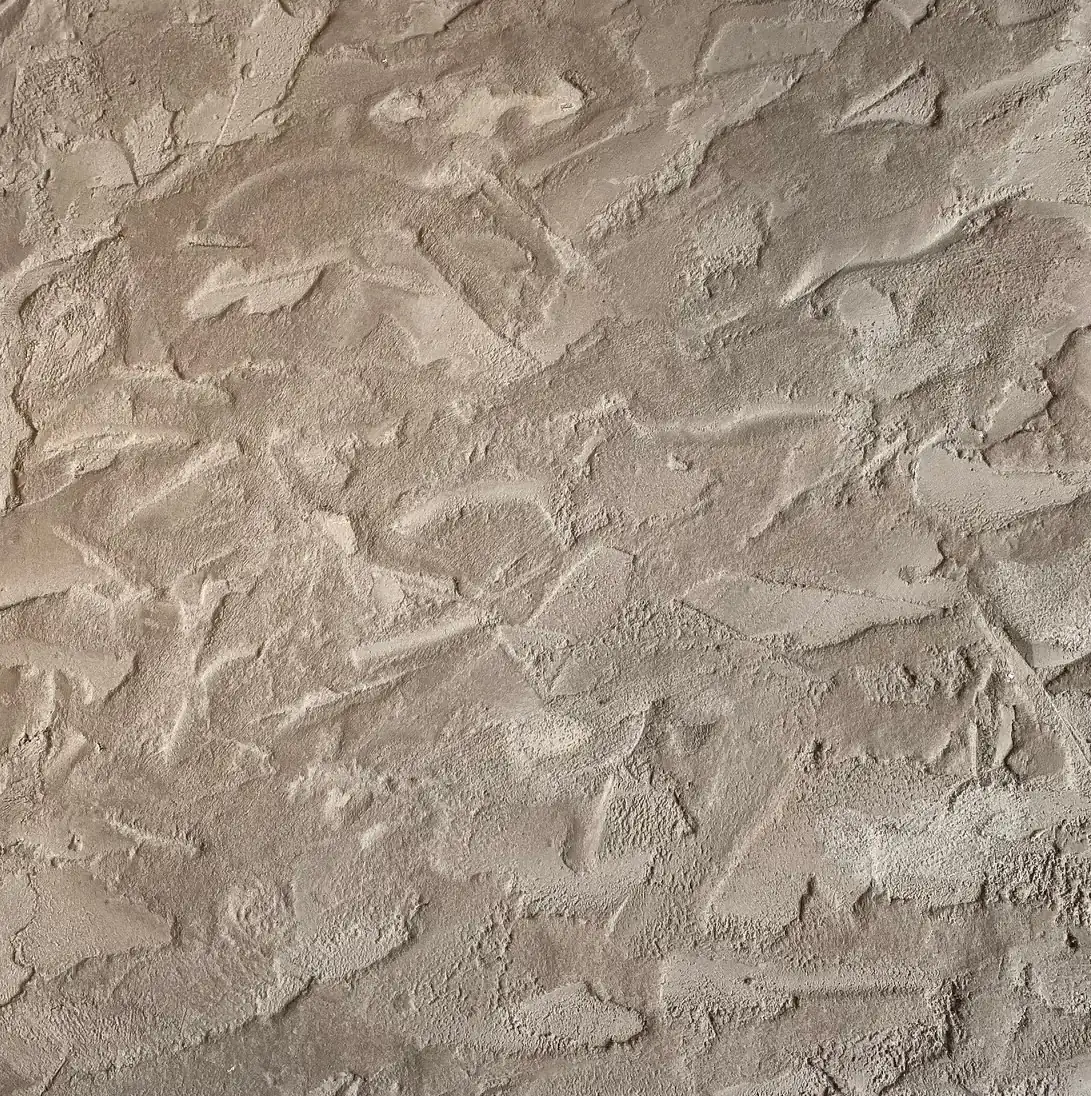
Clay, dolomite and polymer binder, applied wet-on-wet. ClayLime · Brussels.
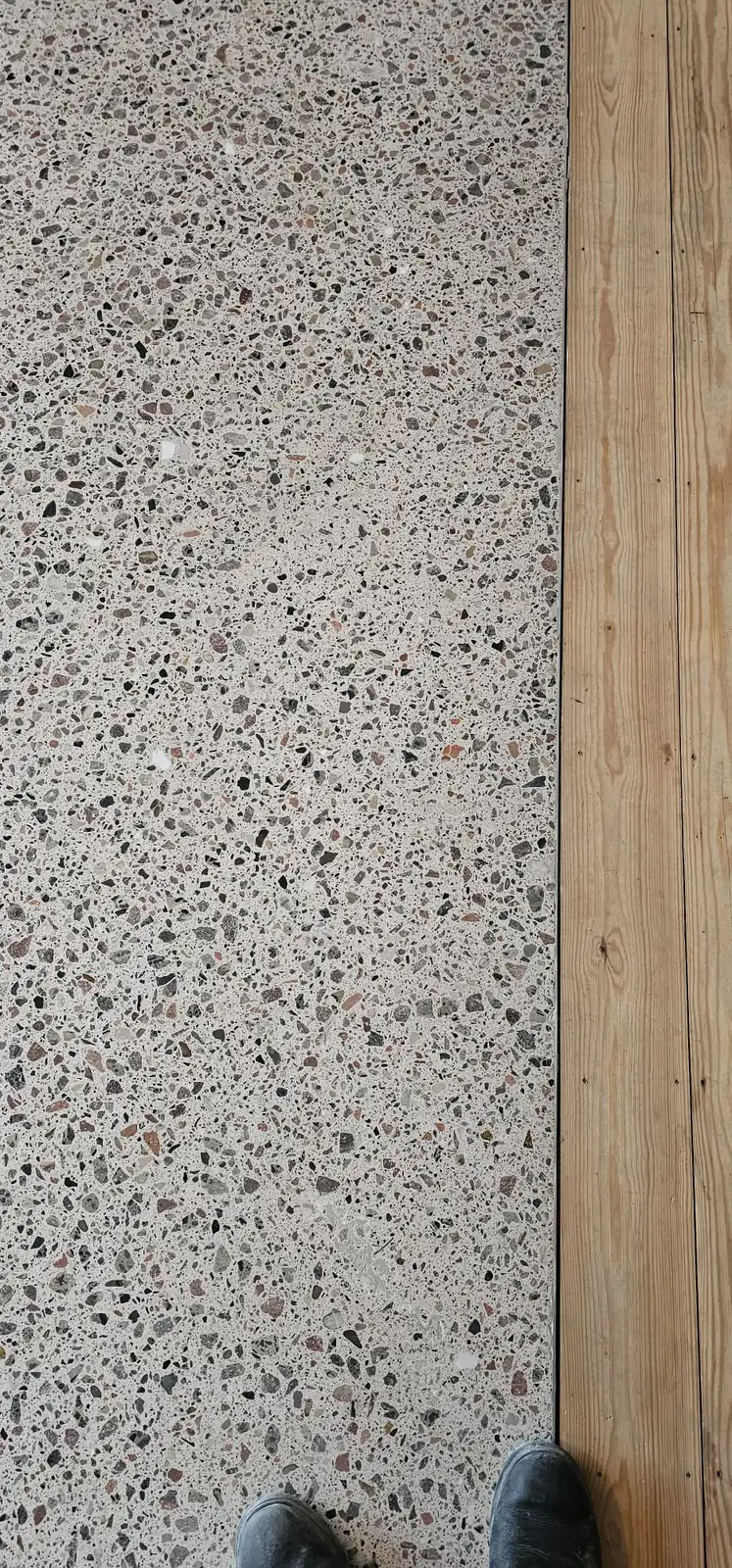
Recycled concrete and brick aggregates. L'alchimie des Matières · Fexhe-le-Haut-Clocher (BE).