Bamboo
flooring
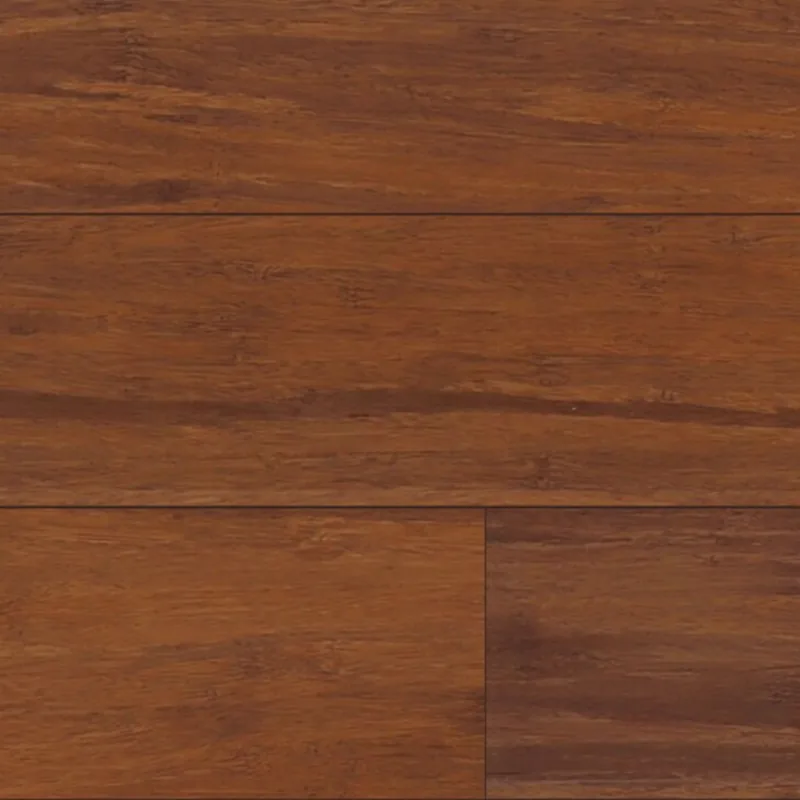
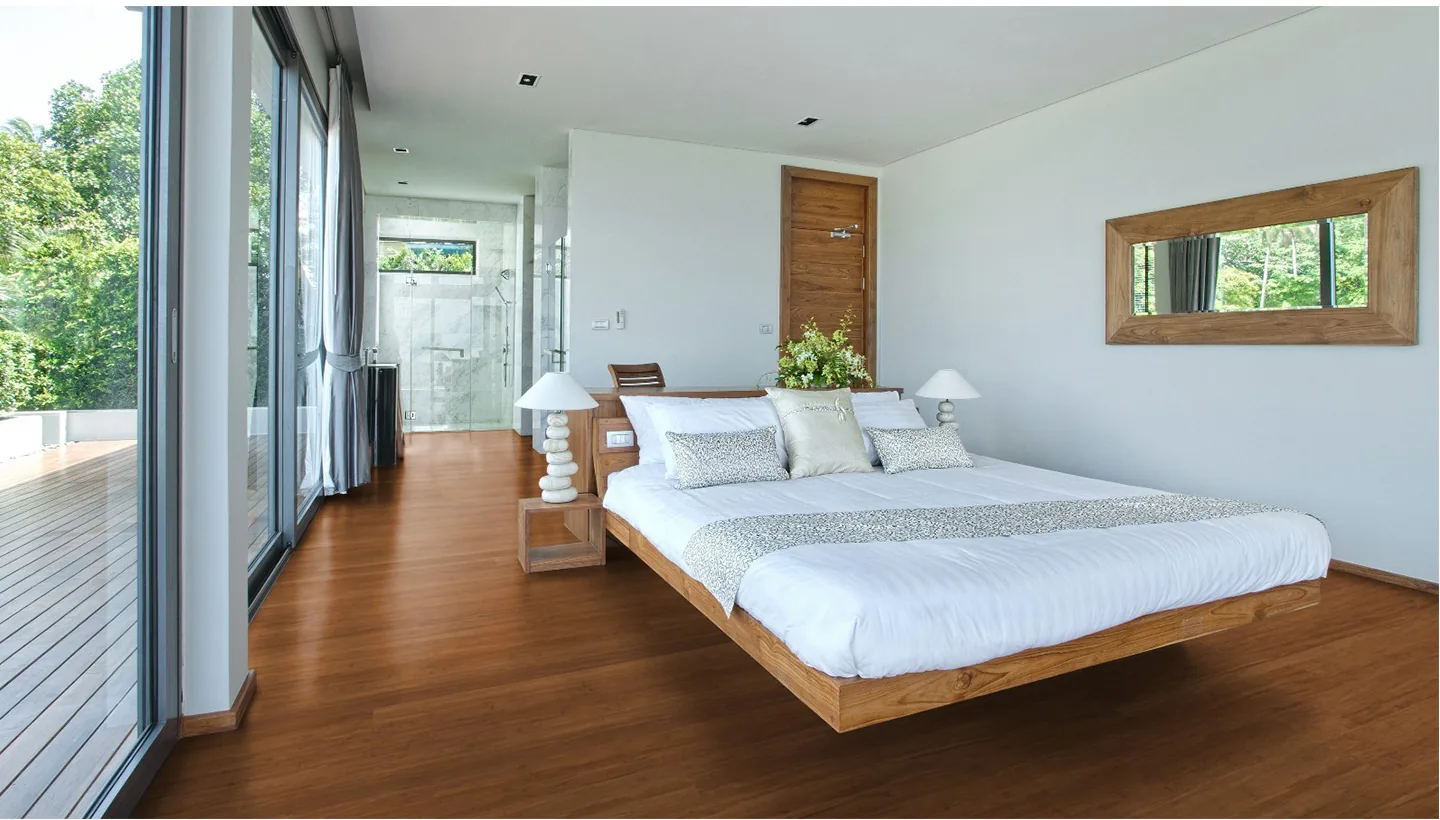
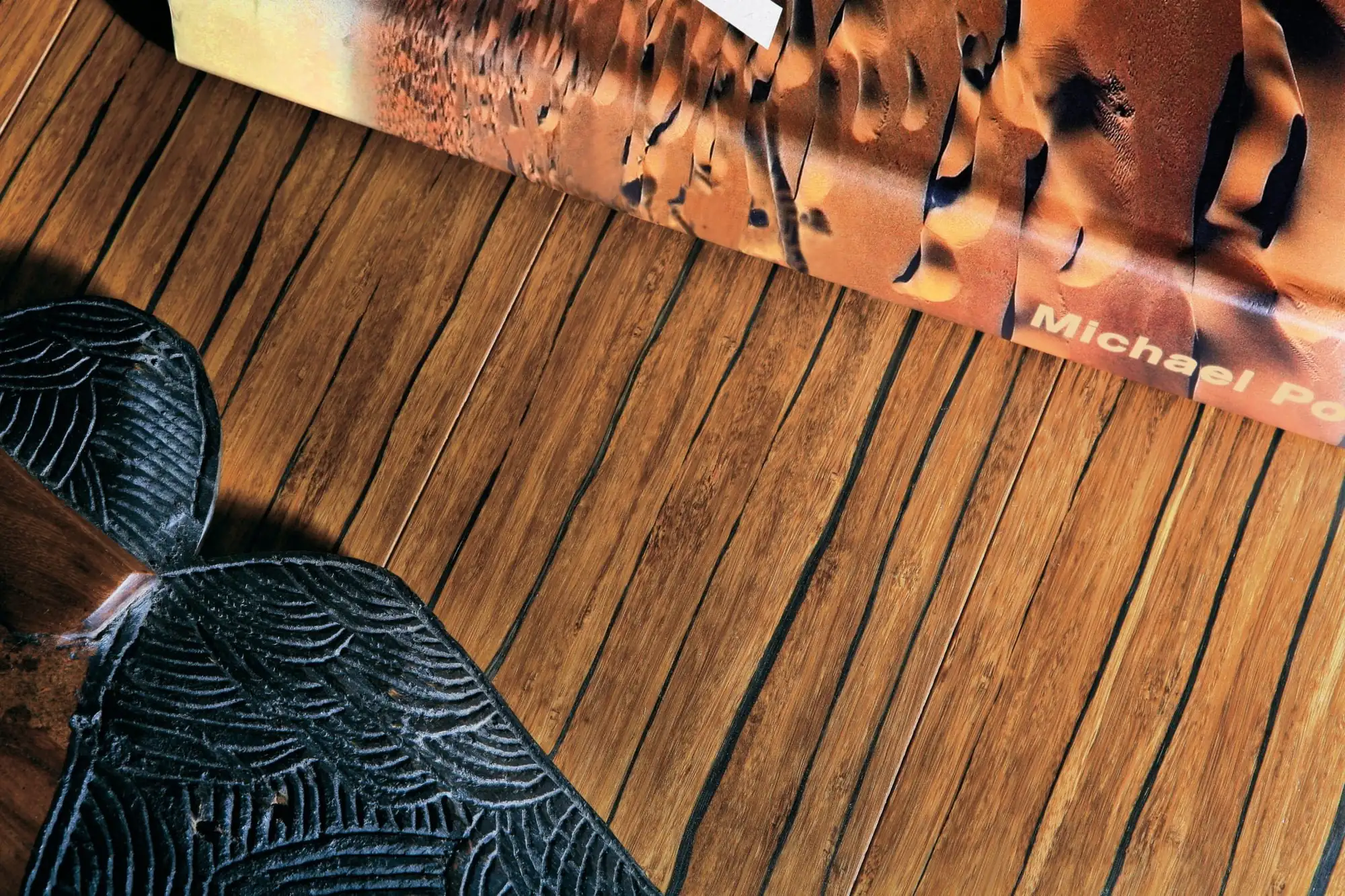
BamWood® compressed bamboo flooring, solid or multi-ply, from the BambooTouch® range by ootouch. Brinell hardness of around 9 kg/mm², boards factory-finished (UV lacquer or oil) or unfinished. Suitable for underfloor heating; in wet rooms, the boards must be glued down.
What is bamboo flooring?
BambooTouch® flooring is a floor covering made of Moso bamboo strips assembled and compressed under very high pressure with a binder, under the name BamWood®. Compression densifies the material, to around 1,050 kg/m³, and gives it a Brinell hardness of around 9 kg/mm².
This density explains its resistance to wear and indentation, useful in places with heavy foot traffic. Bamboo remains a hygroscopic material: its dimensions change by about 0.14% for each percentage point of moisture content, which calls for acclimatisation and expansion gaps when it is laid.
The range covers solid, multi-ply or three-ply boards from 10 to 15 mm thick, and a Click version on an HDF core. The boards arrive factory-finished, with a UV lacquer or a matt-finish oil, or unfinished. Most products can be used over underfloor heating, ideally glued down, and in wet rooms, where gluing down is mandatory.
Classed Cfl-s1 for reaction to fire, and Bfl-s1 when glued down for some products, the flooring has VOC emissions classed A+. Moso bamboo comes from plantations in China, where it reaches maturity in a few years; the flooring is manufactured there and sold in Europe by ootouch as the BambooTouch® range.
Installation & uses
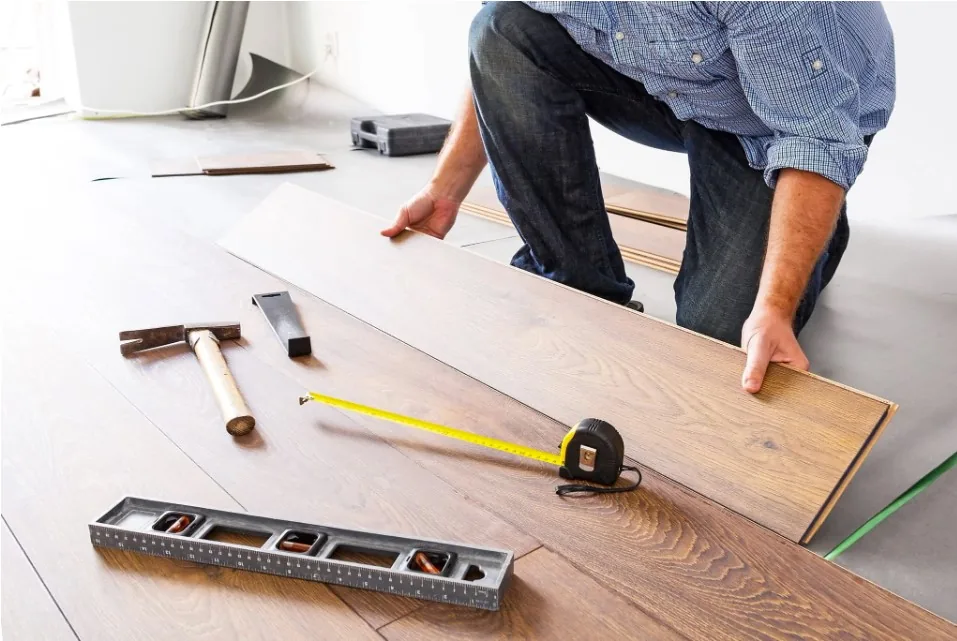
Depending on the product, the flooring is glued down to a screed, laid floating with glued tongue-and-groove joints, or installed as a Click system on an HDF core. The screed must be dry, clean and level, with a residual moisture content below 2.7%. The boards acclimatise for 48 h in their packaging where they are to be laid, and are mixed between packs to spread the natural variations in shade.
An expansion gap of about 1 cm is left around the perimeter and around obstacles, with a movement joint every 8 to 10 m. Over underfloor heating, gluing down is recommended: a floating floor creates an air layer that reduces the efficiency of the heating.
In bathrooms, gluing down is mandatory and the perimeter must be carefully sealed; the Click version is not suitable there. Installation follows DTU 51.2 or the local standard.
On oiled finishes, slightly raised grain may appear; a light sanding followed by oiling reduces it. At end of life, boards laid floating or as Click can be lifted and relaid elsewhere.
About the producer
ootouch is a Belgian brand of Moso bamboo surfaces, based in Braine-l'Alleud and known until 2025 as BambooTouch. It sells four collections: BambooTouch® flooring, EcooTouch® floor coverings, DeckooTouch® decking and PanooTouch® panels.
The products are manufactured in China from plantation bamboo, then distributed in Belgium and Europe through a network of dealers. The brand provides technical data sheets, installation guides and maintenance instructions for specifiers and installers.
Technical performance
Reaction to fire Cfl-s1 (Bfl-s1 when glued down, for some products) · Brinell hardness ± 9 kg/mm² (EN 1534) · formaldehyde E0, < 0.008 mg/m²h (EN 717-1) · VOC emissions A+ · installation to DTU 51.2 or the local standard.
Life cycle
The flooring starts as strips of Moso bamboo, from plantations in China where the plant reaches maturity in a few years. The product is mostly biobased: bamboo and binder, plus an HDF core in the Click version.
The strips are assembled and compressed under very high pressure with a binder, under the name BamWood®, then factory-finished or left unfinished. The flooring is manufactured in China and sold in Europe by ootouch, from Braine-l'Alleud.
Laid floating or as Click, the boards can be lifted and relaid elsewhere; glued down, they are difficult to lift. Glued and finished, compressed bamboo has no recycling route documented by the manufacturer.
FAQ
Can BambooTouch® flooring be laid in a bathroom?
Yes, provided it is glued down: in bathrooms, gluing down is mandatory and the perimeter must be carefully sealed. The Click version on an HDF core is not suitable there.
Which installation method suits underfloor heating?
Most products can be used over underfloor heating, with gluing down recommended. A floating floor creates an air layer that reduces the efficiency of the heating.
What conditions must the screed meet before laying?
The screed must be dry, clean and level, with a residual moisture content below 2.7%. The boards acclimatise for 48 h in their packaging where they are to be laid, and are mixed between packs. Because bamboo moves by about 0.14% per percentage point of moisture content, an expansion gap of about 1 cm is left around the perimeter, with a movement joint every 8 to 10 m.
Does the installation method change the fire classification?
The flooring is classed Cfl-s1 for reaction to fire. Some products reach Bfl-s1 when glued down.
What can be done if the grain rises on an oiled finish?
Slightly raised grain may appear on oiled finishes. A light sanding followed by fresh oiling reduces it.