Decorative
lime plasters
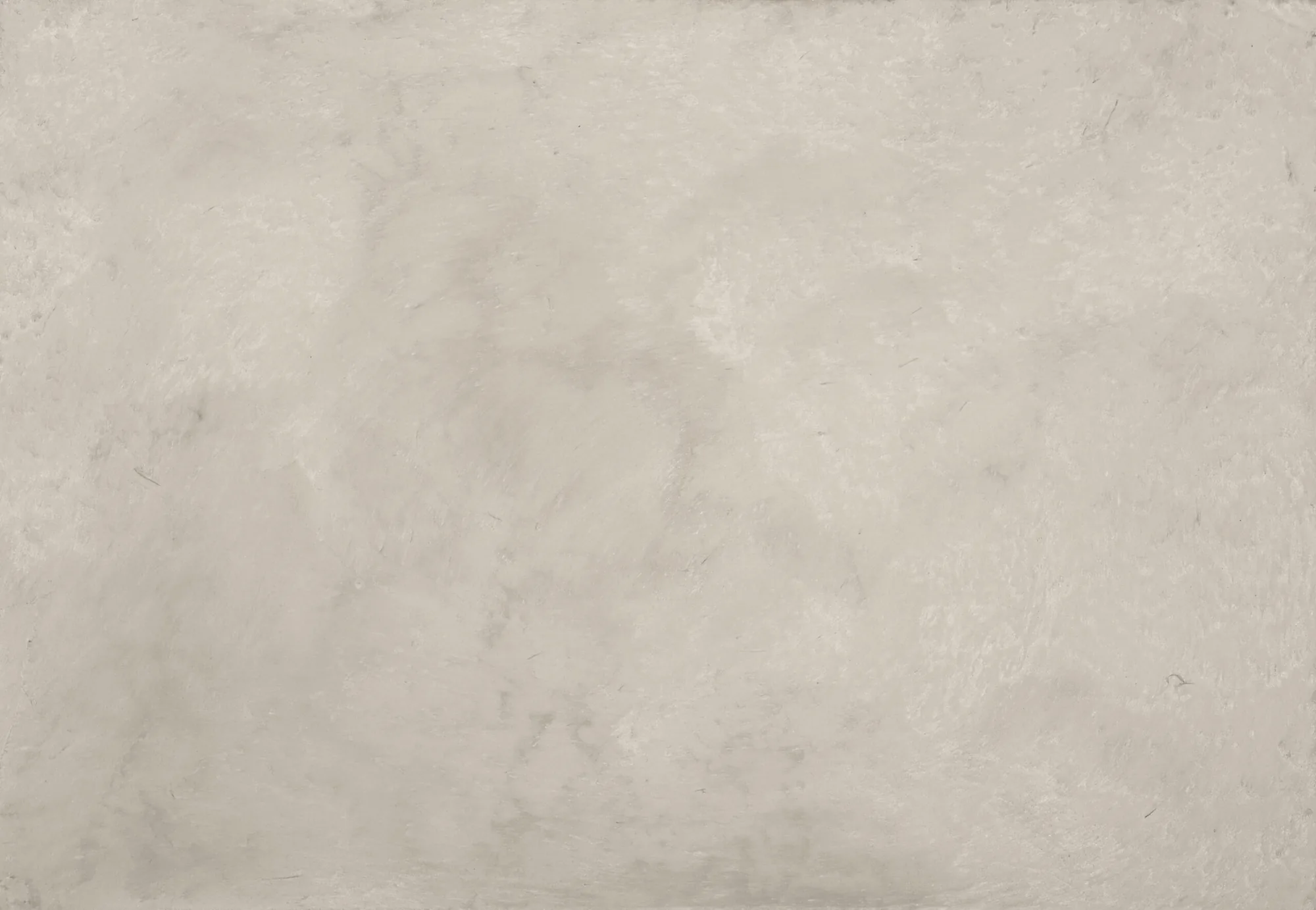
Three lime-based decorative plasters made in Brussels: Creatina for stucco or faux-marble effects, MonoSoft for a plain, soft and smooth finish, TadelaktPro for wet rooms. Depending on the plaster, they cover floors, walls, shower walls and furniture, each under the protection suited to its use.
What are decorative lime plasters?
ClayLime's lime range comprises three decorative plasters made in Brussels. All are based on lime, which forms the mineral matrix and gives the surface its feel, but each has its own finish and its own use.
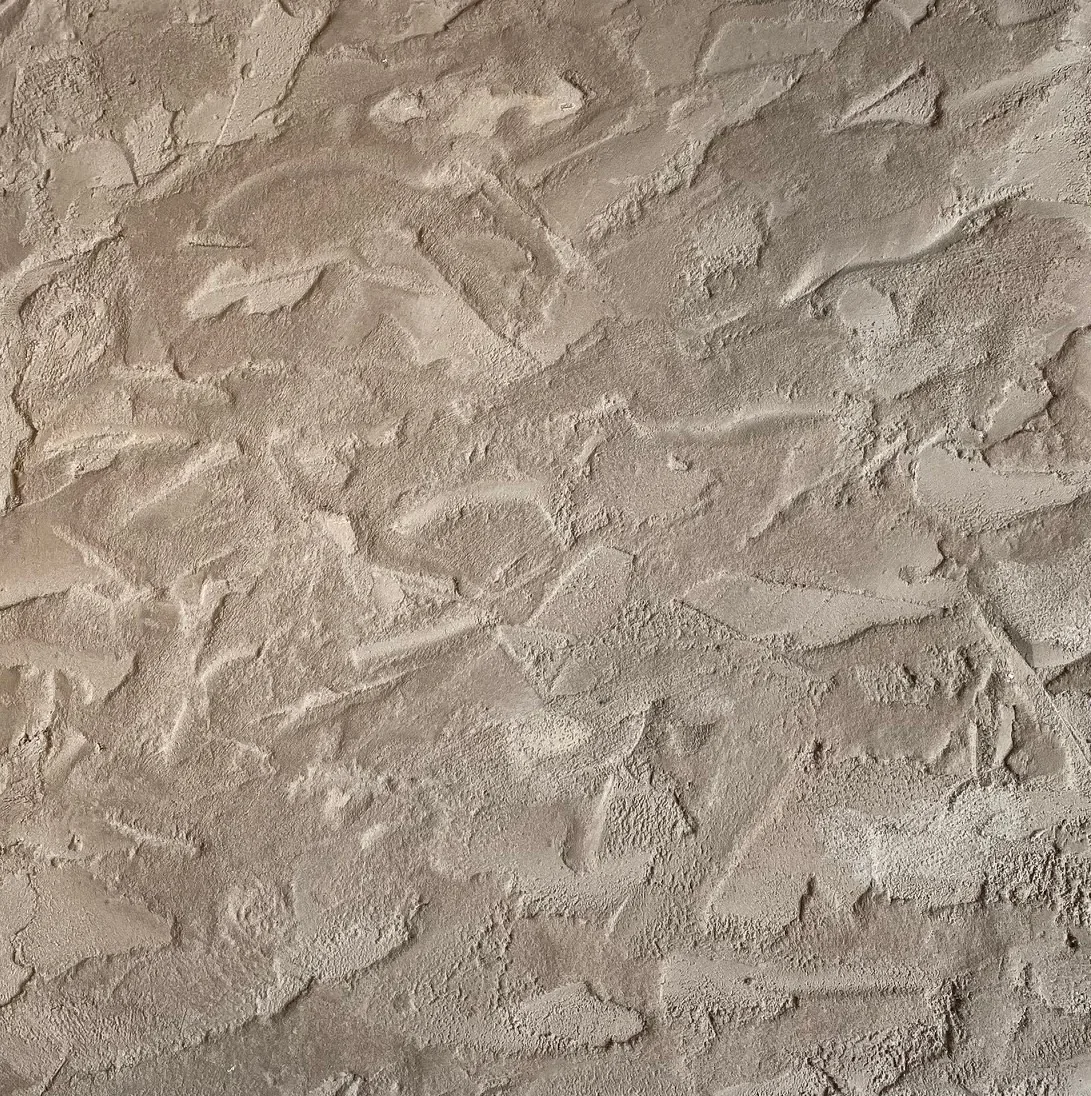
Creatina, the effects plaster. Hydrated lime, alumino-silicates and rock powders, with no cement, are mixed with JES, a Zero VOC liquid polymer binder: the fine powders control the grain, and the binder provides the adhesion and flexibility that prevent cracking. Applied about 1.5 mm thick, it is worked for effect: stucco, faux marble, lines, multilayer, metallic finish. Under varnish, it covers interior floors, interior and exterior walls, shower walls and furniture, but not shower floors. Twenty-nine shades.
MonoSoft, the plain finish. It has the same cement-free base, the same JES binder and the same thickness of about 1.5 mm as Creatina, but a different technique: a plain, soft, smooth surface, close to a microcement. Its thinness also allows it to cover existing tiles. It has the same uses as Creatina. Thirty-three shades.
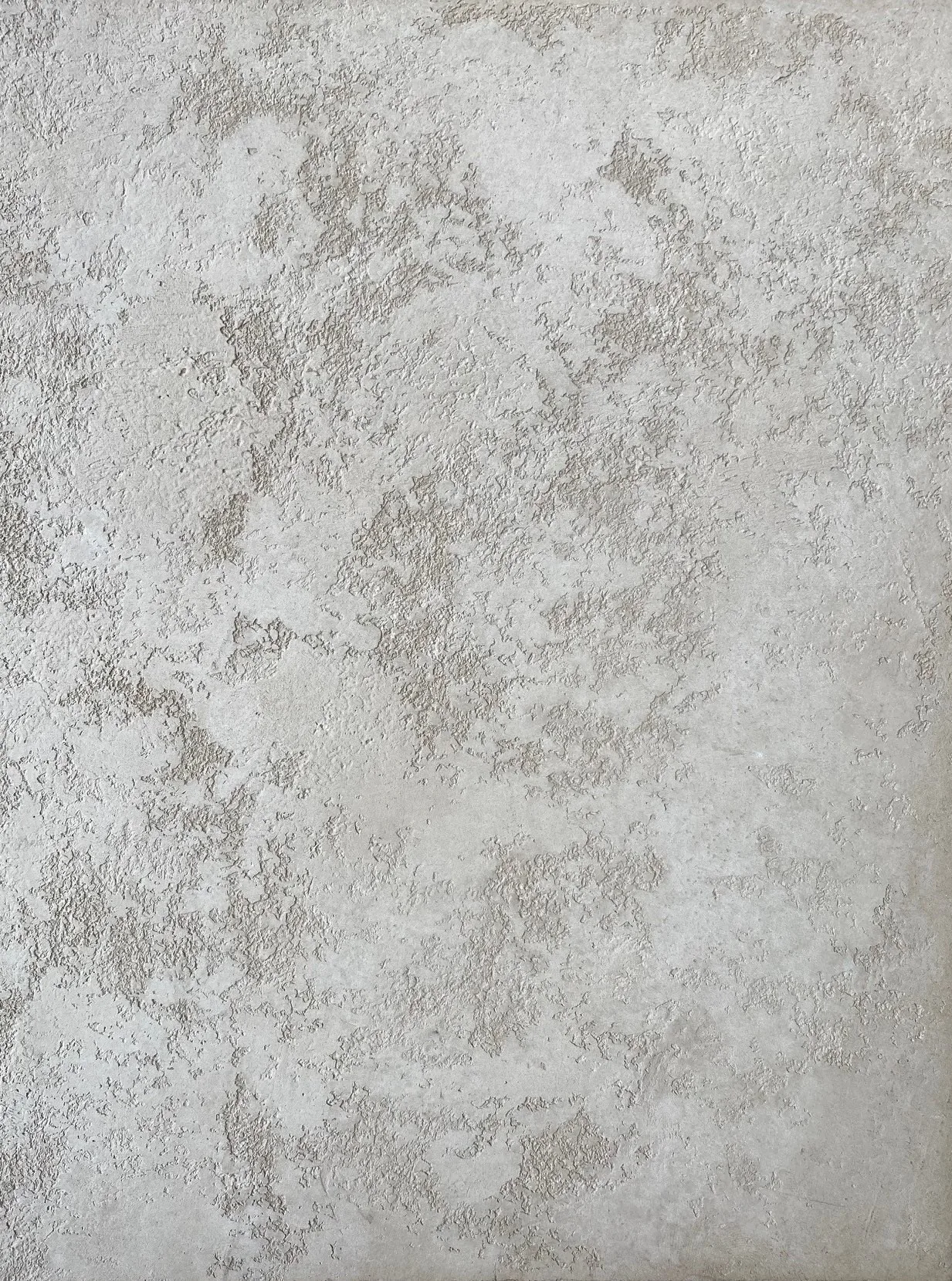
TadelaktPro, for wet rooms. It follows the principle of Moroccan tadelakt: hydraulic lime, hydrated lime and silica share the roles of setting, plasticity for smoothing and fineness of grain. Applied about 4 mm thick, it gets its impermeability from compaction with the trowel and from black soap, and it hardens as the lime carbonates. It is reserved for the walls and ceilings of wet rooms, on a hard substrate, indoors or on a protected exterior wall. Thirty-three shades.
The shades come from natural pigments.
Installation & uses
All three plasters are supplied as kits, and their application is a job for a professional applicator.
Creatina: a powder and JES binder, 7 kg and 2 L for about 12 to 14 m². It is applied over the PrimerPro primer coat, in two coats, dry-on-dry, with a plastering trowel. Floors, furniture and shower walls then receive one coat of MonoSeal and three of PerfectSeal New; a breathable wall receives two coats of PerfectProtect. A floor can be walked on after 48 hours.
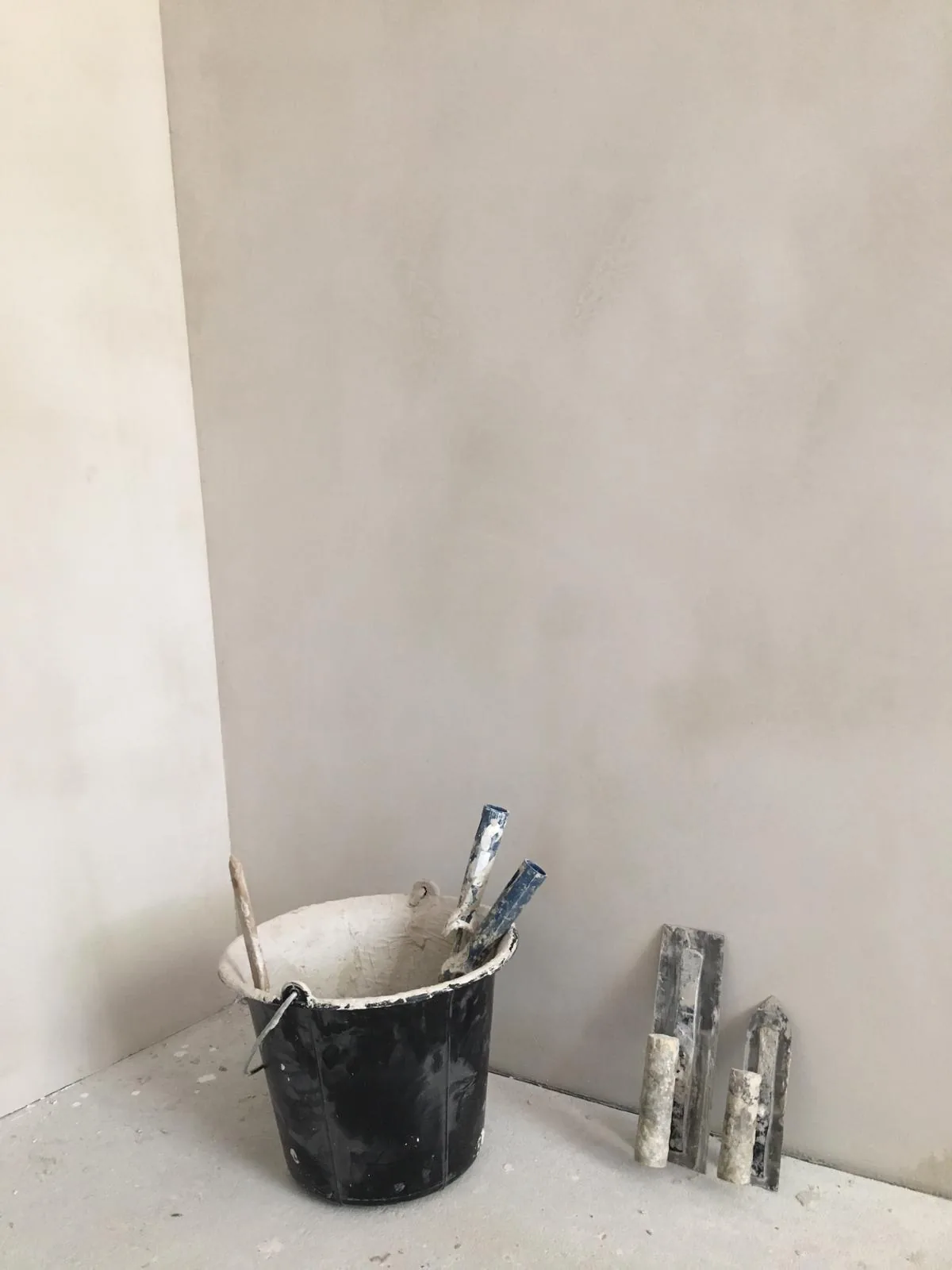
MonoSoft: 5 kg of powder and 2 L of JES for about 10 m². It is applied over PrimerPro, in two coats, dry-on-dry, with a foam roller and then a plastering trowel. On existing tiles, it requires a mesh, a thin levelling compound and a sealing primer, for no more than 4 mm in total. The protective coats and the waiting time are the same as for Creatina.
TadelaktPro: a powder mixed with water, 2.8 L for 10 kg; two 10 kg bags cover about 10 m². It is applied only to a hard substrate (concrete, hydraulic mortar, brick, terracotta), never to plasterboard. An absorbent substrate is dampened about thirty minutes before application; the plaster is applied in two coats, smoothed by pressing with a trowel, then made watertight with PerfectSoap black soap, and PerfectWax can complete the polishing.
Maintenance: with black soap, avoiding acidic products.
About the producer
ClayLime is a Belgian manufacturer of natural decorative plasters, based in Brussels, in the municipality of Schaerbeek, where its workshop is located. Its range comprises two clay-based plasters, Claystone and Wonderstone, and three lime-based plasters, Creatina, MonoSoft and TadelaktPro, for floors, walls and furniture.
Each plaster comes with undercoats and protective treatments suited to its use. ClayLime trains professional applicators in the use of its products and provides technical support on projects.
Technical performance
Life cycle
Creatina and MonoSoft combine hydrated lime, alumino-silicates, rock powders and natural pigments, bound by JES, a Zero VOC liquid polymer binder. TadelaktPro combines hydraulic lime, hydrated lime, silica and fine admixtures.
ClayLime manufactures the three plasters in Brussels and supplies them as kits: powder and JES binder for Creatina and MonoSoft, powder to be mixed with water for TadelaktPro.
ClayLime documents no take-back scheme for these plasters. Bound by a polymer and protected by a varnish, Creatina and MonoSoft cannot be regarded as purely mineral waste at end of life.
FAQ
Which plaster should I choose: Creatina, MonoSoft or TadelaktPro?
Creatina for an effect finish (stucco, faux marble, lines, multilayer), MonoSoft for a plain, soft, smooth surface close to a microcement, TadelaktPro for the walls of bathrooms, showers and hammams. Floors are reserved for Creatina and MonoSoft.
Can they be applied in a shower?
On the walls, yes. Creatina and MonoSoft receive one coat of MonoSeal and then three coats of PerfectSeal New; TadelaktPro becomes impermeable through smoothing with the trowel and black soap. Creatina and MonoSoft are not suitable for shower floors.
Which substrates can they be applied to?
Creatina and MonoSoft are applied over the PrimerPro primer coat; MonoSoft can cover existing tiles after a mesh, a thin levelling compound and a sealing primer. TadelaktPro requires a hard, rigid substrate (concrete, hydraulic mortar, brick or terracotta) and is not applied to plasterboard.
What thickness should be allowed for?
About 1.5 mm in two coats for Creatina and MonoSoft; this thinness also allows MonoSoft to be used in renovation. TadelaktPro is applied in two coats for about 4 mm.
How are they maintained?
With a neutral soap, such as black soap, avoiding acidic products. On TadelaktPro, a wax can be applied from time to time, and descaling products must not be used.
Alongside
Same layer, same use · materials to compare.