Recycled
terrazzo
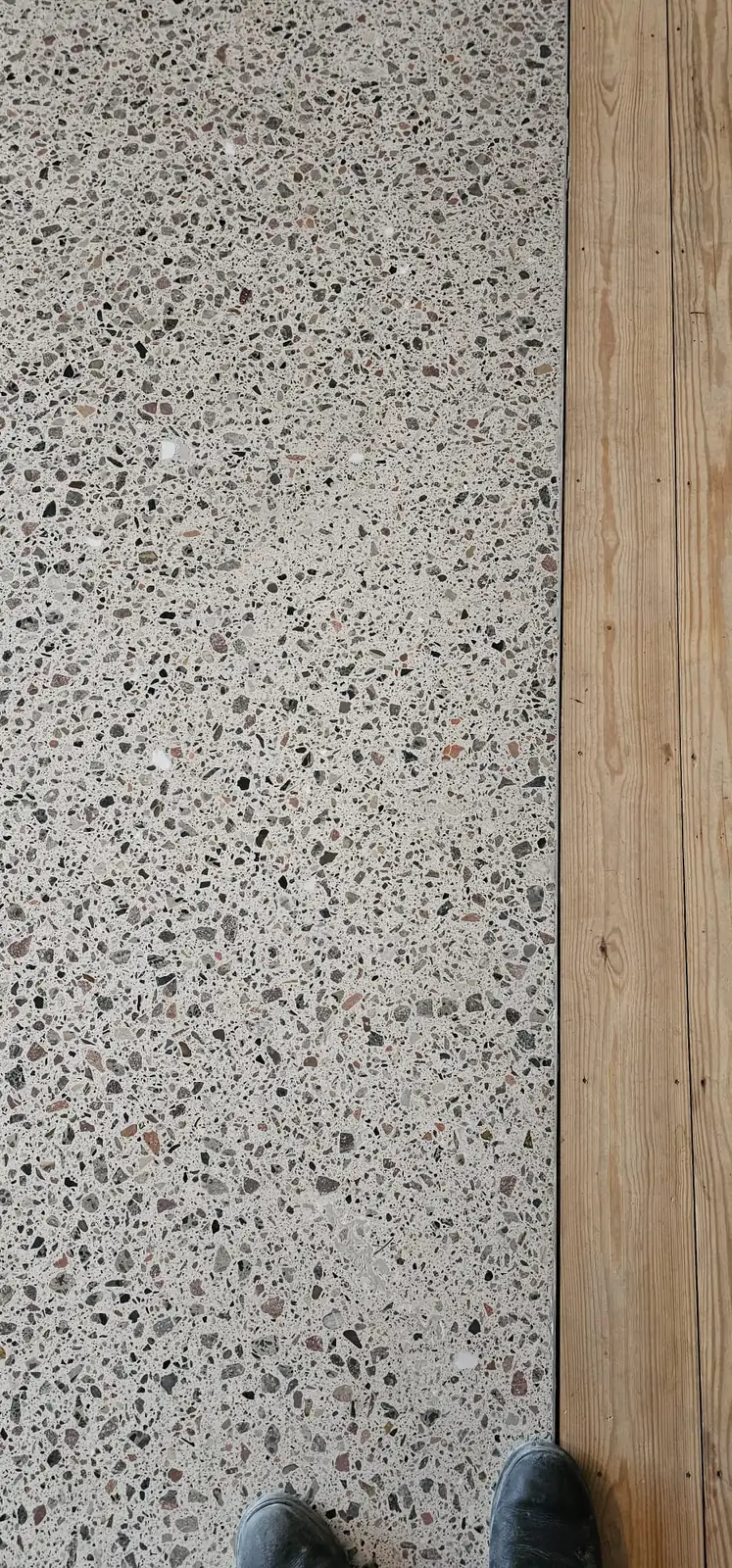
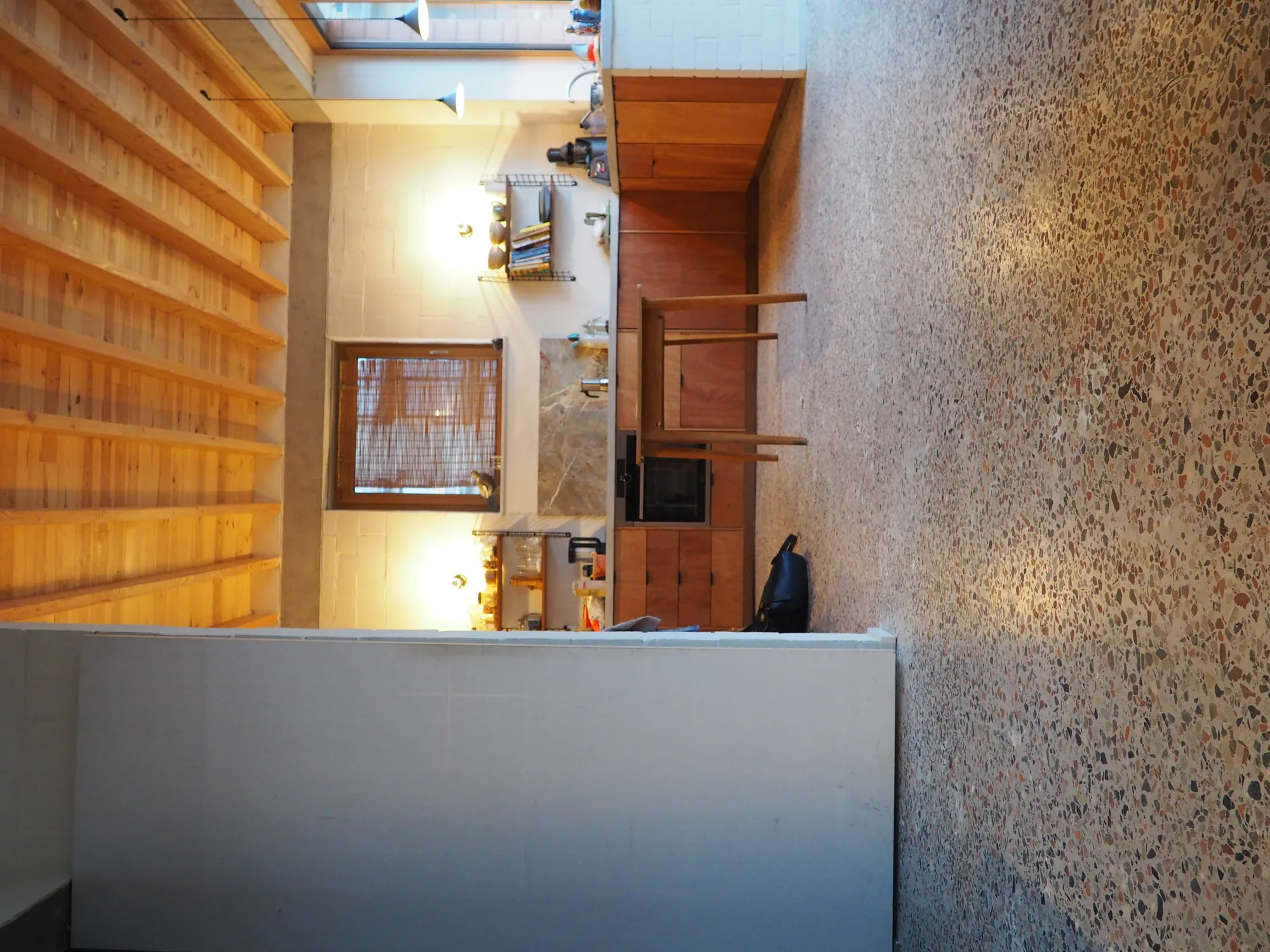
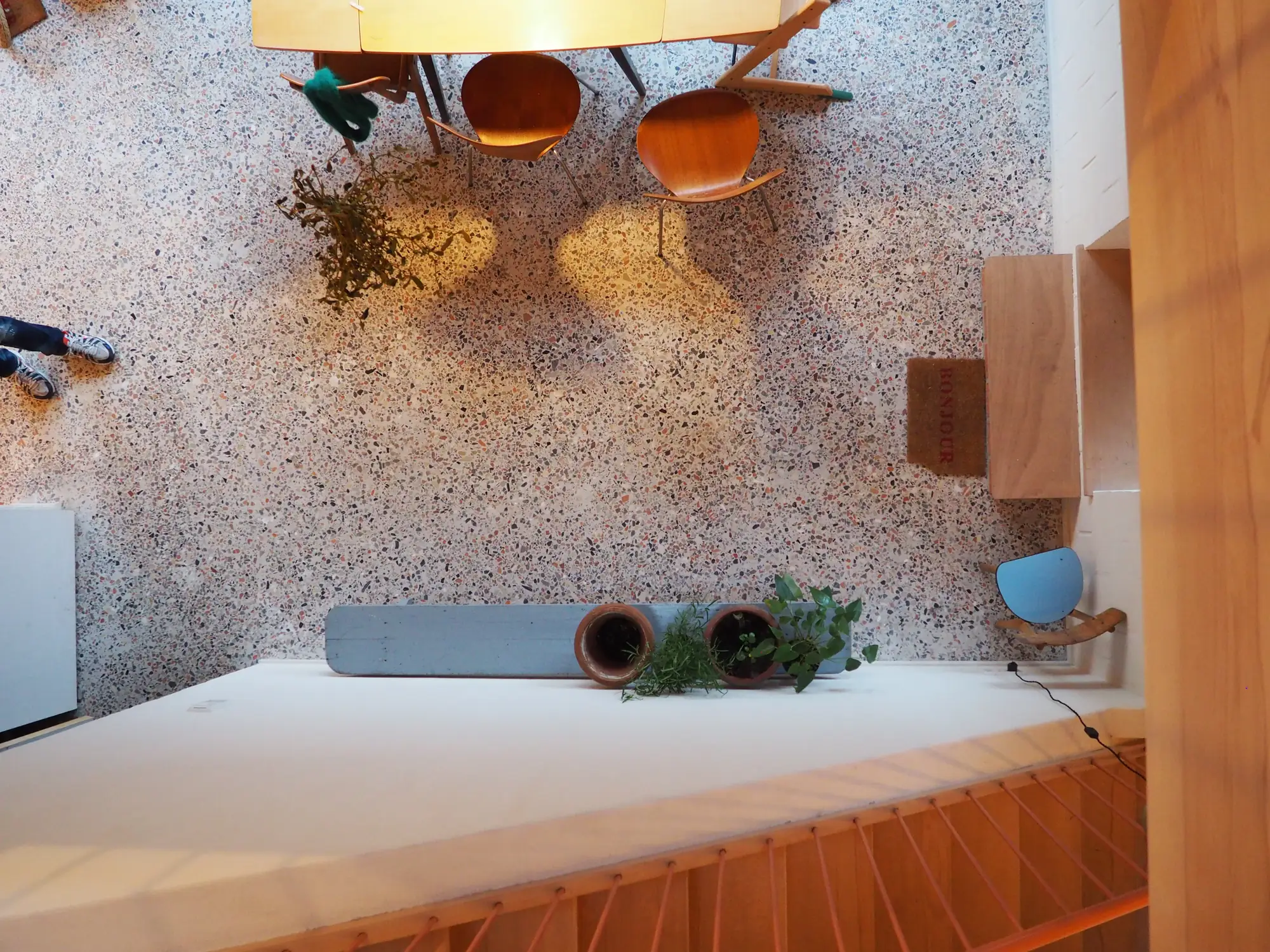
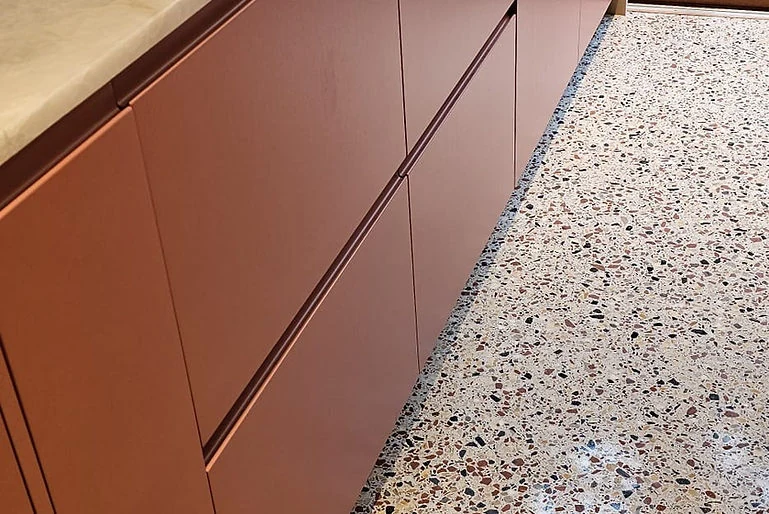
Recuperazzo is a circular terrazzo poured in situ from aggregates produced by recycling inert demolition waste. Applications: floors, walls, worktops, bathroom furniture and window sills. Made-to-order palette, depending on the source material available.
What is recycled terrazzo?
Circular terrazzo is a mineral finish poured in situ, made of aggregates from recycled inert demolition waste and a binder that fixes them into a continuous mass. The aggregates are the dominant material, crushed brick, concrete, roof tile or ceramic, while the binder, made of white cement, quartz powder and resin, provides setting and cohesion. All virgin aggregates are thus replaced by material that has already served in a building.
This substitution gives the finish a distinctive mineral appearance, with a colour range that depends on the source material used. The polished surface reveals the inclusions, and the palette varies with the site the material comes from.
This freedom of composition means the terrazzo can be used for a floor as well as a worktop, a window sill or bathroom furniture. Each project sets its own mix from the source material available.
It is made in Belgium, in Fexhe-le-Haut-Clocher, by L'alchimie des Matières. Depending on the project, the aggregates come from Walloon inert-waste processing facilities or are crushed directly on site with mobile mini-crushers, which reduces transport.
Installation & uses
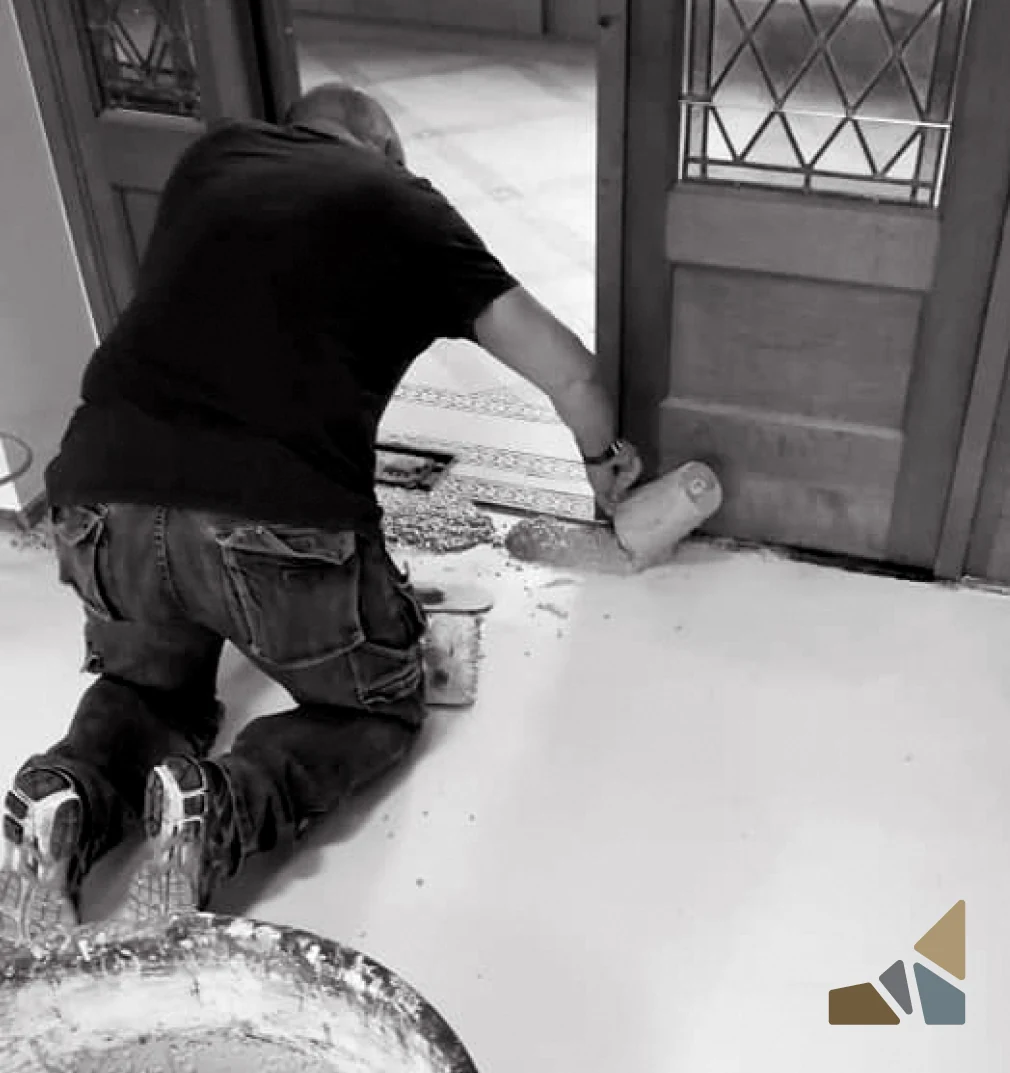
Installation is carried out on site by the craftsperson, on a prepared, level substrate. The mix of aggregates and binder is poured, floated, then ground and polished once it has set to reveal the inclusions. Each stage calls for specific skills and suitable grinding equipment.
The process suits floors, walls, worktops, window sills and bathroom furniture. Polished, matt or satin finishes are obtained by adjusting the grinding grit and the final protective coat.
This craft work produces a result unique to each project, with a colour range and grading chosen beforehand from the source material available. Thicknesses remain moderate (standard overlay of 10 mm), compatible with existing substrates without structural levelling work.
At end of life, the finish can be detached from the substrate and crushed to become aggregate for a future terrazzo. This loop relies on the Walloon inert-waste recycling routes used by the producer.
About the producer
L'Alchimie des Matières is a Belgian family terrazzo workshop based in Fexhe-le-Haut-Clocher, in Wallonia. It has developed Recuperazzo, a terrazzo poured in situ from aggregates made entirely from recycled inert demolition waste.
Depending on the project, these aggregates come from Walloon inert-waste processing facilities or are crushed directly on site with mobile mini-crushers. Each project is unique, and the workshop works with the specifier from the choice of source material through to the final polish.
Life cycle
The aggregates come 100% from recycled inert demolition waste: concrete, brick, roof tile and ceramic. They are sourced from Walloon processing facilities or crushed on the site itself with mobile mini-crushers.
L'alchimie des Matières applies the terrazzo directly to the substrate, with the aggregates held in a binder of white cement, quartz powder and resin. The mix is poured, floated, then ground and polished in situ.
At end of life, the finish can be detached from the substrate, crushed and recycled into aggregate for a future terrazzo. The binder, made of white cement, quartz powder and resin, is however still based on virgin material.
FAQ
Does each project have its own colour?
Yes. The palette depends on the recycled materials available (concrete, brick, roof tile, ceramic) and on the pigments chosen, so it varies from one source site to another. The colour range and grading are set beforehand from the source material available.
Can the terrazzo be made from the rubble of the project's own site?
Yes, this is one of the producer's two routes: inert demolition waste is crushed on site with mobile mini-crushers. Otherwise, the aggregates come from Walloon inert-waste processing facilities.
Is the finish entirely recycled?
The aggregates, which form the visible component, come 100% from recycled inert waste. The binder, made of white cement, quartz powder and synthetic resin, is still based on virgin material.
What additional thickness should be allowed for over an existing substrate?
The standard overlay thickness is 10 mm, compatible with existing substrates without structural levelling work. The substrate must be prepared and level before application.
Is the terrazzo delivered ready to lay?
No, it is not supplied in packs: L'alchimie des Matières applies it directly on site. The mix is poured, floated, then ground and polished in place, and the polished, matt or satin finish is obtained through the grinding grit and the final protective coat.
Alongside
Same layer, same use · materials to compare.