
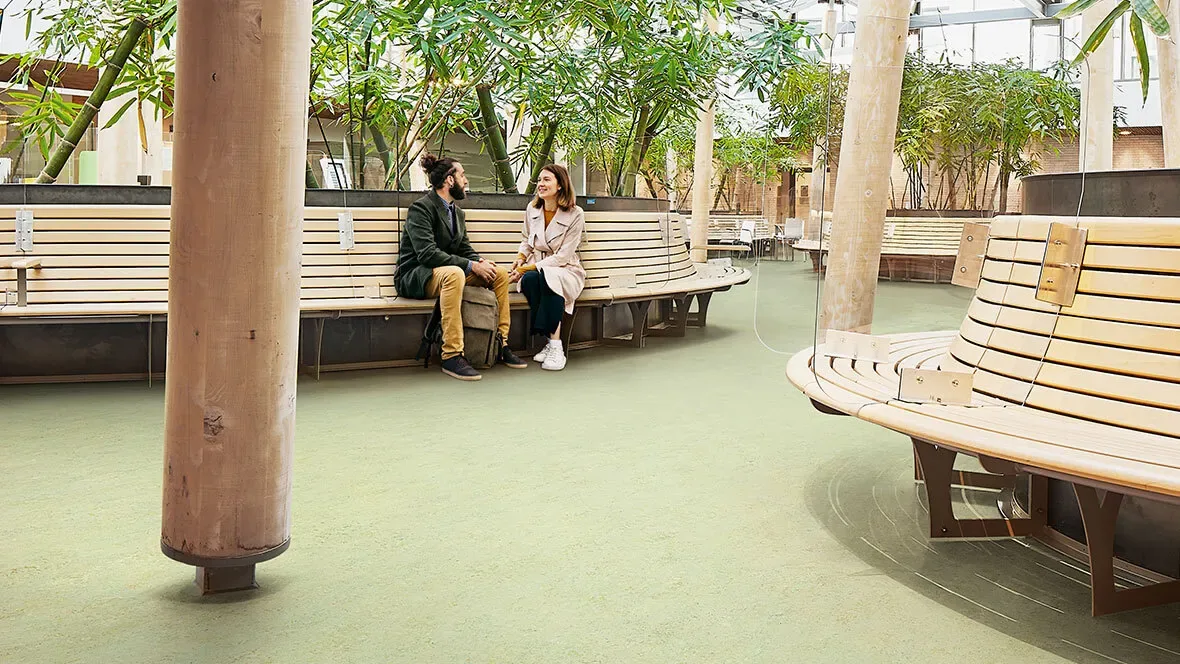
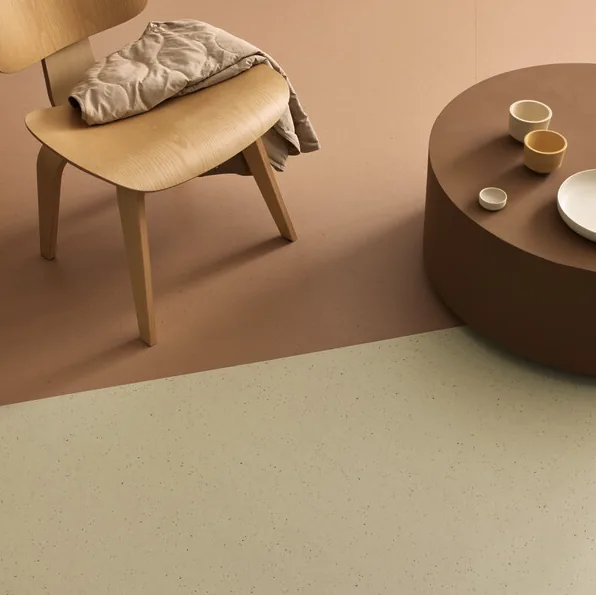
In our exploration of sustainable building materials, linoleum is coming back to the fore. Long associated with the interiors of the past, this floor covering is regaining popularity for its ecological qualities, its robustness and its modern look.
Linoleum is made mainly from renewable plant-based materials: linseed oil, wood flour and jute. Its production requires little raw material and energy, which makes it possible to meet sustainability targets without compromising on quality.
According to Forbo Flooring Systems, its main manufacturer, linoleum is made of 97% natural raw materials, 72% of them rapidly renewable, and it is biodegradable at end of life, two properties that are rare in a floor covering.
Forbo's production practices include reducing water and energy use, recovering heat from the manufacturing process, limiting waste and reusing production offcuts.
The strength of linoleum lies in its combination of an ecological composition, longevity and versatility. Designed to withstand high-traffic environments, it suits residential spaces and large commercial projects alike.
Unlike low-grade synthetic floor coverings, its long service life reduces overall material consumption over the long term.
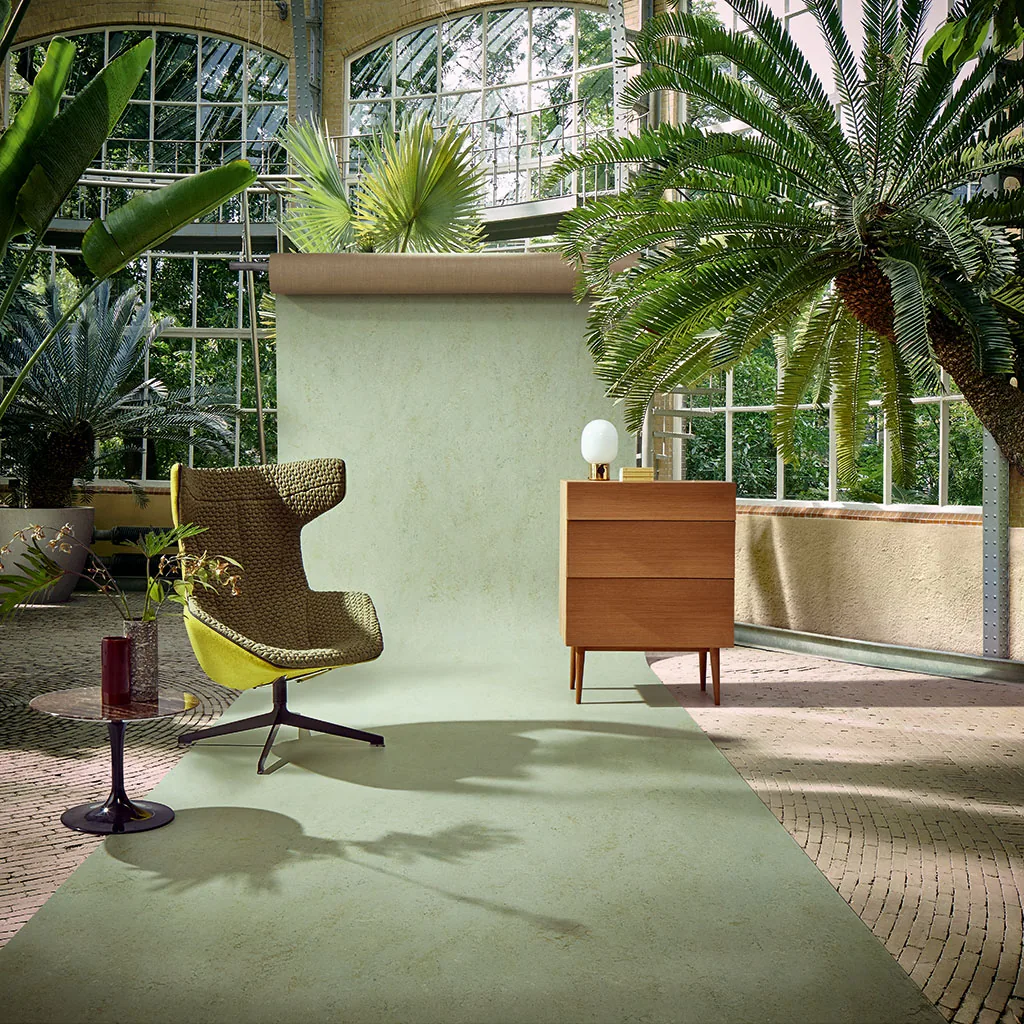
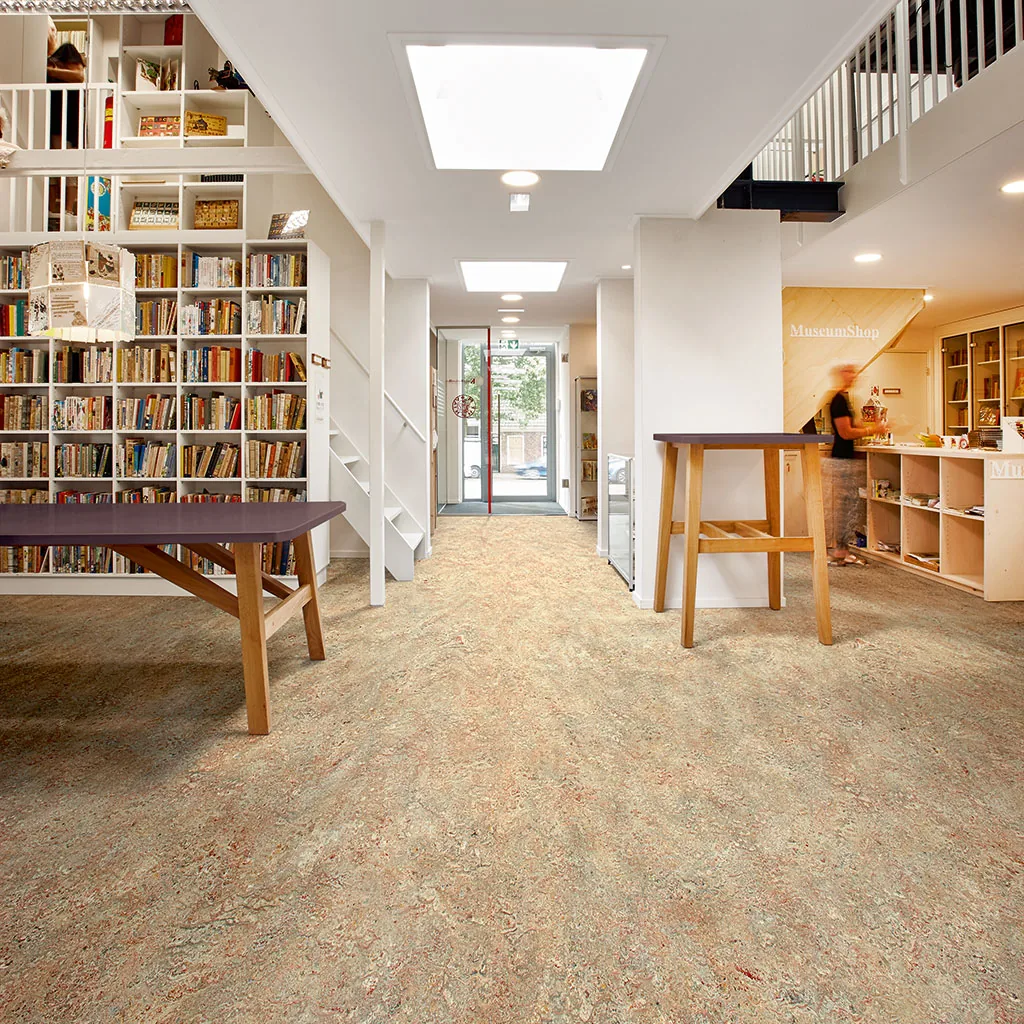

One notable development concerns the reuse potential of linoleum. When large quantities are removed from a site, Forbo explores the possibilities of recovering and reconditioning them. This approach reduces waste and follows the principles of the circular economy by extending the life of quality materials.
Forbo does not stop at the sustainable production of linoleum: the company also builds in social responsibility and staff development, with internal training programmes that align environmental objectives at every level of the organisation.
With its durability, its aesthetic versatility and its low environmental impact, linoleum is a relevant choice for projects that combine design and sustainable performance, particularly in high-traffic commercial programmes, where longevity determines the overall environmental footprint.
Update of 5 November 2026: the original version stated 97% renewable raw materials. Forbo states 97% natural raw materials, 72% of them rapidly renewable; the figure has been corrected.
Three pieces from the Magazine, on floors.
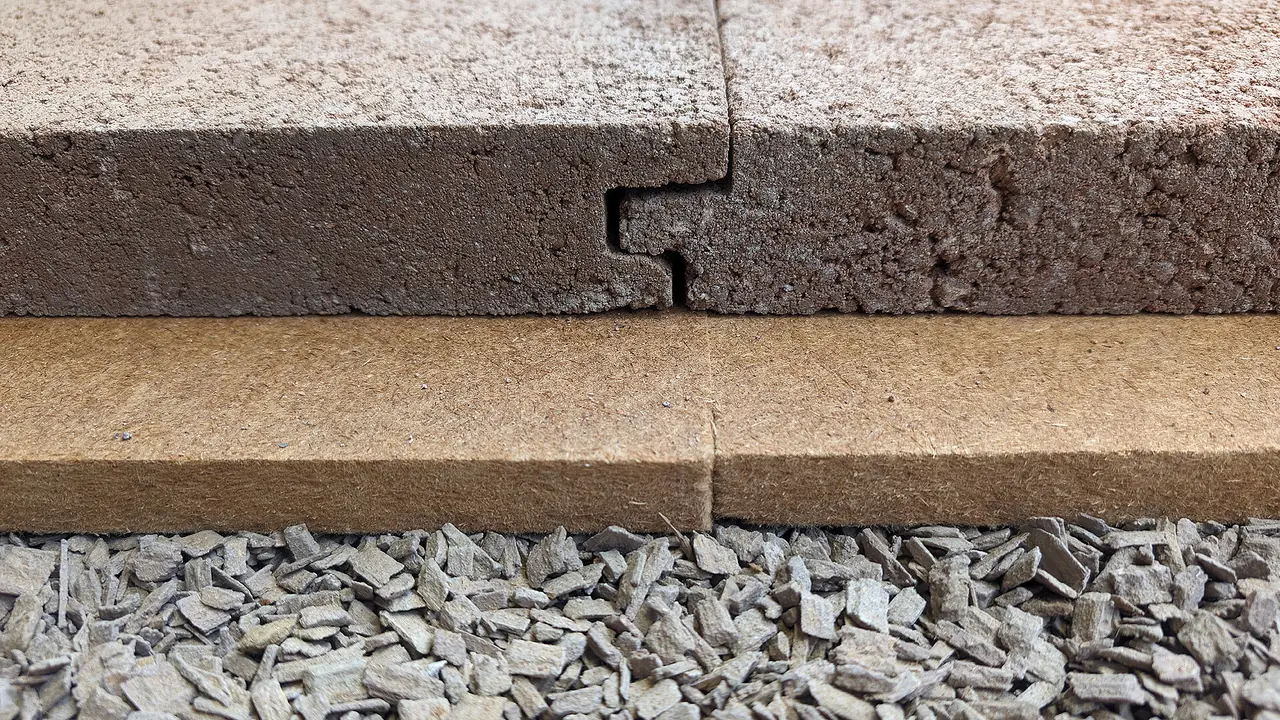
A mineral dry screed that can be taken up and reused.
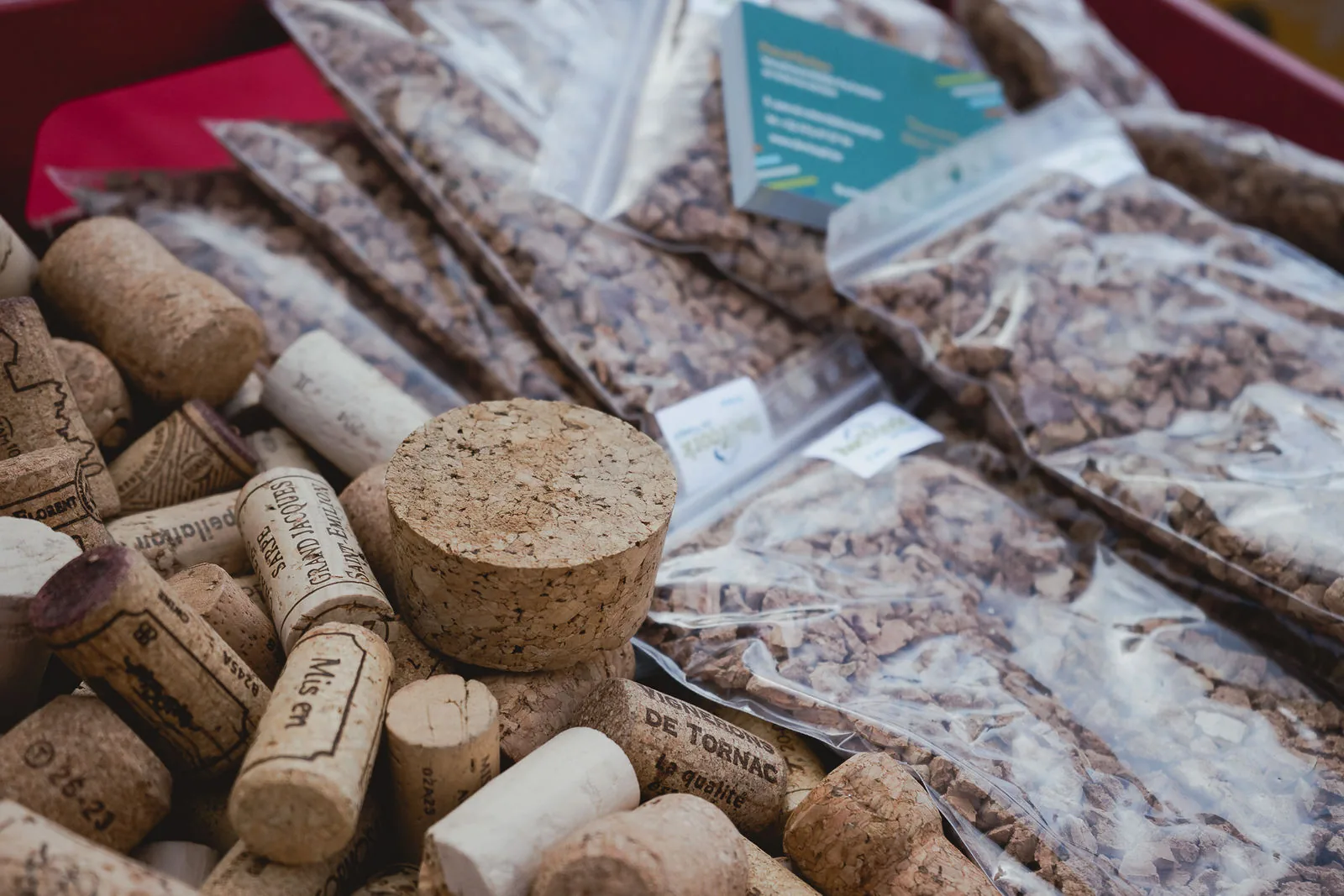
Recycled cork stopper granules, laid loose with no supporting structure, monitored by Buildwise.
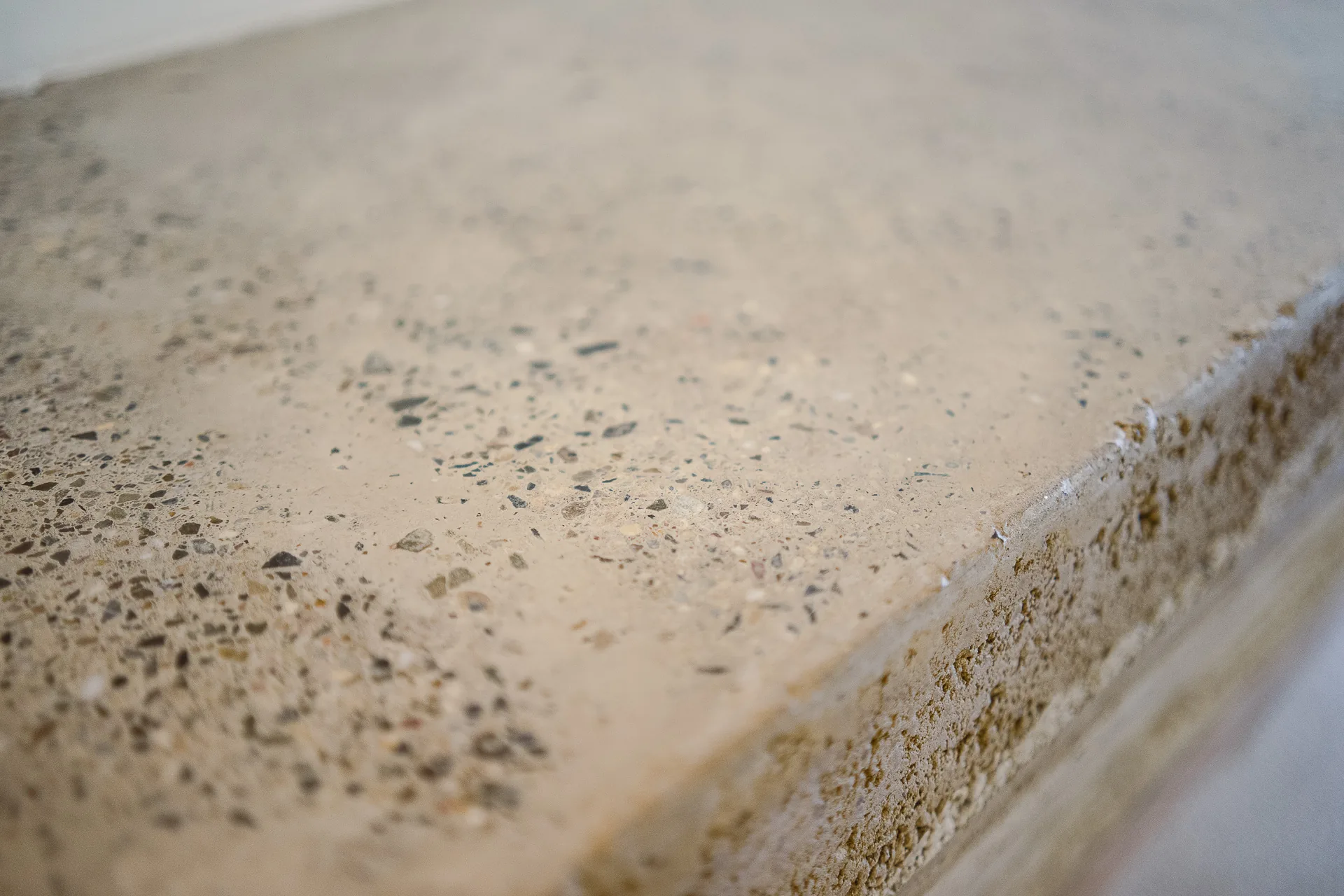
Rammed earth and linen cladding in a Brussels commercial interior.