
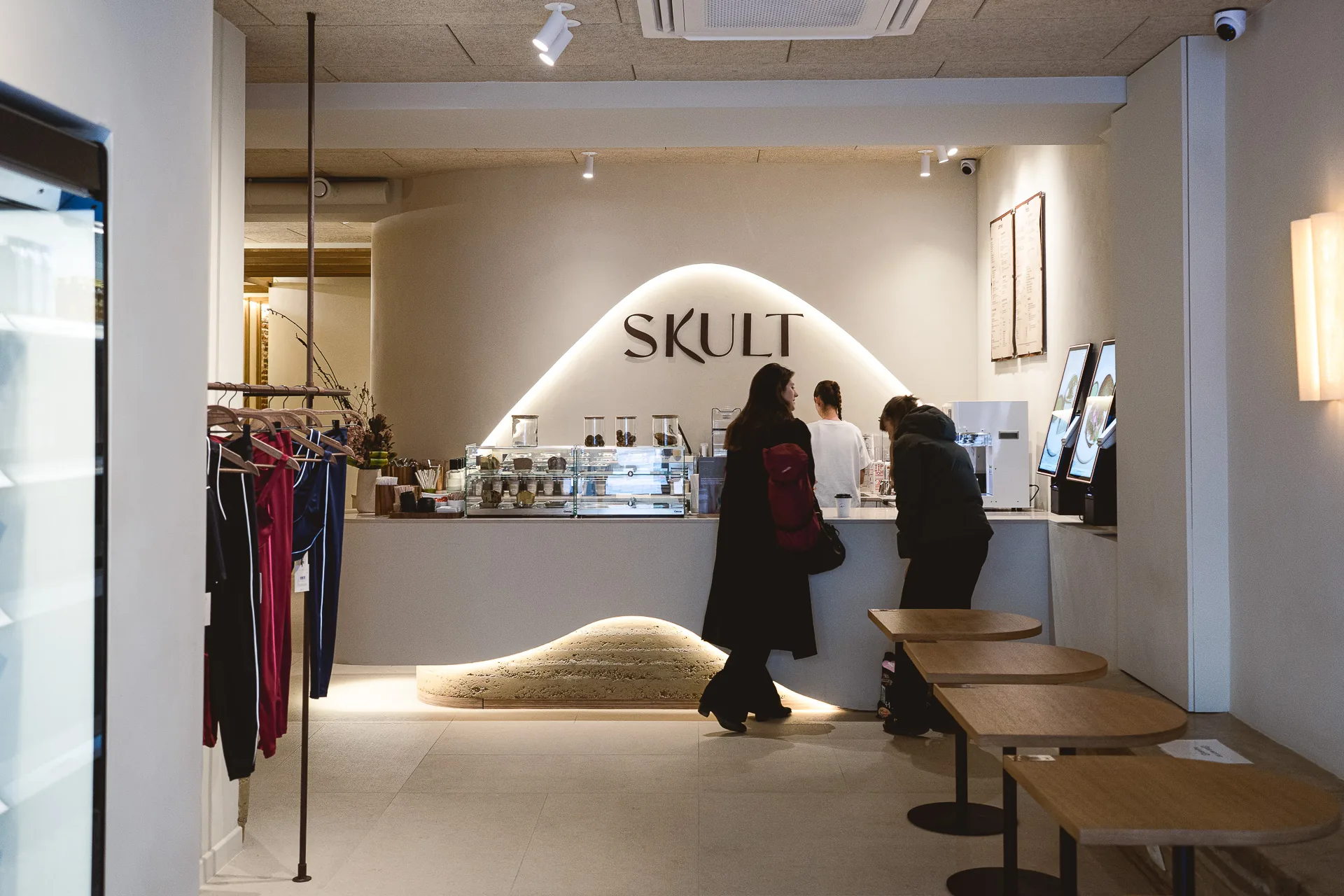
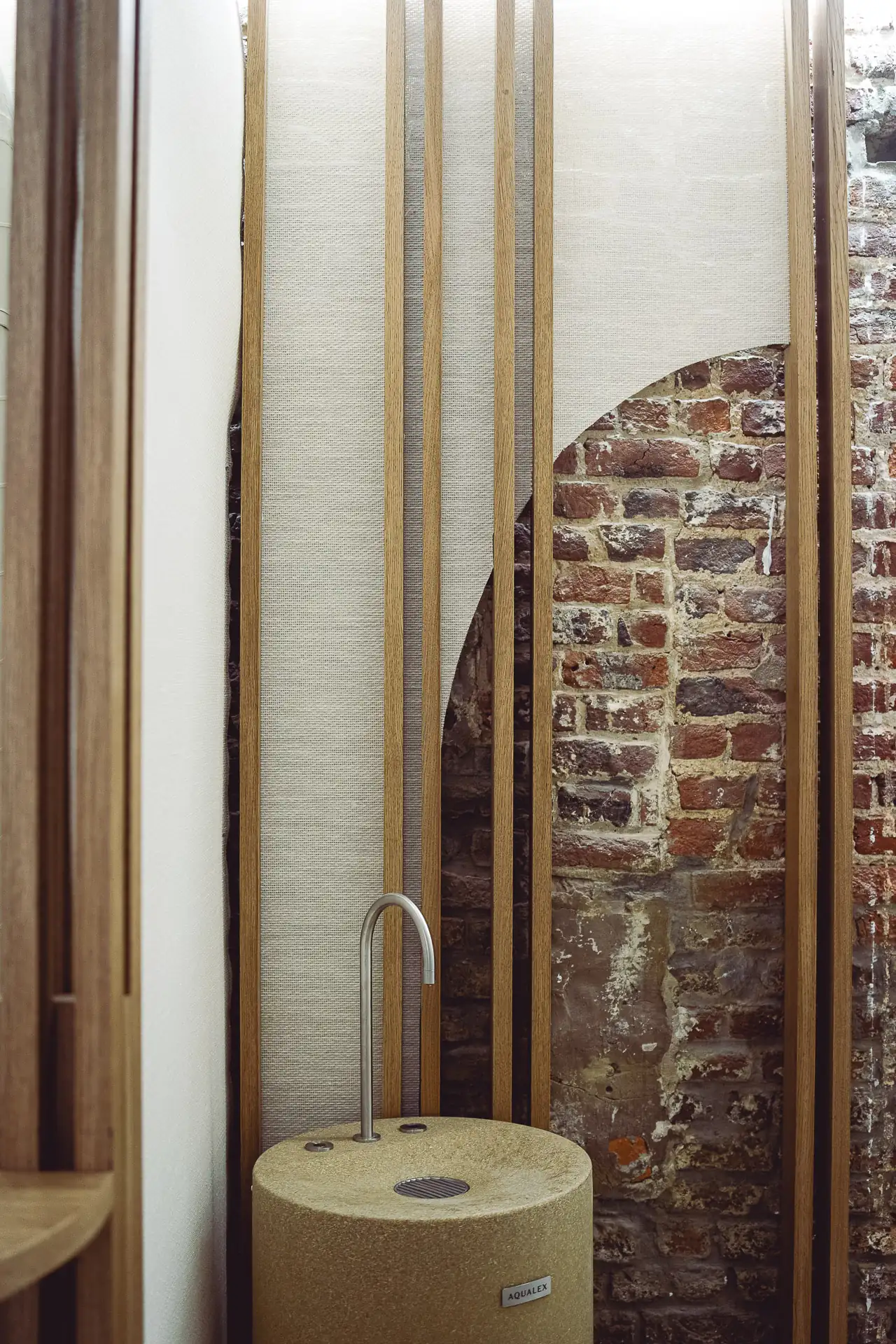
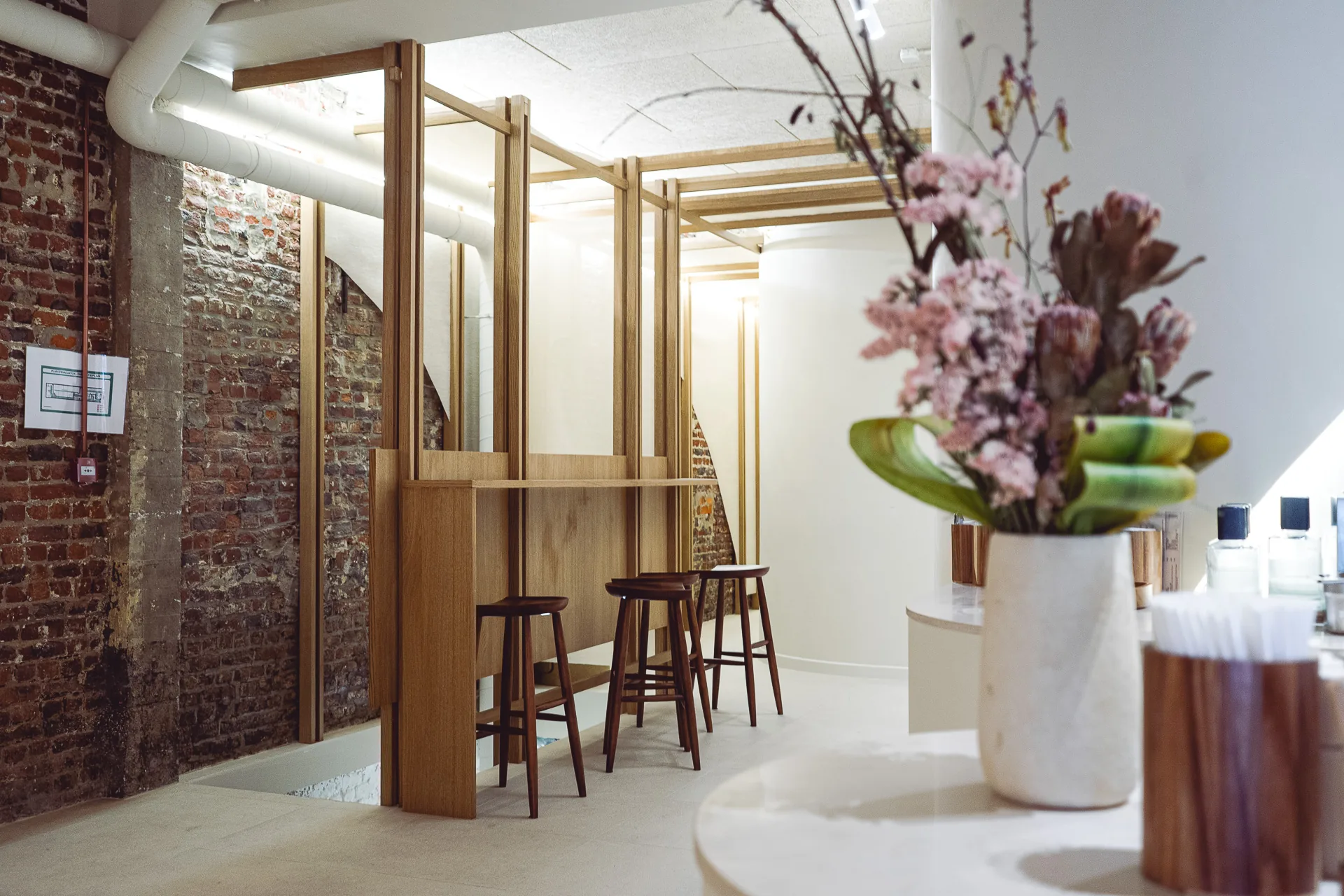
In Brussels, SKULT Studios brings a Pilates studio and a café together under one roof. The interior, designed by Clélia Cantillon, entrusts its surfaces to two biobased finishes: raw rammed earth and Varian linen cladding. Neither is a covering applied to a finished substrate; each of them is the surface you touch.
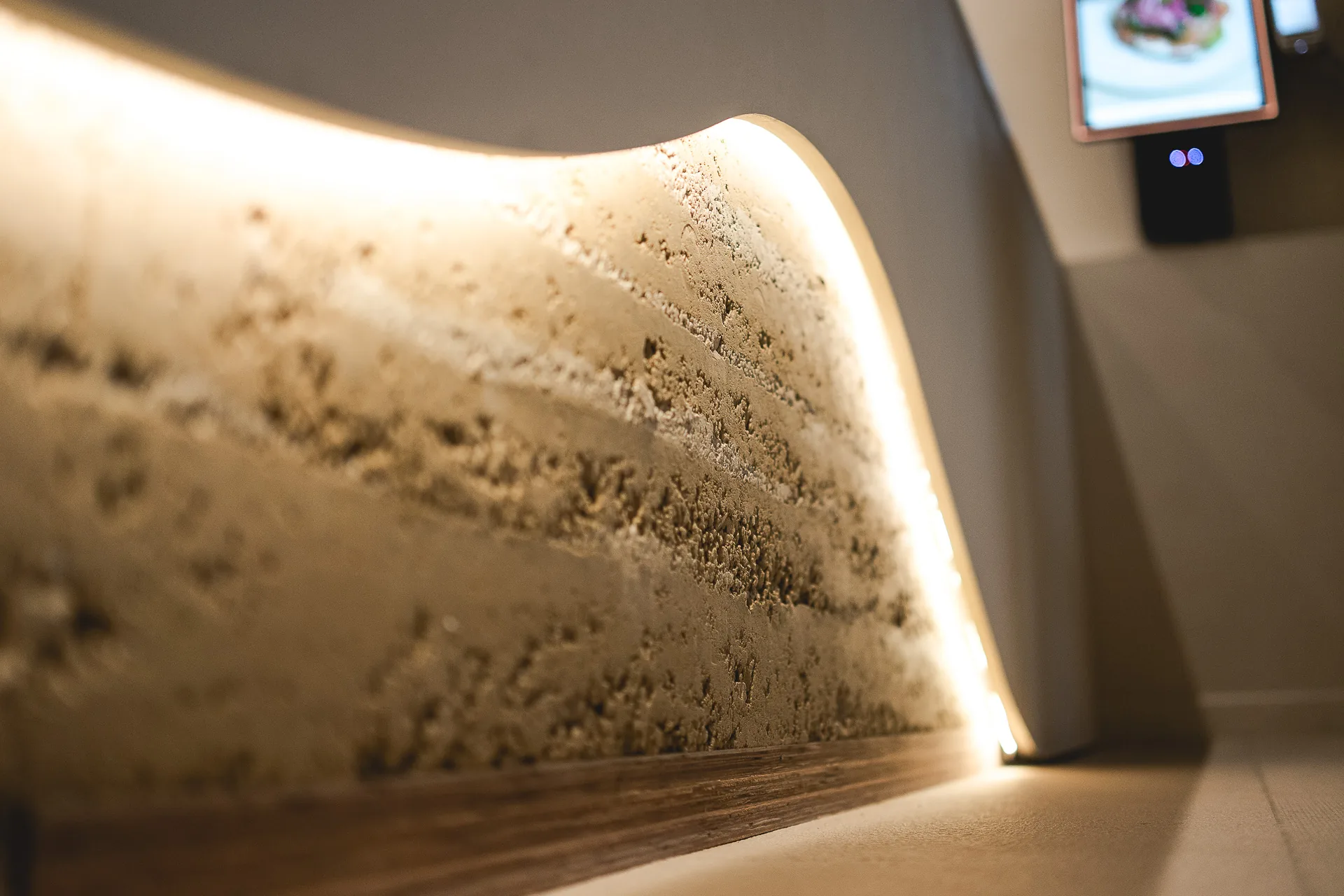
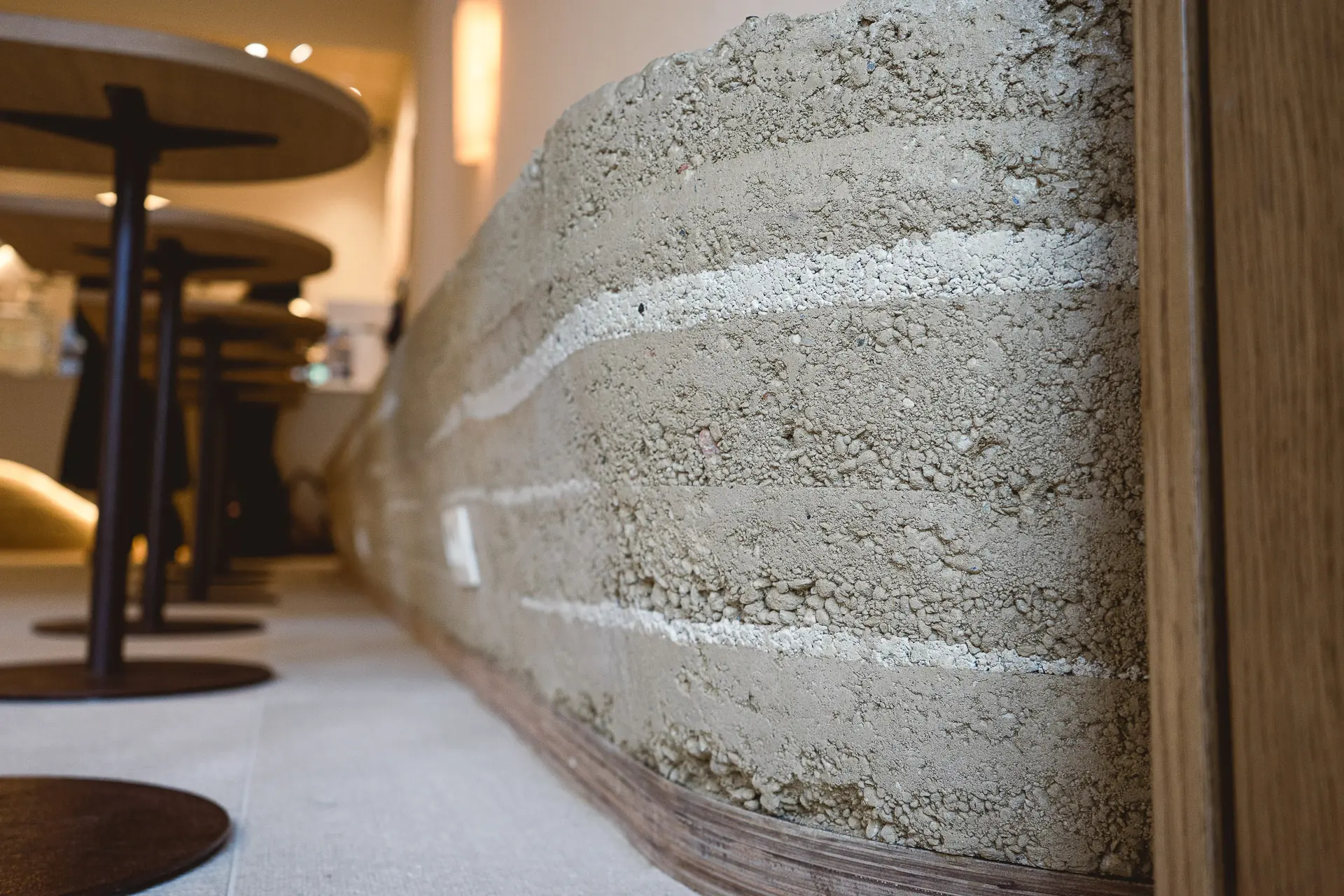
Installed by CRU Atelier, rammed earth was chosen for the banquettes and the base of the counter. The earth is compressed and poured in successive lifts. Poured earth can then be sanded or plastered; here, the lifts were left visible in the final surface, and that is a finishing choice made by the architect.
Its advantages in this setting:
The constraint lies in its use: it is traditionally an exterior material, reinterpreted here as an interior finish, and rammed earth remains uncommon in a commercial interior.
Made by the Belgian manufacturer Culture iN, Varian panels consist of linen fibres bound in a PLA resin derived from maize starch. The producer states that they are fully biobased, with no petrochemical inputs.
Why linen cladding rather than a conventional wall finish, in a place where one session follows another? Because the fibre structure absorbs and diffuses ambient sound, and does so through its very composition, with no added surface treatment.
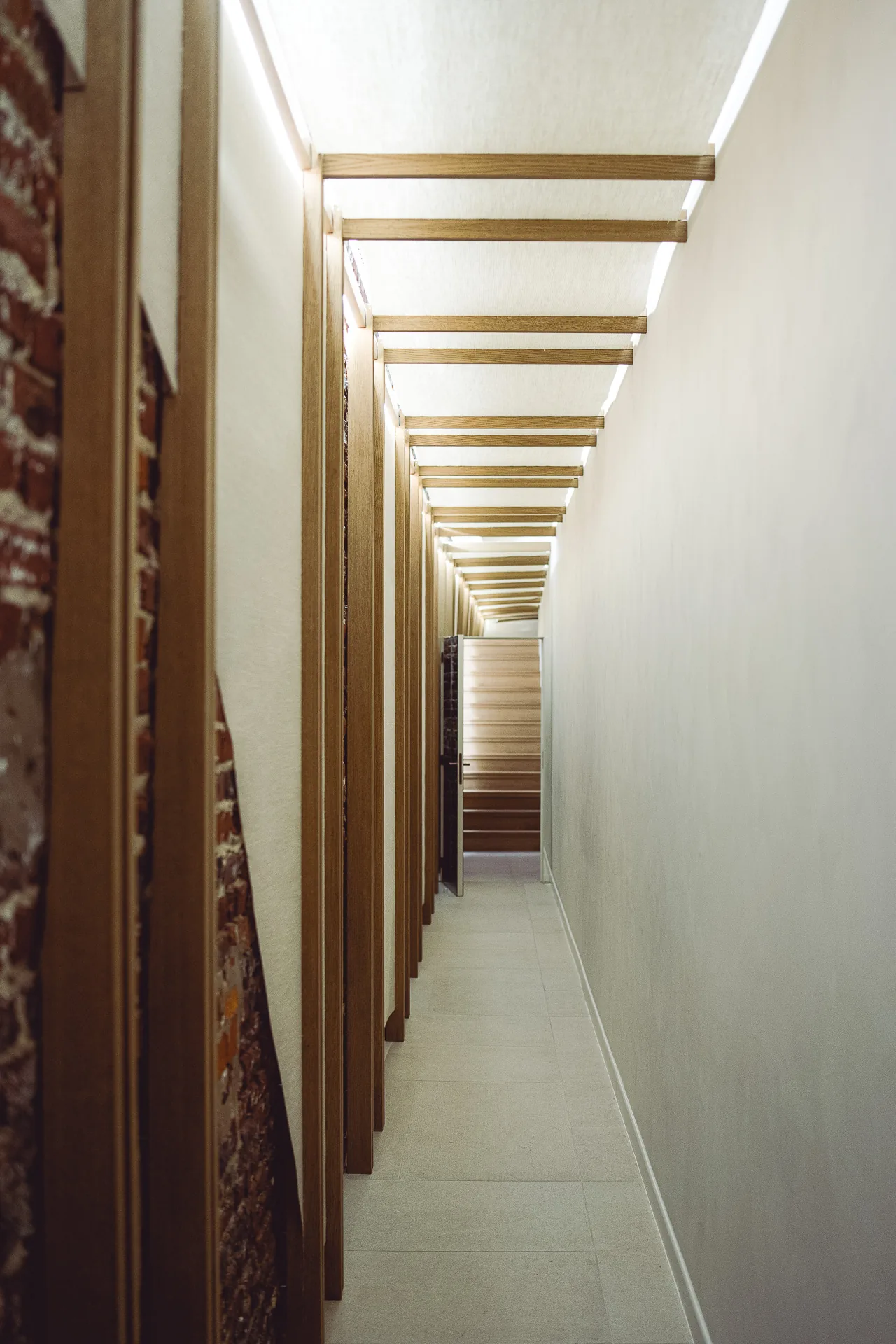
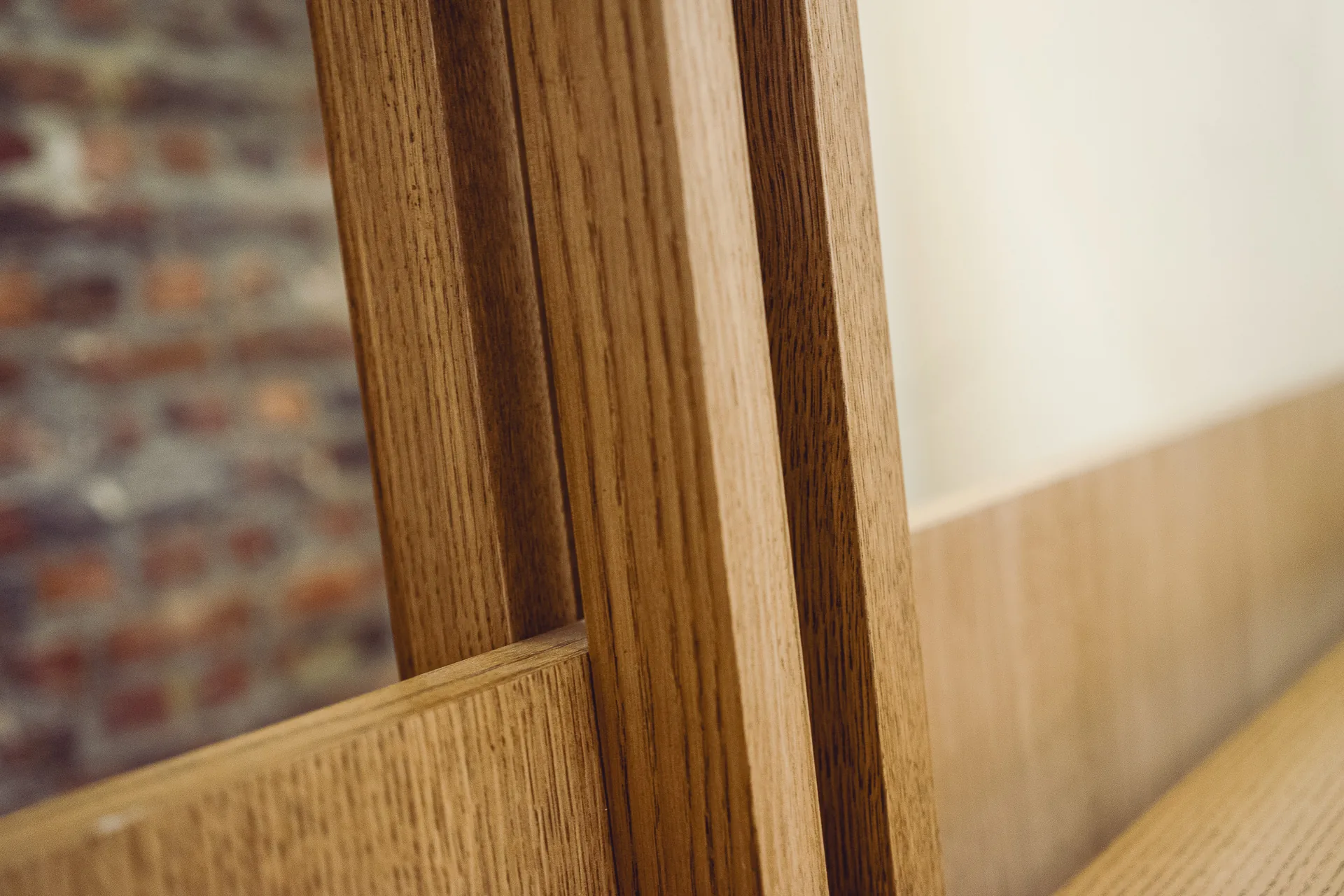
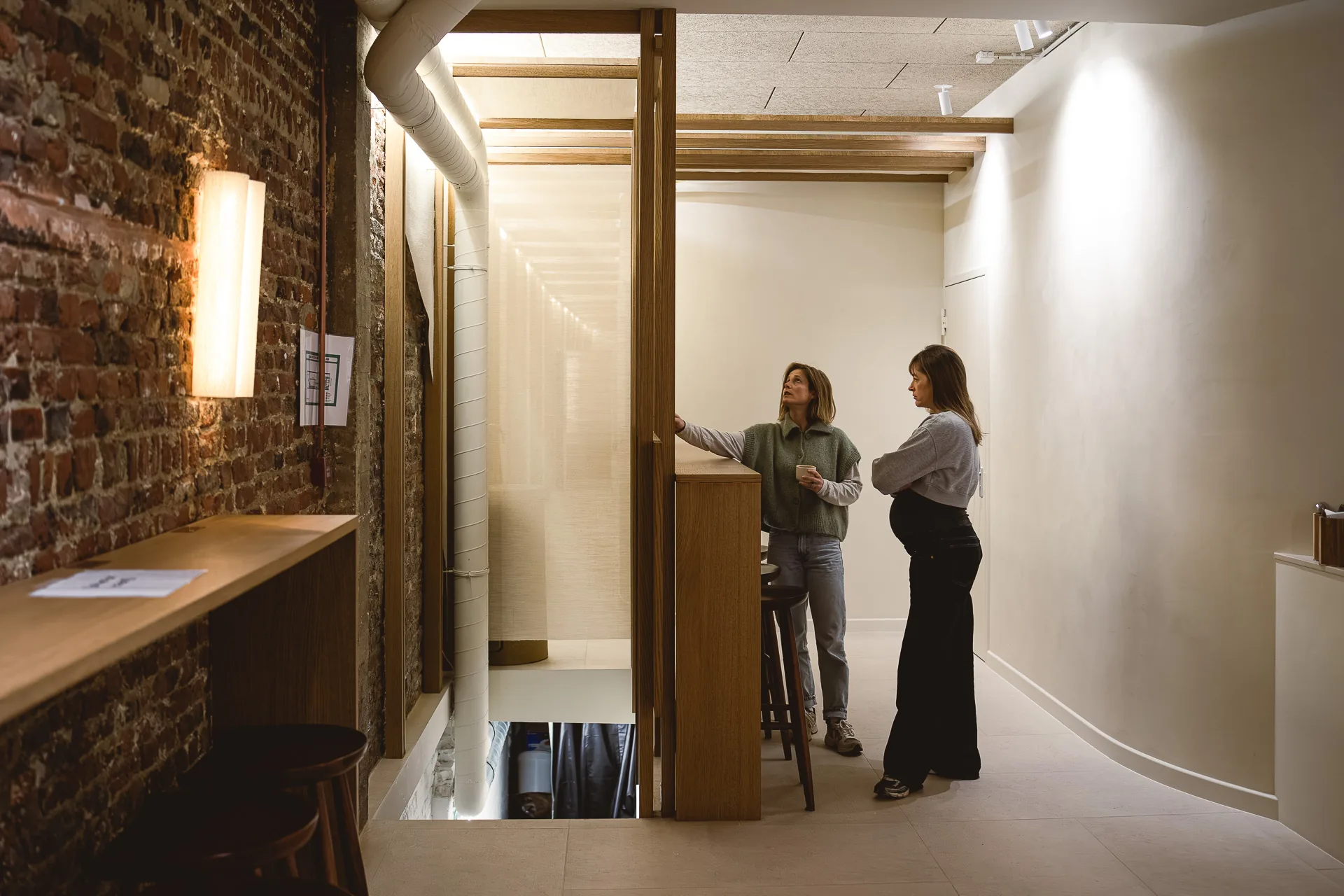
The cladding is fixed to a system of wood battens that can be dismantled without damaging the envelope. The panels are reversible by design: you take them down, and the wall that carried them remains intact.
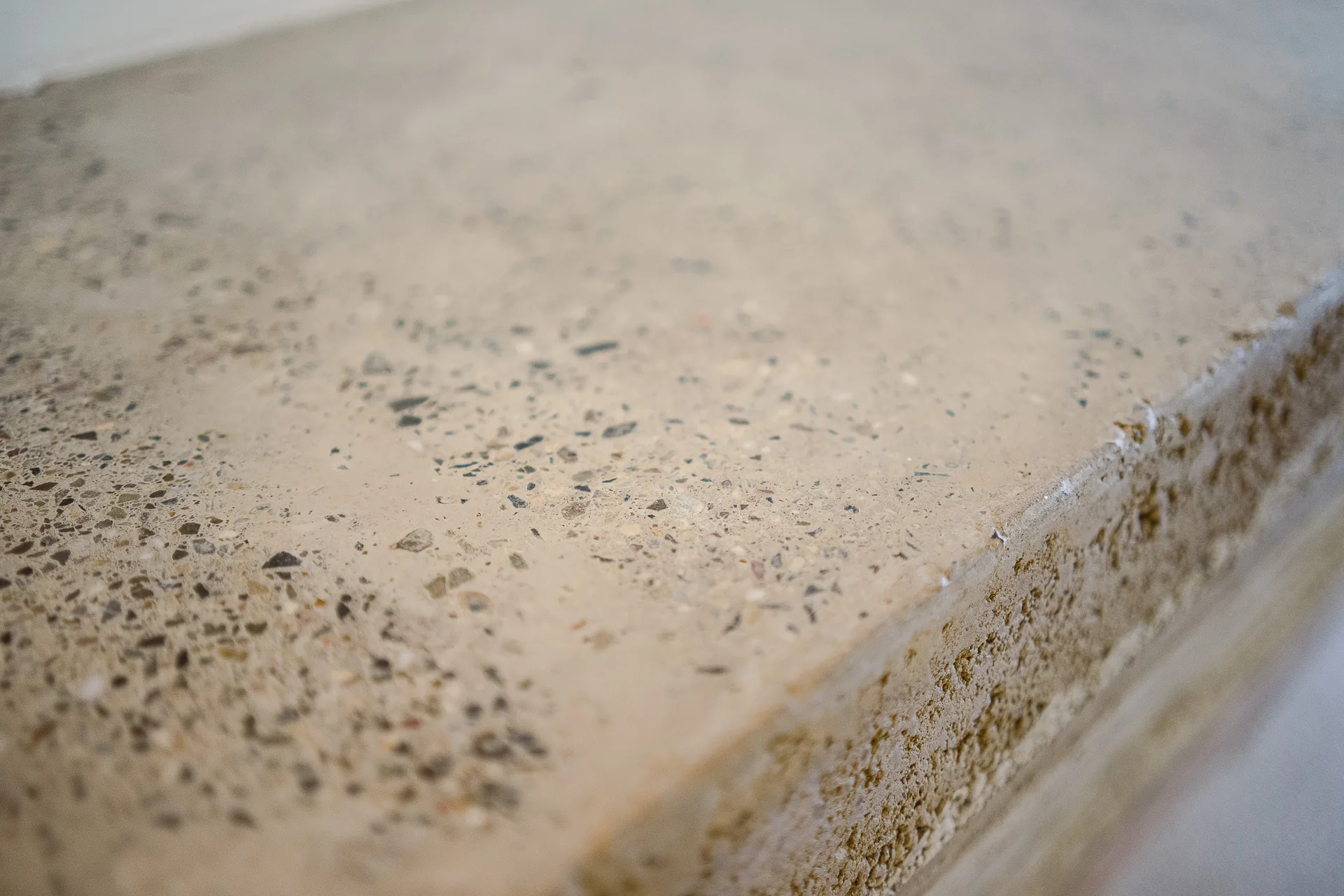
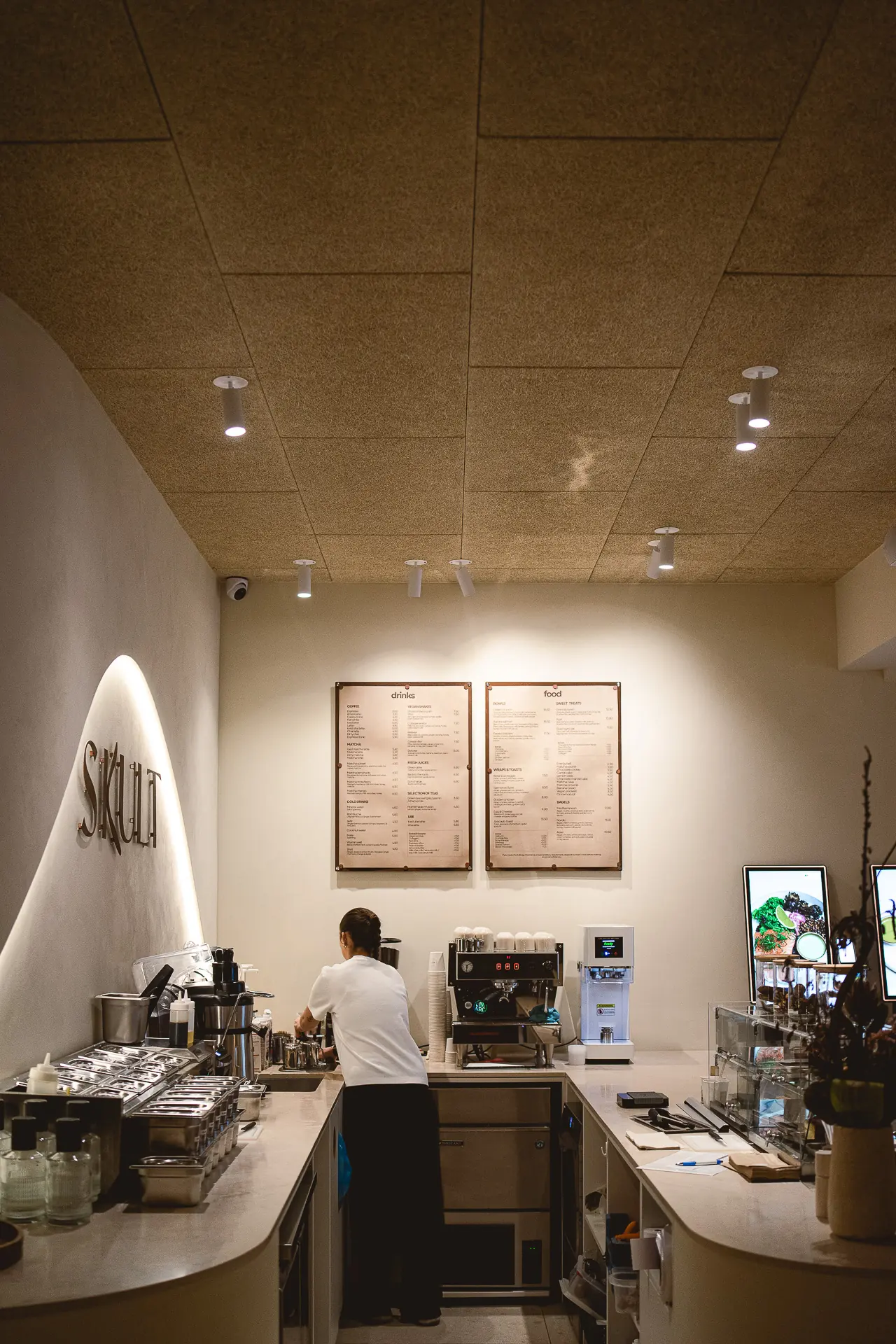
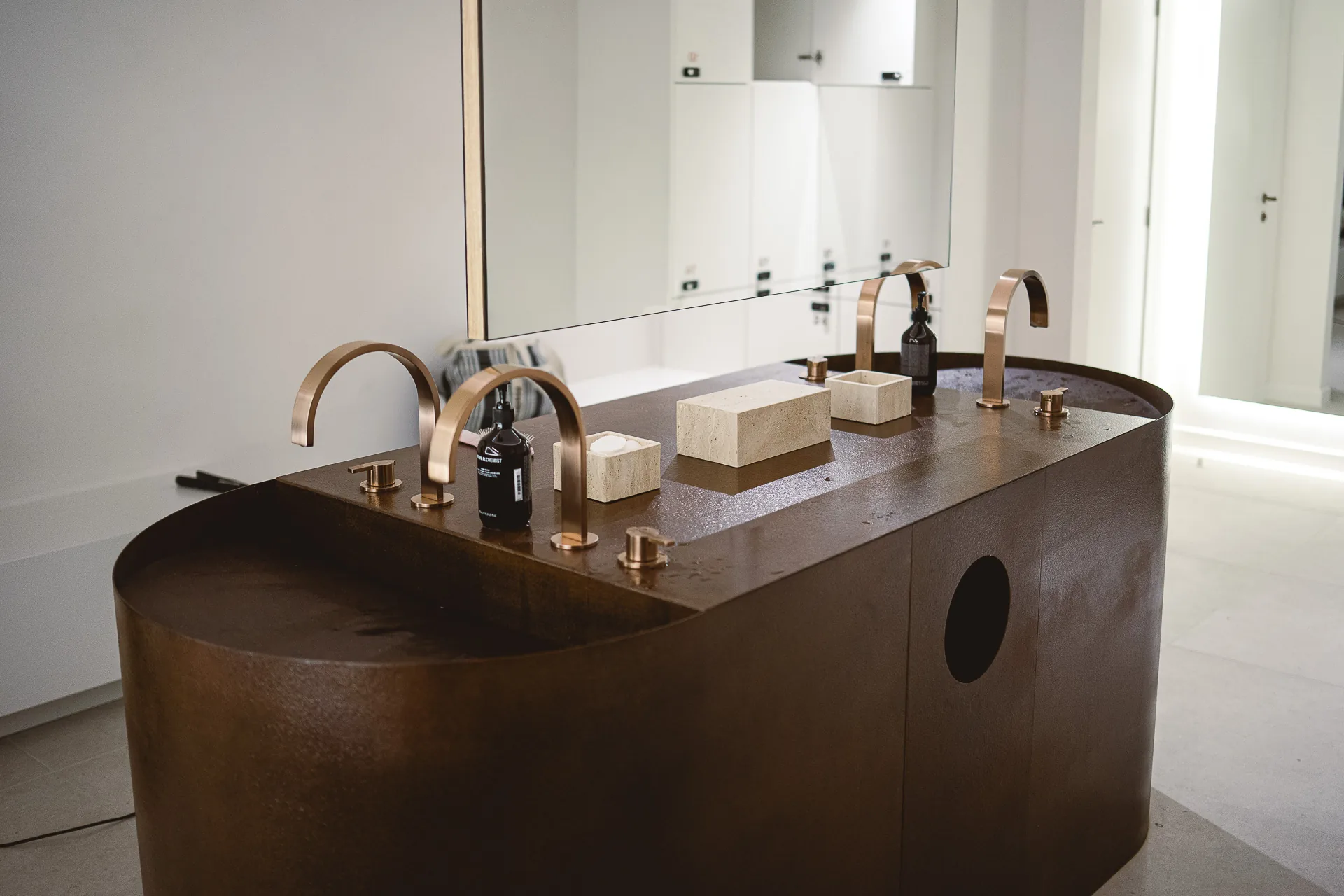
The counter pairs the rammed-earth base with a Corten top made by Béatrice Vancaillie. Corten is neither biobased nor demountable: it is the project's steel element, set on the earth.
It is at end of life that the two biobased finishes part ways, and the difference is worth stating. The Varian panels unscrew from their battens: removal means dismantling, and the envelope is handed back intact. The rammed-earth banquettes, on the other hand, cannot be dismantled; they are broken up, and the rubble returns to the ground, with no additive or binder to separate out.
Both leave the life of the building cleanly, but through two distinct operations: one gives back a component and a wall, the other gives back earth.
Three pieces from the Magazine, around the same build-up.
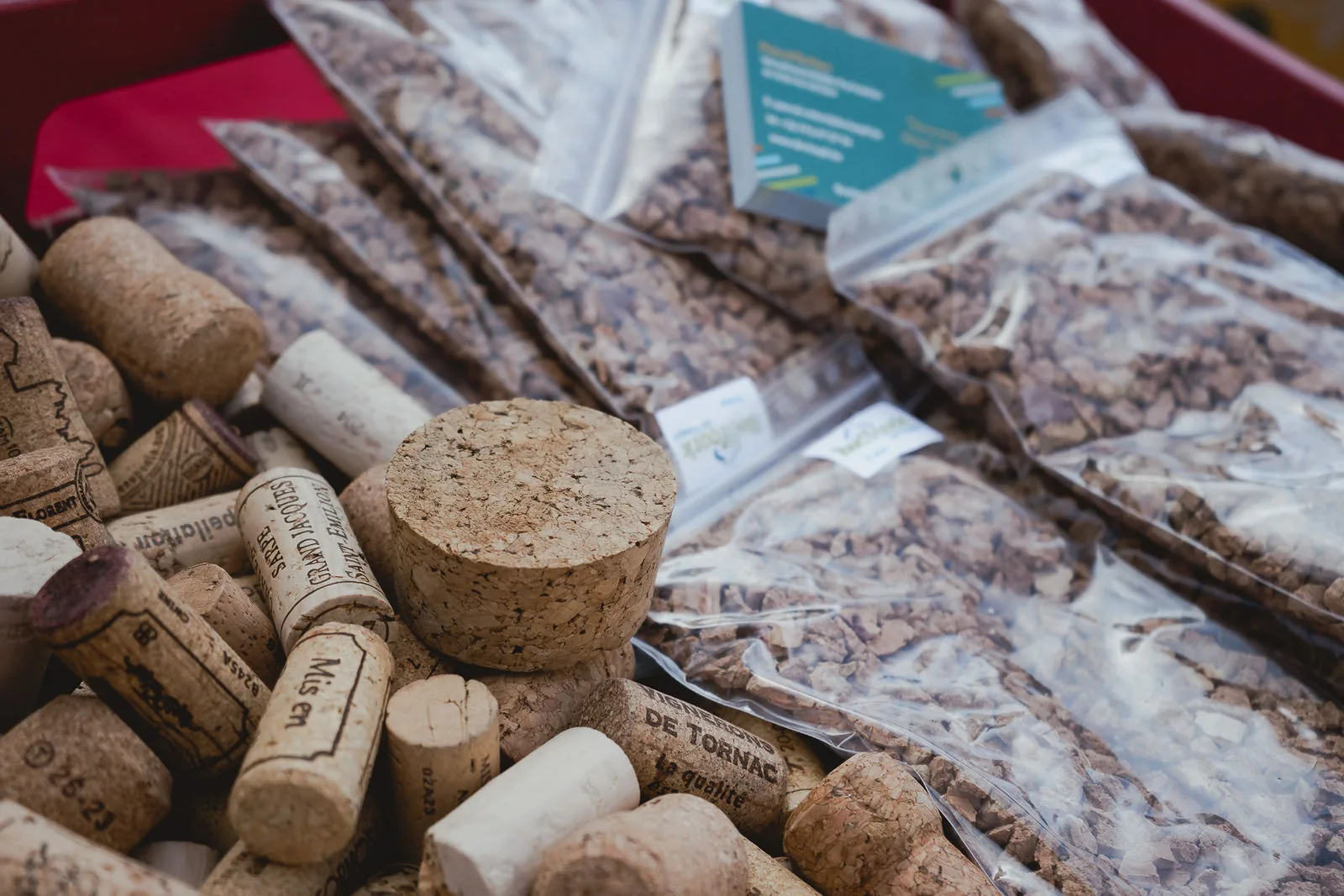
Recycled cork stopper granules, laid loose with no supporting structure, monitored by Buildwise.
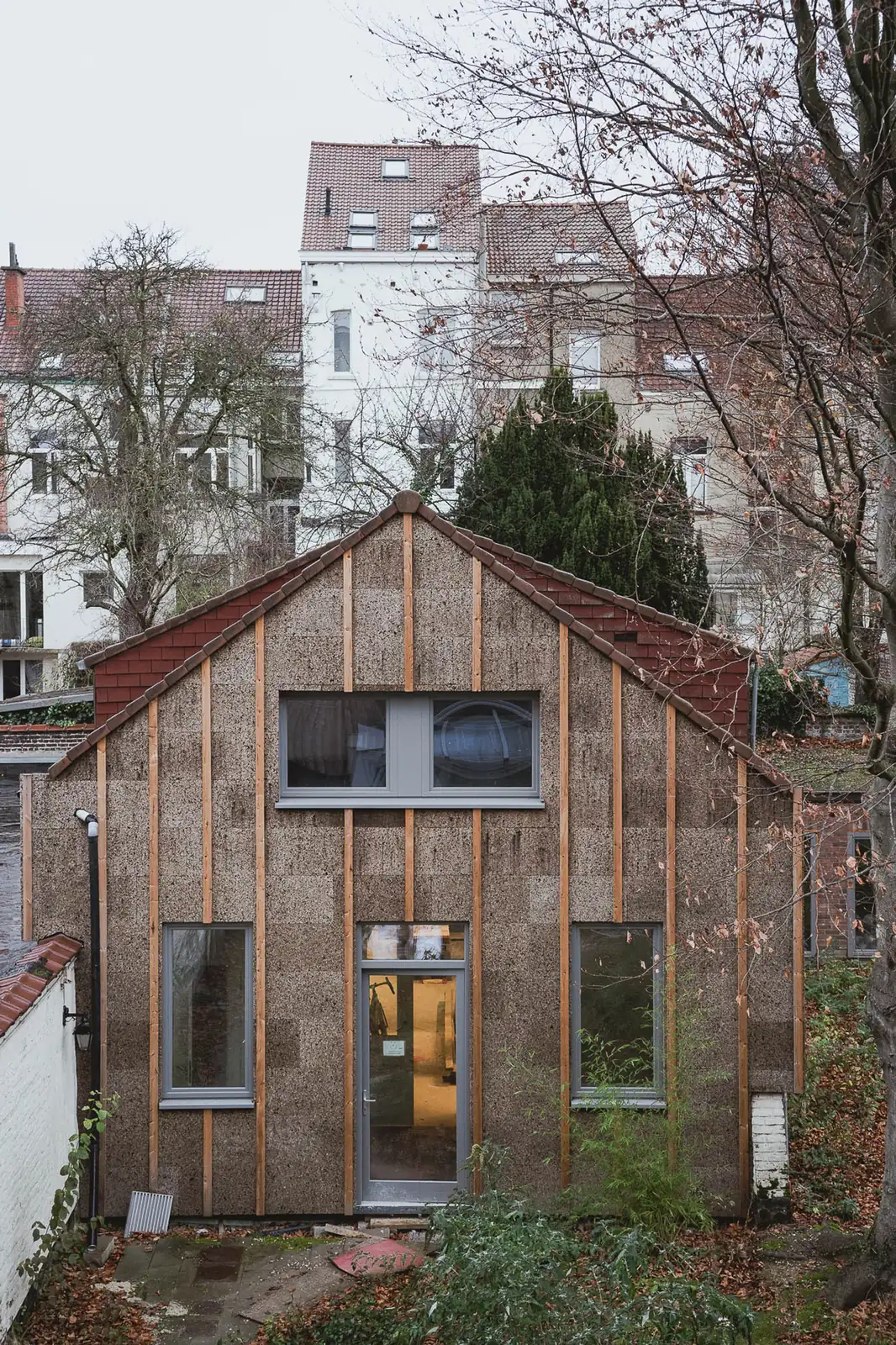
A renovation in which a single layer insulates, withstands the weather and serves as cladding.
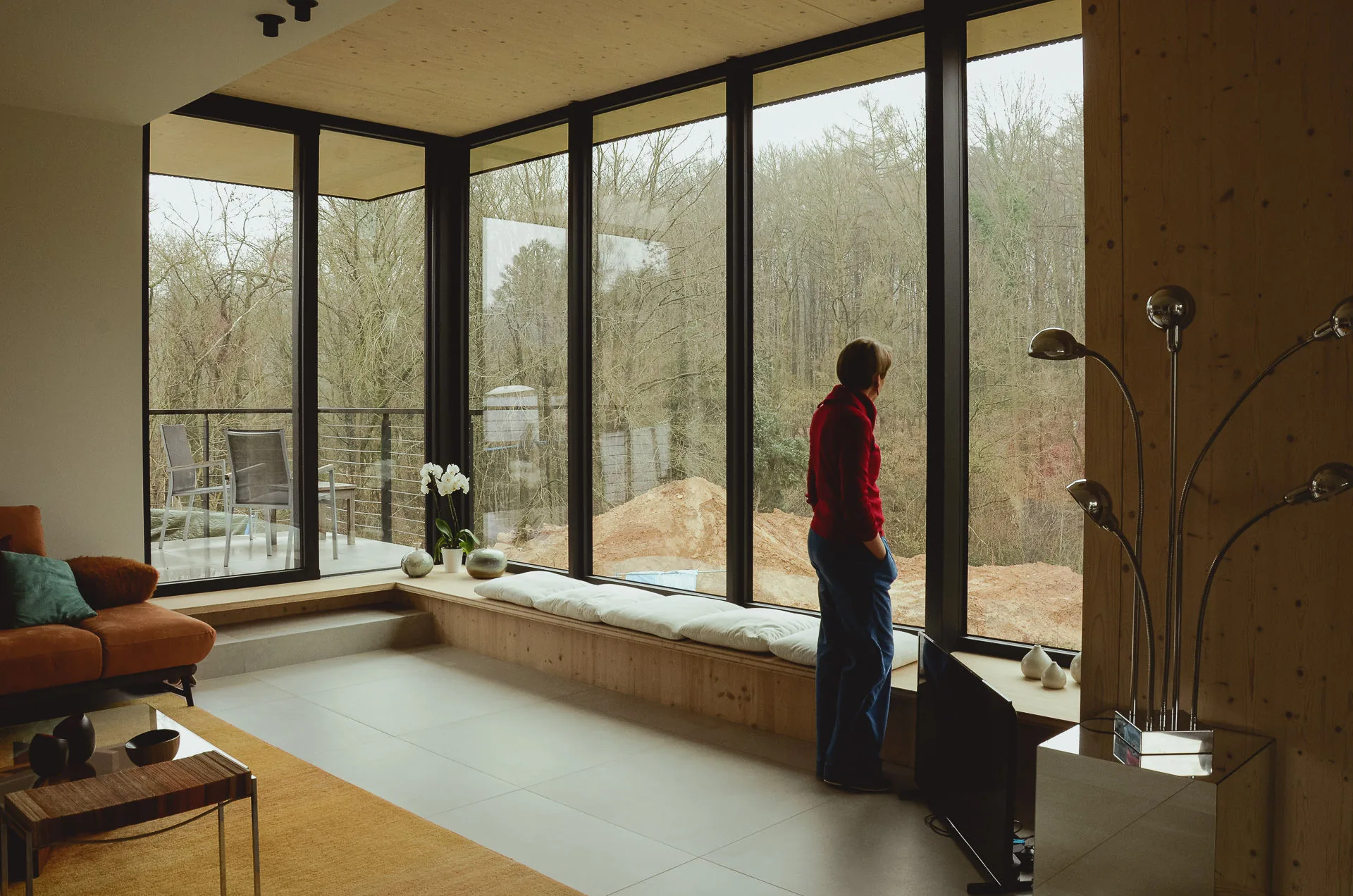
Exposed CLT, a biobased envelope and material continuity from outside to inside.