
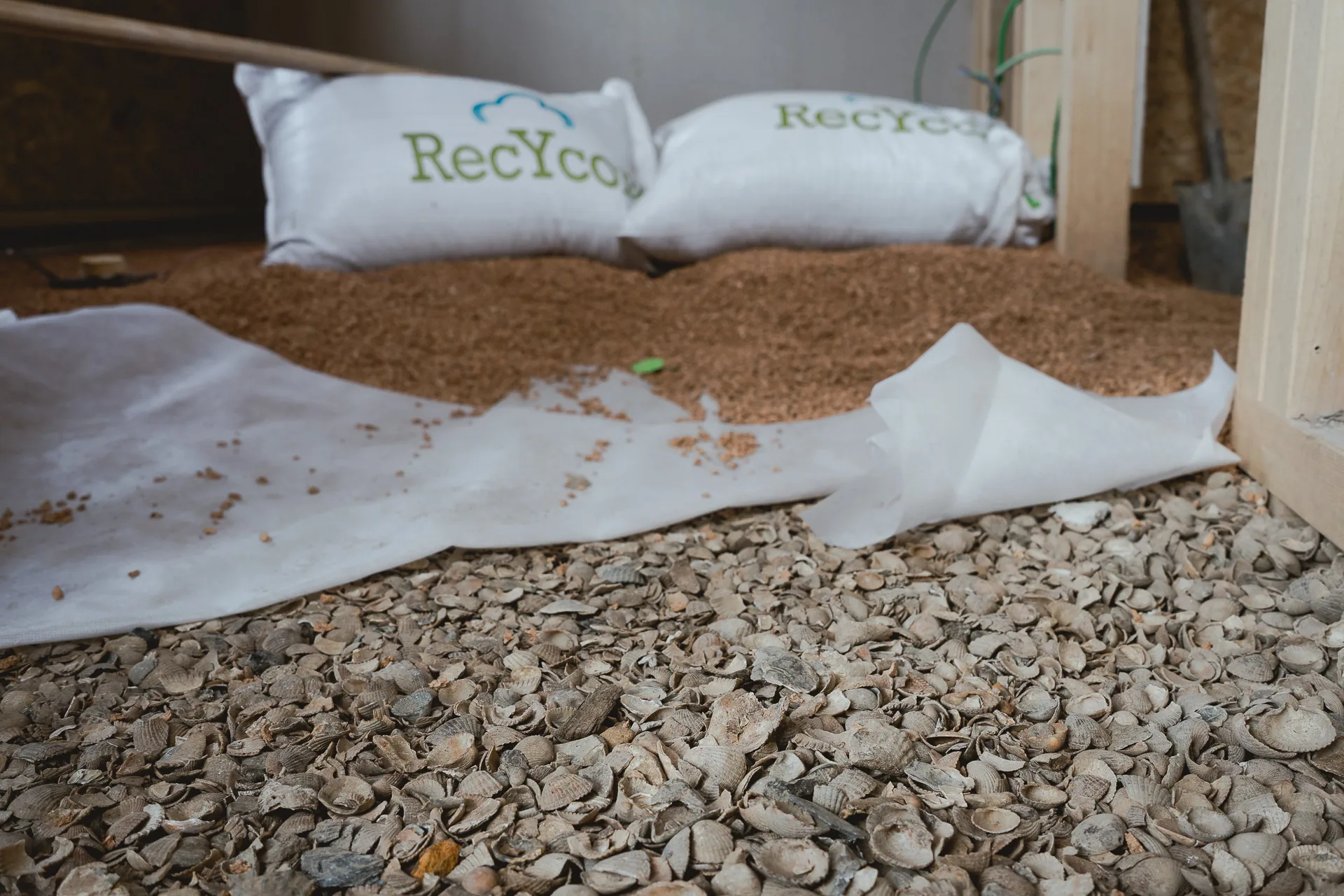
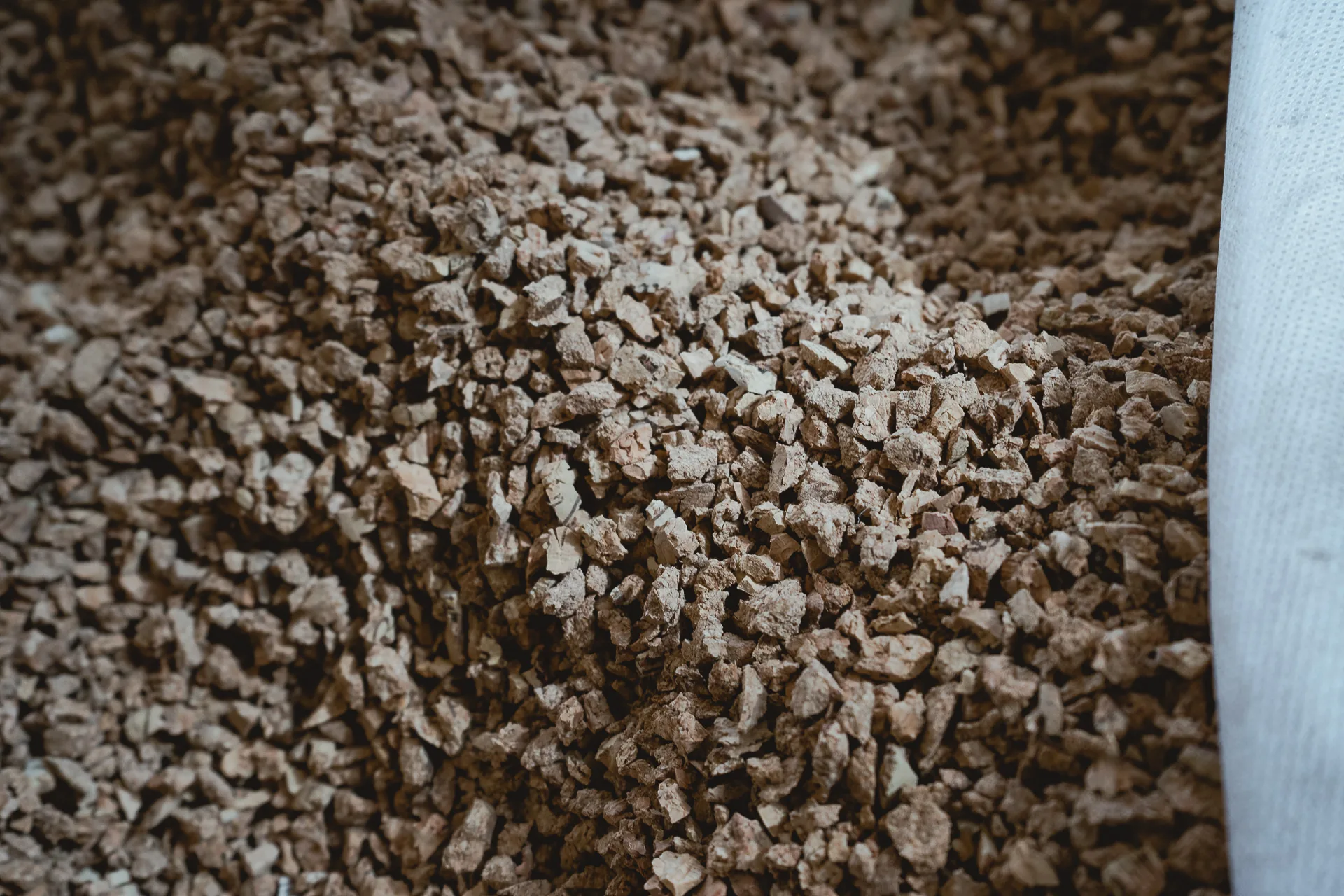
Granules of recycled cork stoppers, laid as loose fill with no supporting structure: circular utopia or genuine technical advance?
And what if this approach paved the way for more rational, more sustainable thinking about how we design our floors, drawing on resources that are already available?
For some months now, Natura Mater and Earth Plant & Fiber (EPF) have been conducting a joint study on Recycork, a biobased and circular insulation made from recycled cork stoppers.
The aim: to test recycled cork laid as loose fill, with no additional structure, within a self-supporting floor build-up. An approach that is both simple and reversible, and that opens the way to new, more sustainable construction practices. The system is being installed under real conditions for the first time on the Greenhouse project, and will be the subject of in-depth technical and environmental monitoring by Buildwise over the coming months.
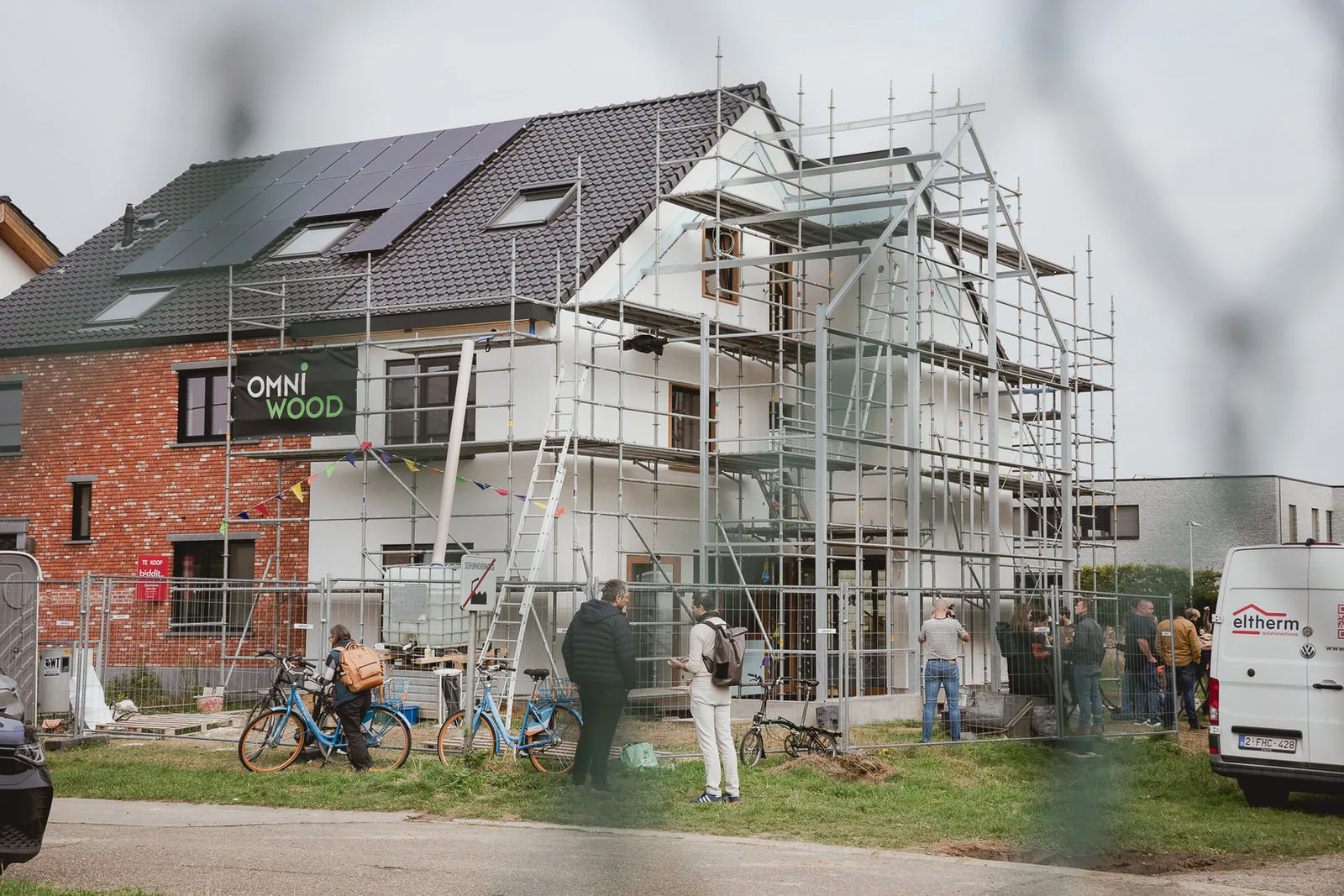
Initiated by Earth Plant & Fiber, Greenhouse is a demonstration site that brings together several circular approaches: a prefabricated timber structure, reused glazing, biobased insulation… and now a 100% circular floor build-up. The project is led by Otik architecture and built by the contractor Eltherm.
Every year, around 90 tonnes of natural cork are collected at Belgian recycling centres, sorted, cleaned and then ground into granules. The result: Recycork, a biobased, local and circular insulation made by recycling a waste product that is almost always incinerated.
Its strengths: the product combines a low carbon footprint, good thermal mass, resistance to moisture and ease of reuse.
Beyond its environmental dimension, the supply chain also has a strong social impact, creating jobs for people on work-integration programmes. Recycork is in fact produced by De Vlaspit, a Flemish non-profit organisation active in the social economy.
Earth Plant & Fiber (EPF) is a coalition of organisations committed to the bioeconomy in Belgium. Its aim: to build bridges between producers, researchers, architects and contractors to speed up the adoption of circular and biobased materials.
As a practice committed to the transition to sustainable construction, Natura Mater is an active member of the coalition and works regularly with the other members on material development. In particular through technical and environmental advice, contributing to practical projects such as BOOST Recycork: a development programme aimed at improving the technical performance of the product and redefining its applications.
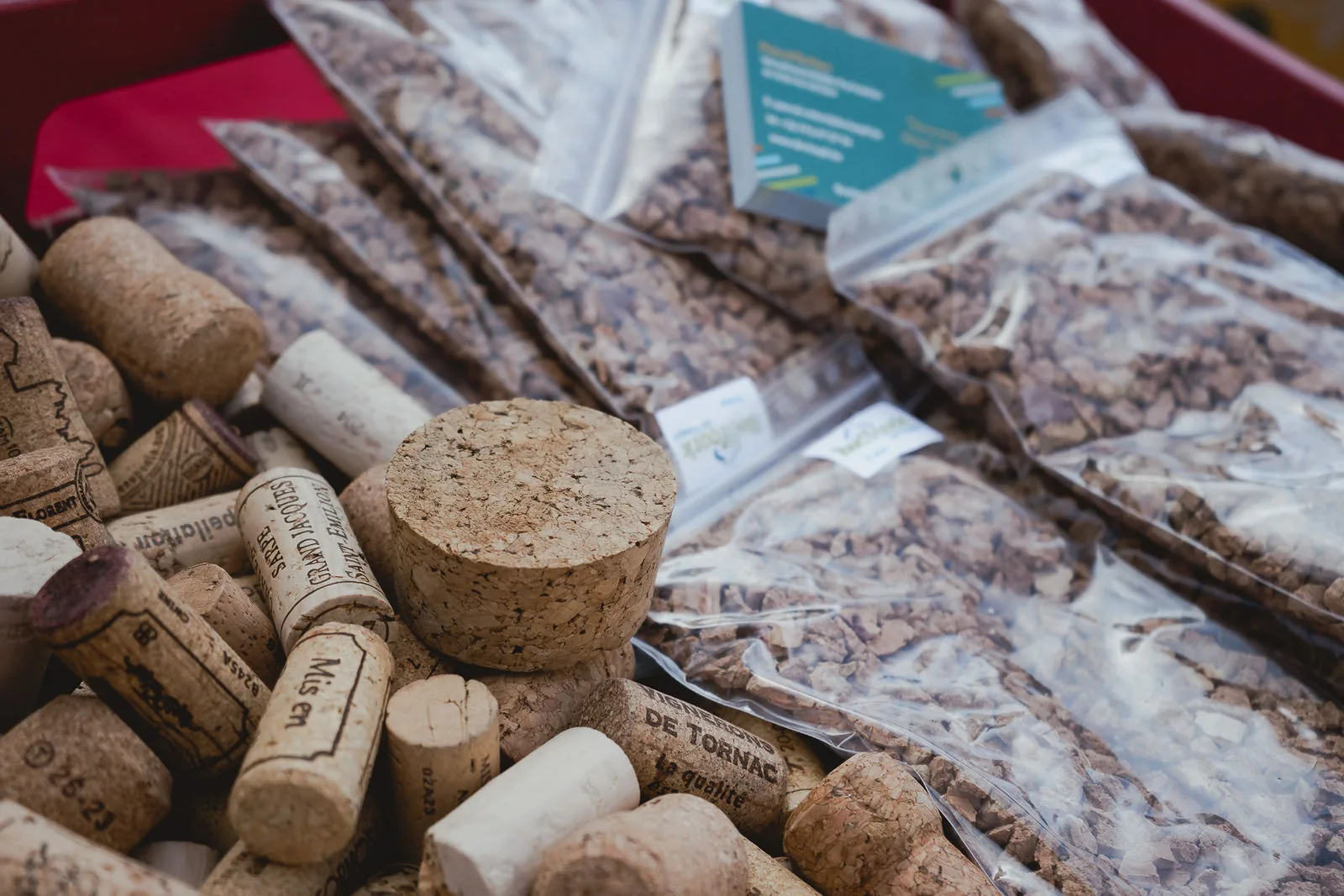
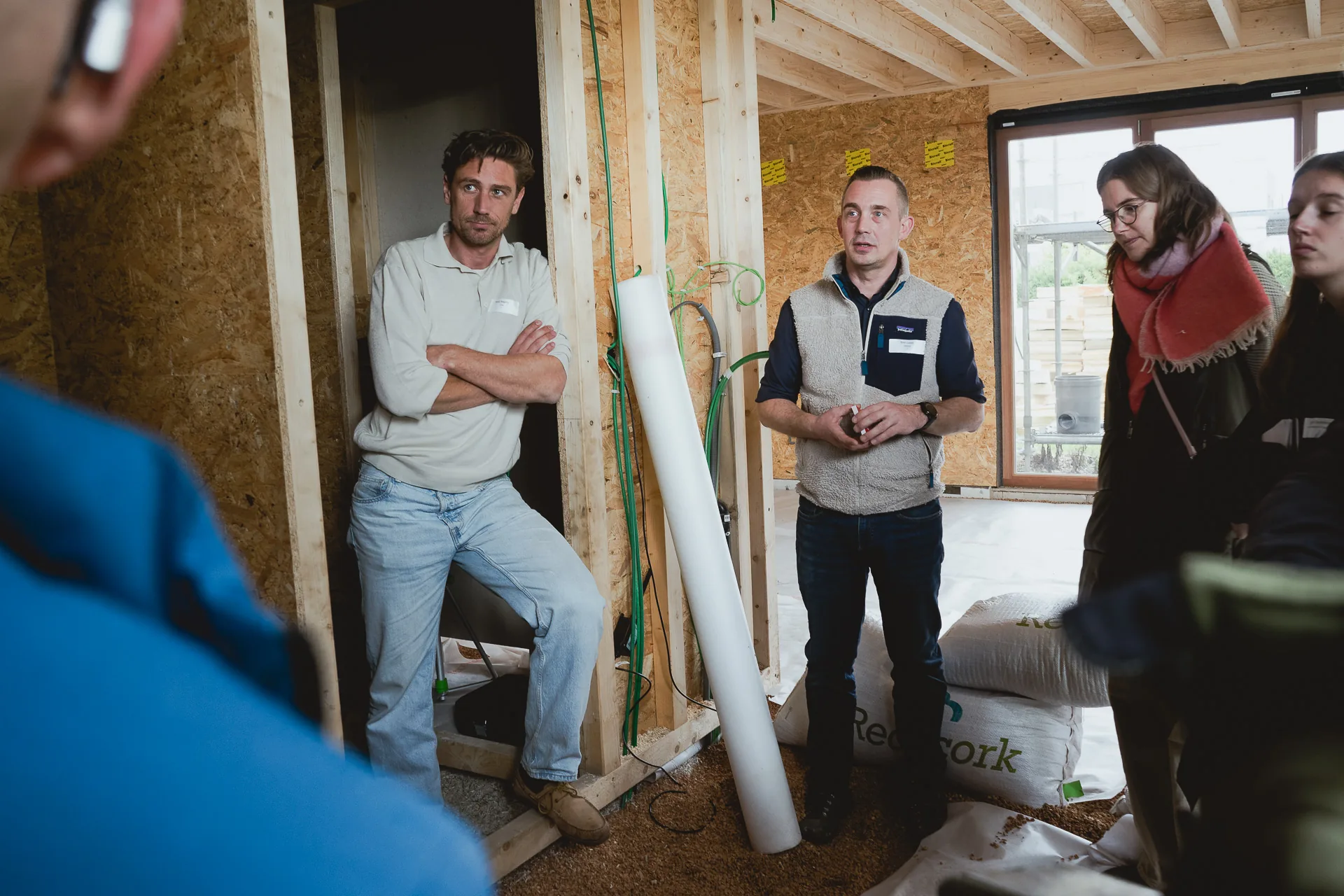
Thanks to its properties, cork offers a wide range of possible applications: render, blown insulation, insulating mats or boards, among others. In our study, we focused our trials on two practical installations: loose-fill insulation between structural members (already tested, with very convincing results) and, as here, use as a loose-fill insulation layer in a ground-floor or suspended-floor build-up.
Given the unusual nature of this pilot project and the unique opportunity to test the performance of several biobased materials in situ, Buildwise joined the trial by installing sensors at the heart of the build-up, providing technical monitoring over the months, to assess changes in moisture content, mechanical stability and the durability of the material under real conditions.
This monitoring will allow us to describe the behaviour and performance of this circular, innovative and promising build-up even more precisely.
Tests carried out by researchers at KU Leuven have shown encouraging performance, confirming the technical potential of this approach.
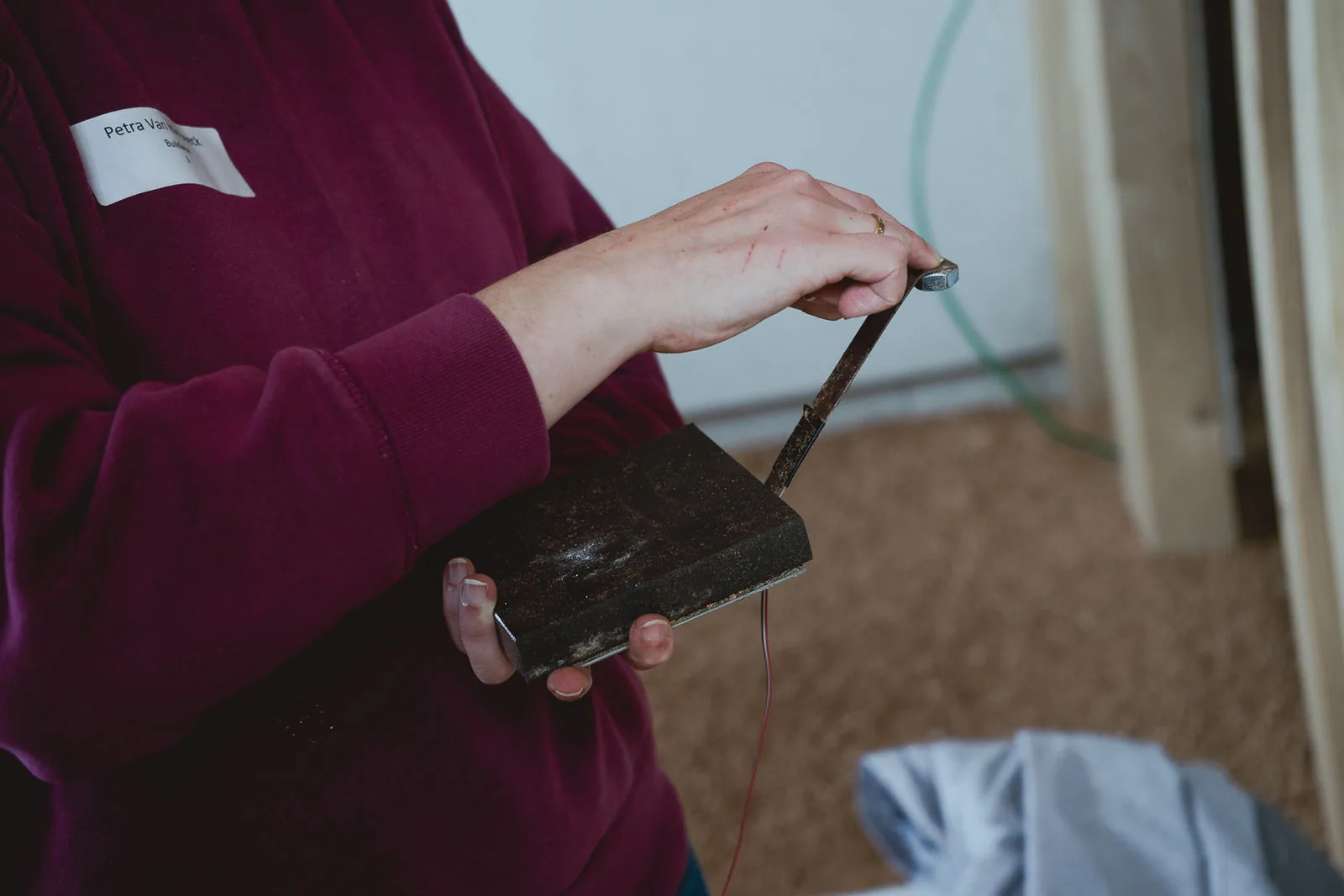
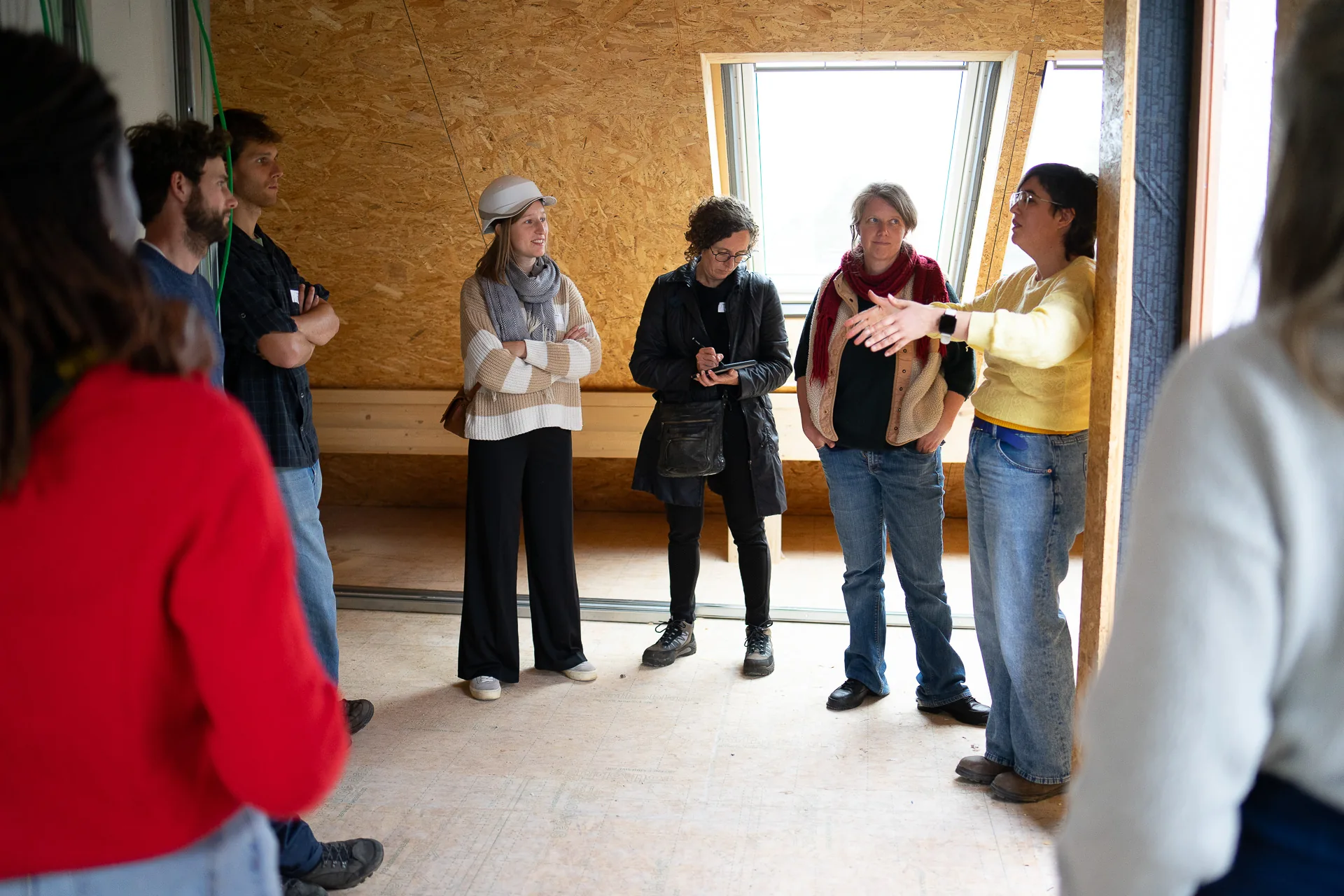
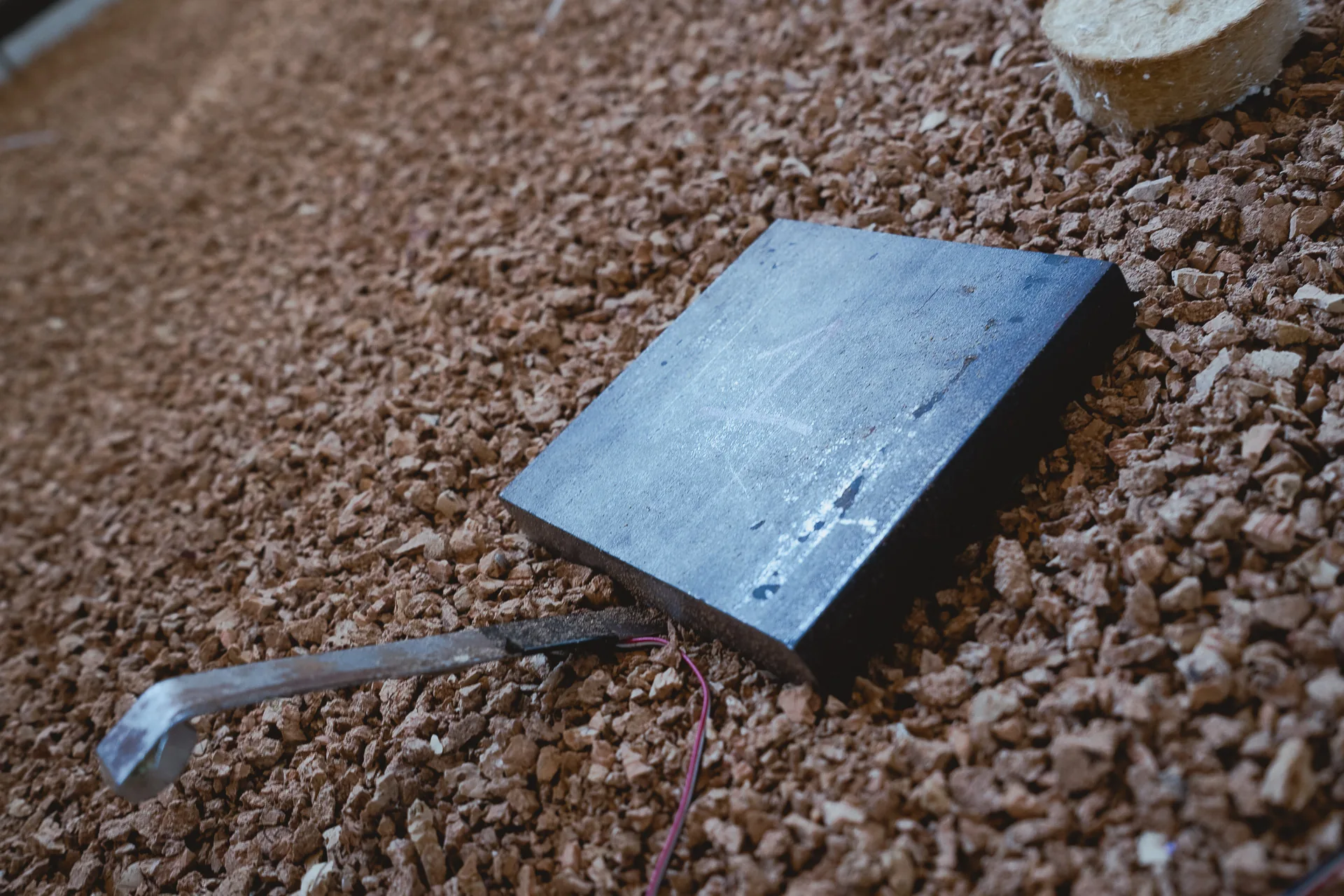
This second application had never before been used on site.
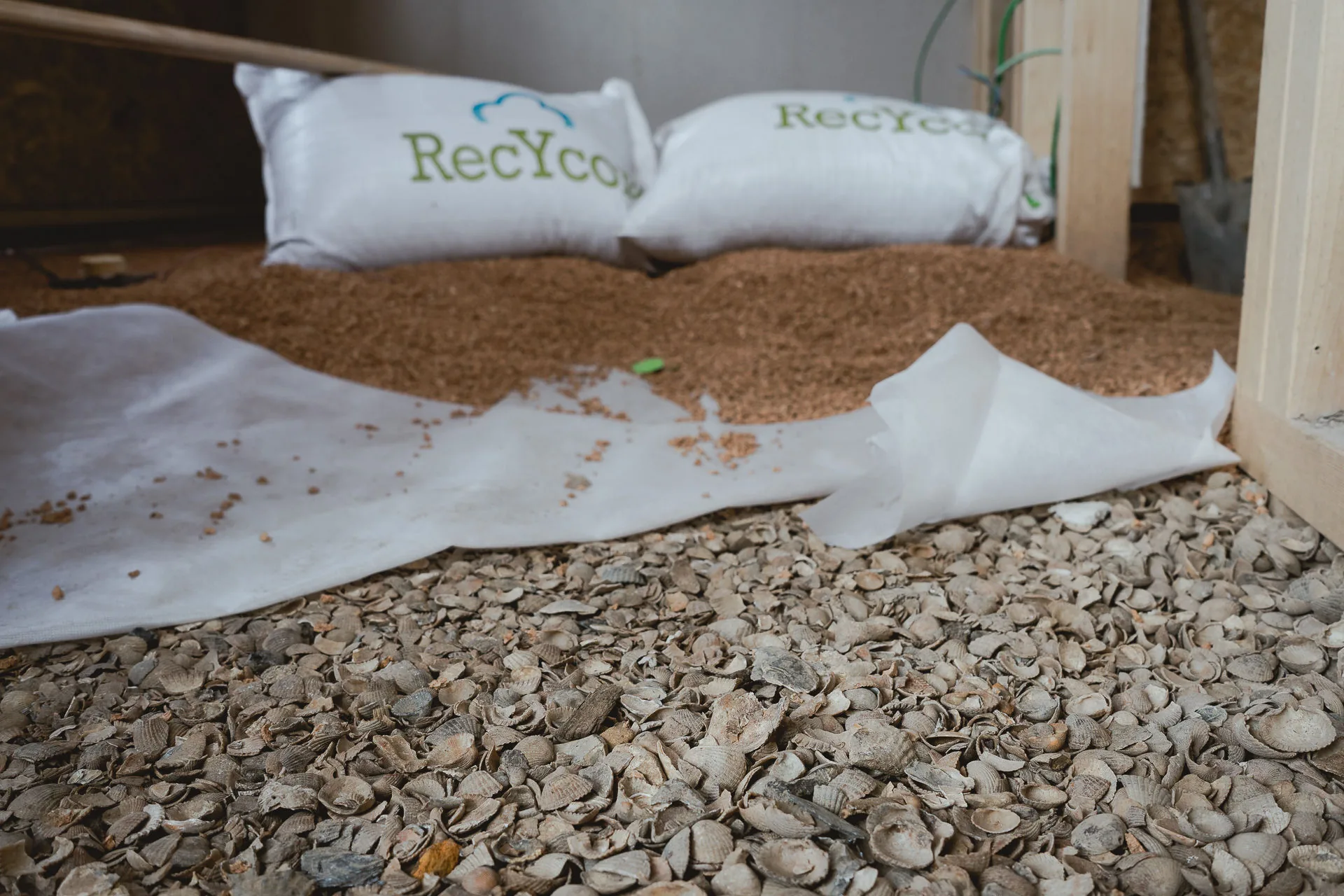
Ground floor, almost the entire area. Layers separated by a vapour-open membrane.
The layers are simply separated by a vapour-open membrane, to make dismantling and future reuse easier. The first feedback from site is encouraging: Recycork is easy to lay and level, with no dust or odour; the settlement observed is low and even; and its lightness makes it easy to handle on site.
One constraint did emerge during installation, however: the granules shifting locally under the workers' feet. Although the granules bear distributed loads well, laying them loose makes it harder to move around the site and to install the elements that make up the upper layer.
To solve this problem, a honeycomb structure was added to stabilise the surface during this phase. A lightweight structure intended simply to stabilise the insulation, making it easier to lay the underfloor heating and pour the screed.
This temporary fix opens the way to other stabilisation options now being studied for future sites. That is the whole point of a full-scale test: finding out the limits of the build-up and looking for ways to overcome them on future projects.
Data from the Natura Mater × Earth Plant & Fiber study, Greenhouse project (Tienen). Buildwise technical monitoring in progress. Mechanical tests by KU Leuven.
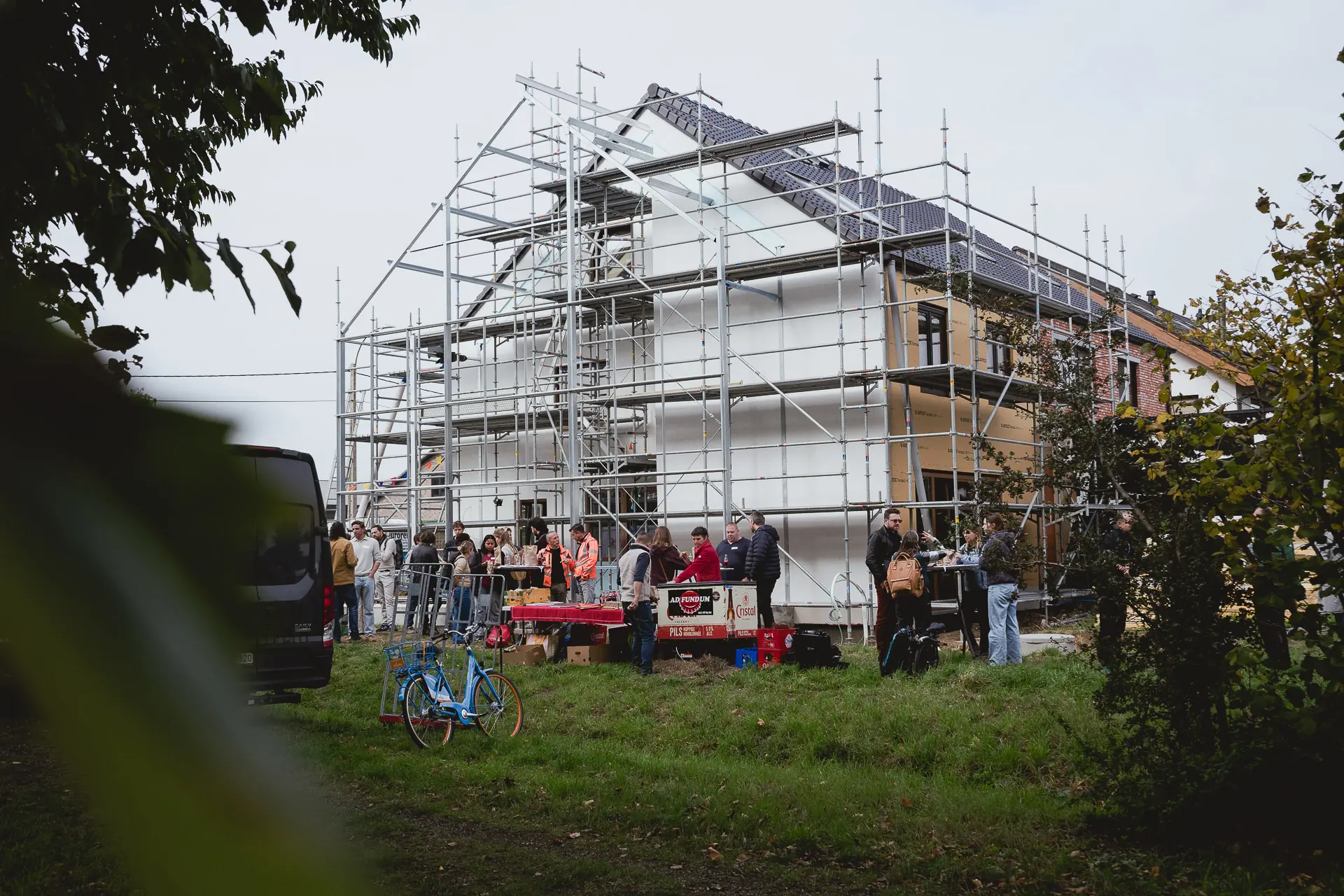
Work on the Greenhouse site will continue until the end of 2025. In the meantime, several actions are under way: collecting and analysing the sensor data, updating the Recycork technical data sheet, and an awareness campaign to increase cork collection at regional level. The aim is to be able to use this resource on a larger scale in the future.
For Natura Mater and EPF, the project is a fine illustration of the current challenges of sustainable construction: regulatory complexity, the cost of certification and the need for suitable support for local and social initiatives. But it also reflects a positive momentum: that of a sector getting organised, innovating pragmatically and making a concrete contribution to reducing the carbon footprint of buildings with recycled and circular materials, with a good dose of innovative spirit.
Our thanks to our partners in this project, and to the open, ambitious and participatory spirit of everyone involved, in particular Rein Dessers (EPF and architect), Roel Coose (Eltherm), Sarah Beuls (OTIK) and the whole Recycork team. Natura Mater is proud to contribute to this collective project, alongside committed partners, to build, step by step, a future in which sustainable construction goes hand in hand with inclusion, circularity and local roots.
Three pieces from the Magazine, around the same build-up.
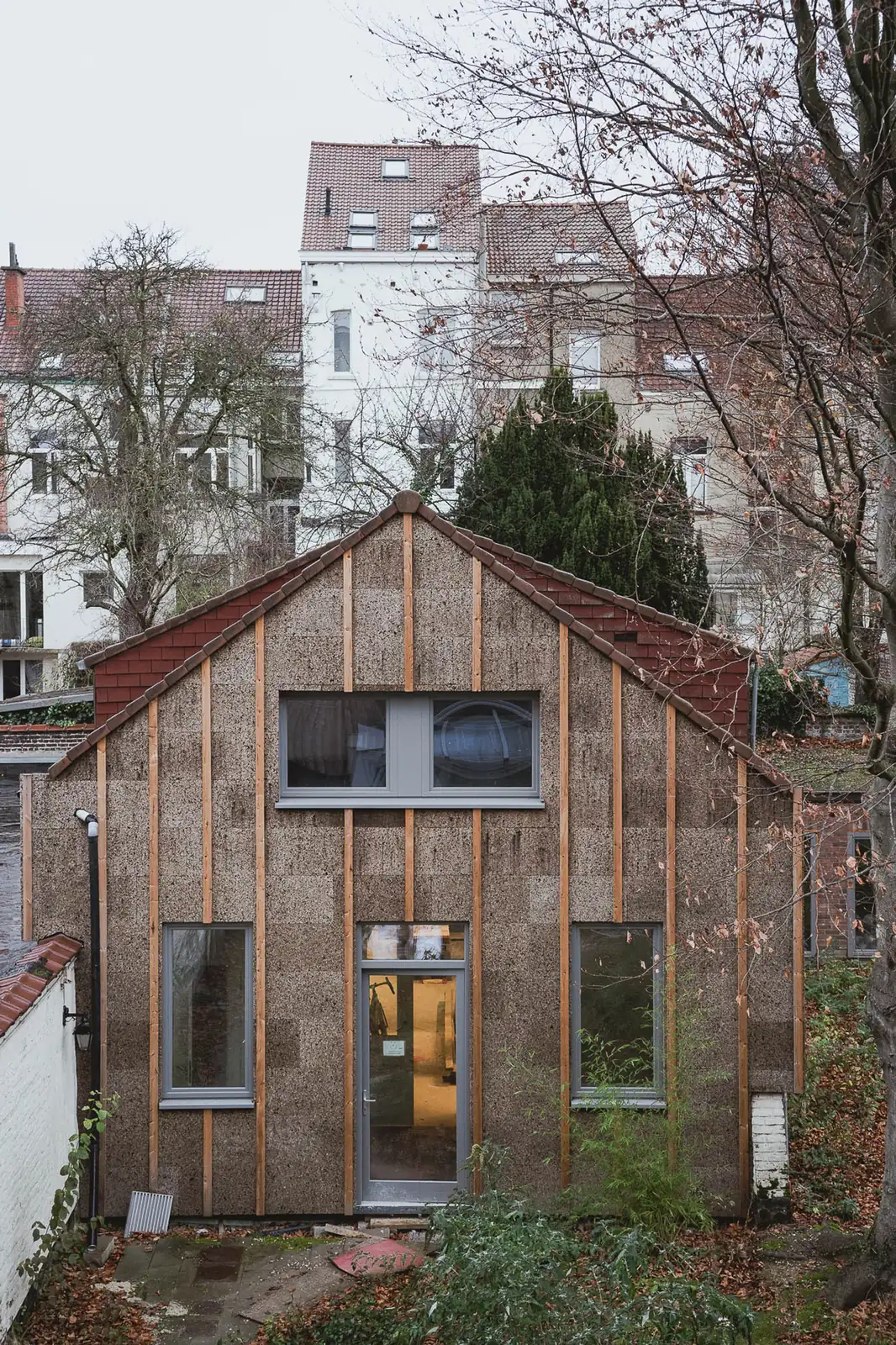
A renovation in which a single layer insulates, withstands the weather and forms the cladding.
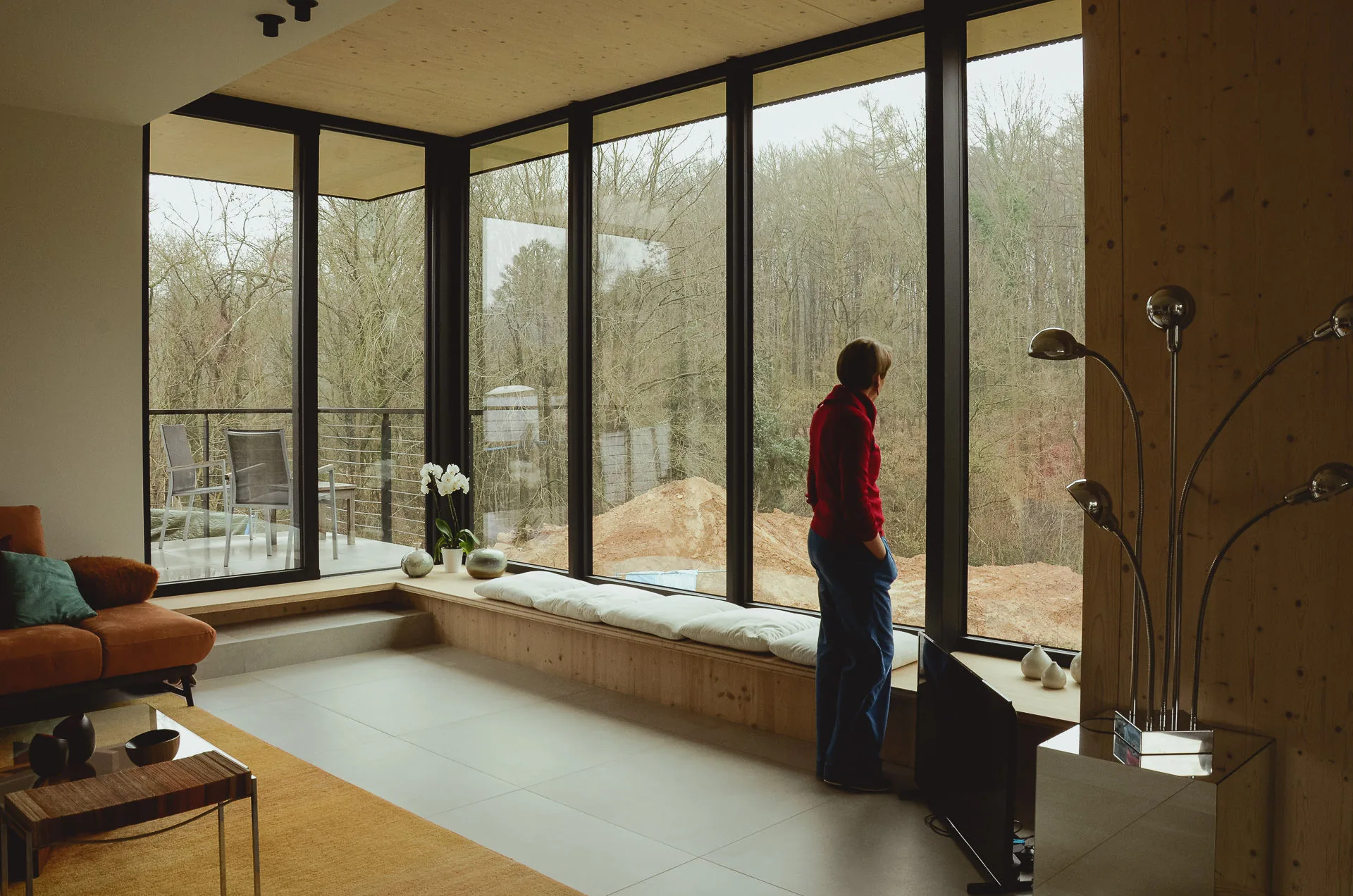
Exposed CLT, a biobased envelope and material continuity from outside to inside.
From roadside grass to insulation: 180,000 m³ a year produced in Auvelais.