
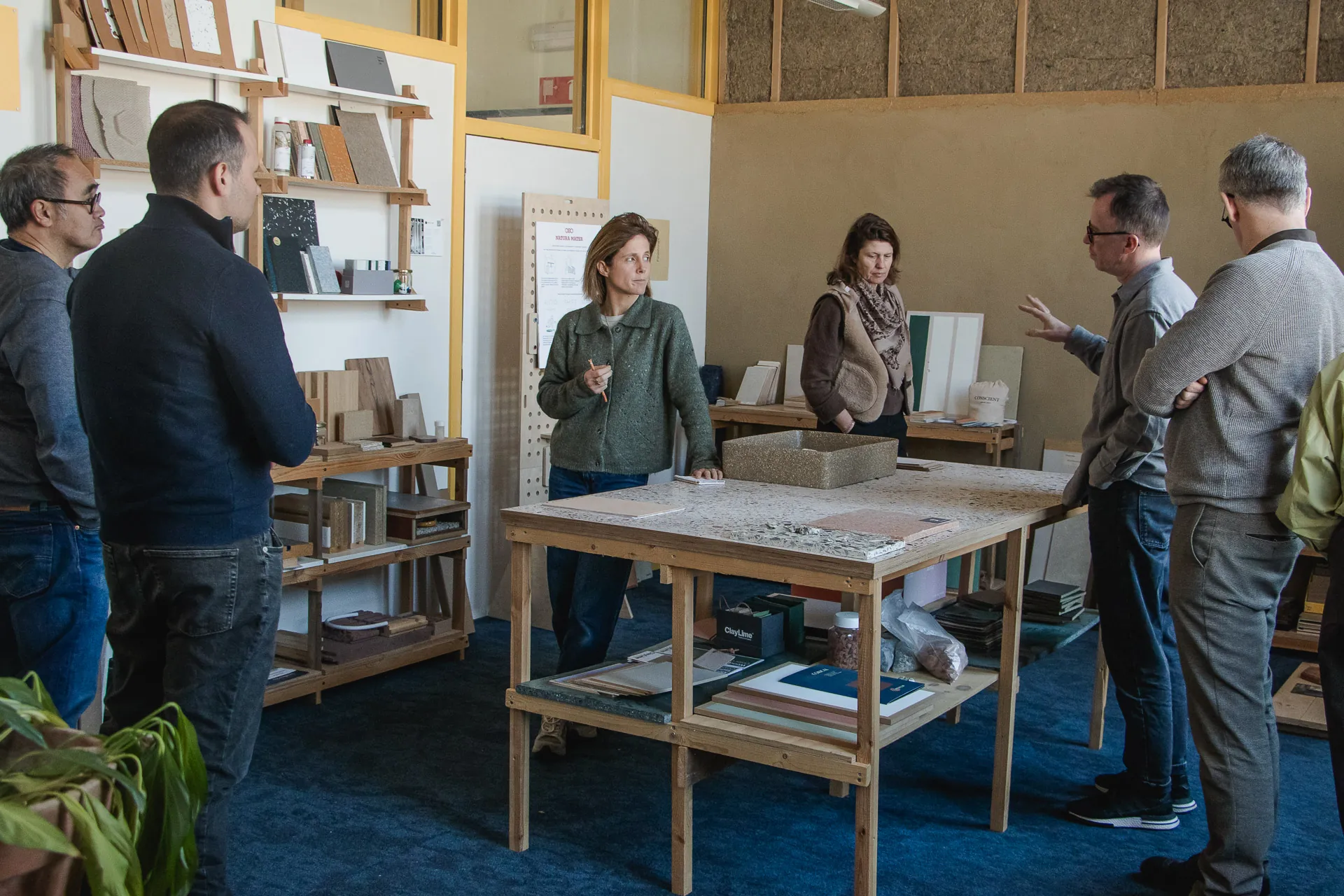
Natura Mater teaches its Master Class in eight modules, from an overview of low-impact materials through to the regulatory framework. It is taught at the Materatek, among the samples it discusses.
The most consequential decisions are made in the earliest stages of a project, while its carbon trajectory can still change. That is the window the training aims at, and it is a narrow one.
Once it has passed, weighing up materials comes down to marginal substitutions, one product swapped for another of equivalent performance, with no change to what really carries weight: the structural system, the thickness of the envelope, the quantity of material used. Training a designer to weigh up these trade-offs is only worthwhile if there is still something left to weigh.
The framework is Avoid · Shift · Improve: avoid material where the project can do without it, switch material where it cannot, improve what remains. The eight modules apply it layer by layer, from the structural system to the regulatory documentation, on real cases.
The Master Class is aimed at architects, engineers, engineering consultancies and developers. Each module lasts two hours and can be taken on its own.
The Materatek is not a training backdrop. It is Natura Mater's working library, and the sessions are held there because that is where the materials are.
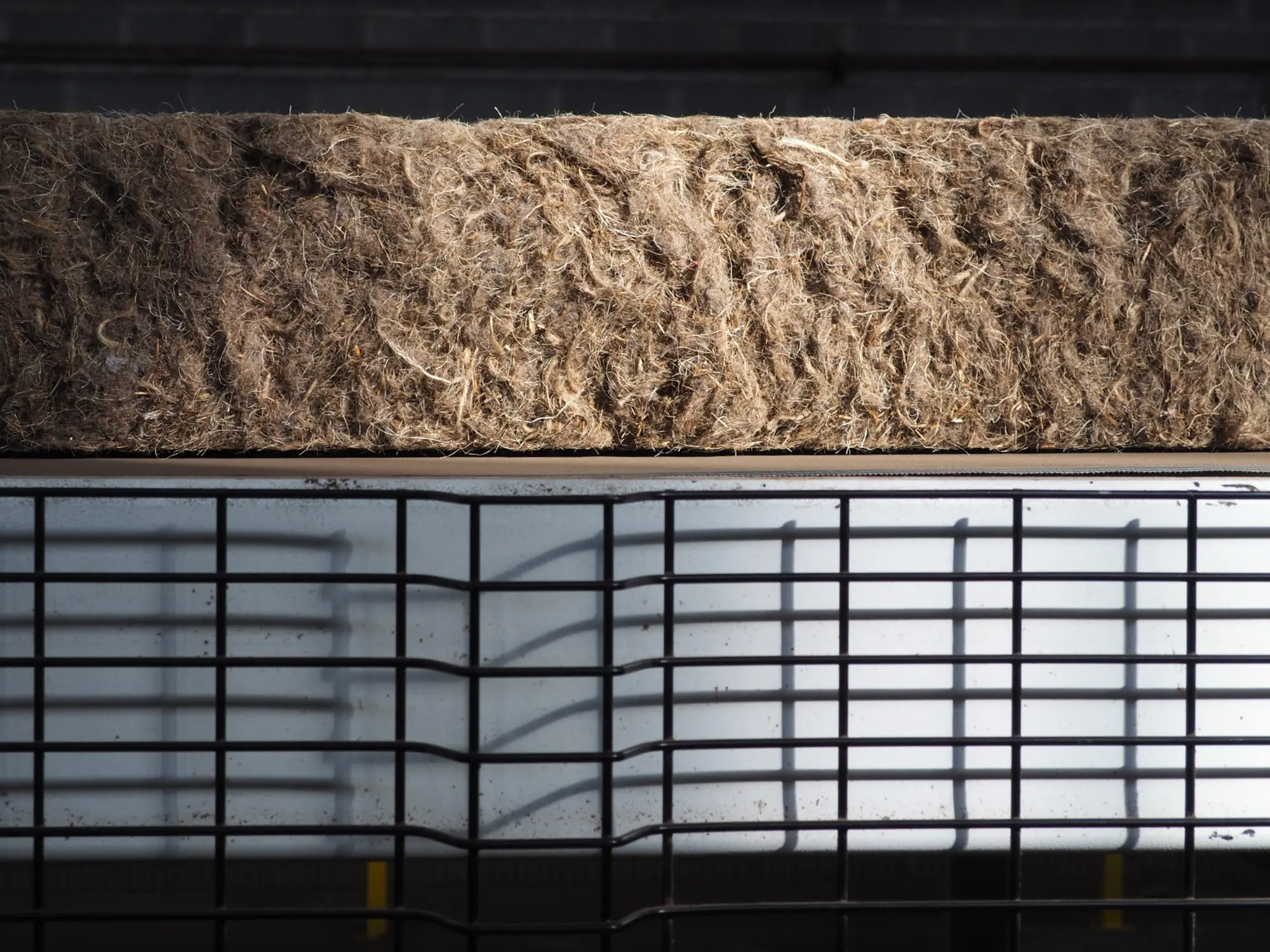
A grass-fibre board, a compressed earth block and a sheet of expanded cork cannot be compared on a data sheet. You pick them up, look at the cut edge, and set side by side the thicknesses each one needs for the same thermal resistance. The difference becomes project data, no longer a line in a table.
Architect, engineer or property developer, you come away with the trade-off matrices, the orders of magnitude for embodied carbon and the deliverables expected at tender stage: enough to turn a low-carbon ambition into decisions you can defend to a client.
Three pieces from the Magazine, on materials handled in the modules.