
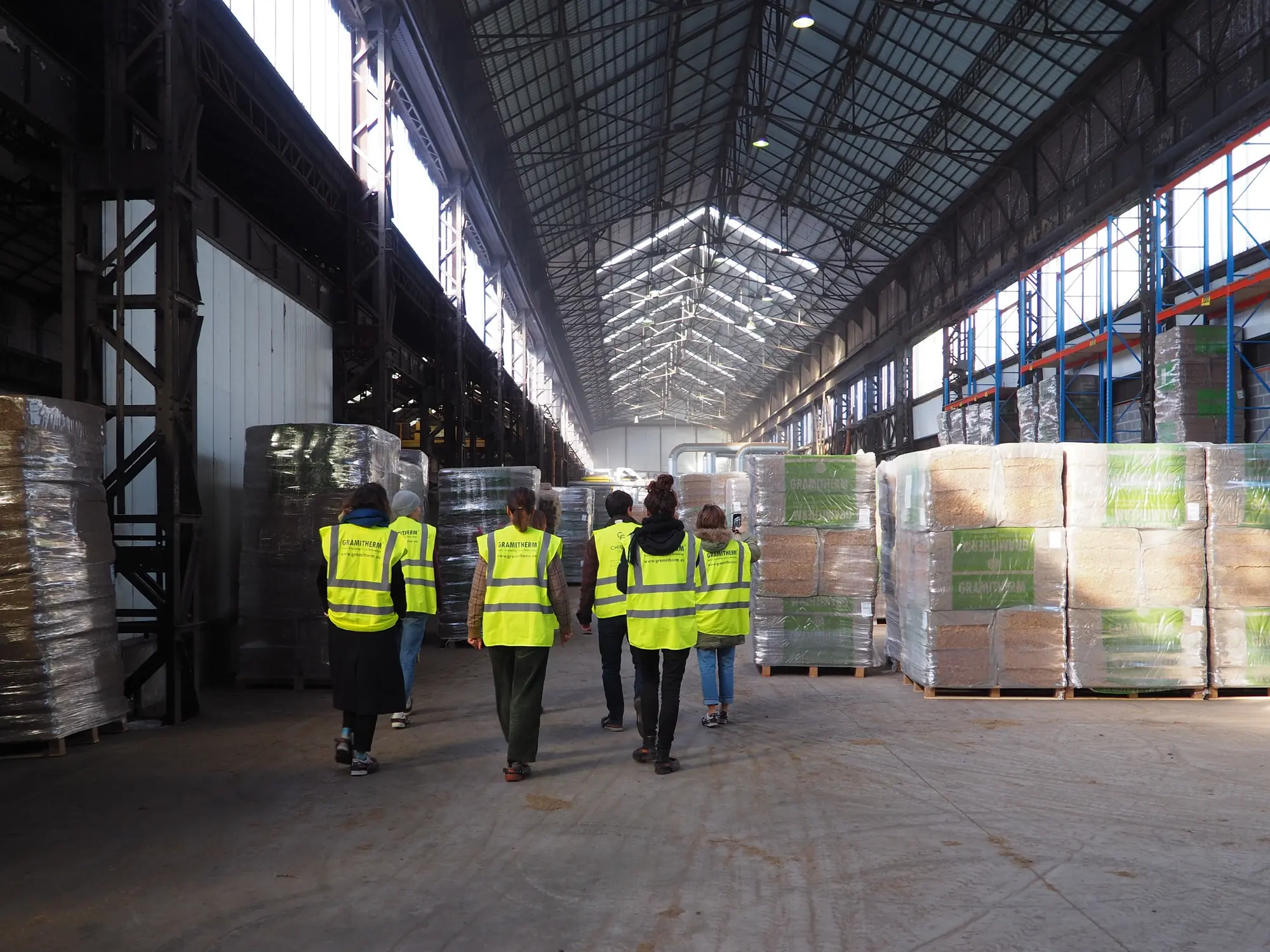
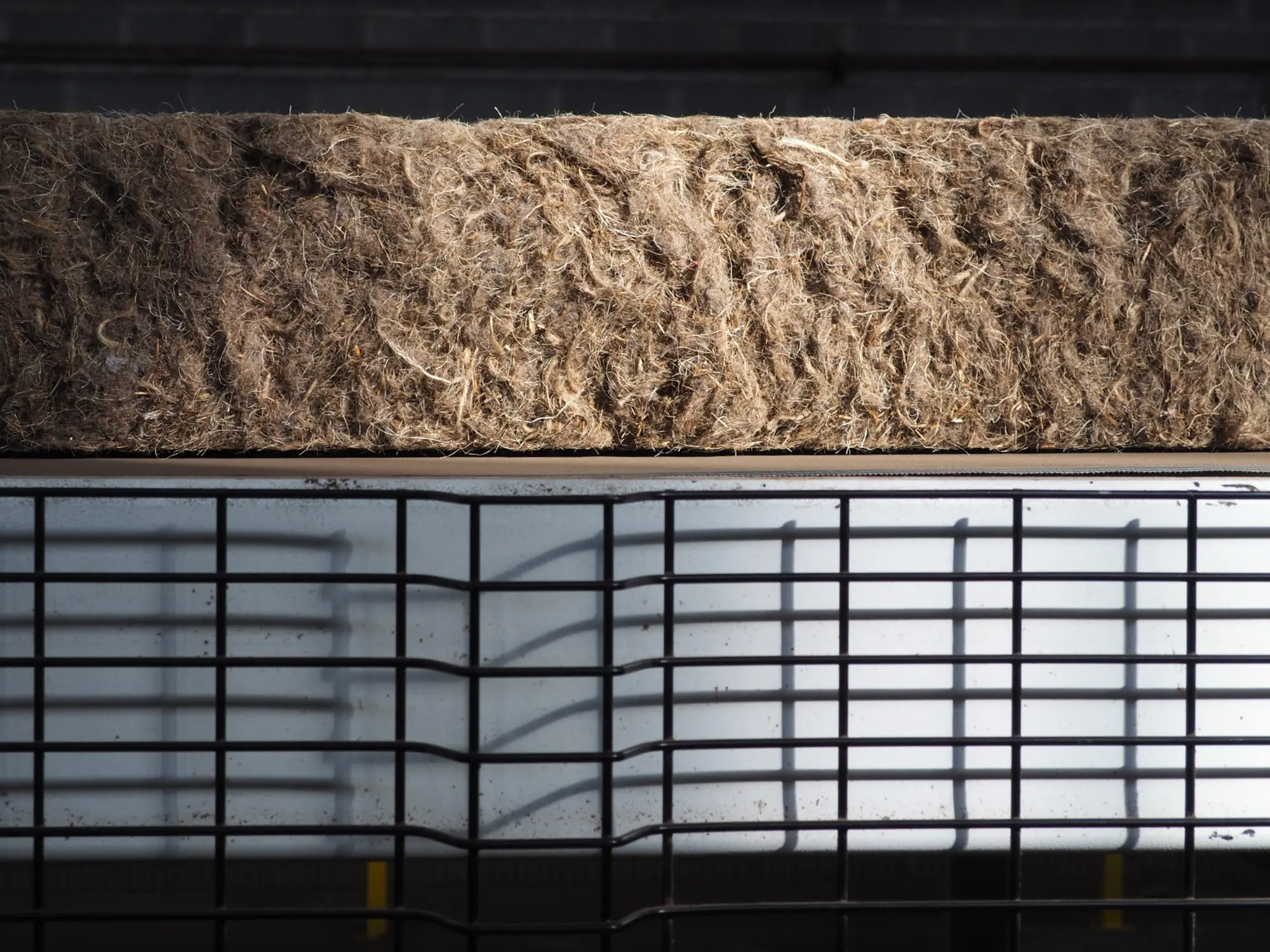
For 15 years, Gramitherm has been developing an insulation material made from grass residues. Since 2022 the company has been based in Belgium, in Auvelais, where it produces its boards and rolls for construction.
The grass used comes from areas excluded from the food chain: road verges, airports, wetlands. The association that maintains these areas cuts around 1.5 million tonnes of grass a year.
Just 2.2% of this quantity is enough to run the production line at full capacity, with an output of 180,000 m³ of insulation a year, the equivalent of 3,000 insulated houses.
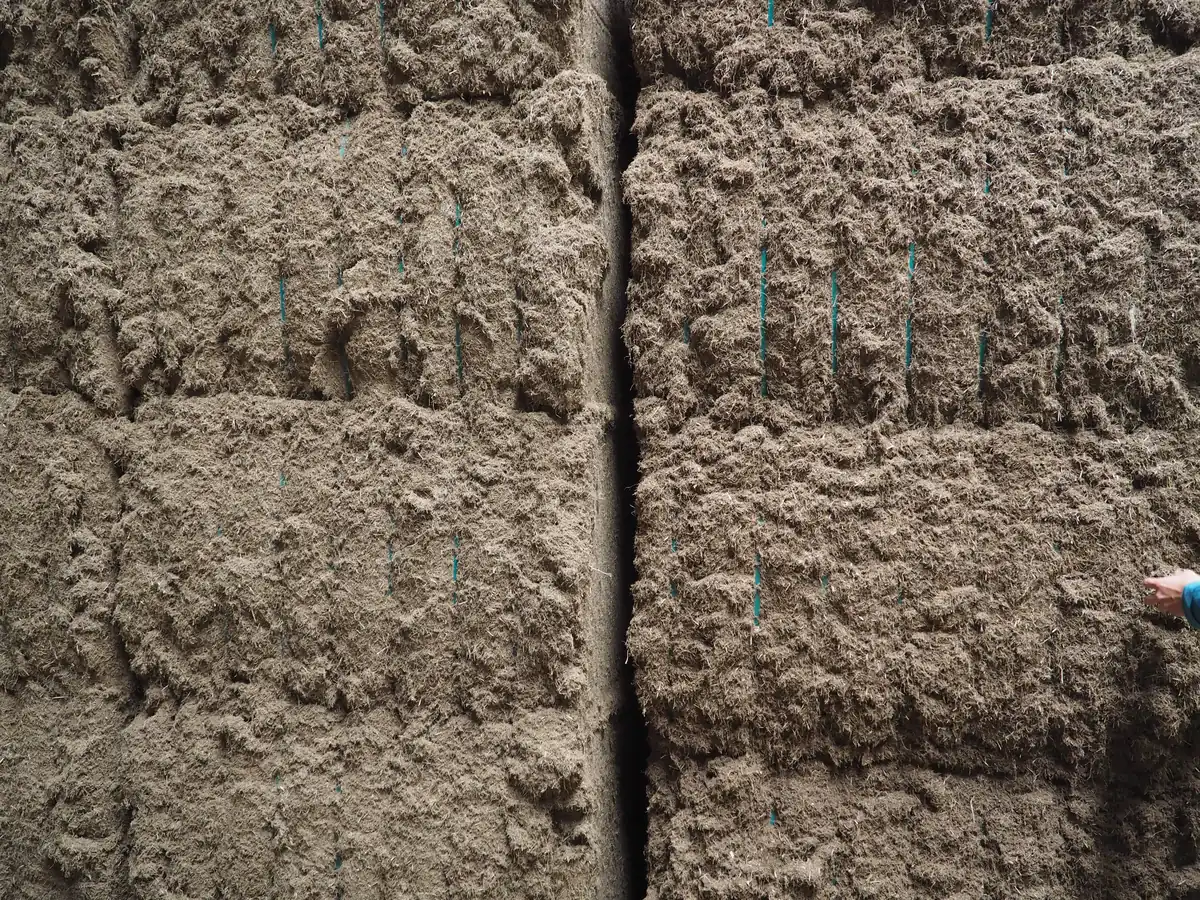
Once the grass has been collected, the juice and the fibre are separated. The juice is turned into biogas, which is used to dry the fibre.
Grass fibre makes up 72% of the raw material of the finished board. It is mixed with 20% jute fibre and 8% synthetic fibre, the latter being needed to bind the fibres together.
The mix is compressed and then spends two minutes in an oven at 160 °C, a short bake that uses considerably less energy than the manufacture of a conventional insulation material.
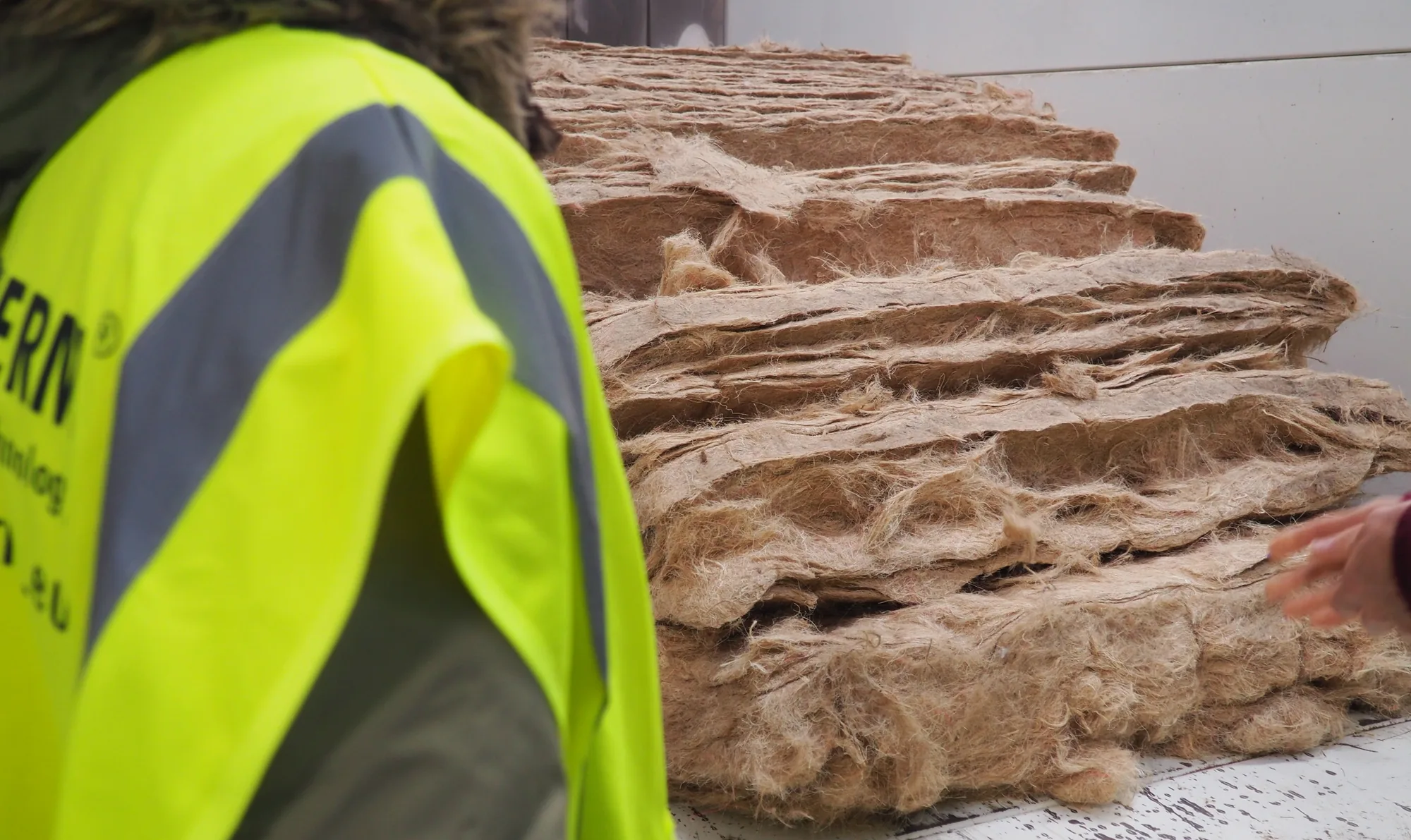
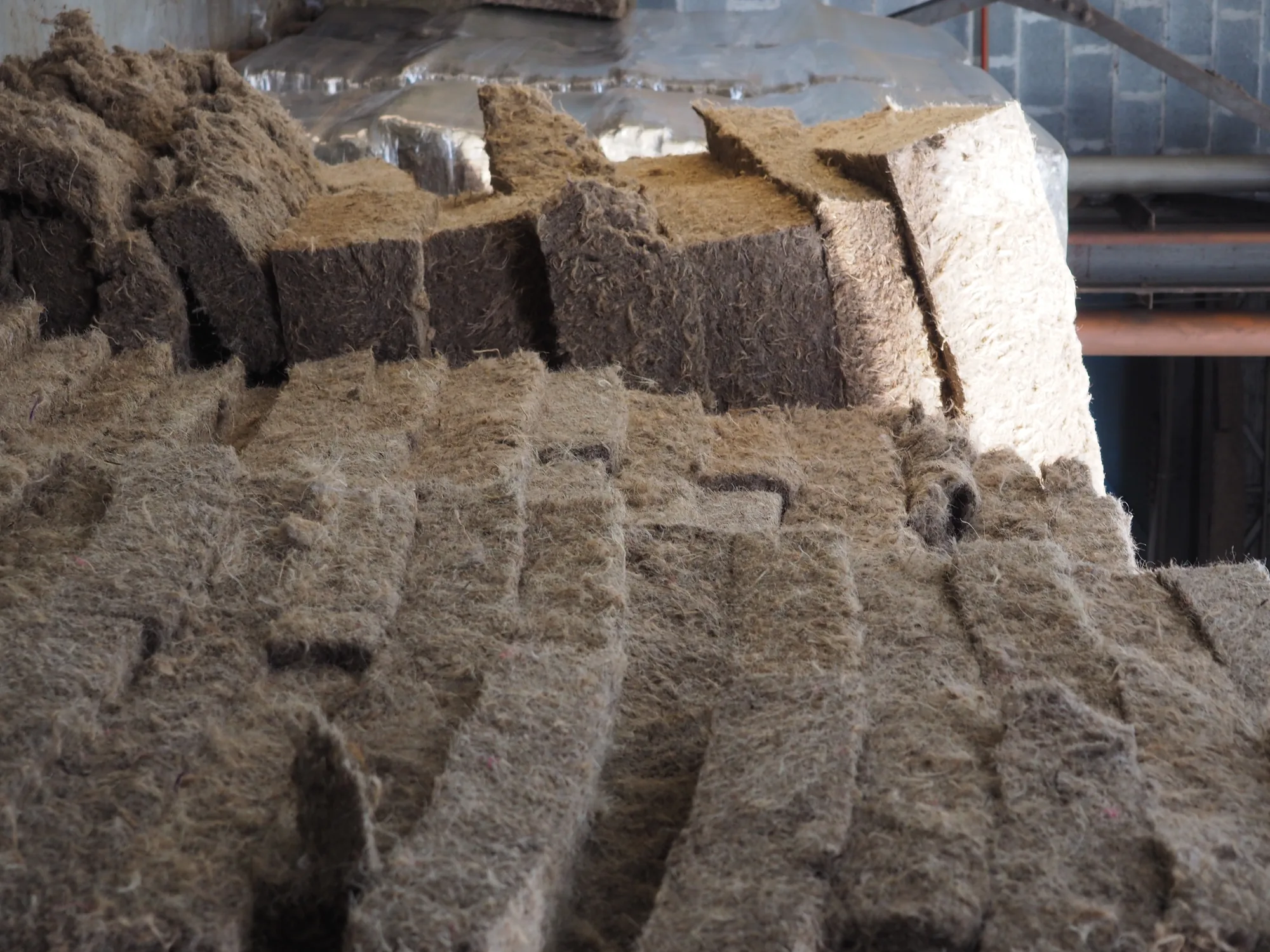
By the end of its manufacture, one kilogram of Gramitherm insulation has stored the equivalent of 2.08 kg of CO₂ and generated only 0.675 kg of CO₂ emissions.
The result: a negative carbon footprint of -1.4 kgCO₂/kg, against +7.36 kgCO₂/kg for an EPS board of equivalent performance.
Gramitherm is installed in the same way as a flexible wool-type insulation, without the itching for installers.
Because the product is made locally, its price is more stable than that of products exposed to international trade. On the Belgian market in 2024, Gramitherm was priced below stone wool.
A biobased insulation gives access to regional grant top-ups: €10/m² in Brussels and a 25% top-up in Wallonia (subject to the “Produit biosourcé” label).
Three pieces from the Magazine, around the same build-up.
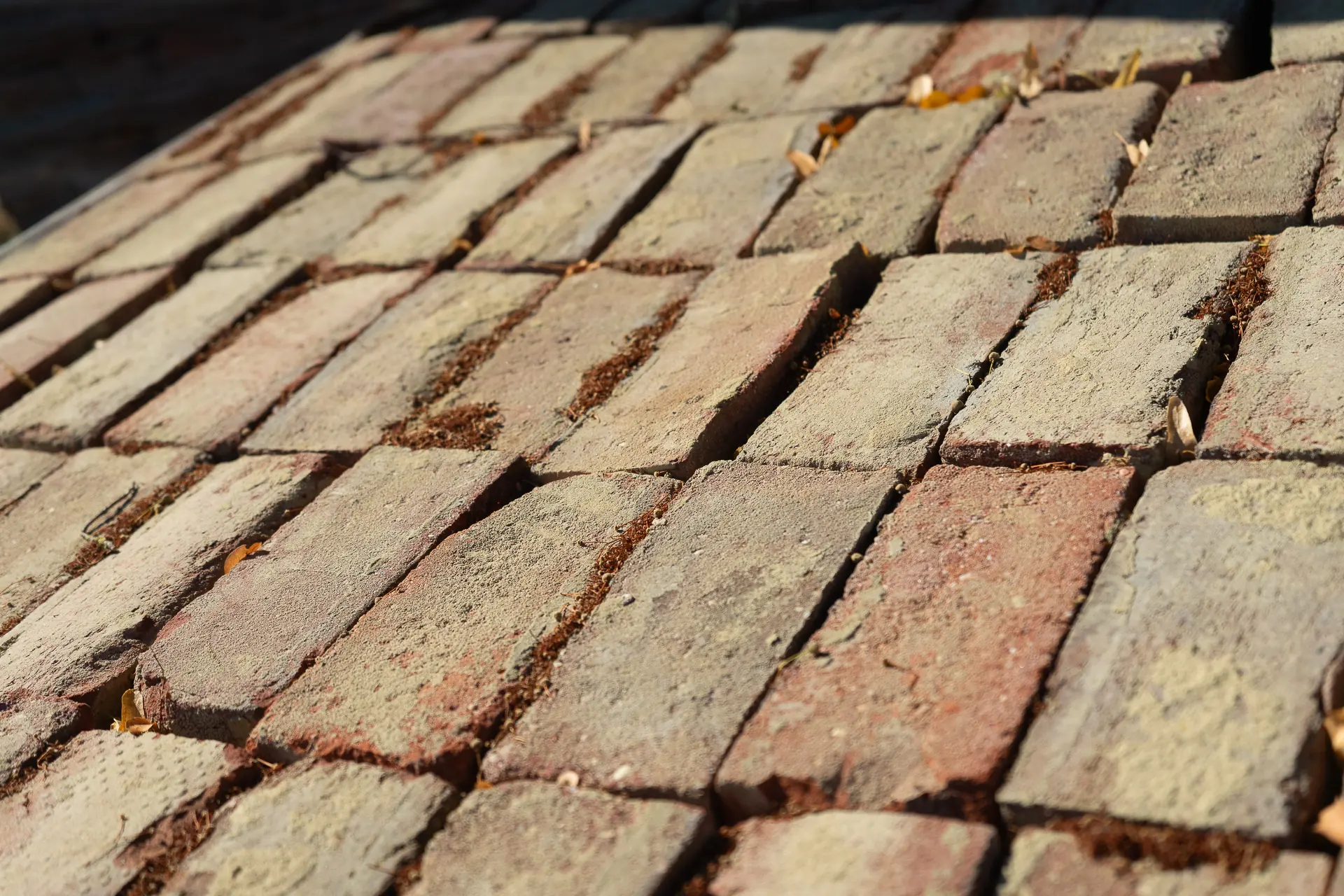
Steel, bricks and glazing removed on site go back into the renovated project.
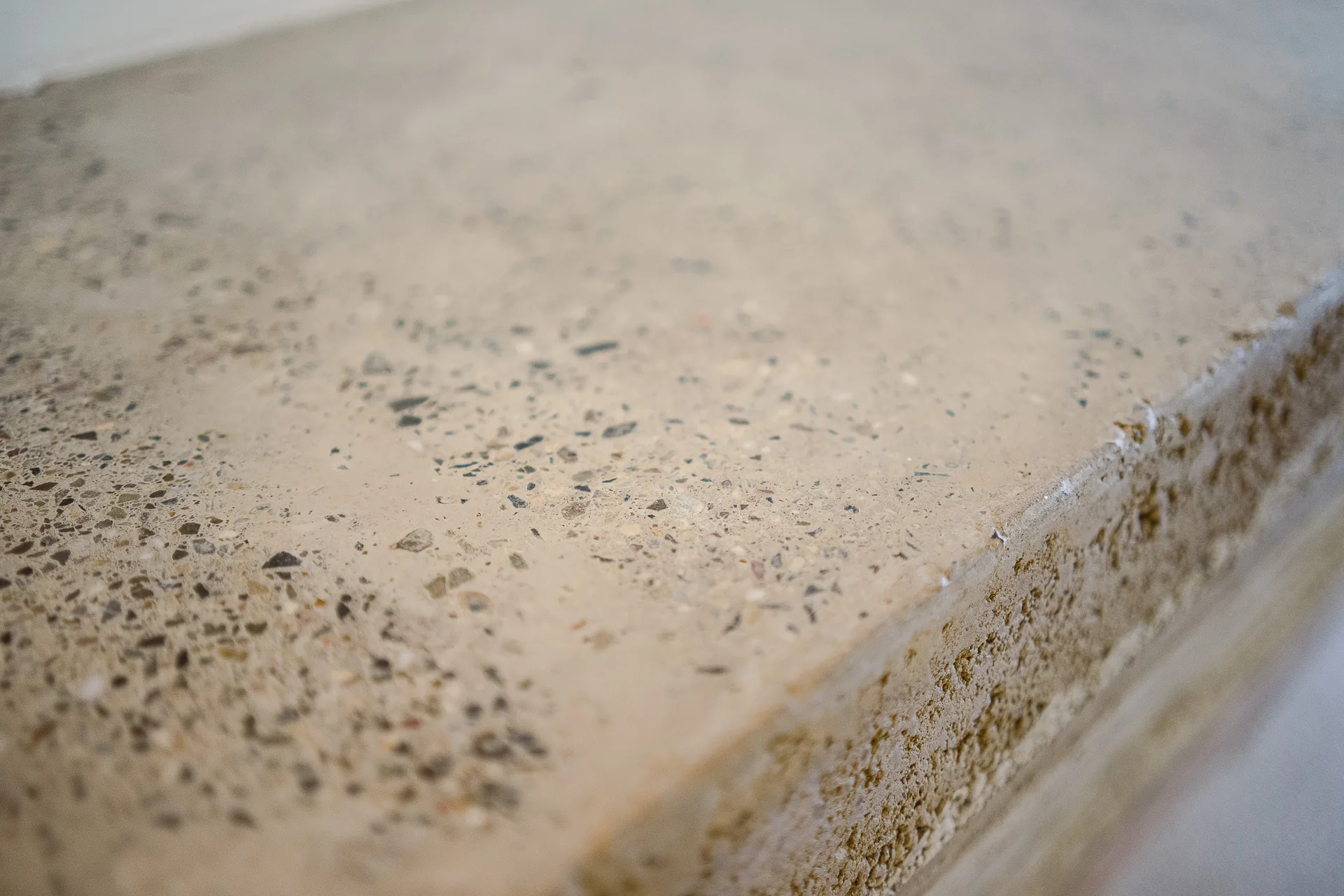
Rammed earth and linen cladding in a Brussels commercial interior.
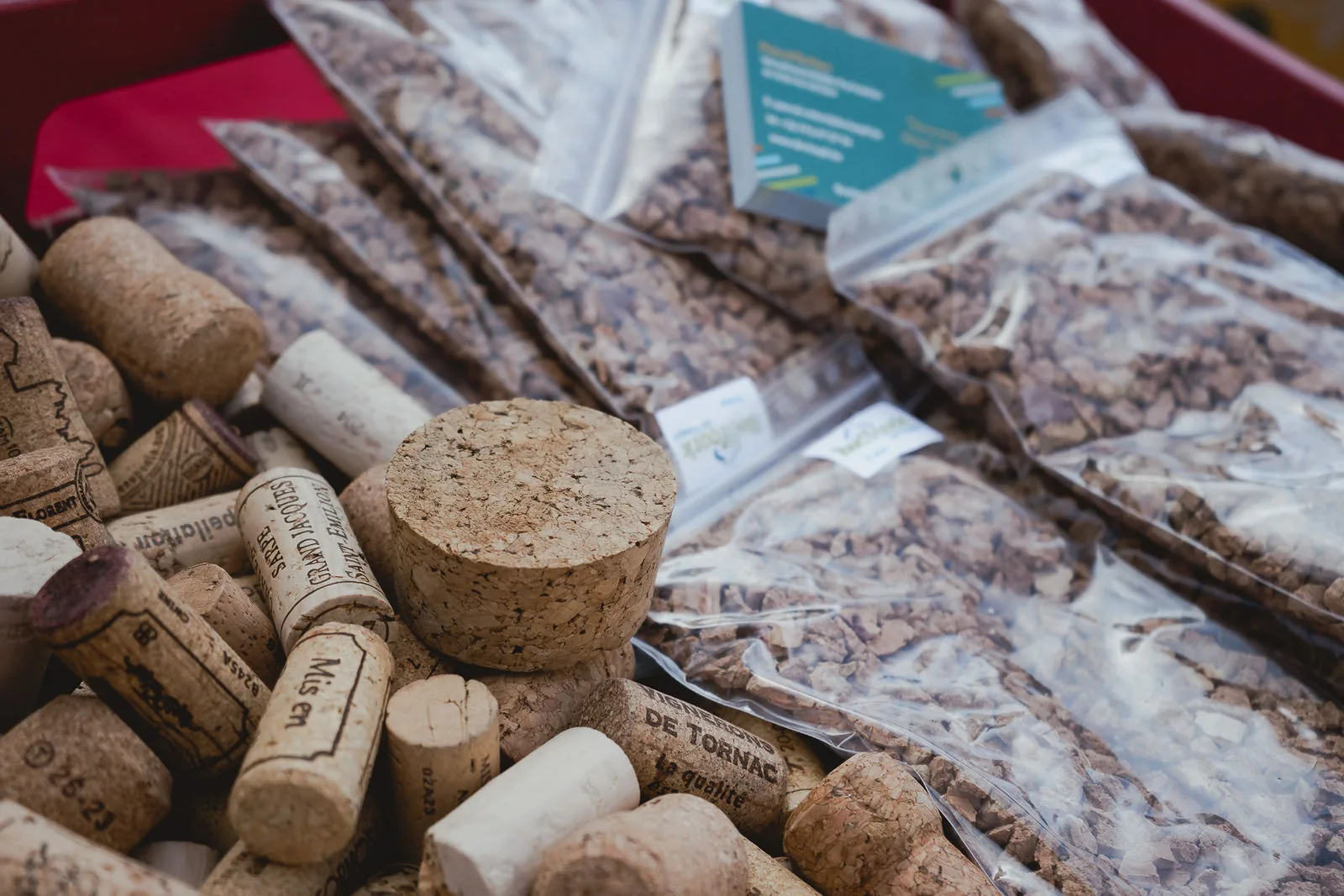
Recycled stopper granules, laid loose with no supporting structure, under Buildwise monitoring.