Keeping homes cool through ever hotter summers has become a priority in construction. The choice of insulation has a direct bearing on summer comfort, not only on winter performance.
Air conditioning is gaining ground in European homes, and its summer consumption now comes on top of heating consumption in winter. This paradox is explained by conventional insulation materials (EPS, PUR, mineral wool), which protect well against the cold but poorly against heat. Heat gets into buildings more easily in summer, pushing occupants towards energy-hungry air conditioning whose effect disappears as soon as it is switched off.
A sustainable insulation material is one made by a low-energy production process, from natural, recycled or reused components, and which is itself biodegradable or reusable at end of life.
An insulation material traps still air. Its performance depends on two distinct technical criteria: low thermal conductivity and a good thermal phase shift.
Thermal conductivity (λ) measures the amount of heat that will pass through the material. The lower the lambda, the better the insulation performs and the less thickness is needed to keep the cold outside.
Conventional insulation materials have a very low thermal conductivity: that is their strength in winter.
Phase shift is the time heat takes to pass through the material. The longer this time, the longer the building stays protected.
With a 10-hour phase shift, heat does not get into the building until the evening, when the outdoor temperature has dropped again.
A good phase shift also depends on the density of the material. The denser it is, the harder it is for heat to get through. The recommended combination: a high-density bio-based insulation together with heavy materials of high thermal mass, such as raw earth or brick.
Thermal mass is a material's capacity to store heat and release it gradually, with a time lag.
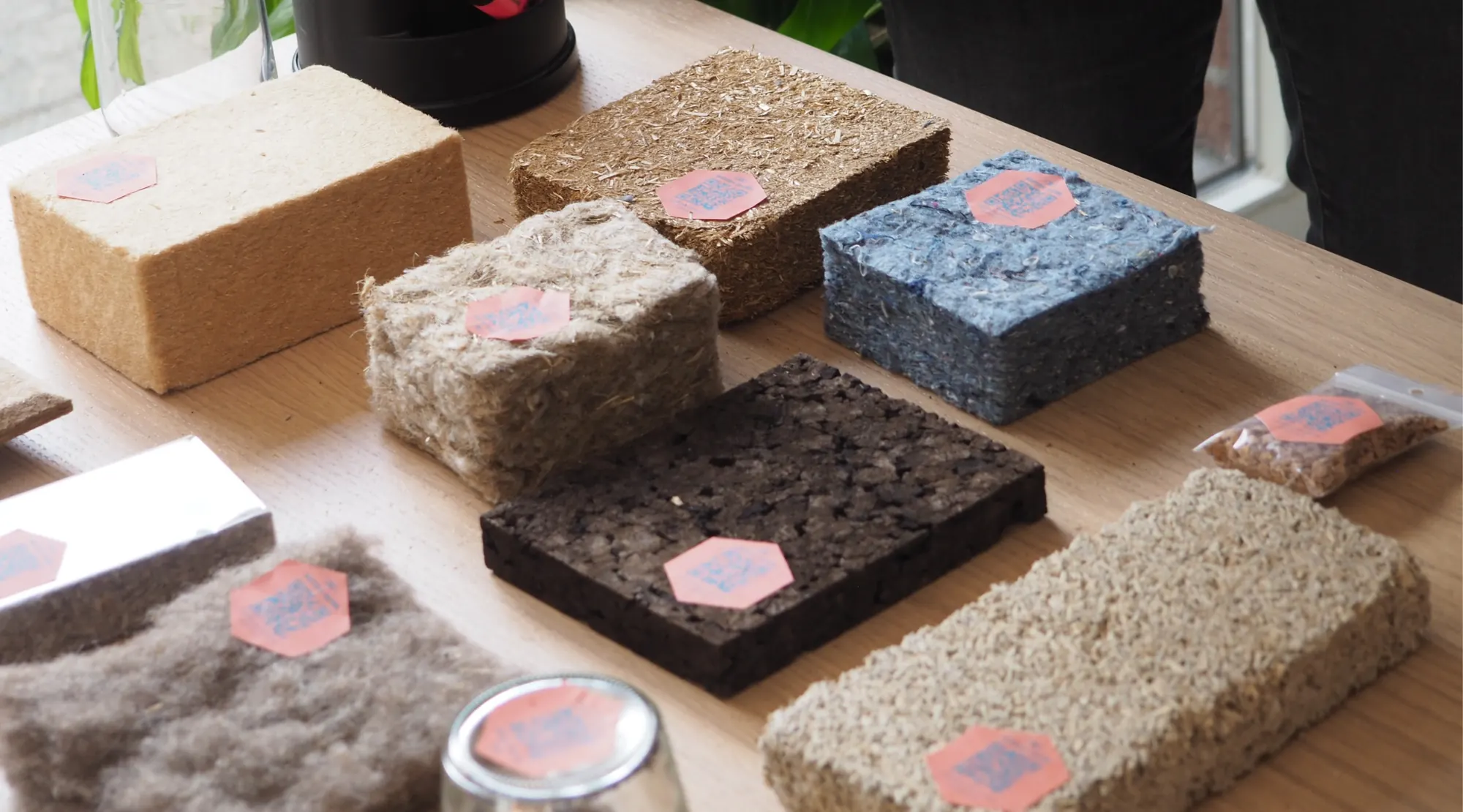
Bio-based insulation comes as boards, as fibres and as loose-fill, for walls, roofs and floors:
These materials provide thermal insulation, moisture regulation and acoustic insulation at once.
Expanded cork offers the best phase shift among bio-based materials. It costs more than other fibres, but its water resistance means it can be left exposed, saving the labour cost of a rendering stage.
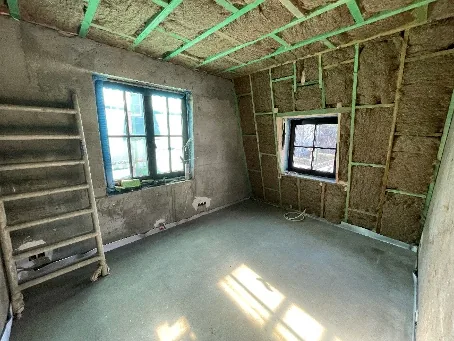
Wood fibre and straw fibre boards are installed in the same way as petrochemical boards, while keeping the build-up vapour-open if they are finished with a natural lime render.
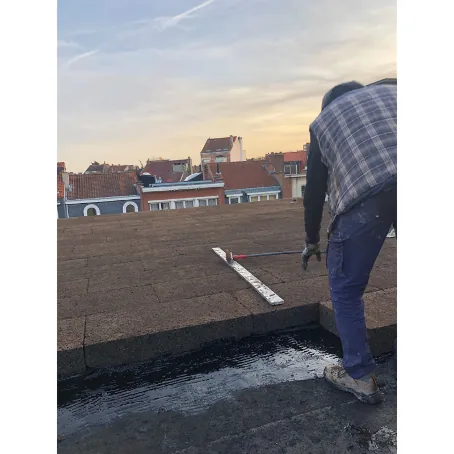
Most heat gets in through the roof. A high-density bio-based insulation provides good thermal mass.
A bio-based insulation is not necessarily more expensive than a conventional one. Flexible insulation products are priced similarly to mineral wool, for an equivalent lambda and a better phase shift. Regional grant top-ups exist to cover any difference.
Installation is very close to that of conventional insulation: labour costs should not double. A significantly higher quote may reflect the contractor's unfamiliarity with the material, which suitable technical information can address.
Update of 5 November 2026: the original version stated that in many European homes air conditioning already used more energy than heating. This is not the case: heating remains by far the largest energy use in European homes. The sentence has been corrected.
Three pieces from the Magazine, on bio-based insulation.
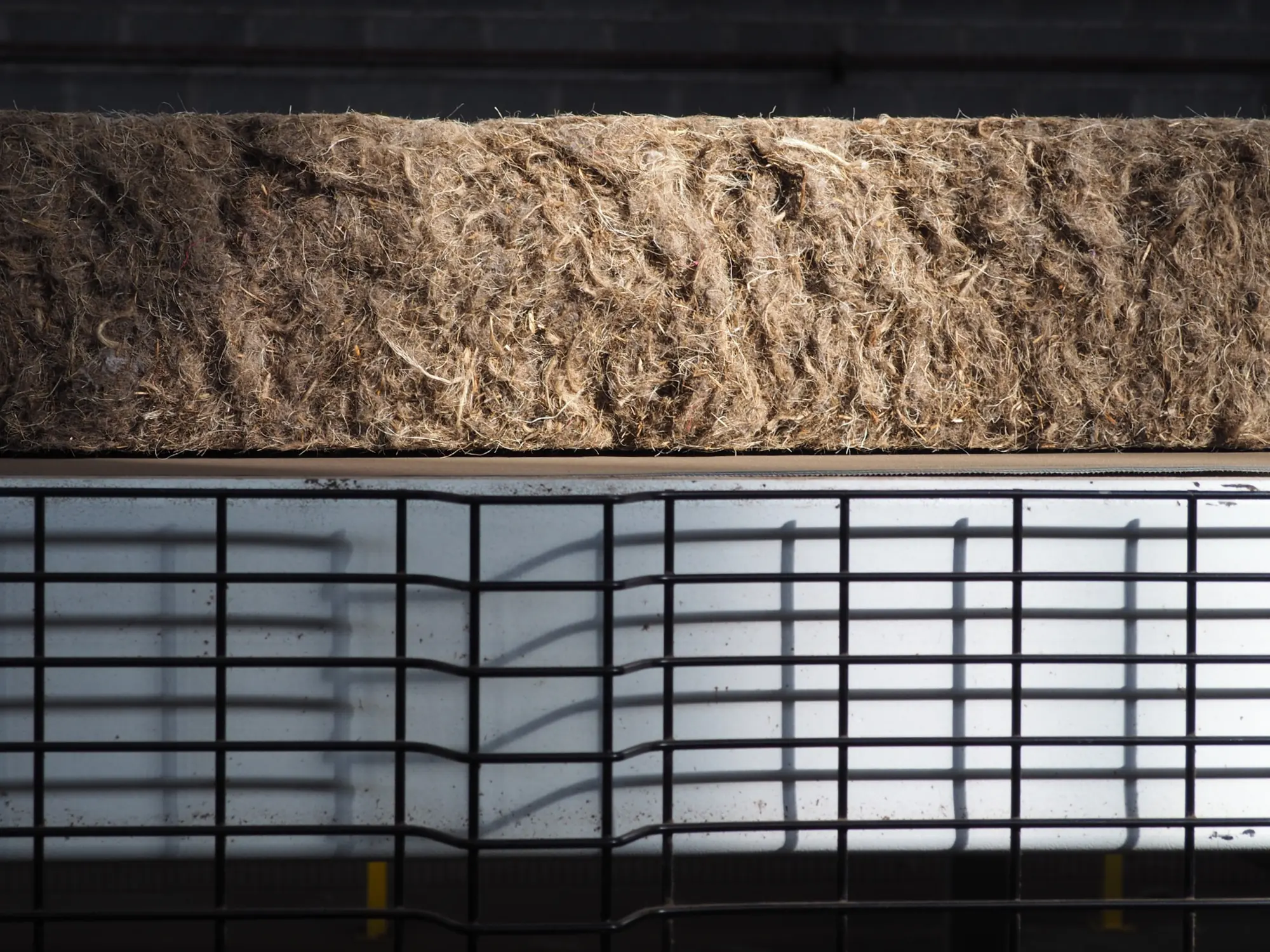
An insulation made in Auvelais from grass residues, as boards and rolls.
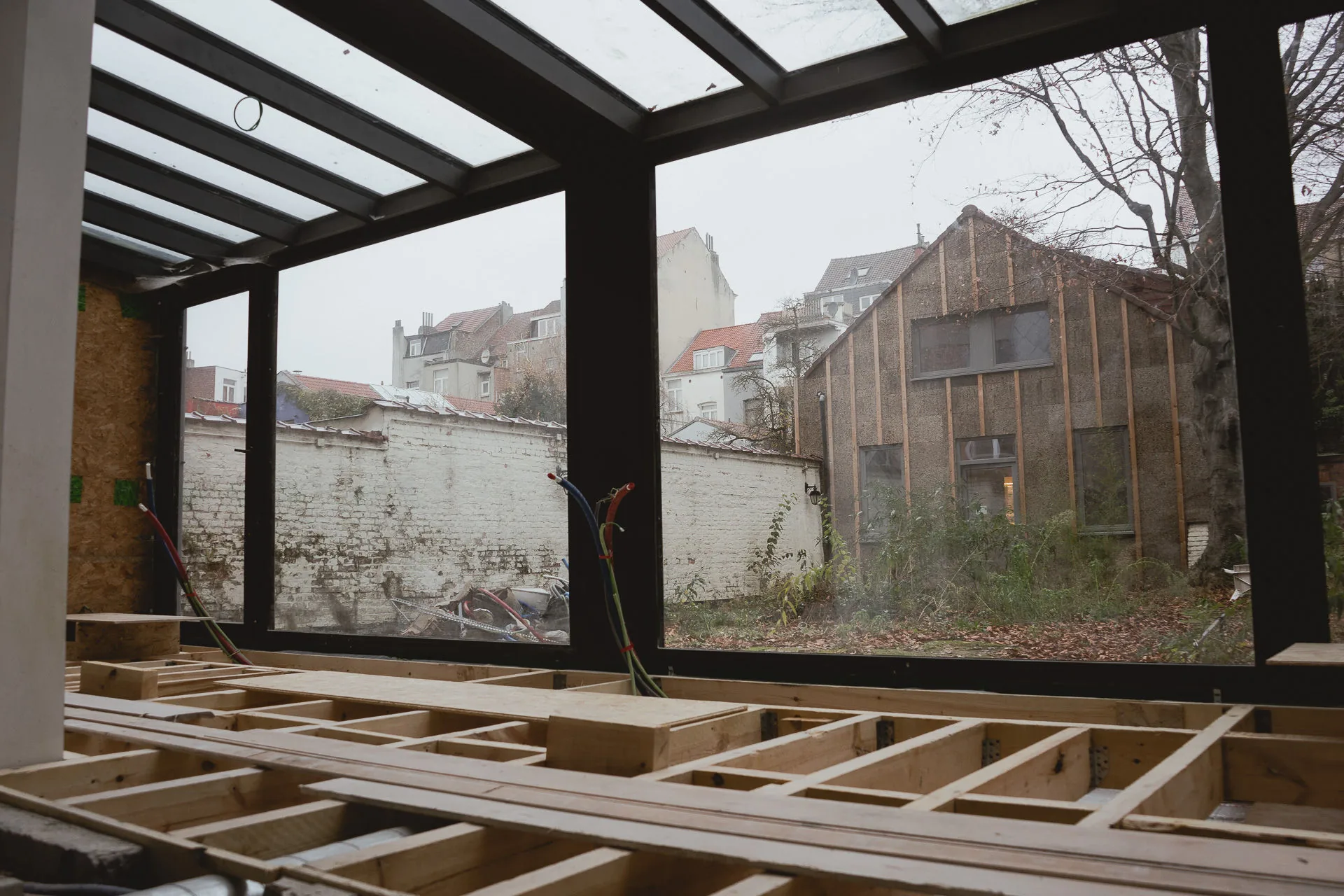
A project that takes the opposite approach to the accumulation of technical systems.
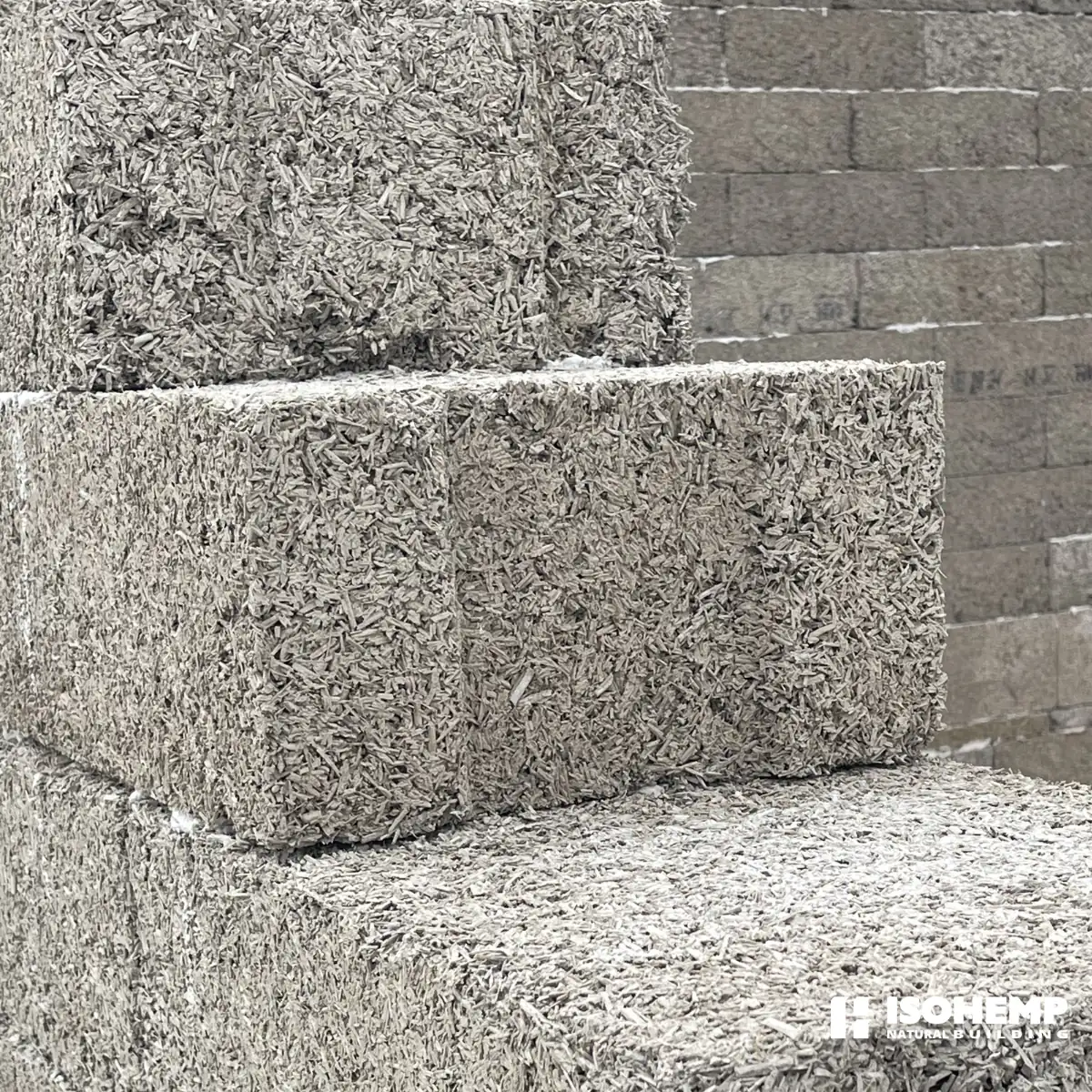
Two Belgian producers, two approaches: the block and loose-fill.