Grass
insulation
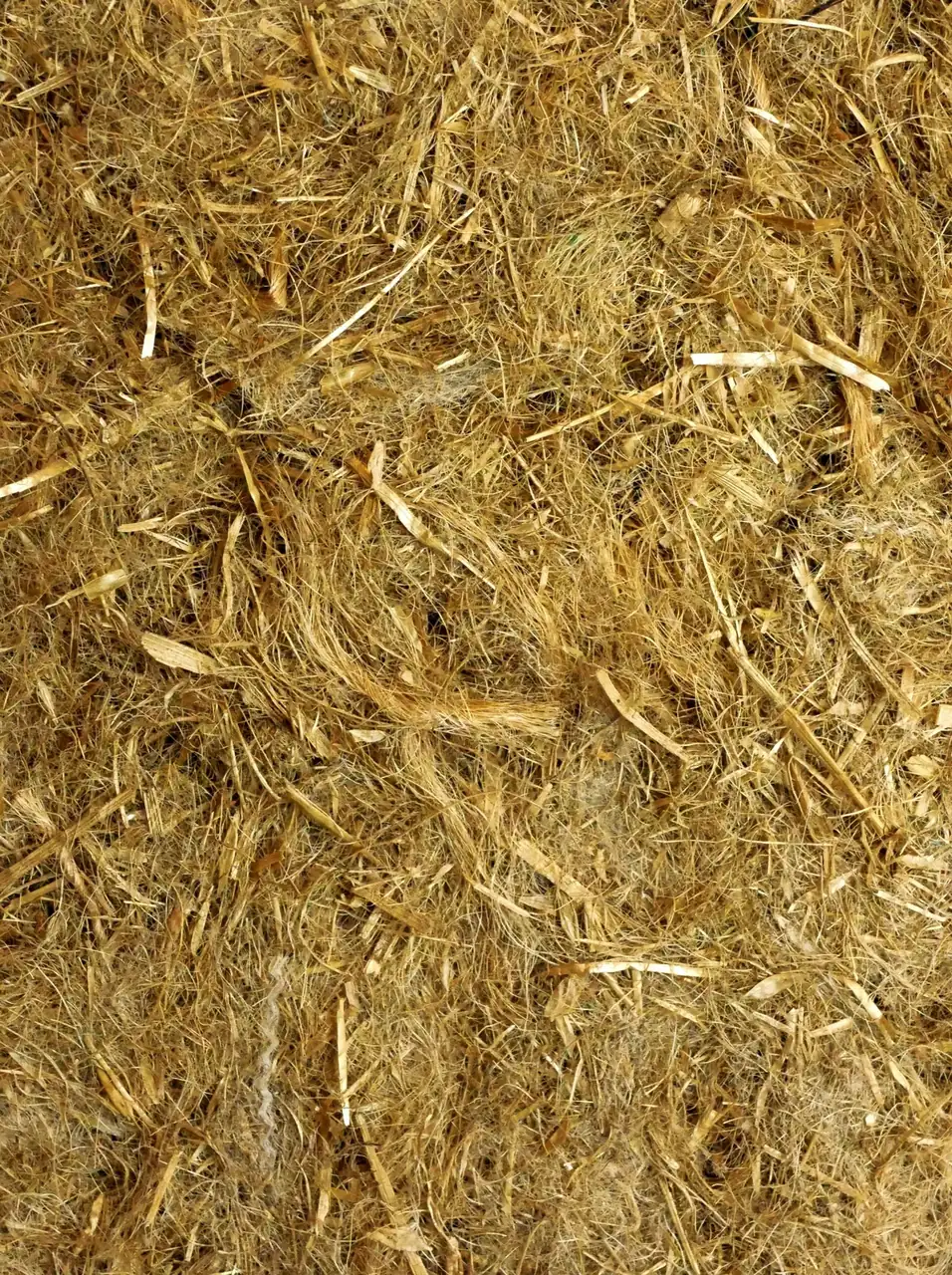
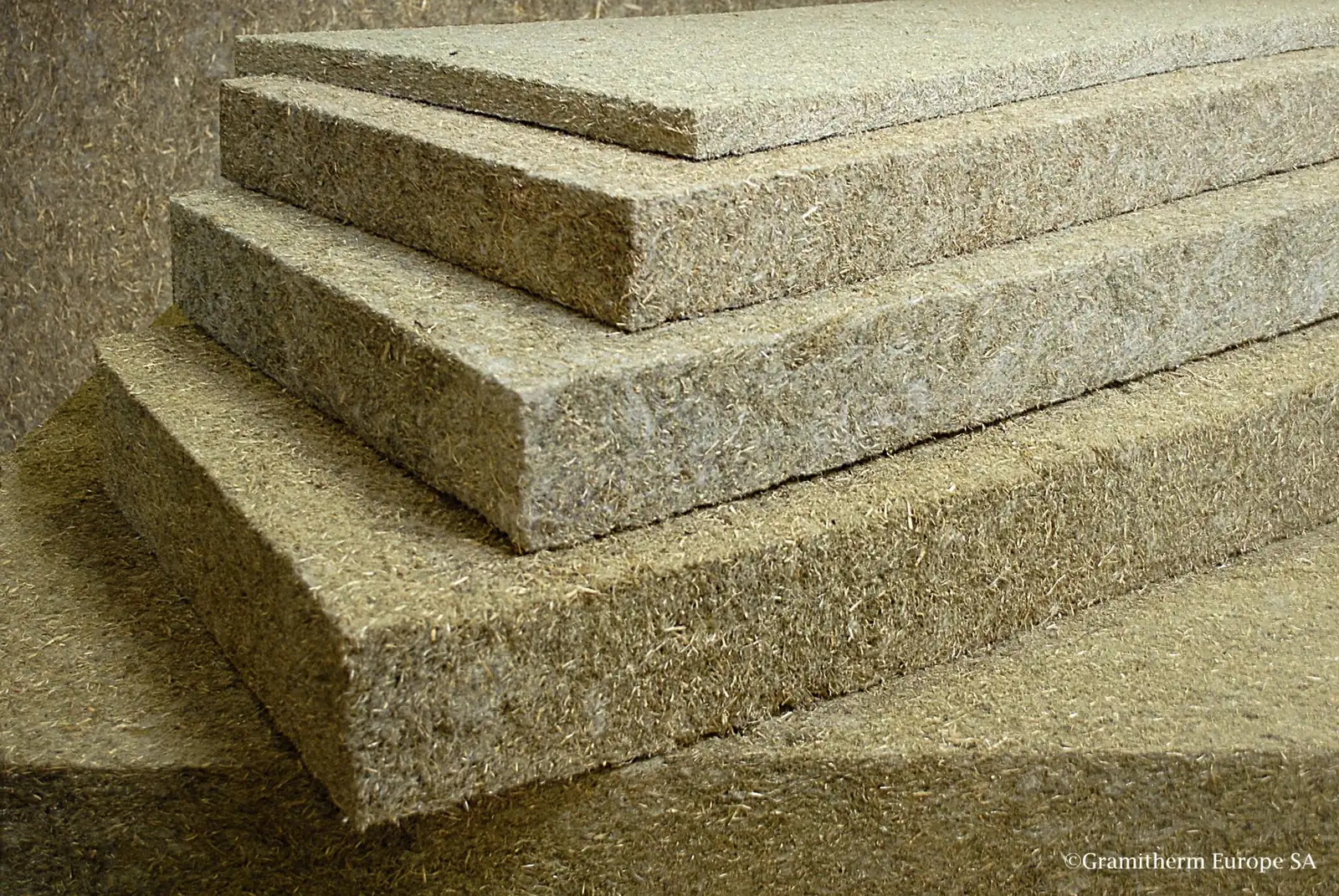
A flexible biobased board of grass fibre (70%) and recycled jute (20%), made in Auvelais from otherwise unused grass from local sources. It is fitted between rafters or within a timber frame to insulate walls, roofs and floors. Boards are taken back at the factory at end of life.
What is grass insulation?
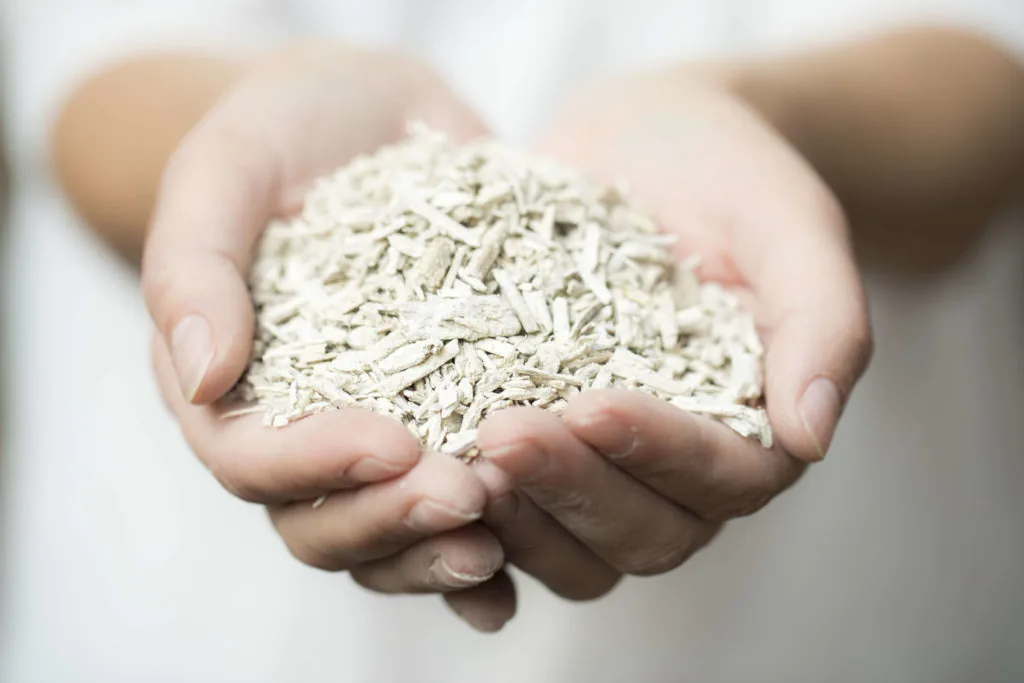
Grass insulation is a flexible biobased board made of otherwise unused grass fibres (from the maintenance of canal banks, roadside verges and airports), combined with recycled jute fibres (coffee and cocoa sacks from the port of Antwerp) and recycled synthetic binding fibres. The grass is the insulating material, while the jute and binding fibres hold the board together. The fibre puts to use a resource that is plentiful and regularly available.
The board is vapour-open and regulates moisture within the wall. Its moderate density (40 kg/m³) gives good thermal performance in winter (λD = 0.040 W/(m·K)) and a useful summer phase shift (9 h at 240 mm), owing to the fibre's ability to store heat temporarily. Its flexible texture makes it easy to fit on site.
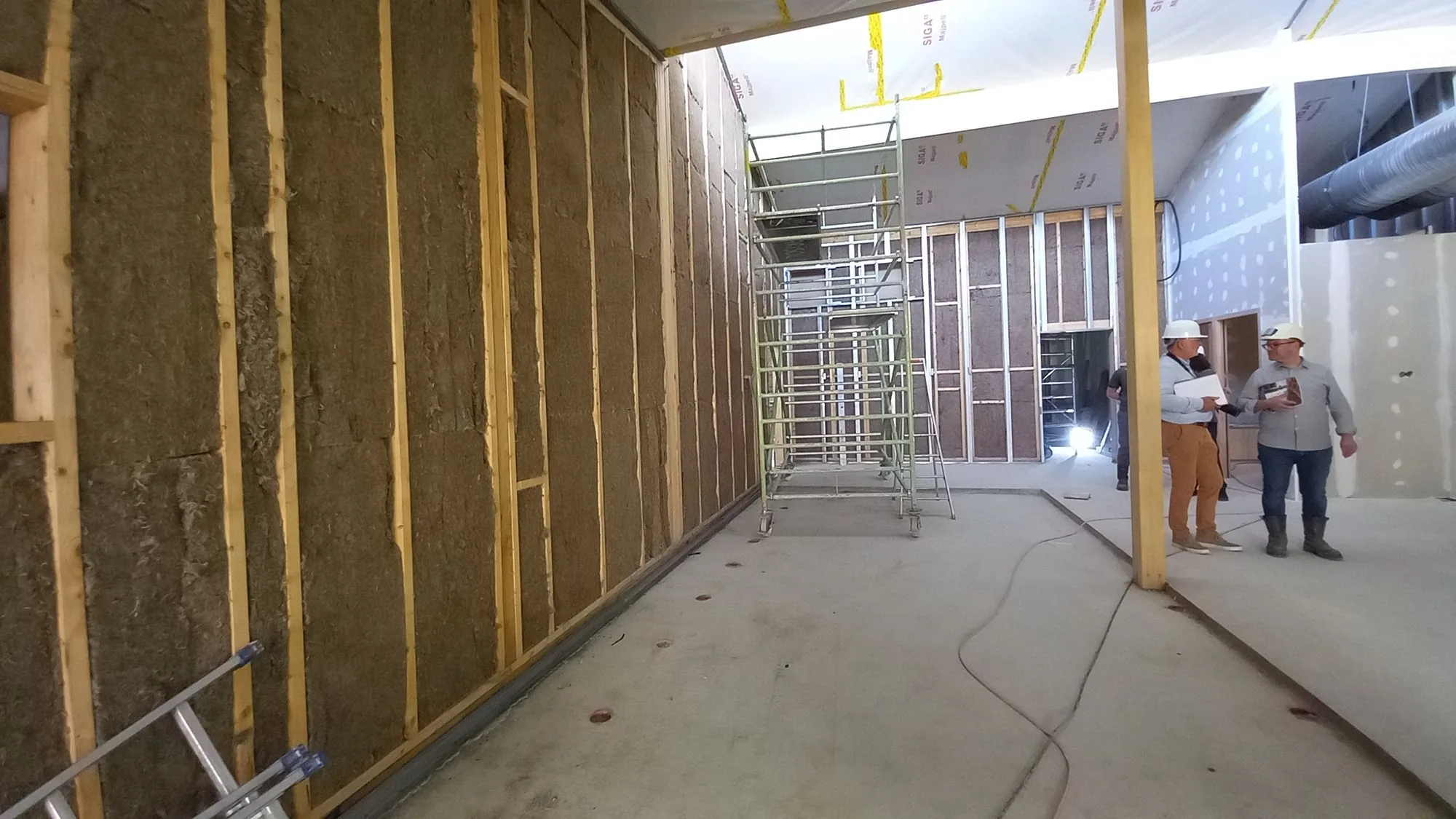
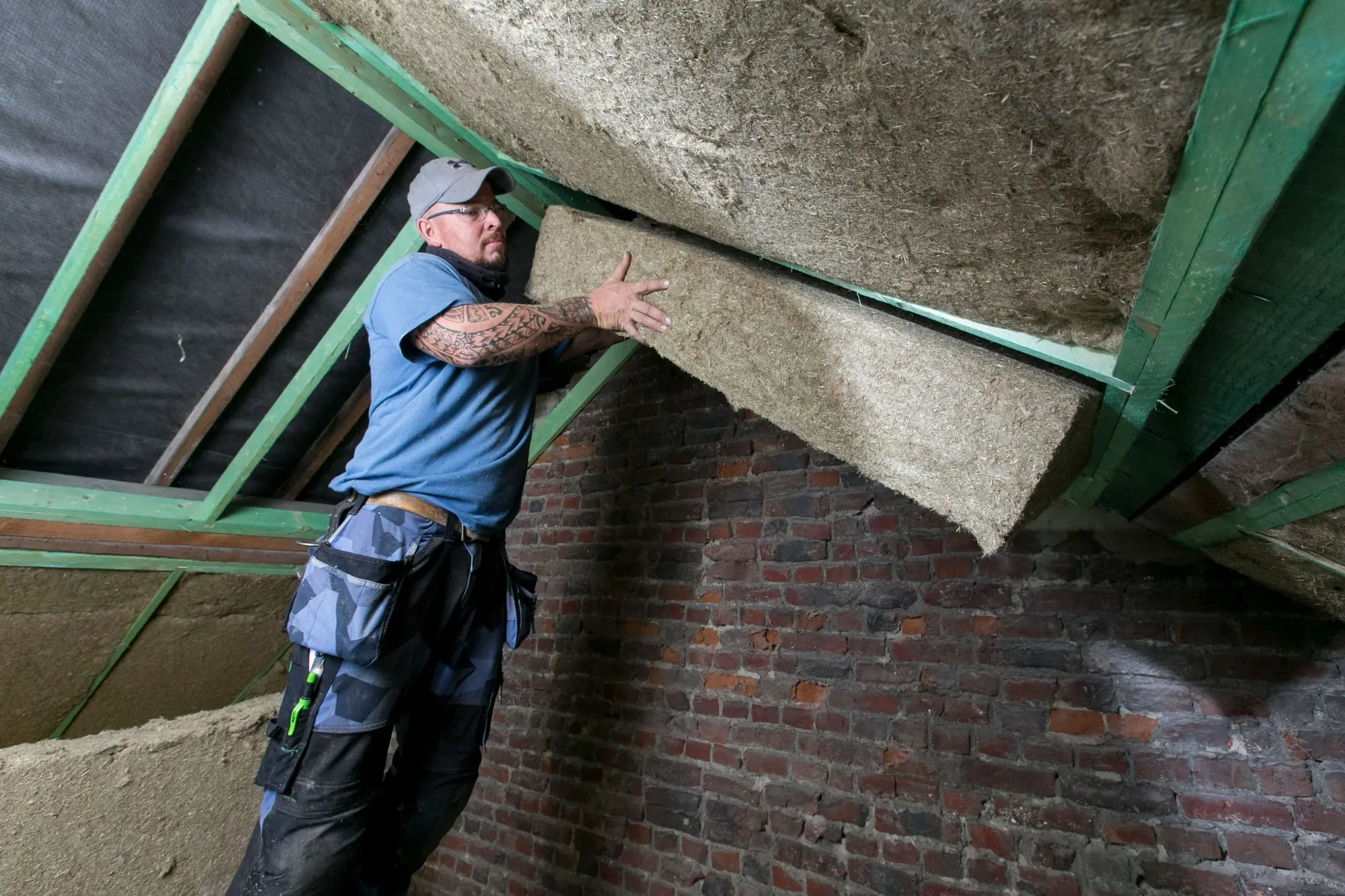
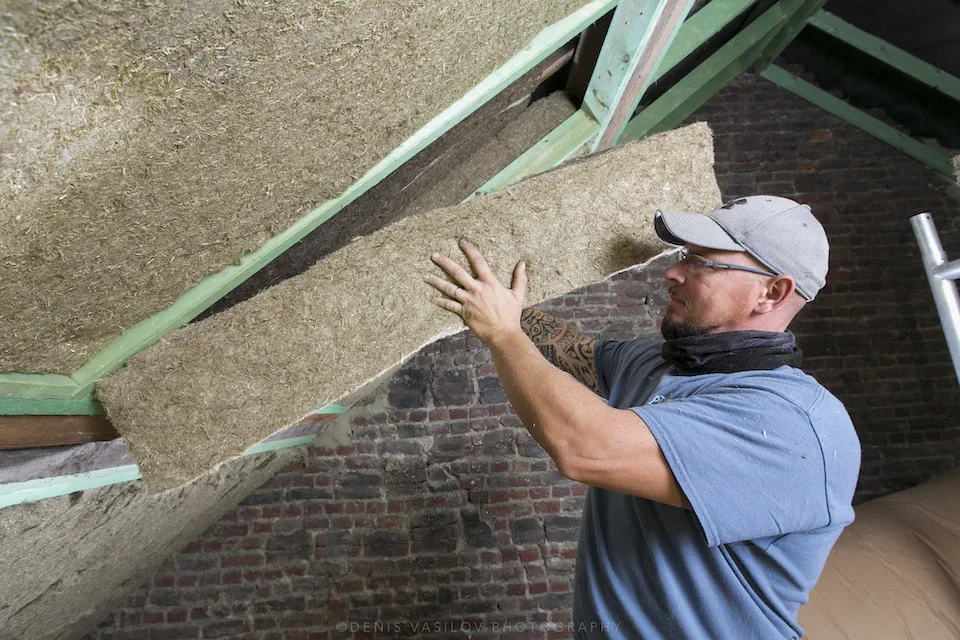
The insulation is fitted between rafters in roofs, between studs in timber-frame walls, or between joists in floors. Slight compression when fitted ensures continuous contact with the structure, with no gaps and no thermal bridges.
It is made in Belgium, in Auvelais, from grass gathered from local sources within a short regional radius (<300 km). Boards and offcuts return to the factory to be fed back into the production of new boards, in a closed loop.
Installation & uses
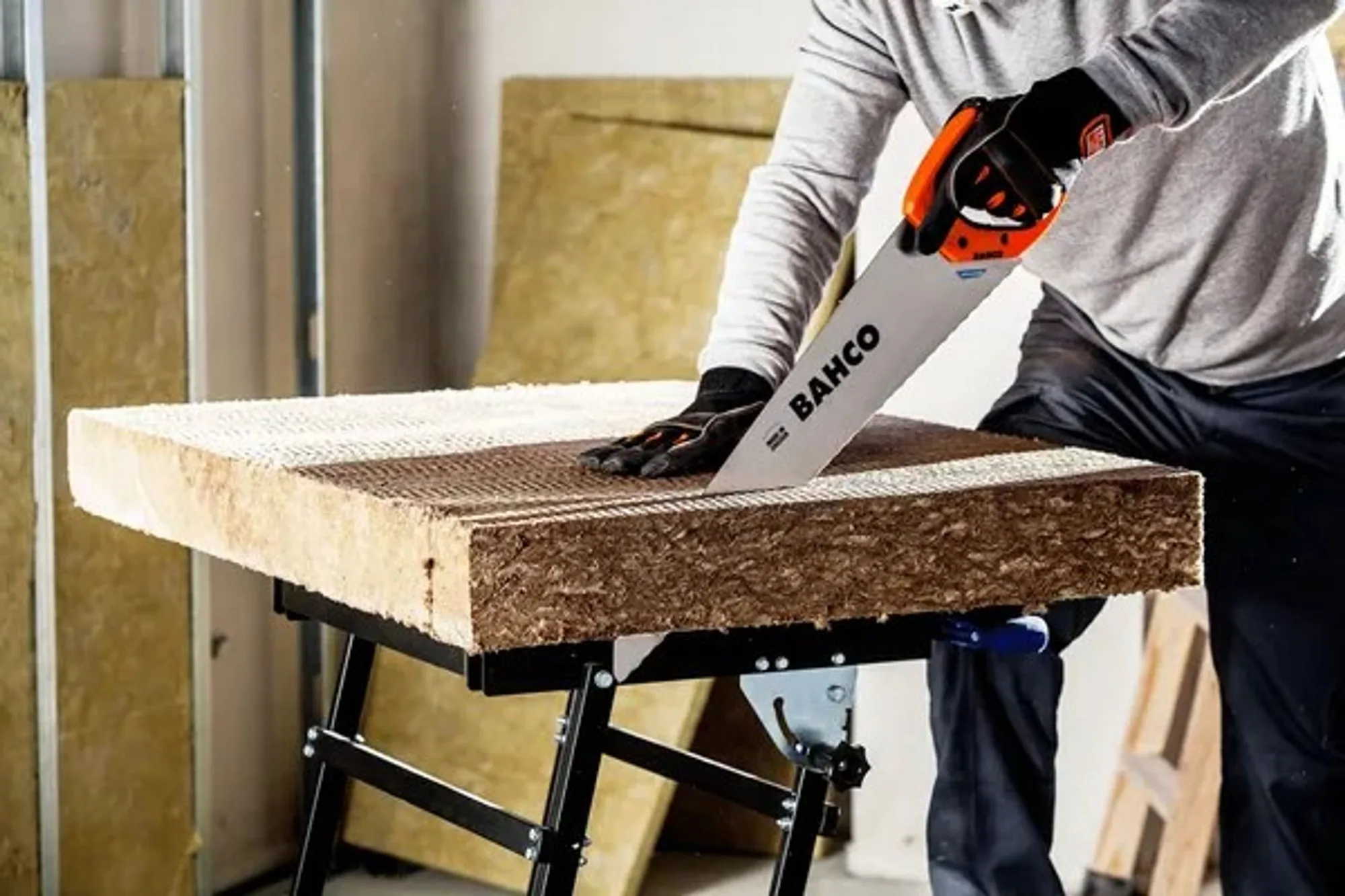
The board is fitted between the framing members with slight compression. It is cut with a knife or a toothed saw, then adjusted to follow the geometry of the cavity.
It suits pitched roofs, timber-frame walls and floors, in new build and renovation. In roofs, an airtight membrane is installed on the inside to preserve the board's hygrothermal behaviour.
The material must be kept out of the rain during transport, storage and installation. Once protected by the finished envelope, it maintains its performance over the service life of the building.
At end of life, boards and site offcuts can be taken back by the producer at the Auvelais factory to be fed back into the production of new boards.
About the producer
Gramitherm is a Belgian producer of biobased grass fibre insulation, based in Auvelais in Wallonia. The company puts to use grass that previously went unused, from the maintenance of wetlands, canal banks, roadside verges and airports, within a radius of less than 300 km.
Its flexible boards are intended for timber construction and for insulating roofs and walls. Offcuts and returned boards are fed back into production, and the product carries the label of the Walloon biobased sector.
Technical performance
ETA-21/0260 (DIBt) and DoP GR/S/01 (DOC-SMQ-002), on the basis of EAD 040005-00-1201 · EN 16785-2:2018 (biobased) · EN 15804+A2 (EPD) · EN 13171 for thickness class T2 only (dimensional stability, with EN 1604)
Life cycle
The grass, 70% of the board, comes from otherwise unused sources: wetlands, canal banks, the maintenance of roadside verges and airports. It is combined with 20% recycled jute, from coffee and cocoa sacks from the port of Antwerp.
Gramitherm makes the board in Auvelais, Belgium, with grass collected within 300 km of the factory. Recycled synthetic binding fibres, 10% of the mix, give the board its cohesion, and it is 86% biobased.
Boards at end of life and site offcuts can be taken back at the Auvelais factory and fed into new boards, in a closed loop. The synthetic binding fibres do, however, limit direct composting.
Projects and publications
The projects that use it and the publications that discuss it.
FAQ
Does grass attract rodents or mould?
The board is declared rodent-resistant, as the cellulose in grass is not digestible. Its resistance to fungi was tested for 28 days at 28 °C and 85% relative humidity.
Where does the grass come from?
It is otherwise unused grass from wetlands, canal banks and the maintenance of roadside verges and airports, collected within 300 km of the Auvelais factory. It makes up 70% of the board, with 20% recycled jute from coffee and cocoa sacks from the port of Antwerp and 10% recycled synthetic binding fibres.
Does the board also protect against summer heat?
Yes: it gives a phase shift of 9 h at 240 mm thickness, thanks to the high heat capacity of the fibre (2,232 J/(kg·K)). In winter, its thermal conductivity is λD 0.040 W/(m·K).
What precautions apply when fitting it in a roof?
Being very vapour-open (μ = 2), the board requires an airtight membrane on the inside to preserve its hygrothermal behaviour. It must be kept out of the rain during transport, storage and installation.
What happens to offcuts?
Site offcuts, like boards at end of life, can be taken back at the Auvelais factory and fed back into the production of new boards. The 10% synthetic binding fibre content does, however, limit direct composting.
Alongside
Same layer, same use · materials to compare.