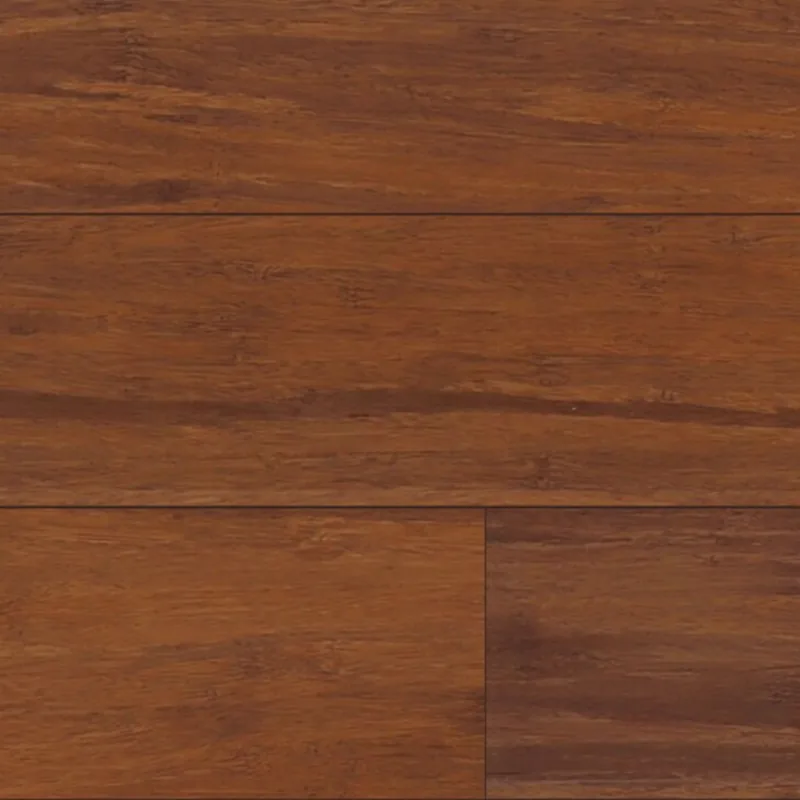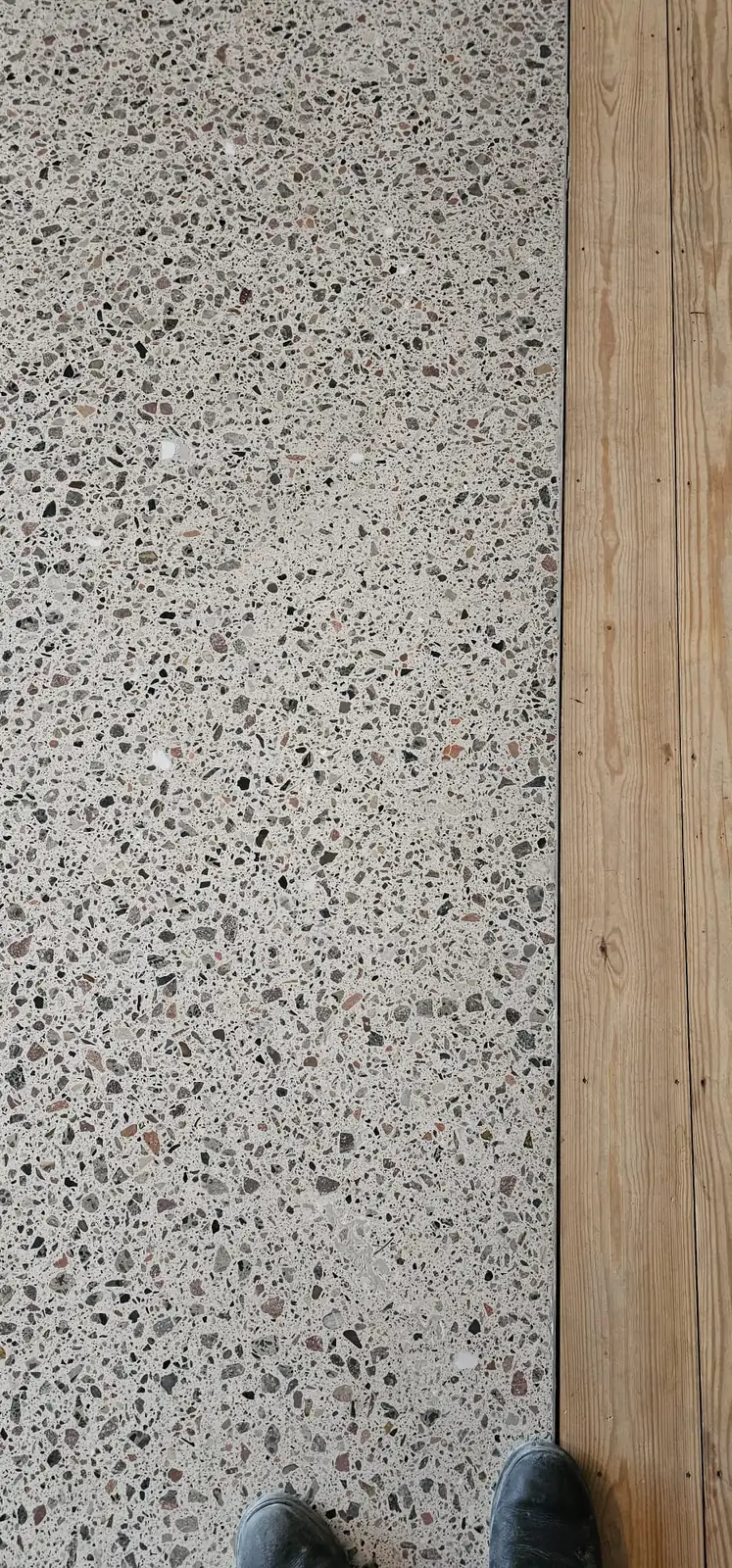
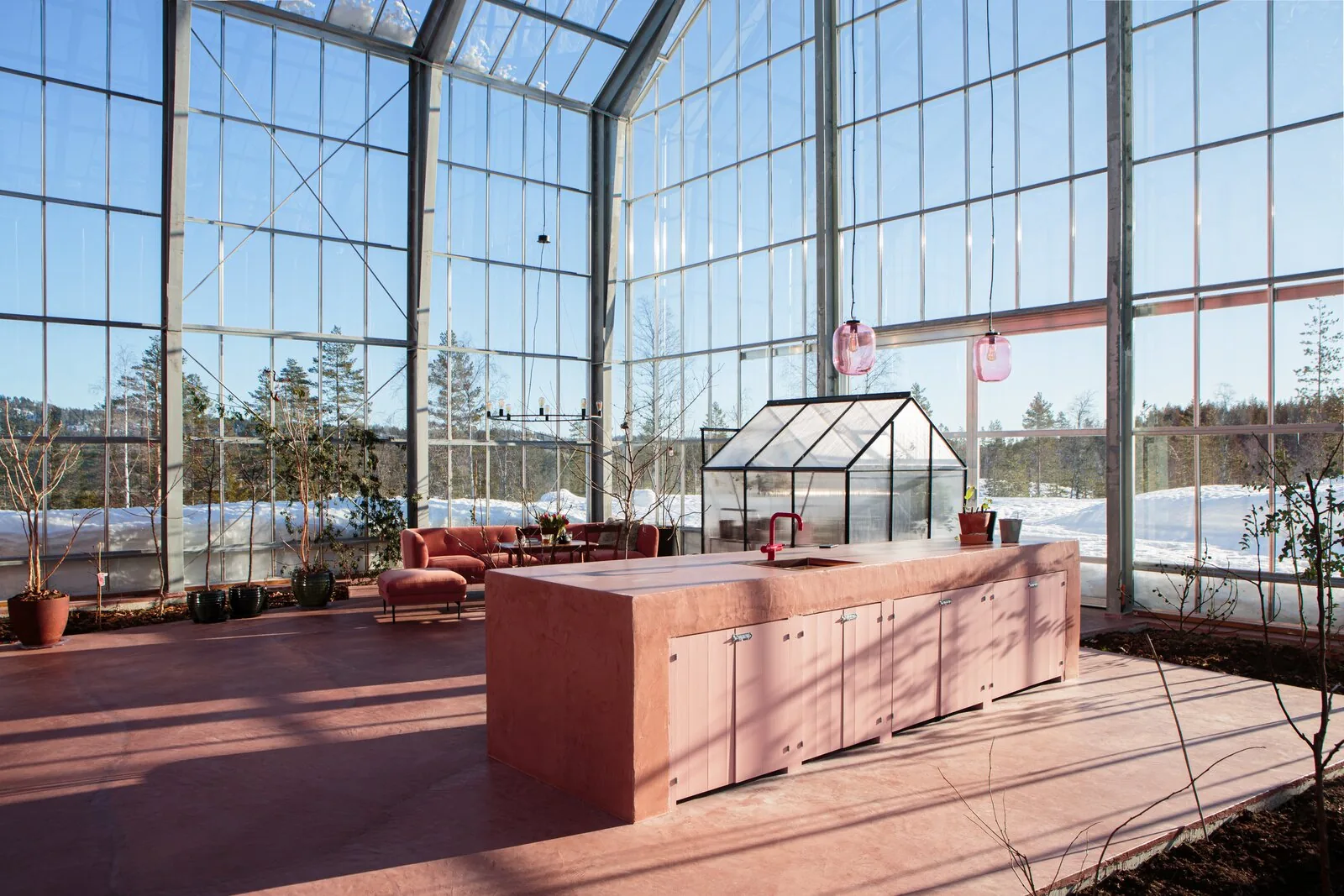
Decorative
clay plaster
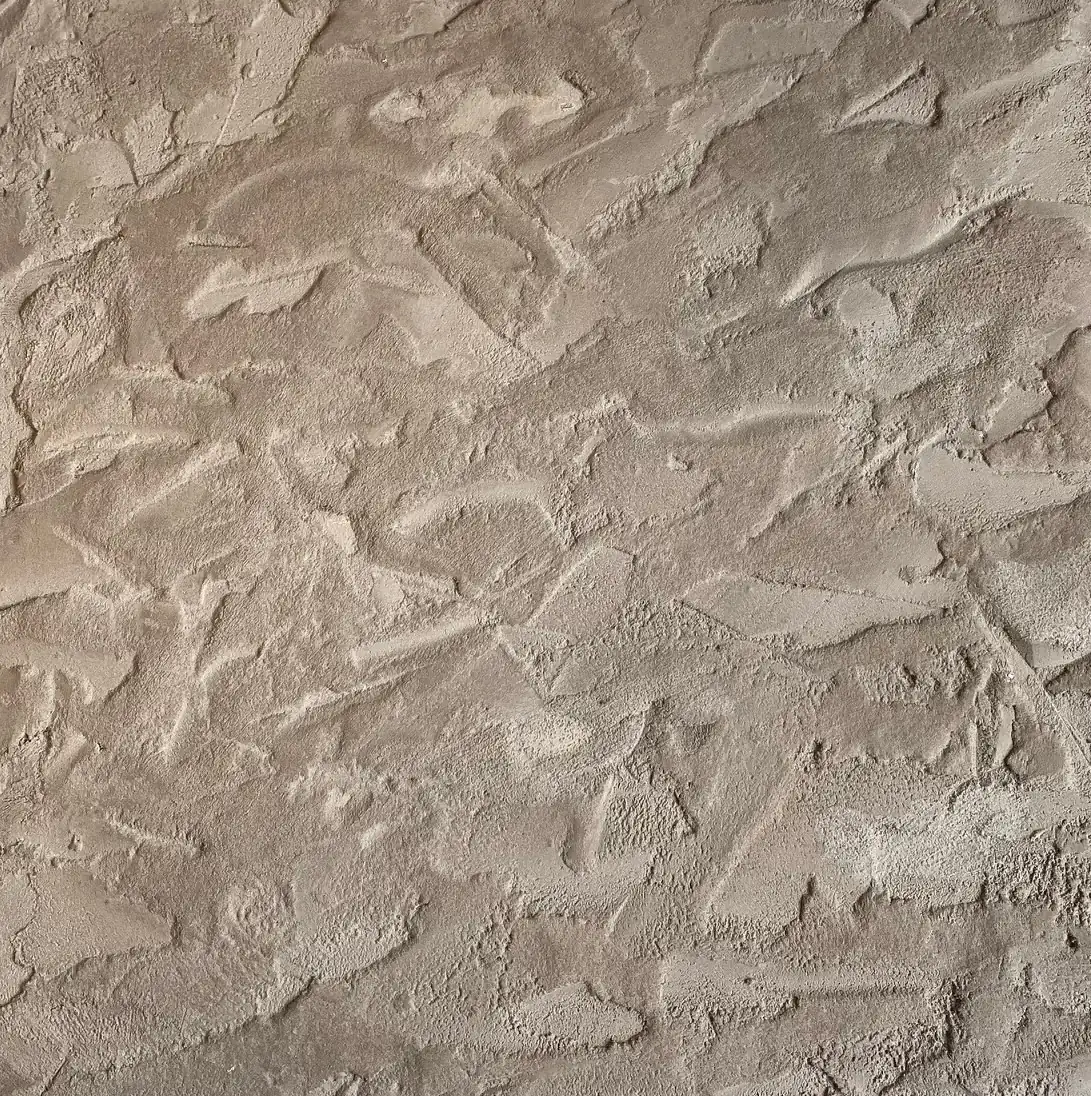
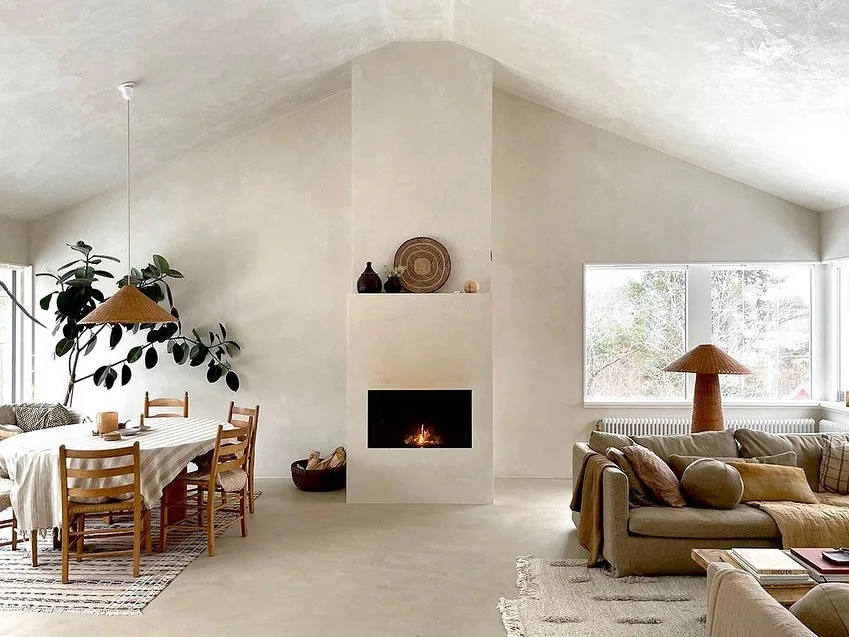
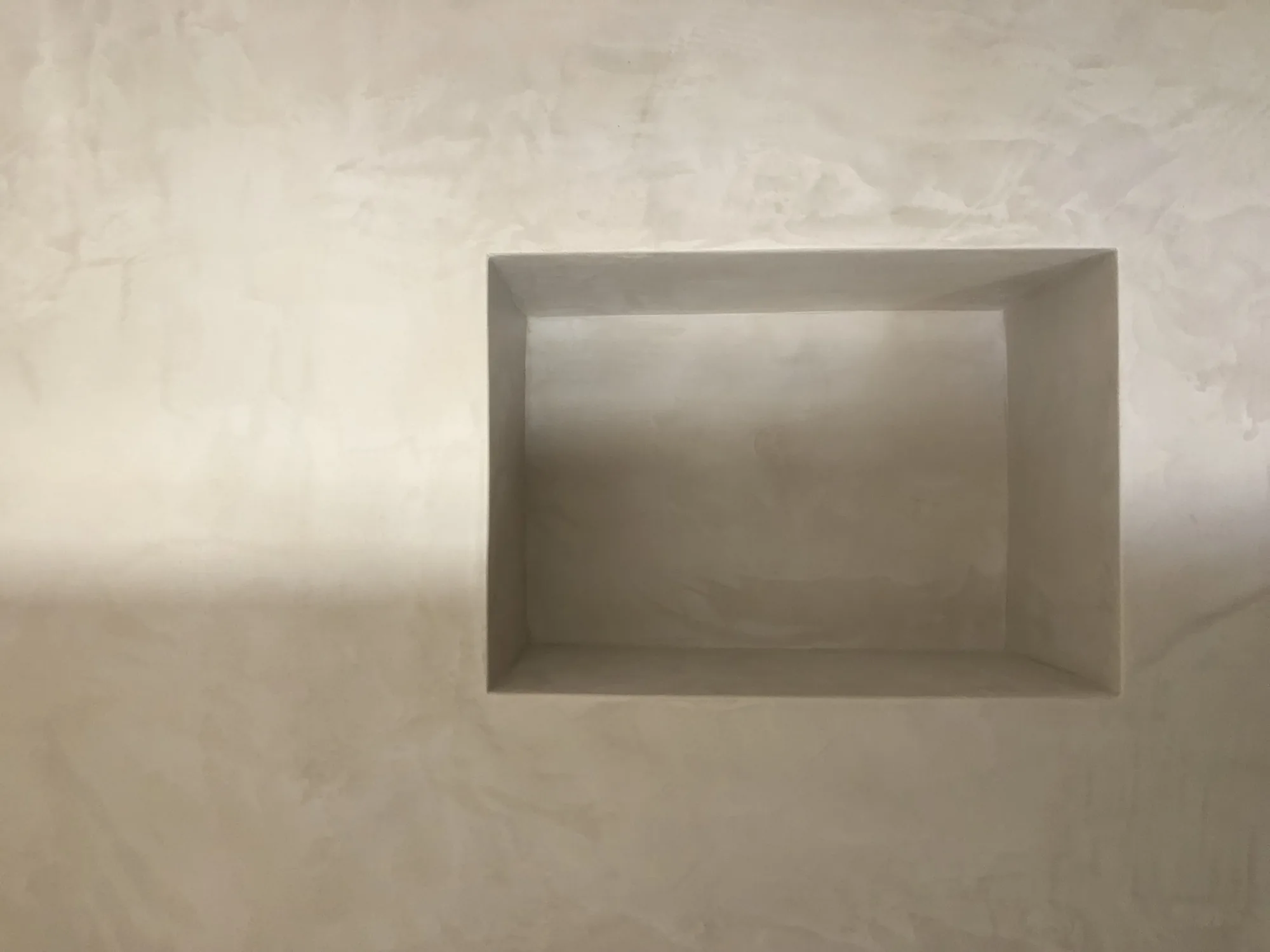
A decorative clay plaster made of clay, dolomite, sedimentary rock and a liquid polymer binder. Zero VOC. Smooth microcement or natural stone effect. Applications: interior and exterior walls, living-area floors, worktops and bathroom furniture.
What is decorative clay plaster?
Claystone is a decorative mineral plaster based on clay, dolomite and sedimentary rock, bound by a Zero VOC liquid polymer binder called JES. The clay forms the fine matrix that gives texture and colour, the dolomite and rock powders provide the filler and surface hardness, and the binder gives the layer its cohesion and flexibility. The formula contains no cement.
This flexibility is why the plaster does not crack on a sound substrate, and why it withstands heavy foot traffic once protected by a suitable varnish. Applied at around 2 mm, it gives the look of microcement or natural stone without the thickness or weight of those materials.
The choice of varnish also determines how the surface behaves towards water vapour: a breathable PerfectProtect finish keeps the wall vapour-open, while PerfectSeal New varnish closes the surface further so that it resists water and stains.
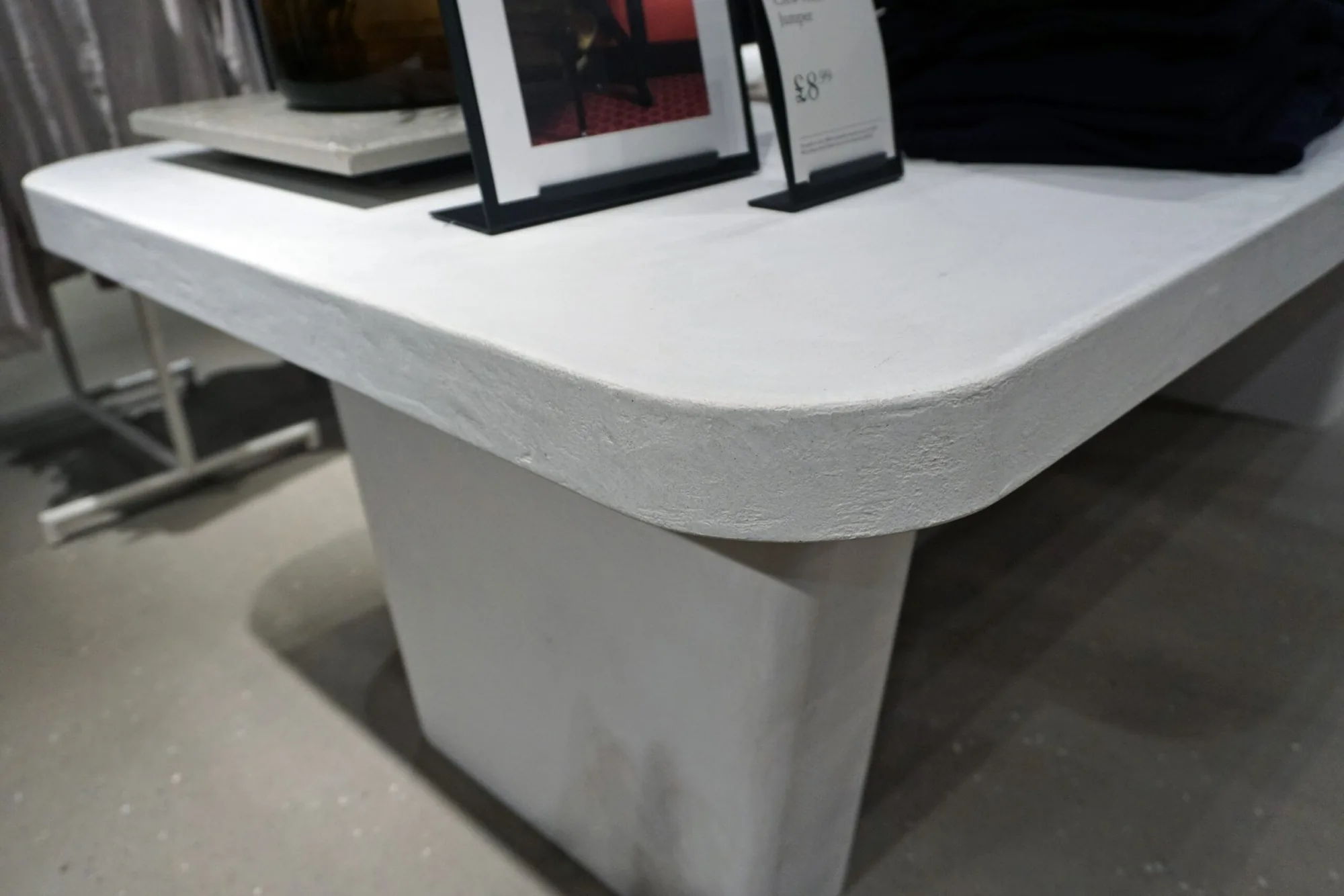
These two options open the plaster to a range of uses: interior floors, interior and exterior walls, worktops and furniture. The colour is chosen from thirty shades based on natural pigments, or made to order.
Claystone is manufactured by ClayLime in Brussels and carries the Sundahus ecolabel.
Installation & uses
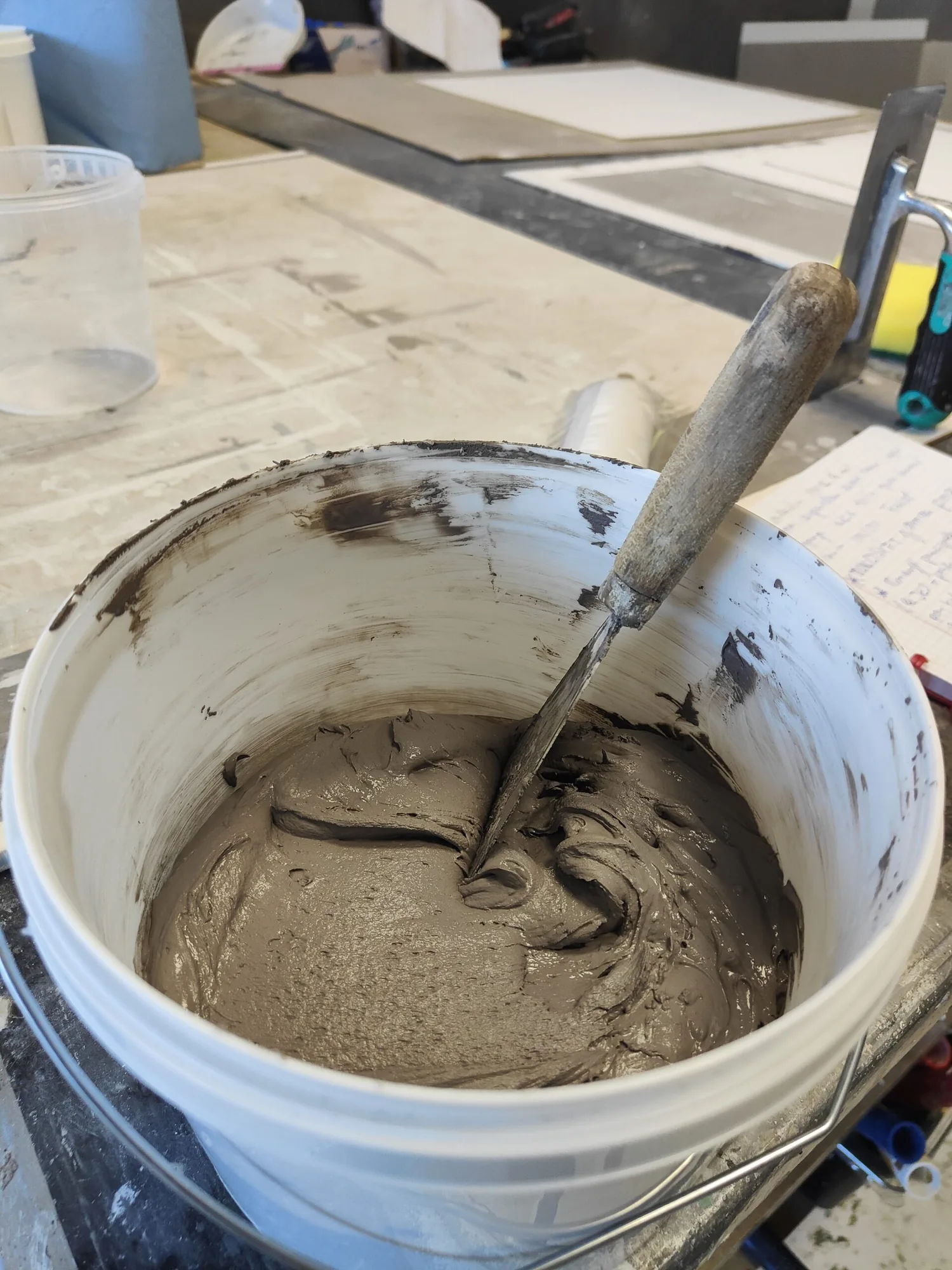
Claystone is supplied as a kit: 15 kg of powder and 2 L of JES binder, to be mixed with the same quantity of water. One kit covers around 8 m², and the mix keeps for 48 hours away from air and light, which leaves time to work without rushing.
The substrate must be sound, flat and evenly absorbent, and then receives the PrimerPro primer coat. On existing tiles or plasterboard, a reinforced levelling compound and a sealing primer go on before the PrimerPro. The plaster is then applied with a trowel in two thin coats, wet-on-wet, for a total thickness of around 2 mm.
The protection depends on the use: three coats of PerfectSeal New for a floor or a piece of furniture, a PowerSeal impregnation followed by two coats of PerfectSeal New for a worktop, and two to three coats of PerfectProtect for a wall that must stay breathable. A protected floor can be walked on after 48 hours and takes heavy use after 72 hours. With underfloor heating, the heating is switched off 48 hours before work starts and brought back up gradually once the protective coats are fully dry, after 72 hours at the earliest.
Application is a job for a professional applicator trained on the product. Maintenance is done with a neutral soap, such as black soap, avoiding acidic products.
About the producer
ClayLime is a Belgian manufacturer of natural decorative plasters, based in Brussels, in the municipality of Schaerbeek, where its workshop is located. Its cement-free range comprises two clay-based plasters, Claystone and Wonderstone, and three lime-based plasters, Creatina, MonoSoft and TadelaktPro, for floors, walls and furniture.
Each plaster comes with primers and protective coats matched to its use. ClayLime trains professional applicators on its products and provides technical support to projects.
Life cycle
Claystone combines clay, dolomite, sedimentary rock and natural pigments. These mineral fillers are bound by JES, a Zero VOC liquid polymer binder, and the formula contains no cement.
ClayLime manufactures Claystone in Brussels and supplies it as a kit of powder and JES binder, to be mixed with water on site. The plaster is applied with a trowel in two thin coats, wet-on-wet, for around 2 mm, then receives a protective varnish.
ClayLime documents no take-back scheme for this plaster. Bound by a polymer and protected by a varnish, it cannot be regarded as purely mineral waste at end of life.
FAQ
Is Claystone ready to use?
No, it is a kit to be prepared: 15 kg of powder and 2 L of JES binder, mixed with the same quantity of water, for around 8 m² at 2 mm. A mini kit of 3.75 kg and 0.5 L of JES covers around 2.5 m². The mix keeps for 48 hours away from air and light.
Can it be applied over existing tiles or plasterboard?
Yes, after a reinforced levelling compound and a sealing primer, then the PrimerPro primer coat. On other substrates, the surface must be sound, flat and evenly absorbent before the PrimerPro.
Which protection should be applied for each use?
Three coats of PerfectSeal New for a floor or a piece of furniture, and a PowerSeal impregnation followed by two coats of PerfectSeal New for a worktop. For a wall that must stay breathable, two to three coats of PerfectProtect. PerfectSeal New closes the surface further so that it resists water and stains.
When can a plastered floor be brought back into use?
A protected floor can be walked on after 48 hours and takes heavy use after 72 hours. It is then maintained with a neutral soap, such as black soap, without acidic products.
Is it a purely mineral clay plaster?
No. The clay, dolomite and sedimentary rock are bound by JES, a Zero VOC liquid polymer binder, and the formula contains no cement. With this binder and the protective varnish, the plaster cannot be regarded as purely mineral waste at end of life.
Alongside
Same layer, same use · materials to compare.