
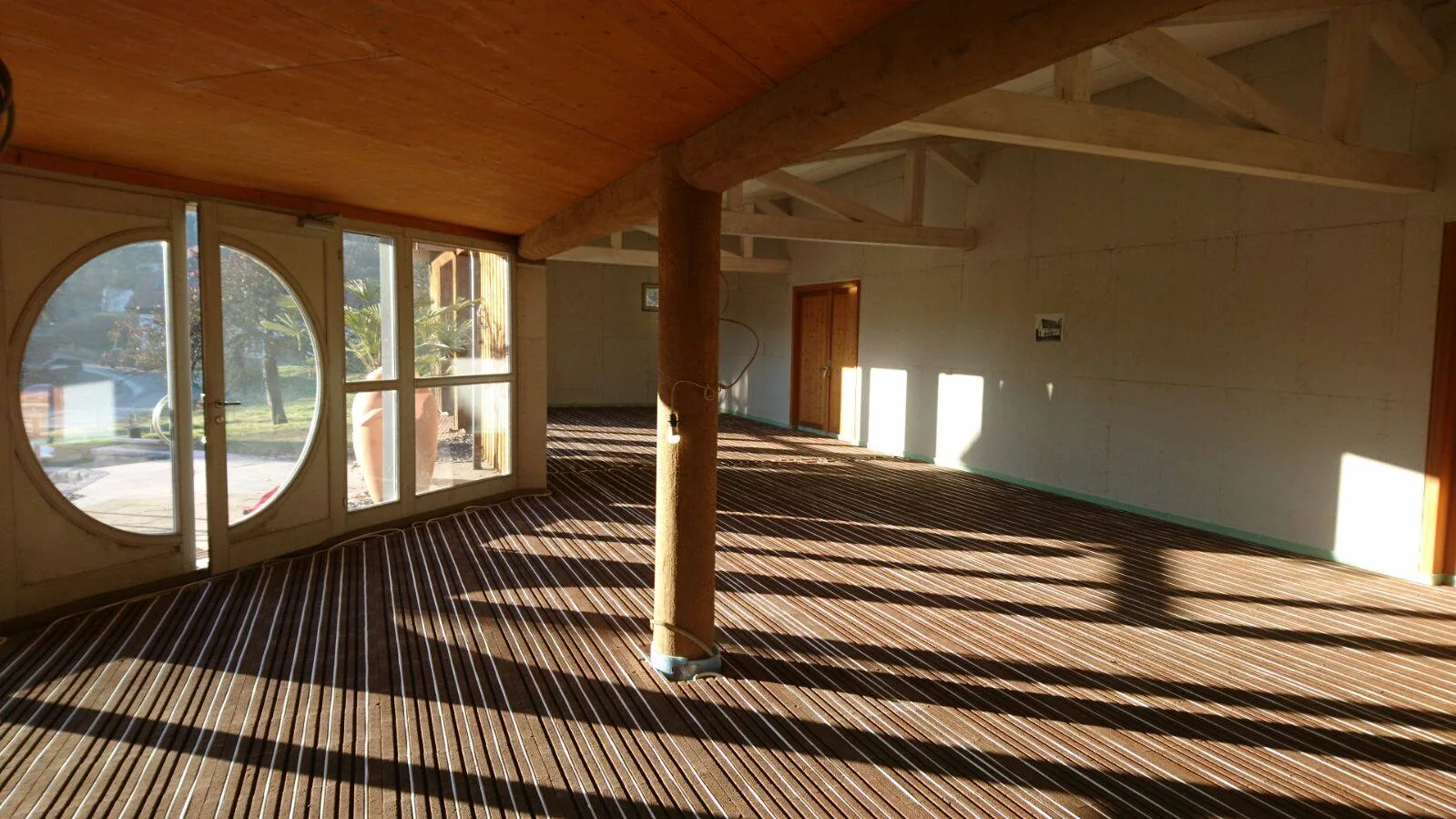
Dry mineral
screed
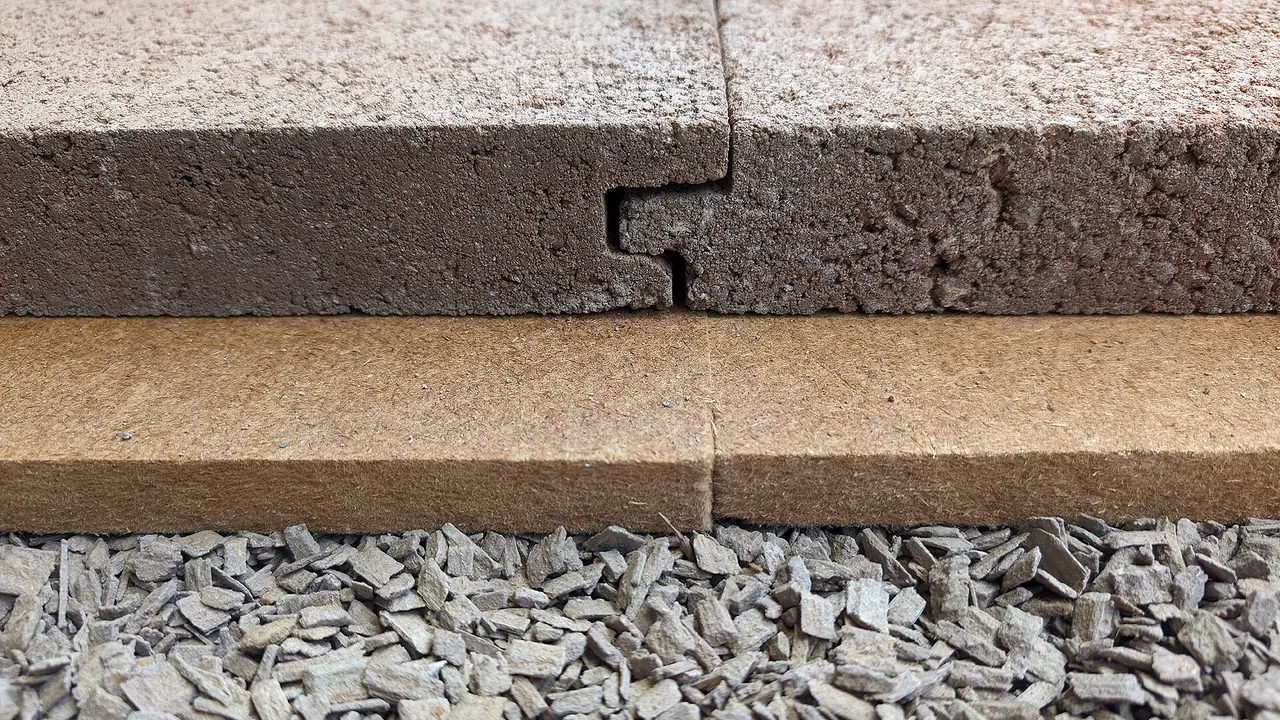
Prefabricated dry screed panels of cement-bound mineral aggregates, laid floating with tongue-and-groove joints and no drying time. Two products: LW86 for unheated floors and the Formplatte Kalksplitt-Blähton, grooved for low-temperature underfloor heating. Thickness 45 mm, reaction to fire A1.
What is dry mineral screed?
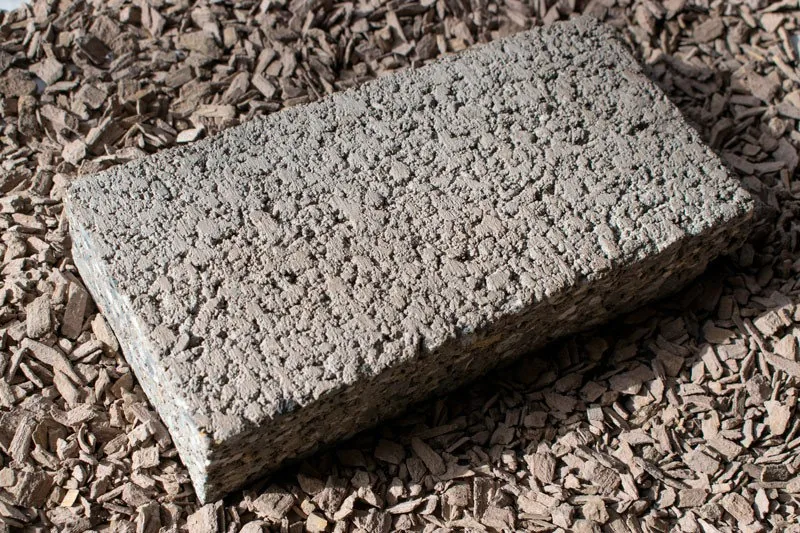
Lithotherm dry screeds are prefabricated panels of cement-bound mineral aggregates that replace a wet screed under the floor finish. The aggregates form the skeleton and provide the mass; the cement (10 to 25% of the mass, according to the EPDs) holds them together. The 45 mm panels join by tongue and groove and are laid floating.
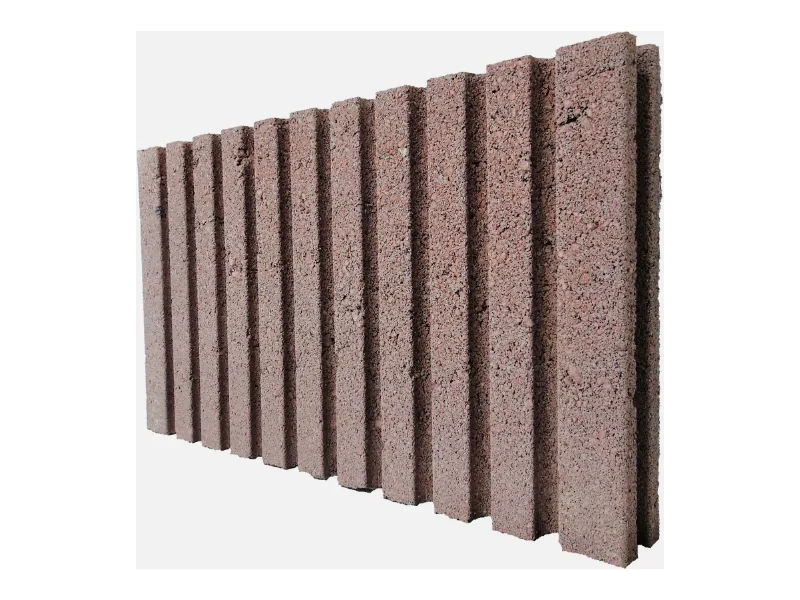
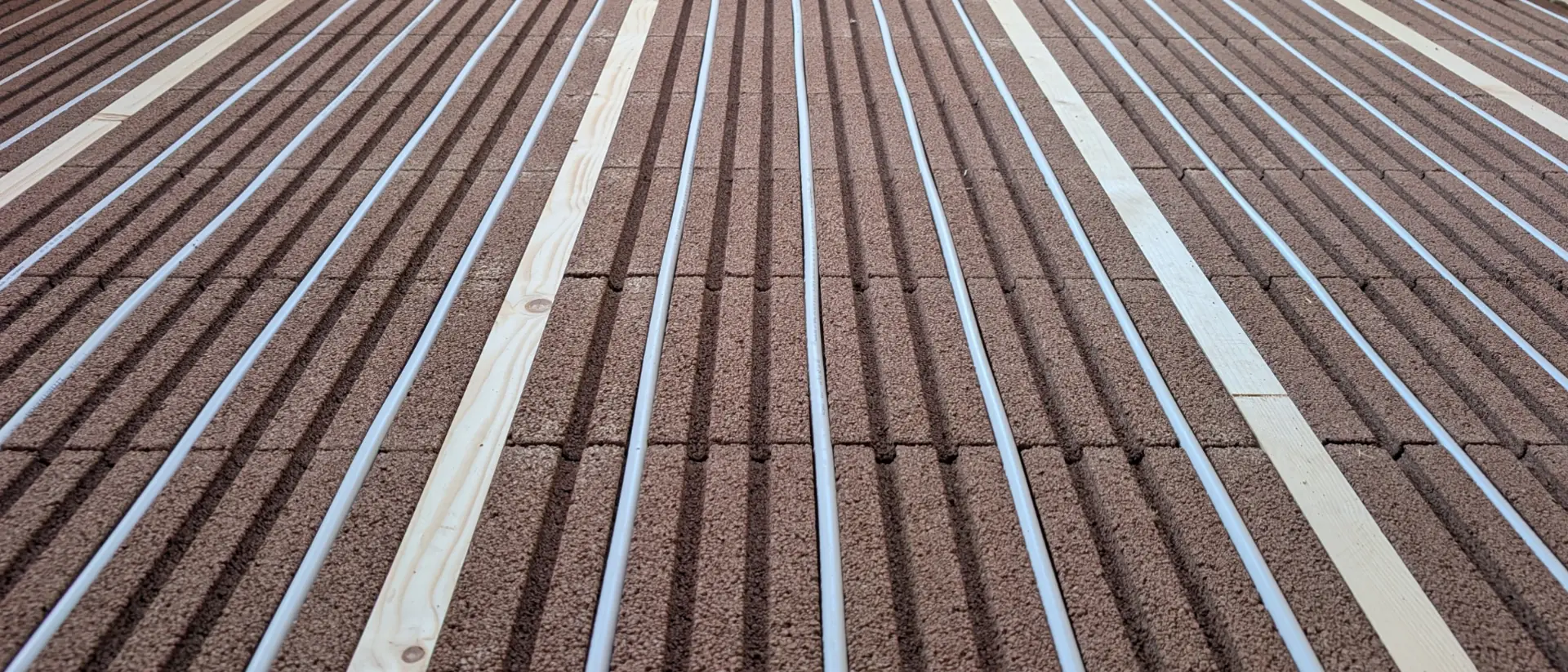
The range comprises two products. LW86, made of natural sands and cement, forms an unheated floor weighing 90 kg/m². The Formplatte Kalksplitt-Blähton, made of crushed limestone, expanded clay and cement, has grooves that take the pipes of a low-temperature underfloor heating system, placed just beneath the floor finish for a fast response.
In both cases, dry laying brings no water into the building: the floor finish can follow as soon as assembly is complete. This property, together with the low build-up height, suits the system to renovation, timber construction and projects where time is tight.
Both products are classed A1 for reaction to fire and have a verified EPD: 1.62 kgCO₂eq per LW86 element and 5.88 kgCO₂eq/m² for the Formplatte (A1-A3). LW86 is made at Neu-Bamberg (Germany), the Formplatte at St. Veit an der Glan (Austria).
The panels can be taken up without damage and reused; failing that, they go to the recycling route for mineral aggregates.
Installation & uses
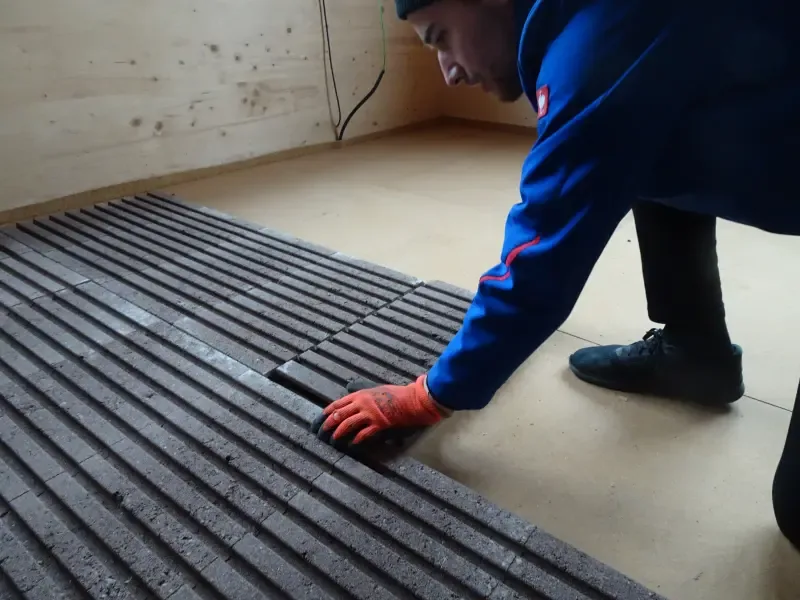
Lithotherm panels are laid floating on a flat, dry substrate with adequate compressive strength, with perimeter isolation strips along the walls. Unevenness is taken up with a dry granular levelling fill, covered by a load-distribution layer of wood fibre boards.
The panels interlock by tongue and groove, with no adhesive or mortar. On the Formplatte, the 14 × 2 mm heating pipes are then clipped into the grooves, at centres suited to the heating demand.
The system takes tiles, natural stone, bonded or floating wood flooring and solid wood boards. On the Formplatte, bonded or floating finishes require a glass-fibre mesh embedded in tile adhesive; solid wood boards are screwed to timber battens fitted between the rows of panels. In wet rooms, waterproofing must be provided under the floor finish.
No drying time separates laying the screed from laying the floor finish, which shortens the sequence of trades.
About the producer
Lithotherm is a German family business based in Bad Kreuznach that has been developing dry floor systems since 2002. Its prefabricated panels of cement-bound mineral aggregates replace a wet screed: they are laid dry, floating, with no drying time, and can be taken up without damage.
The range comprises LW86, a dry screed for unheated floors, and the Formplatte Kalksplitt-Blähton, a grooved panel that takes the pipes of a low-temperature underfloor heating system. The producer supports projects with advice and planning aids.
Technical performance
Reaction to fire class A1 for both products. EPDs to EN 15804+A2 (EPD Norway): NEPD-10111-10111-2 (LW86) and NEPD-10118-10118-2 (Formplatte Kalksplitt-Blähton).
Life cycle
The panels are made of mineral aggregates bound with cement, which accounts for 10 to 25% of their mass. LW86 combines natural sands and cement, the Formplatte crushed limestone and expanded clay; no recycled material goes into either.
LW86 is made at Neu-Bamberg, in Germany, and the Formplatte Kalksplitt-Blähton at St. Veit an der Glan, in Austria. The panels leave the factory ready to lay, with tongue-and-groove edges, and are laid dry with no drying time.
Laid without adhesive or mortar, the panels can be taken up without damage and reused. Failing that, the end-of-life scenarios in the EPDs send them for recycling as mineral aggregate.
FAQ
Is drying time needed before laying the floor finish?
No. The panels are laid dry and bring no water into the building: the floor finish can follow as soon as assembly is complete, which shortens the sequence of trades.
LW86 or Formplatte: which should you choose?
LW86, made of natural sands and cement, forms an unheated floor weighing 90 kg/m². The Formplatte Kalksplitt-Blähton, made of crushed limestone, expanded clay and cement, has grooves into which the 14 × 2 mm pipes of a low-temperature underfloor heating system are clipped. Both are 45 mm thick and classed A1 for reaction to fire.
How is an uneven substrate dealt with?
The substrate must be flat, dry and have adequate compressive strength, with perimeter isolation strips along the walls. Unevenness is taken up with a dry granular levelling fill, covered by a load-distribution layer of wood fibre boards.
Which floor finishes can the system take?
Tiles, natural stone, bonded or floating wood flooring and solid wood boards. On the Formplatte, bonded or floating finishes require a glass-fibre mesh embedded in tile adhesive, and solid wood boards are screwed to timber battens fitted between the rows of panels. In wet rooms, waterproofing must be provided under the floor finish.
Can the panels be reused?
Laid without adhesive or mortar, they can be taken up without damage and reused. Failing that, they are recycled as mineral aggregate.
Alongside
Same layer, same use · materials to compare.
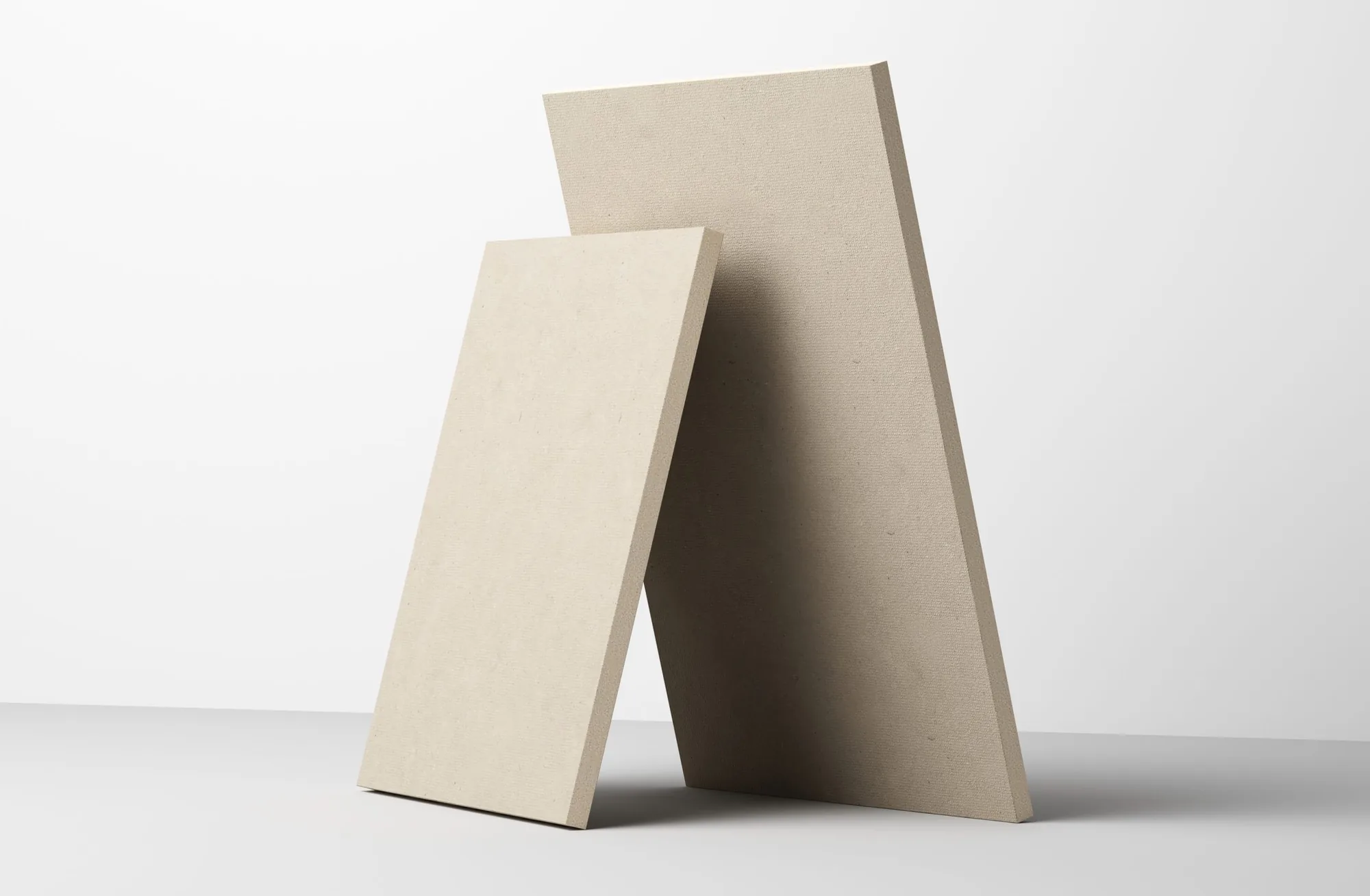
Paper mill sludge and recycled cardboard, resin-free. Honext · Barcelona.
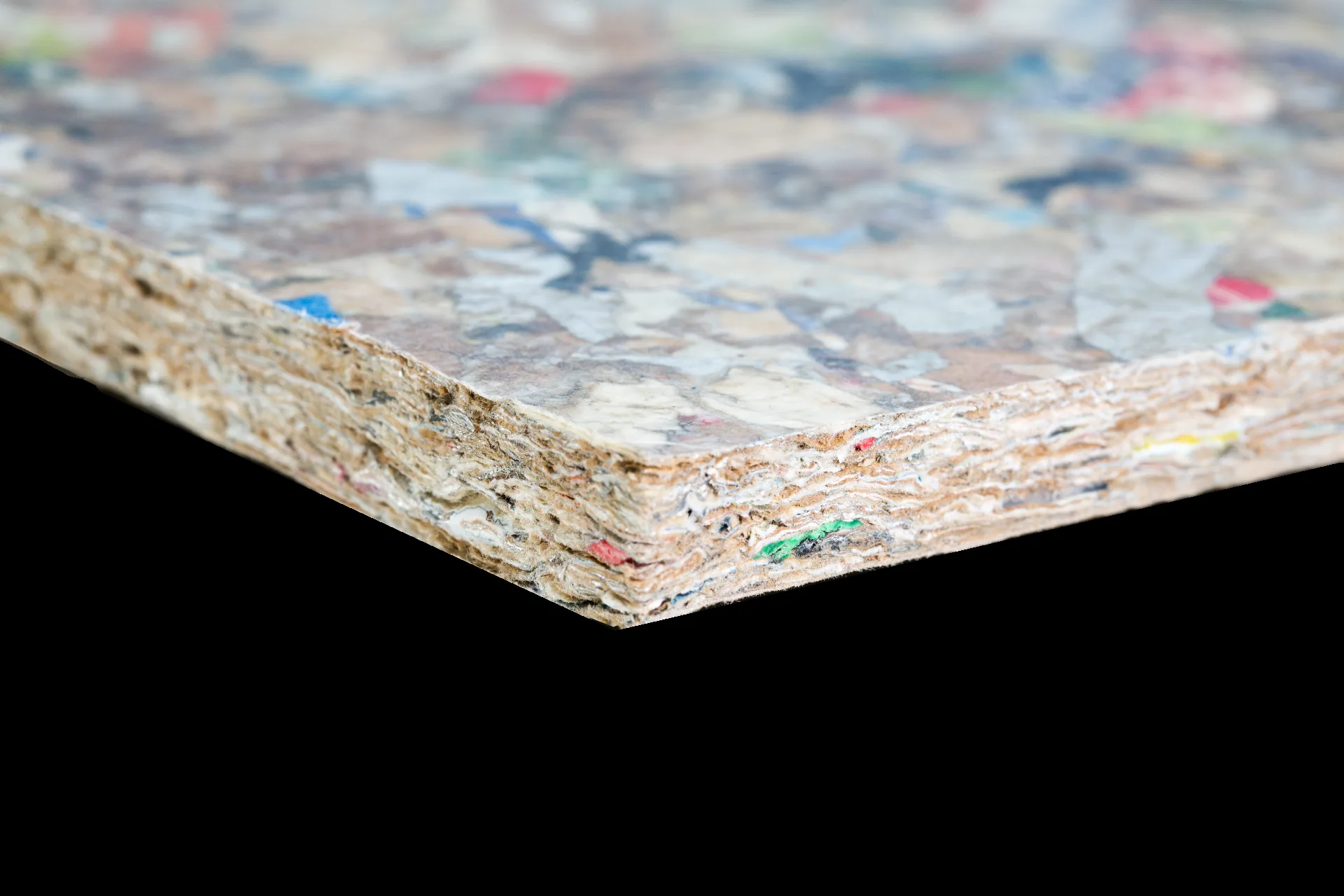
Recycled composite food packaging, remelted with no added binder. Recoma · Hässleholm.
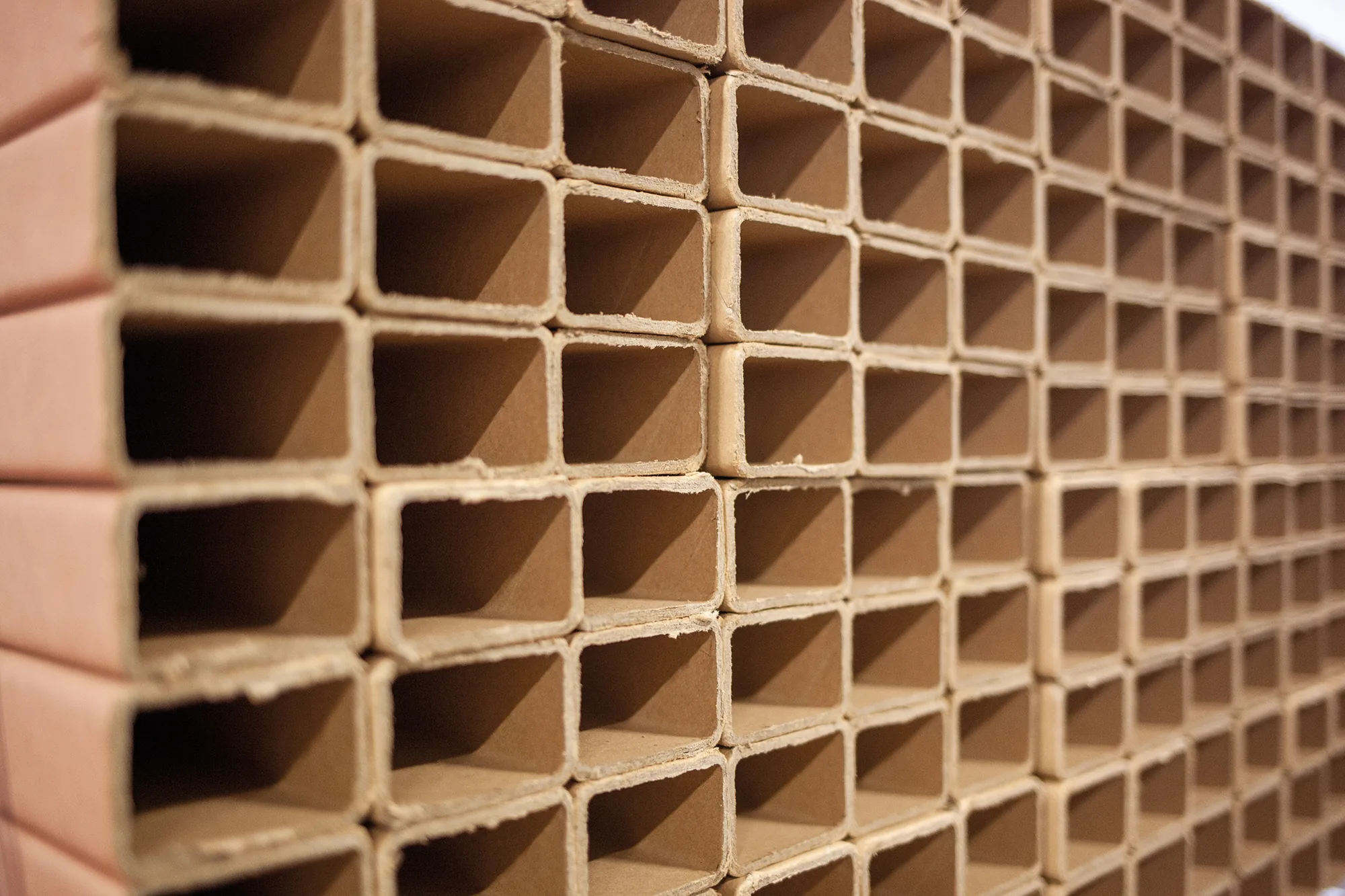
Post-consumer recycled paper, glued into a tubular profile. Wood Tube · Säffle.