Paper
fibre board
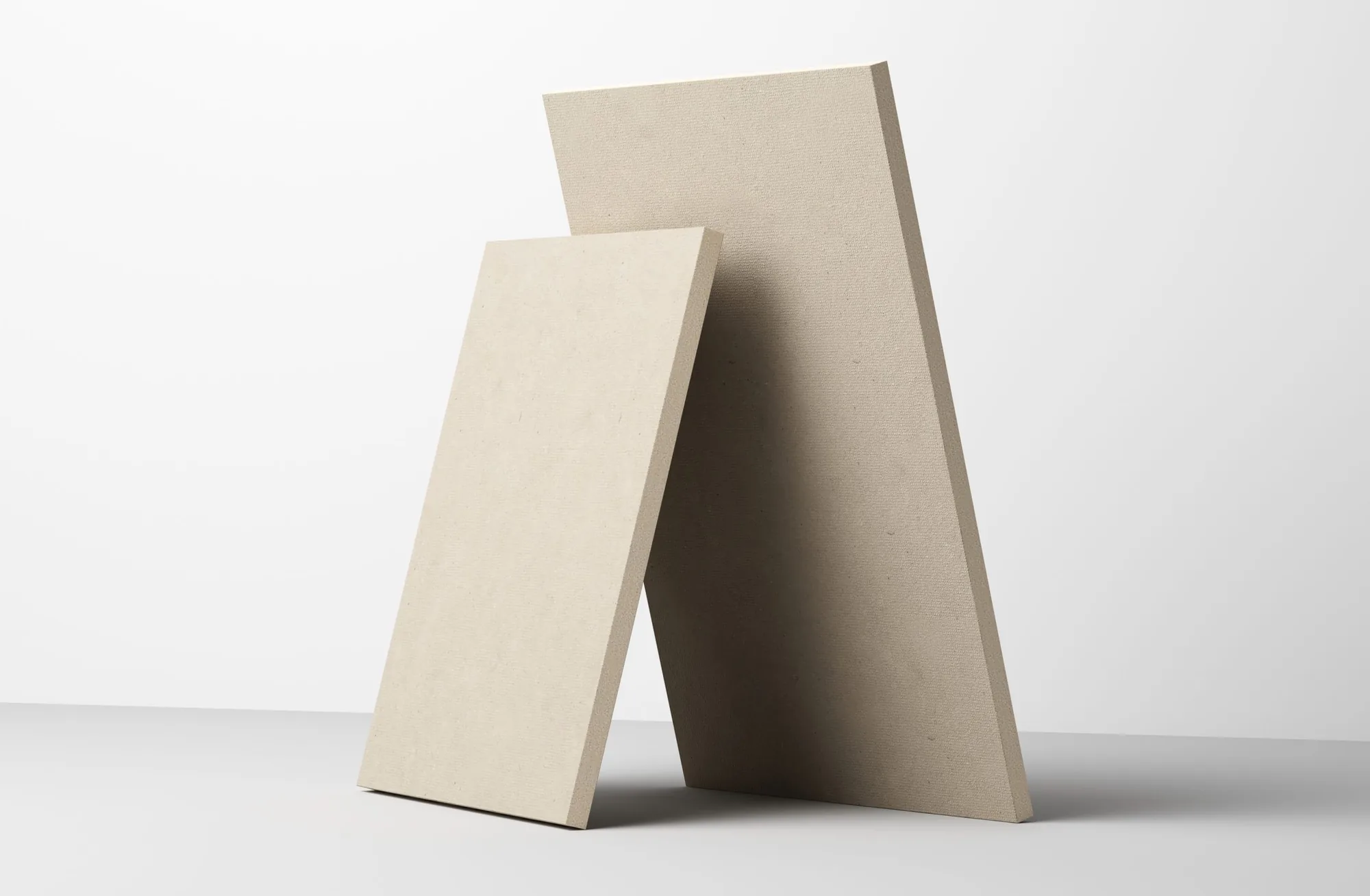
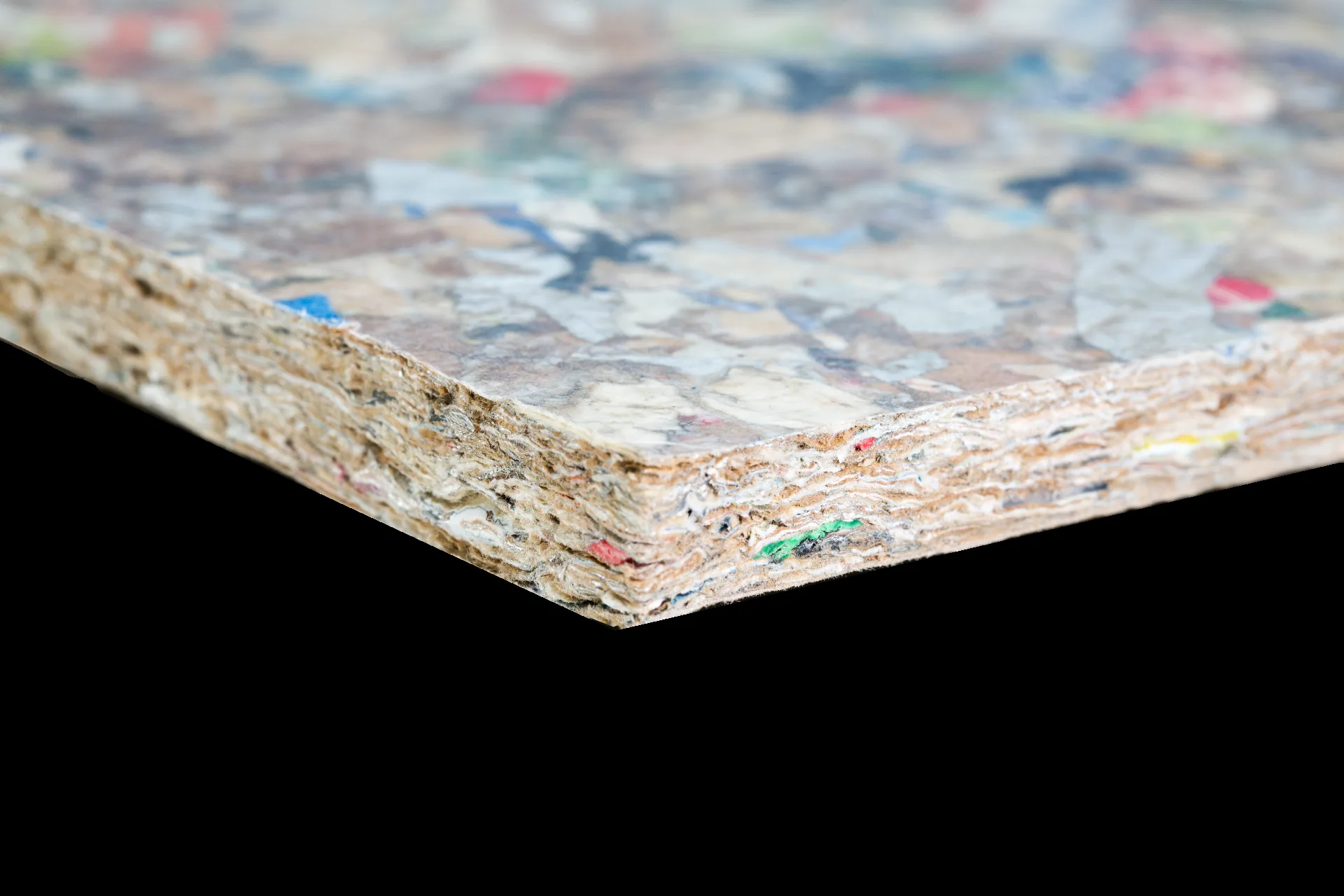
Paper fibre board is an interior fit-out material used for facings and partitions. Made from paper mill sludge and post-consumer cardboard, it turns industrial waste into a building material, with no resin or glue.
What is a paper fibre board?
Paper fibre board is an interior fit-out material made of around two thirds sludge from paper industry filters and one third post-consumer cardboard. A biotechnological process activates the natural bonding of the fibres and hardens the board, with no resin, glue or formaldehyde. The FR-B version is fire-retarded with silicates; the FR-C version has no additives.
The result is a hard, uniform board that can be worked like a conventional fibreboard, with standard joinery tools. The material remains vapour-open and does not emit volatile organic compounds.
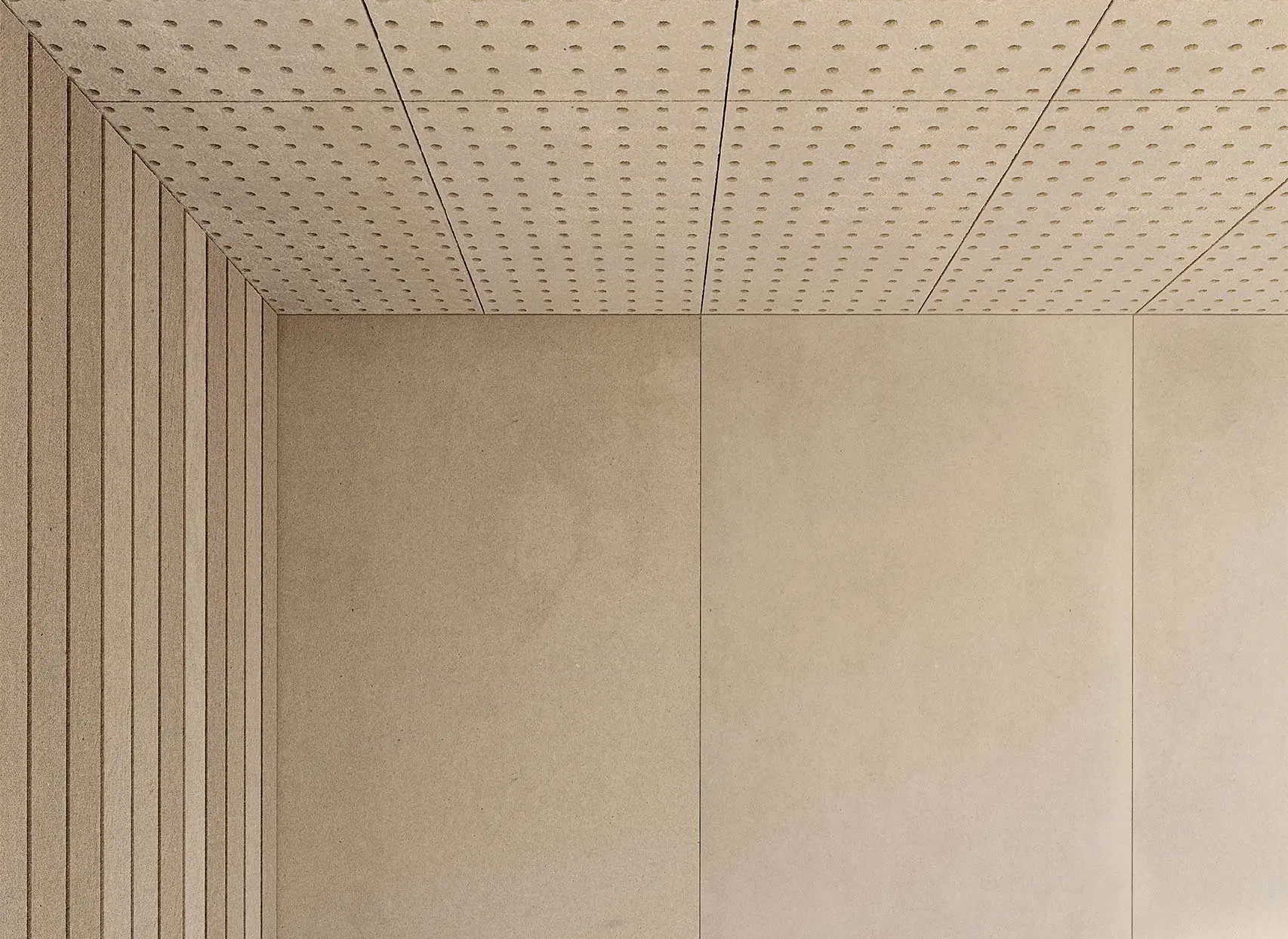
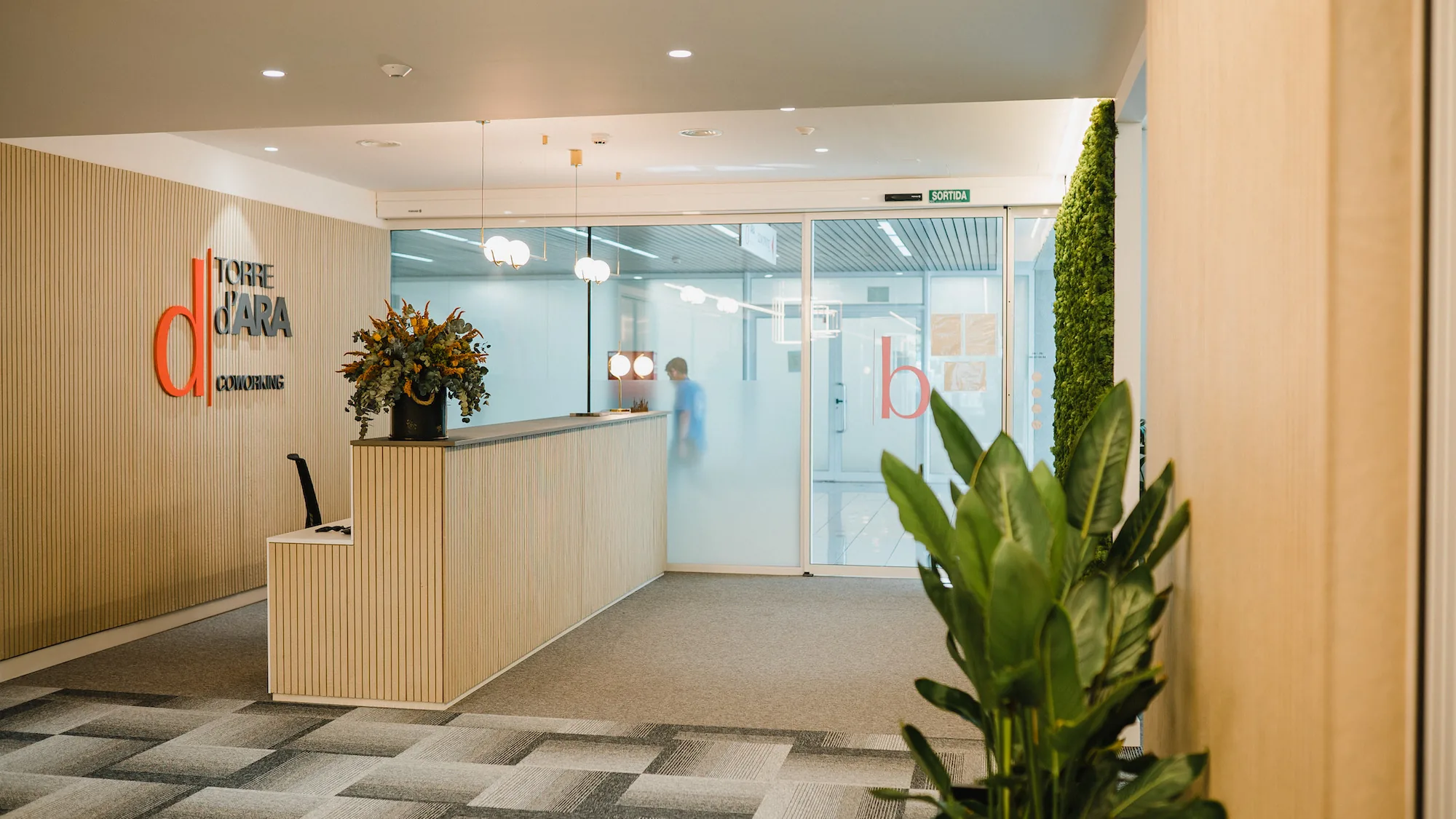
It is suited to interior wall cladding, stud partitions, suspended ceilings, furniture tops, acoustic panels and the fit-out of exhibition stands or shops.
It is manufactured at the Honext plant in Vacarisses, near Barcelona. A second plant is planned in Kriebstein, Germany, as part of a joint venture with the paper group WEPA. Certified Cradle to Cradle Gold, the board can be recycled through the Honext process into new boards.
Installation & uses
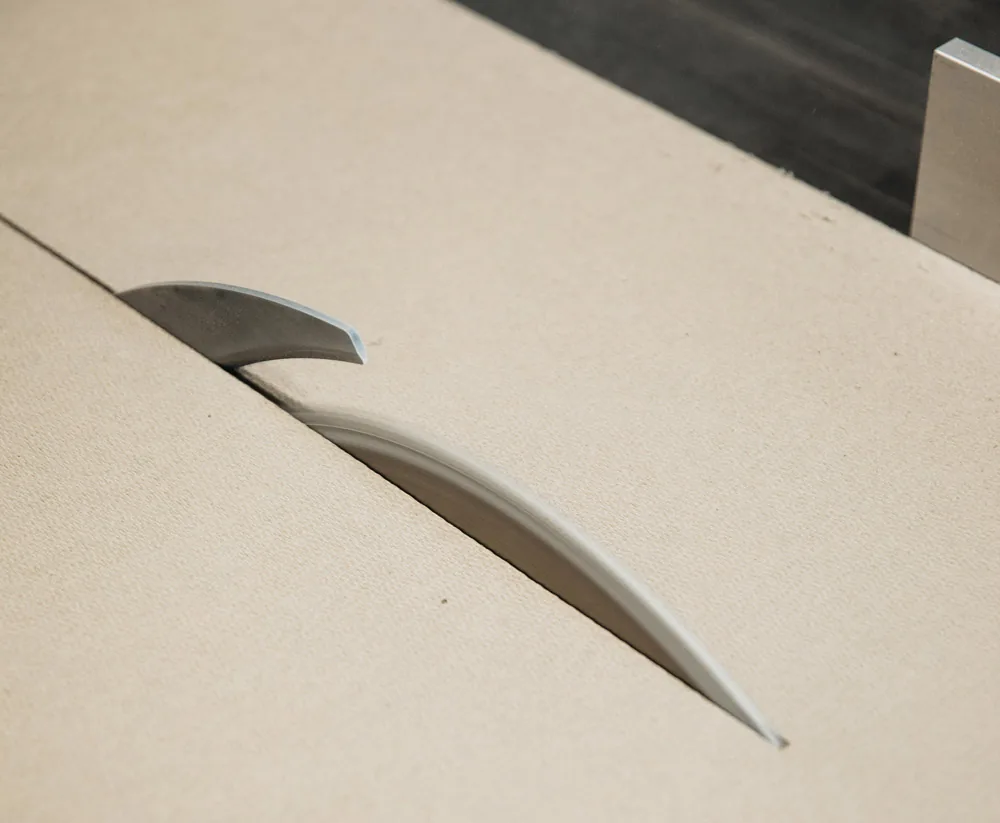
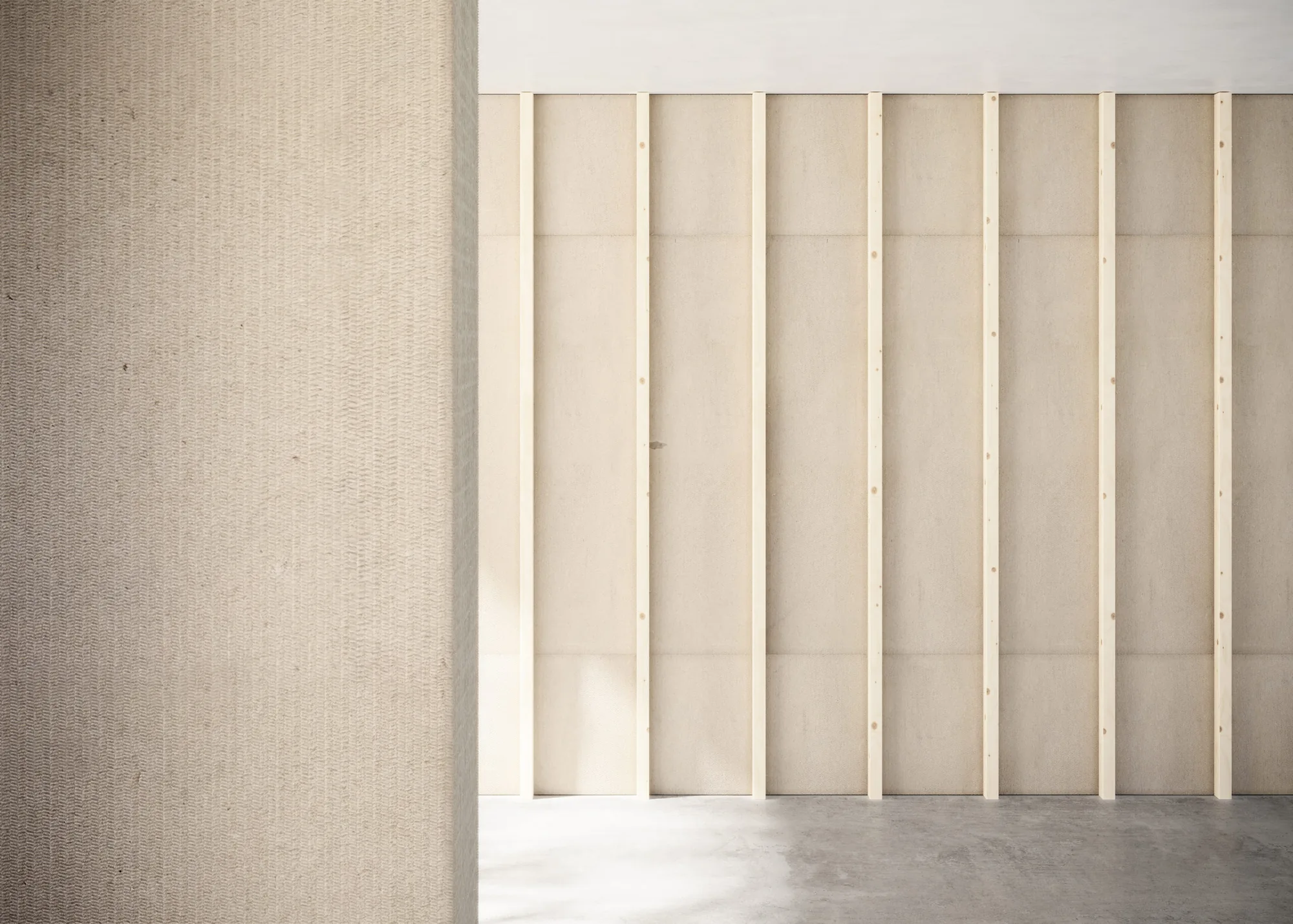
The board is worked with a circular saw, a jigsaw or a router. It is fixed by screwing, stapling or gluing, depending on the substrate and the use.
It is installed as interior wall cladding, as a partition on a stud frame, as a suspended ceiling or as furniture facing. A dedicated installation manual details the setting-out principles for the cladding.
The two faces have a slightly different texture, a result of the filtration process, which leaves a choice between a more uniform and a more textured appearance. The surface can be left exposed or given a compatible paint, oil or varnish.
At end of life, the board can be recycled through the Honext process, which feeds it back into the manufacture of new boards.
About the producer
Honext is a Spanish producer based in Barcelona, specialising in fibreboards made from paper industry waste. Its patented biotechnological process turns paper mill sludge and used cardboard into hard boards, with no resin or glue, certified Cradle to Cradle Gold.
In 2025 the company partnered with the paper group WEPA to develop its production on a European scale, with a second plant planned in Germany.

Technical performance
CE marking on the basis of EAD 210132-00-0504: ETA 22/0227 (ITeC) and DoP H2501 for the FR-C version (named STD in the DoP); ETA 23/0631 (ITeC) and DoP H2502 for the FR-B version. EN 13501-1 (reaction to fire). EPD GlobalEPD EN15804-036 rev2 (AENOR), valid until 16 April 2028.
Life cycle
The board is made from 100% paper industry waste: around two thirds sludge from paper industry filters and one third post-consumer cardboard. No resin or glue is added; only the FR-B version is fire-retarded with silicates.
Honext manufactures the board at its plant in Vacarisses, near Barcelona, Spain. A biotechnological process activates the natural bonding of the fibres and hardens the board, with no resin, glue or formaldehyde.
The board can be recycled through the Honext process, which feeds it back into the manufacture of new boards in Vacarisses. Over a reference service life of 25 years, the EPD assumes an end-of-life scenario of 80.4% recycling.
FAQ
Are the two faces of HONEXT® Board identical?
No. The filtration process gives each face a slightly different texture, which leaves a choice between a more uniform and a more textured appearance. The natural cream-beige shade also varies from batch to batch, which Honext documents in its Heterogeneity Manual.
What is the difference between the FR-B and FR-C versions?
The FR-C version, with no additives, is classed C-s1, d0; the FR-B version, fire-retarded with around 3% silicates, achieves B-s1, d0 to EN 13501-1. FR-B is slightly denser: 580 to 650 kg/m³ against 550 to 620 kg/m³. The embodied carbon of -730 kgCO₂eq/m³ (A1-A3) published in the EPD applies to the FR-C version.
Does the board contain resin or glue?
No. A biotechnological process activates the natural bonding of the paper mill sludge and cardboard fibres, with no resin, glue or formaldehyde. The board is declared free of VOC emissions and remains vapour-open, with μ = 2.7.
Can it be used as an acoustic panel?
As supplied, it absorbs little: αw = 0.15 to ISO 354. For acoustic use, the recommended perforation is 8 mm in diameter at 32 × 32 mm centres. The 12 mm board alone is estimated at Rw = 24 dB; higher values apply to complete partition build-ups that have been tested.
What impact resistance does it offer in a wall?
According to the declarations of performance for the FR-C and FR-B versions, based on EAD 210132-00-0504, the board withstands a soft body impact of 1,200 N·m and a hard body impact of 10 N·m, without collapse, penetration or projected fragments.