Recycled
packaging board
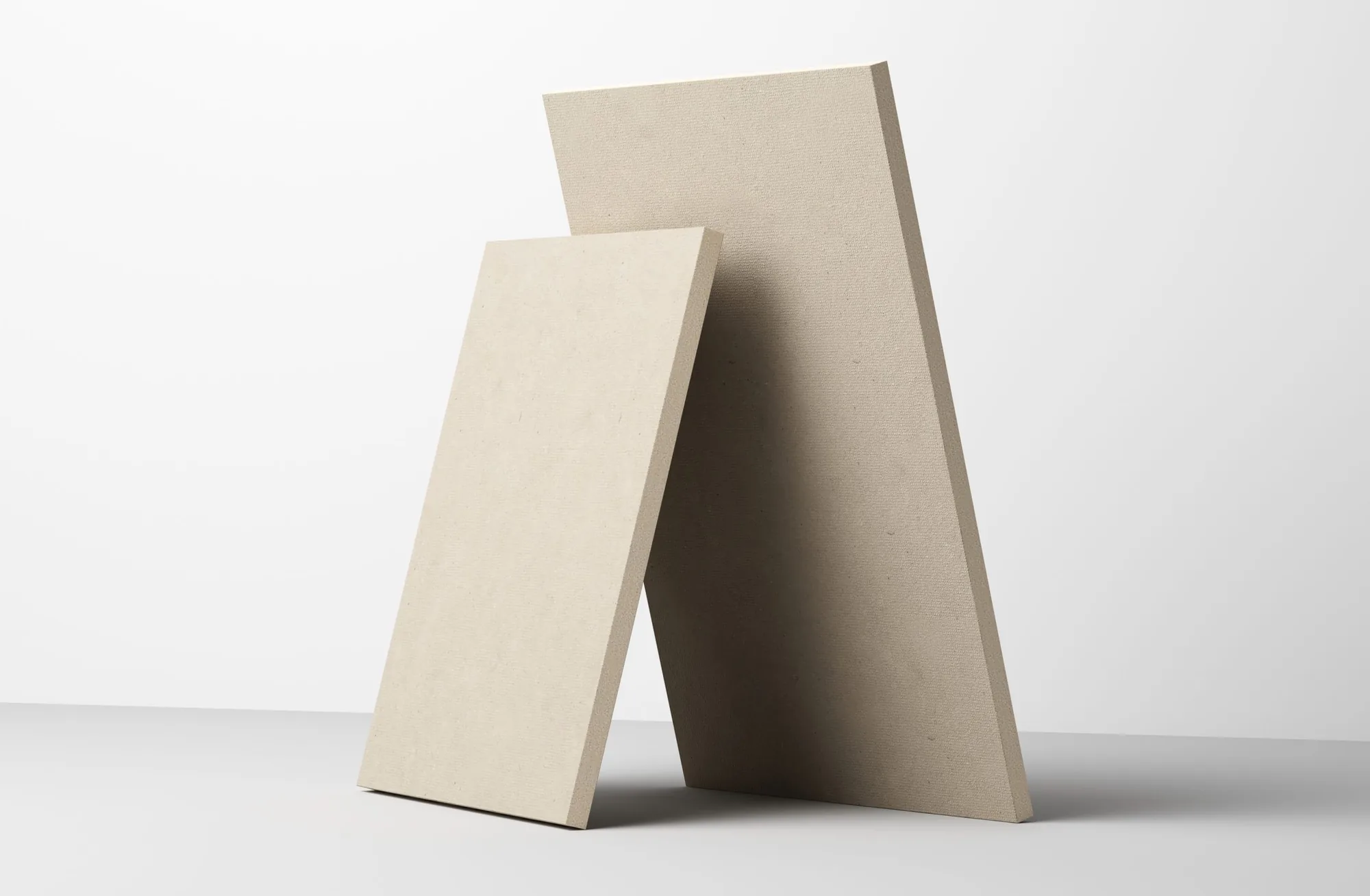
Interior finishing board made from 100% recycled and remelted composite food packaging (around 65-75% cardboard, 25-35% polyethylene, 1-5% aluminium). Three finishes: Basic, plain; Design, with a visible structure; Surface, with rounded edges for filled joints. Embodied carbon (A1-A3): -10.58 kgCO₂eq/m².
What is a recycled packaging board?
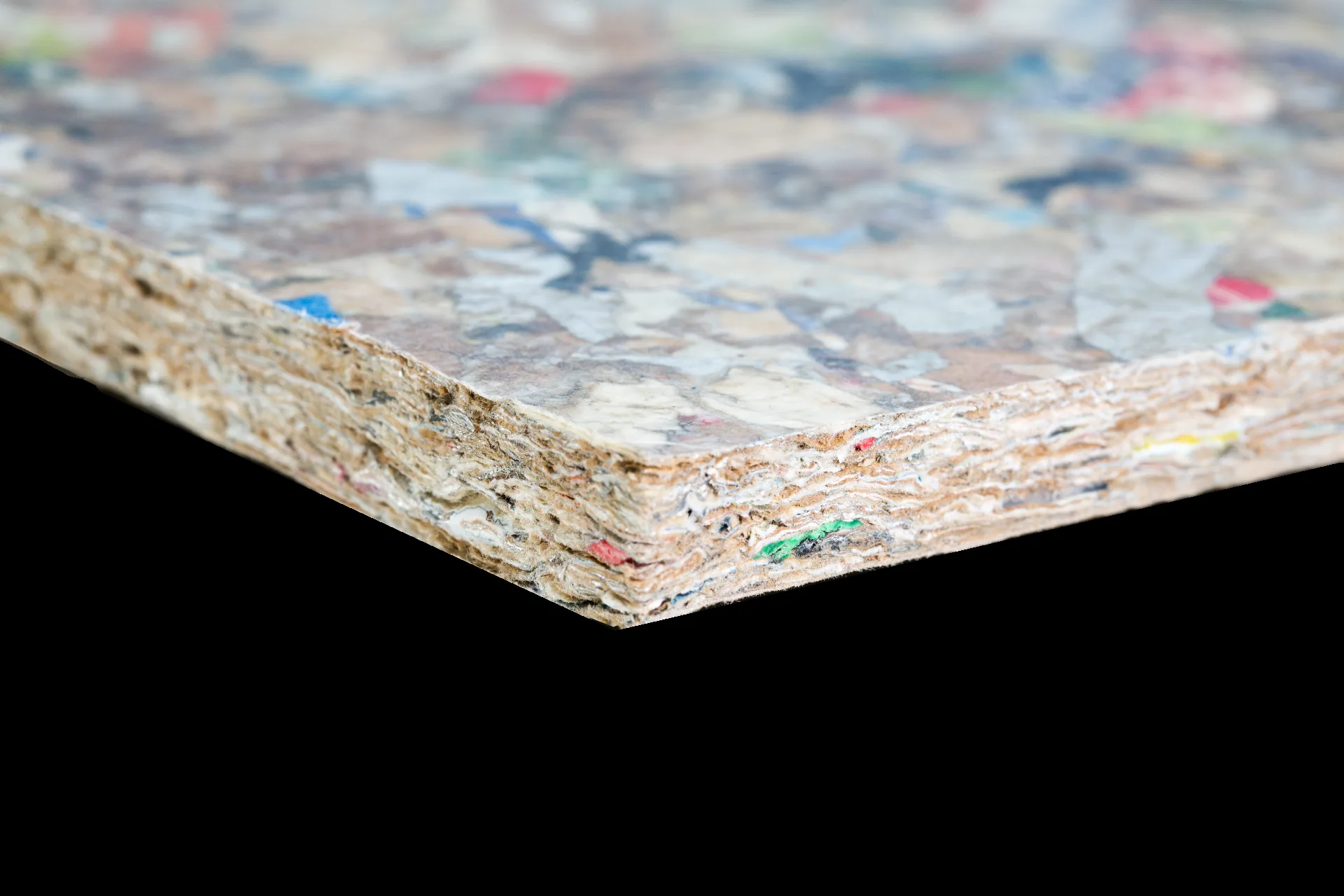
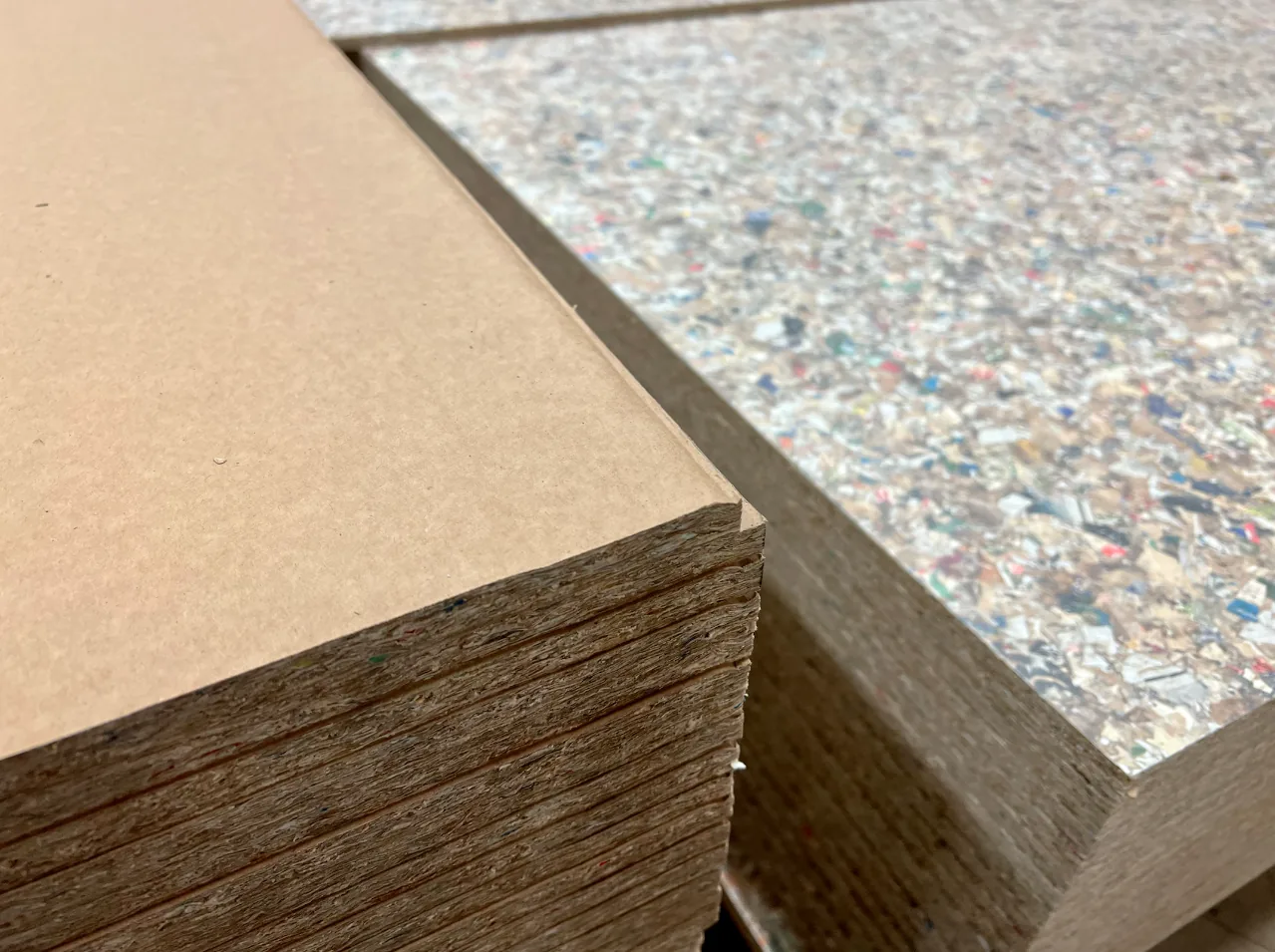
The recycled composite packaging finishing board is an interior fit-out material made of post-consumer food cartons, shredded and remelted with no added binder. Cardboard (65 to 75%) makes up most of the material, the polyethylene film (25 to 35%) acts as a hot-melt binder once melted, and the aluminium (1 to 5%) stays locked in the body of the board.
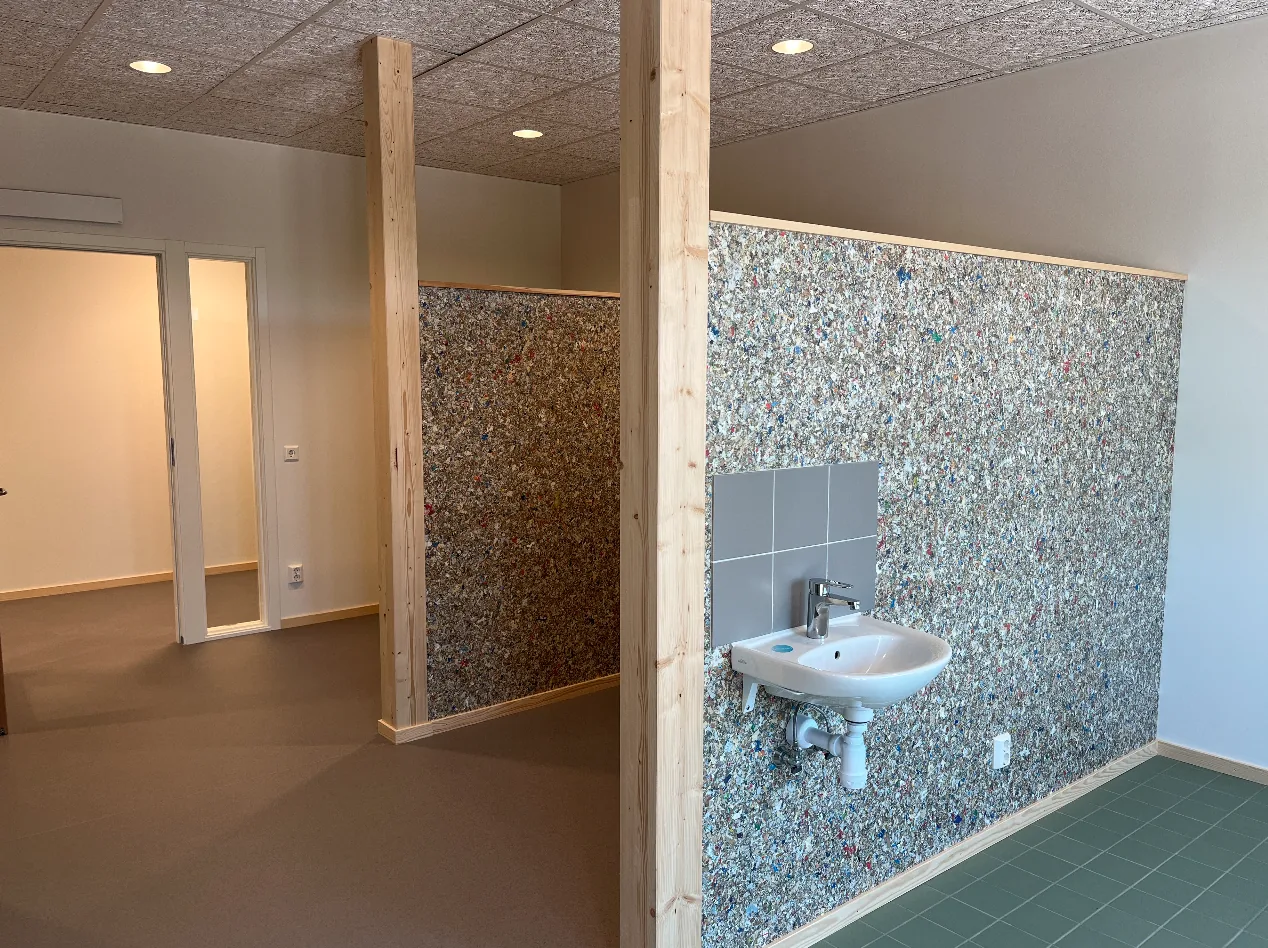
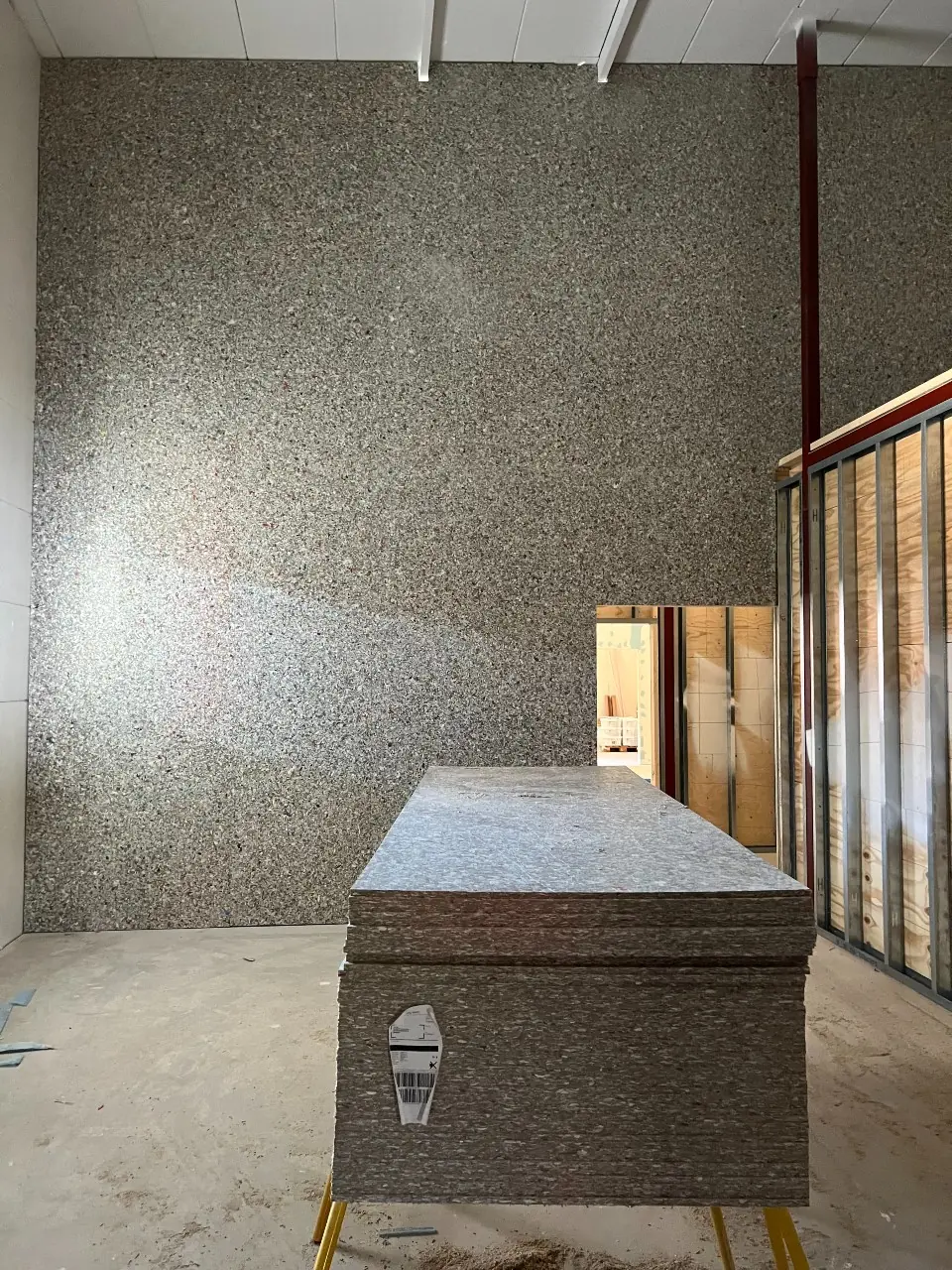
The resulting board is hard and uniform and is worked like chipboard, on a timber or metal frame. Three finishes are available: Basic (plain kraft), Design (visible laminated structure) and Surface (Basic with rounded edges for filled joints, as on plasterboard).
It is suited to interior stud partitions, wall linings, furniture tops and acoustic walls. It is semi-permeable to water vapour and not waterproof: using it in wet rooms requires additional waterproofing.
It is manufactured in Hässleholm, Sweden, and actively distributed in the Benelux from Brussels. At end of life, the board is recycled through the offcut take-back scheme offered by Recoma.
Installation & uses
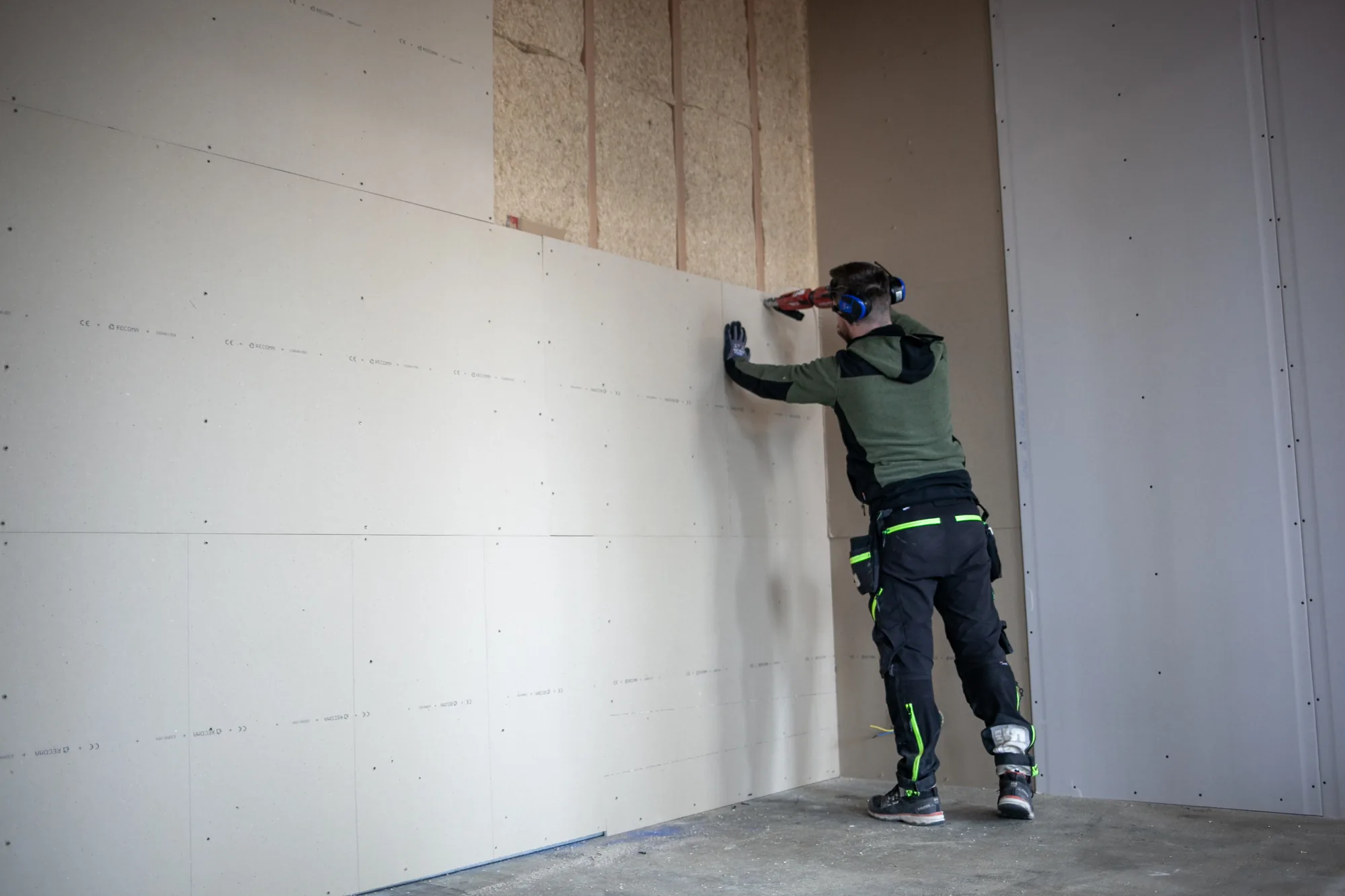
The board is installed like chipboard, with standard joinery tools. It is cut with a circular saw, a table saw or a jigsaw (the polymer content can wear blades faster than a conventional wood-based board). It is fixed by screwing to timber or steel studs.
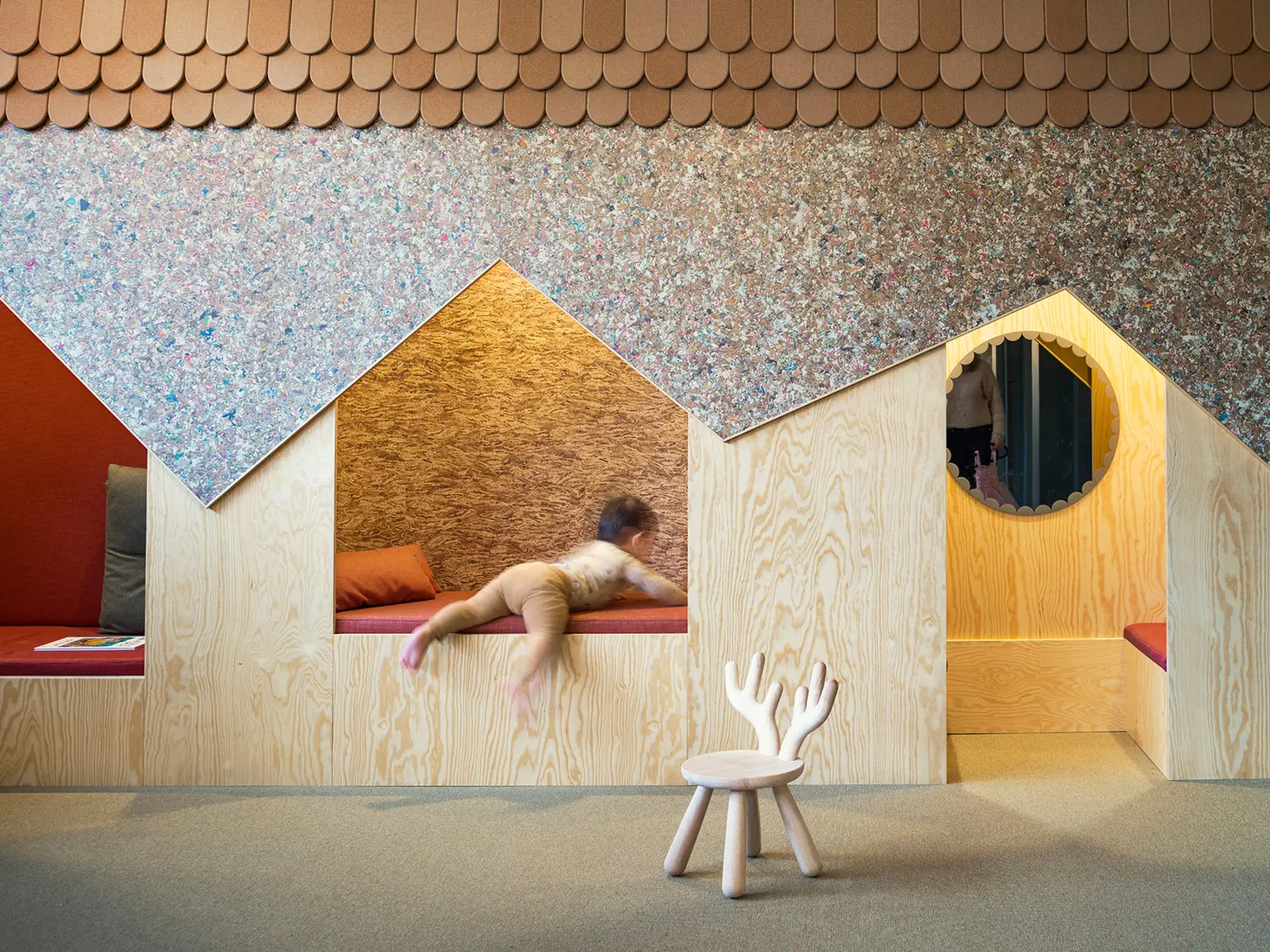
It is suited to interior stud partitions, wall linings, office or kitchen furniture tops, and acoustic panels. A complete system called ERW GreenWALL combines it with paper studs and biobased insulation for a fully circular partition.
For a smooth, even final surface, Recoma recommends applying a skim coat over the whole surface or a glass-fibre lining before painting. The board can also be wallpapered or lacquered. With the Surface finish and its rounded edges, the joints are filled as on plasterboard.
In wet rooms, the board requires additional waterproofing: it is semi-permeable but not waterproof.
About the producer
Recoma is a Swedish producer, based in Hässleholm, that makes interior fit-out boards from post-consumer composite food packaging. The process fully remelts the packaging, with no added resin, to produce a hard, uniform board.
The company has been present in the Benelux since 2025, with an operation based in Brussels.
Technical performance
CE marking: ETA 21/0912 (TZÚS Praha) on the basis of EAD 210138-00-0504, DoP SE2022/01. Swedish Type Approval C900856 (interior partition system). EPD-IES-0012841 (EPD International, EN 15804+A2 / ISO 14025).
Life cycle
The board is made from 100% recycled composite food packaging, post-consumer cartons and cups. Cardboard accounts for 65 to 75% of the mass, with 25 to 35% polyethylene and 1 to 5% aluminium.
Recoma shreds the packaging and remelts it into boards at its plant in Hässleholm, Sweden, around 1,400 km from Brussels. Melted at around 200 °C, the polyethylene acts as the binder, with no added resin, glue or water.
Offcuts and removed boards are recycled through the take-back scheme offered by Recoma, which returns the material to its process. The polyethylene and aluminium rule out biodegradation: circularity depends on this return to manufacture.
FAQ
Which PackWall finish should I choose: Basic, Design or Surface?
Basic has a uniform, smooth kraft surface. Design shows the laminated structure of the packaging, with a speckled appearance. Surface is the Basic board with rounded edges, so that the joints can be filled as on plasterboard. For a smooth final surface to be painted, Recoma recommends a full skim coat or a glass-fibre lining.
Are special tools needed to cut it?
No, it is cut with a circular saw, a table saw or a jigsaw, and fixed by screwing to timber or steel studs. The polymer content can, however, wear blades faster than a wood-based board.
Can it be installed in wet rooms?
The board is semi-permeable to vapour but not waterproof. In wet rooms, it requires additional waterproofing.
What sound insulation does a PackWall partition achieve?
According to the build-ups tested by RISE and independent laboratories, Rw = 49 dB on a timber frame, 58 dB on a steel frame with mineral wool and 60 dB with a double PackWall lining. These values apply to the complete partition, not to the board alone.
Are boards thicker than 16 mm available in the Benelux?
The maximum commercial thickness currently available in the Benelux is 16 mm, within a range of 8 to 18 mm, with 12 mm as standard. Beyond that, the wall is built in two 12 mm layers.
Alongside
Same layer, same use · materials to compare.