Loadbearing
recycled-aggregate block
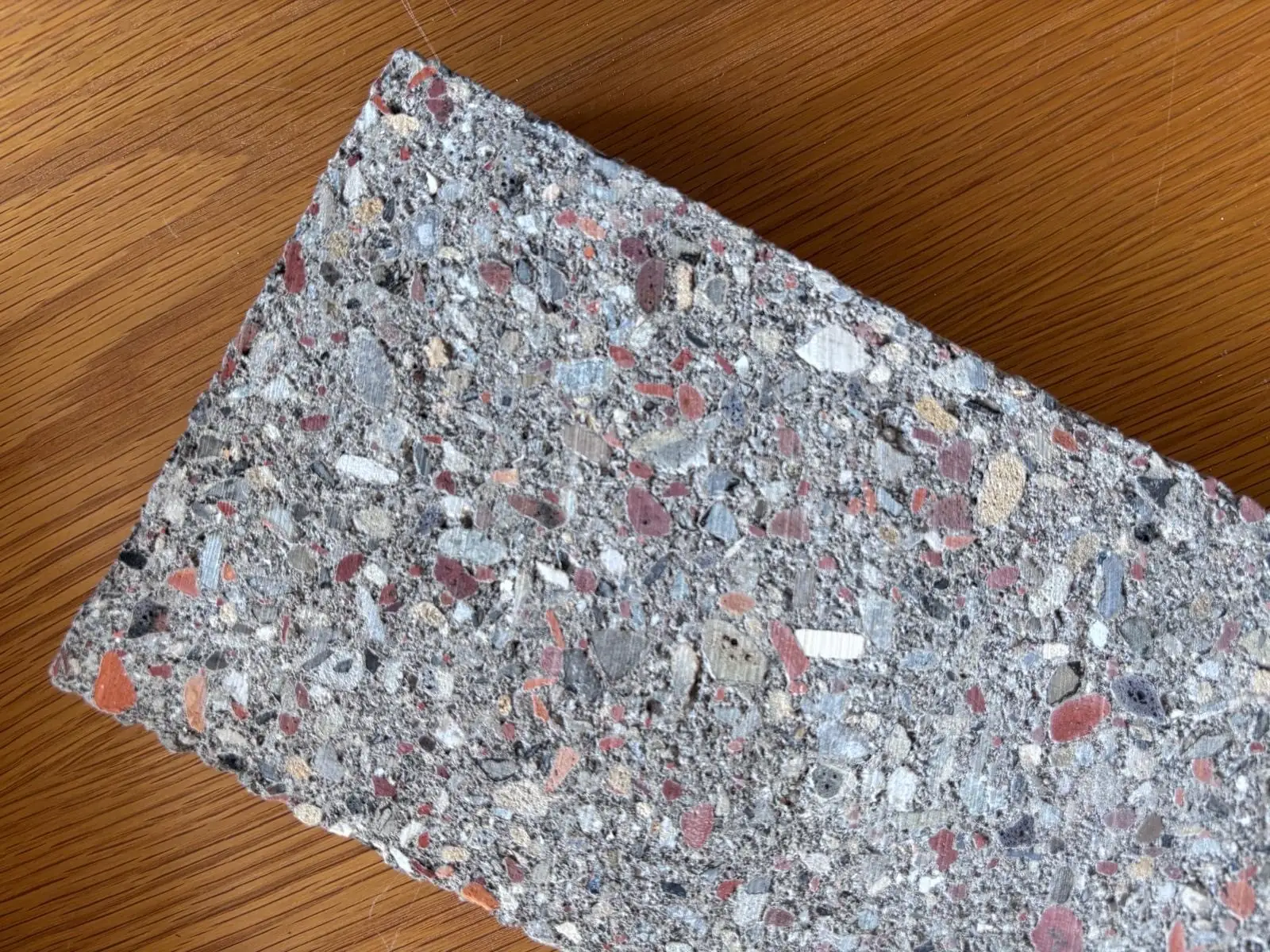
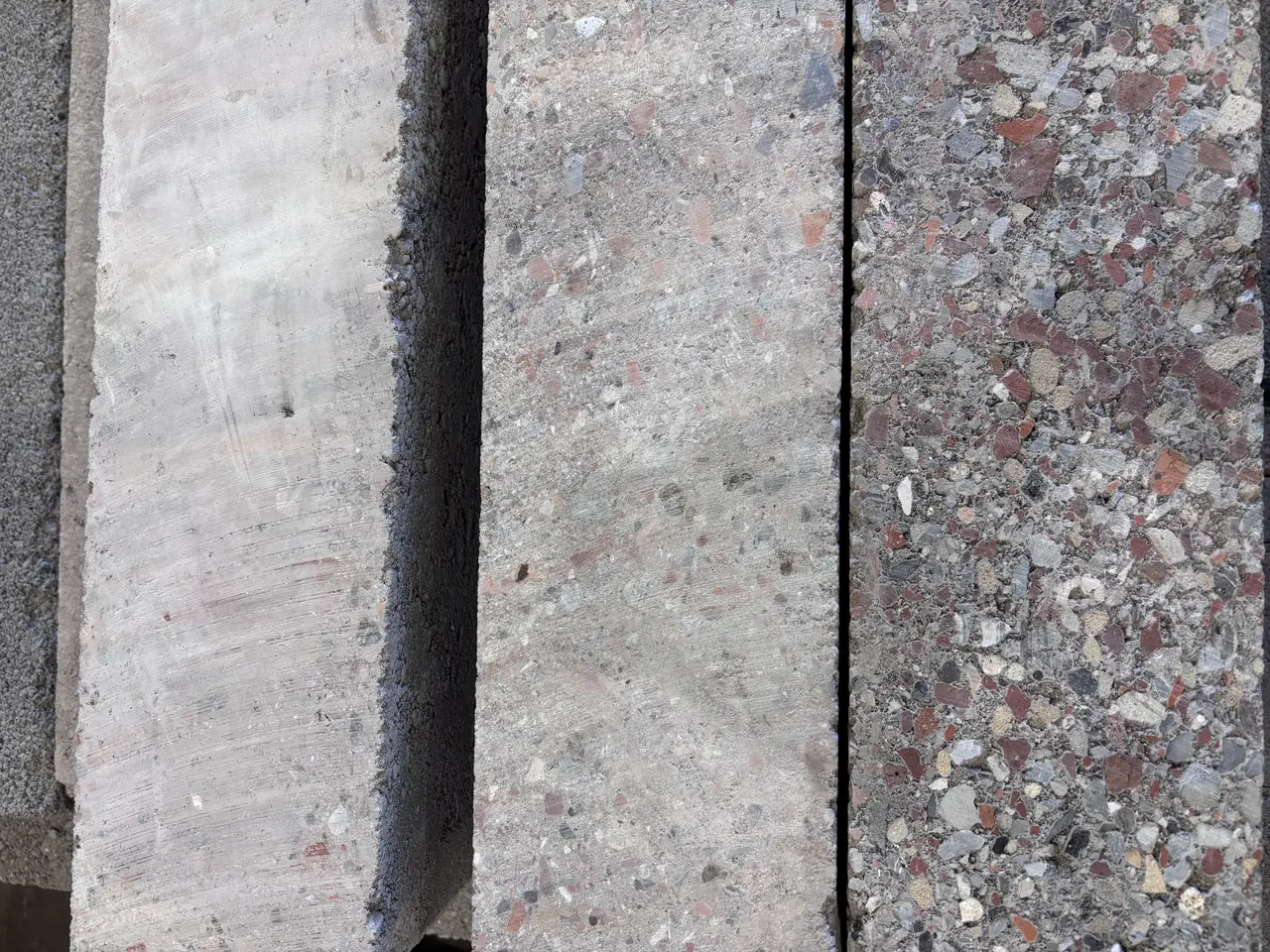
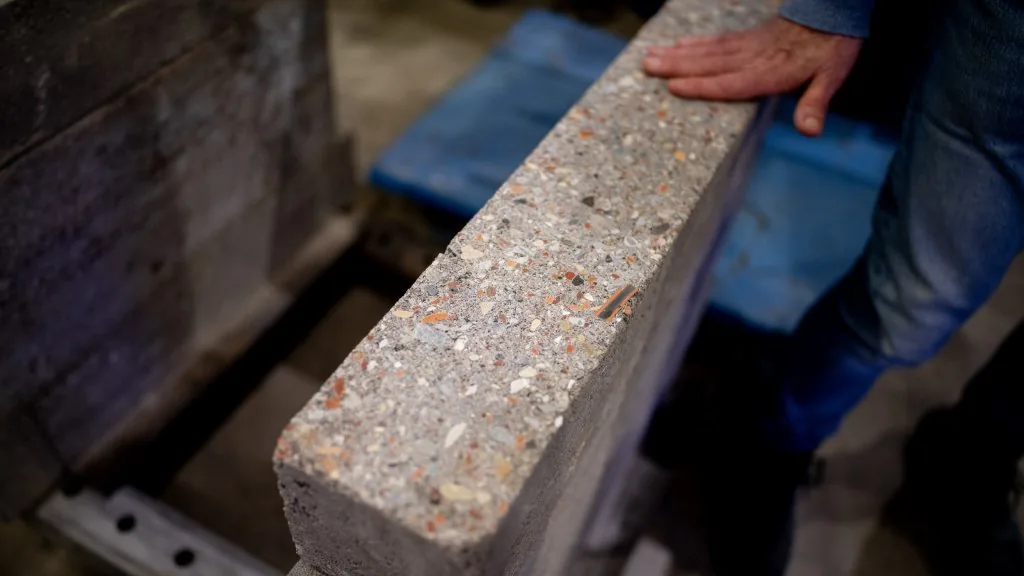
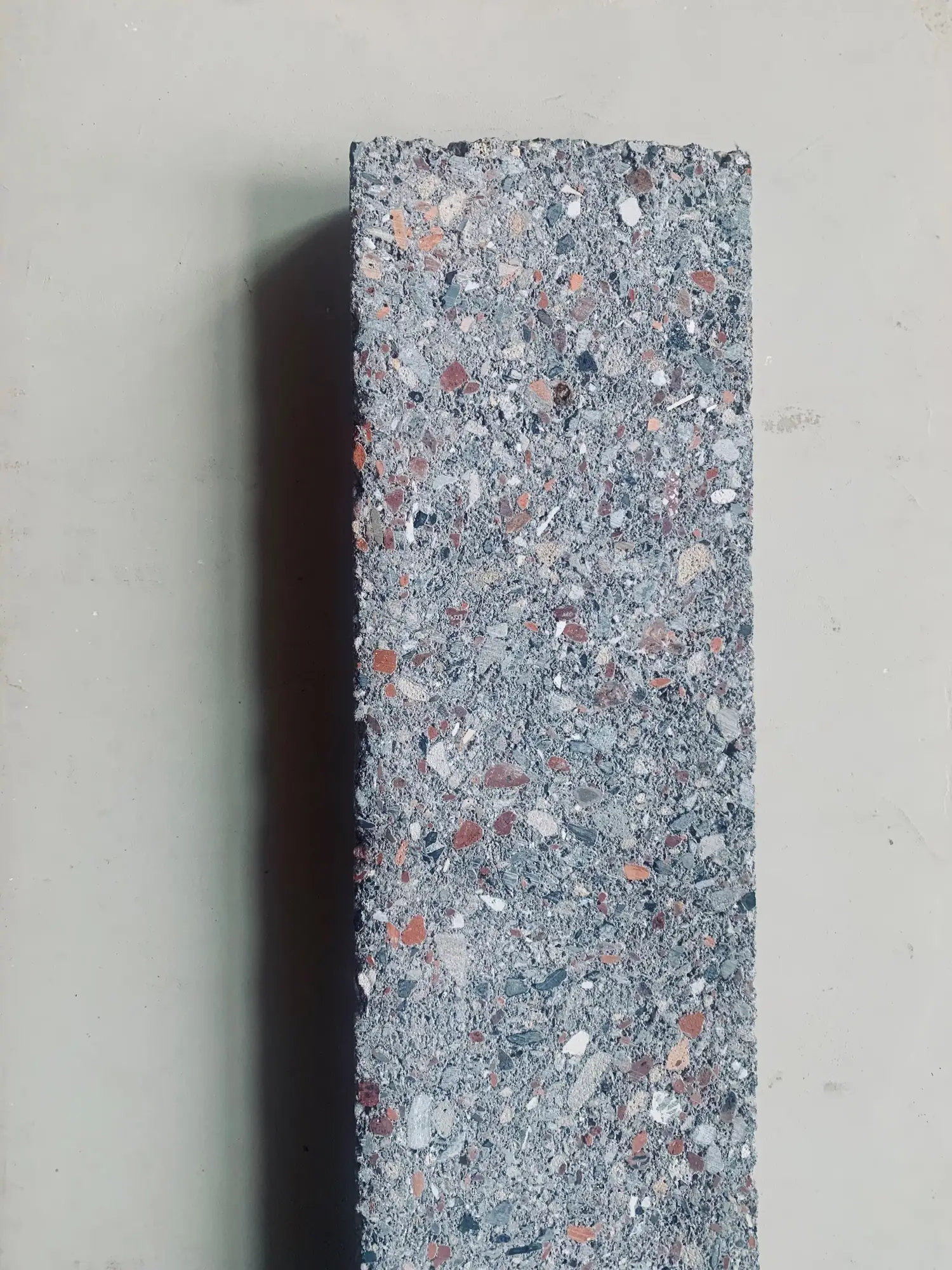
Clayton is a loadbearing masonry block made of 100% recycled aggregates from Belgian construction waste and a low-carbon binder. 1200 × 200 mm format in three thicknesses (90, 140 and 190 mm). The supply-and-install service includes the structural design, the as-built drawing and registration in a materials passport.
What is a loadbearing recycled-aggregate block?
The Clayton circular loadbearing block is a masonry unit made of mixed aggregates from demolition and a low-carbon binder. The aggregates form the granular skeleton, while the binder provides cohesion as it hardens. All virgin aggregate is replaced by material that has already been in use.
This choice shifts the block's impact: the resource comes from Belgian deconstruction sites rather than quarries, and the binder is formulated to reduce the carbon footprint compared with a standard concrete block.
The block carries the loads of loadbearing walls, and its three thicknesses (90, 140 and 190 mm) cover uses from cross walls to loadbearing external walls. The supply-and-install service includes the structural design, the as-built drawing and registration in a materials passport.
Clayton is manufactured in Belgium by Roosens Bétons and distributed by Milton. At end of life, the masonry is deconstructed and the blocks are taken back by the producer to be crushed and turned back into aggregate for new production.
Installation & uses
The block is laid as conventional masonry, with a compatible mortar, like a standard concrete block. The three thicknesses (90, 140, 190 mm) cover internal loadbearing walls, cross walls and external walls.
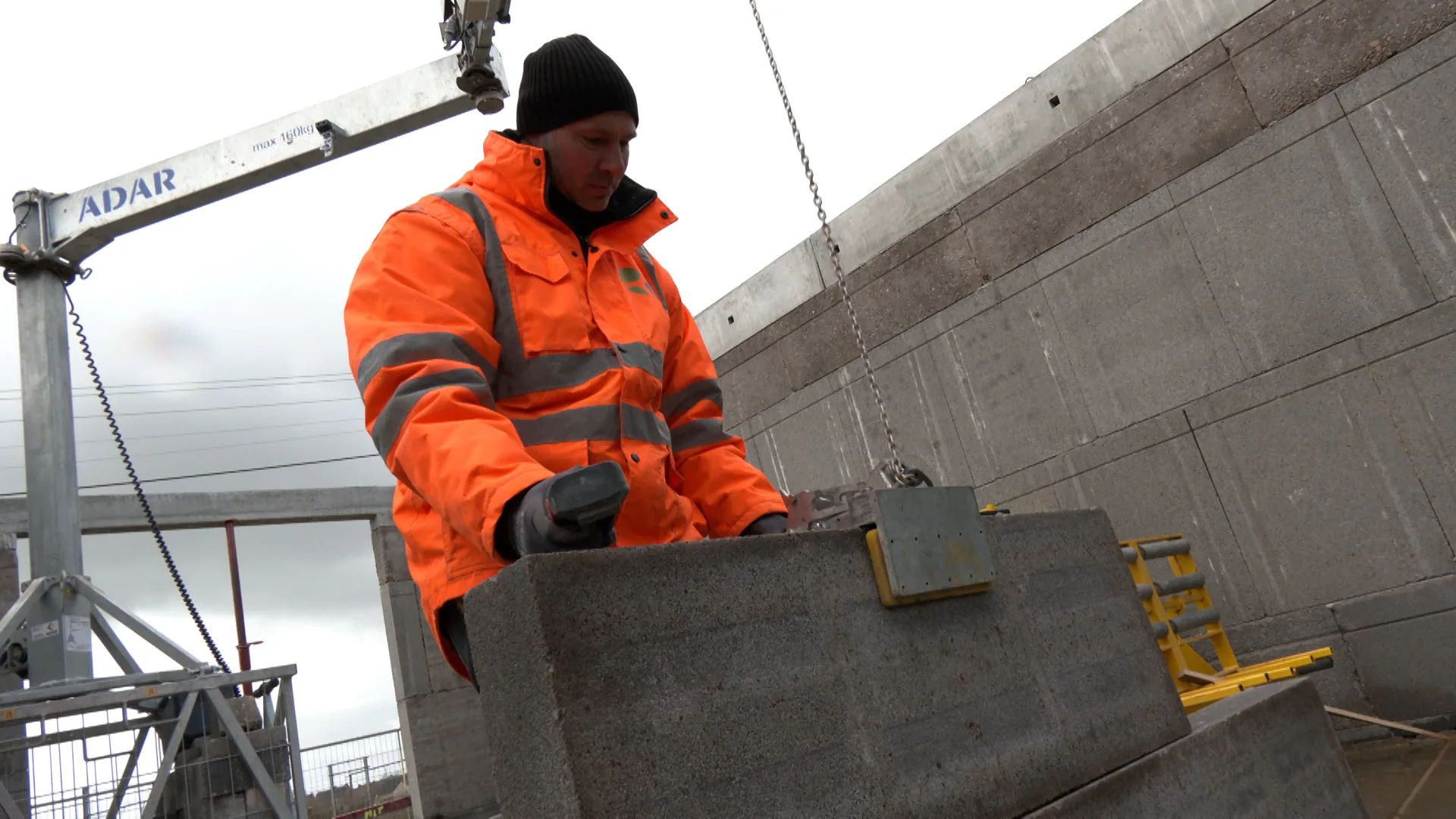
Given the 1200 × 200 mm format and a density above 1,600 kg/m³, each block weighs several tens of kilos and is laid with a mini crane or suitable lifting equipment. As part of the supply-and-install service, Roosens Bétons provides the structural design for the wall and the associated floor, the as-built drawing and registration in a materials passport.
The block can be finished with lime plaster or render, or left exposed, depending on the appearance sought. Being mineral, it takes common finishes without any specific prior treatment.
At end of life, the masonry is deconstructed and the blocks are taken back by Roosens Bétons at 10% of their value (indexed annually), then crushed and turned back into aggregate for new production. This take-back loop, organised by the producer, underpins the product's claim to circularity.
About the producer
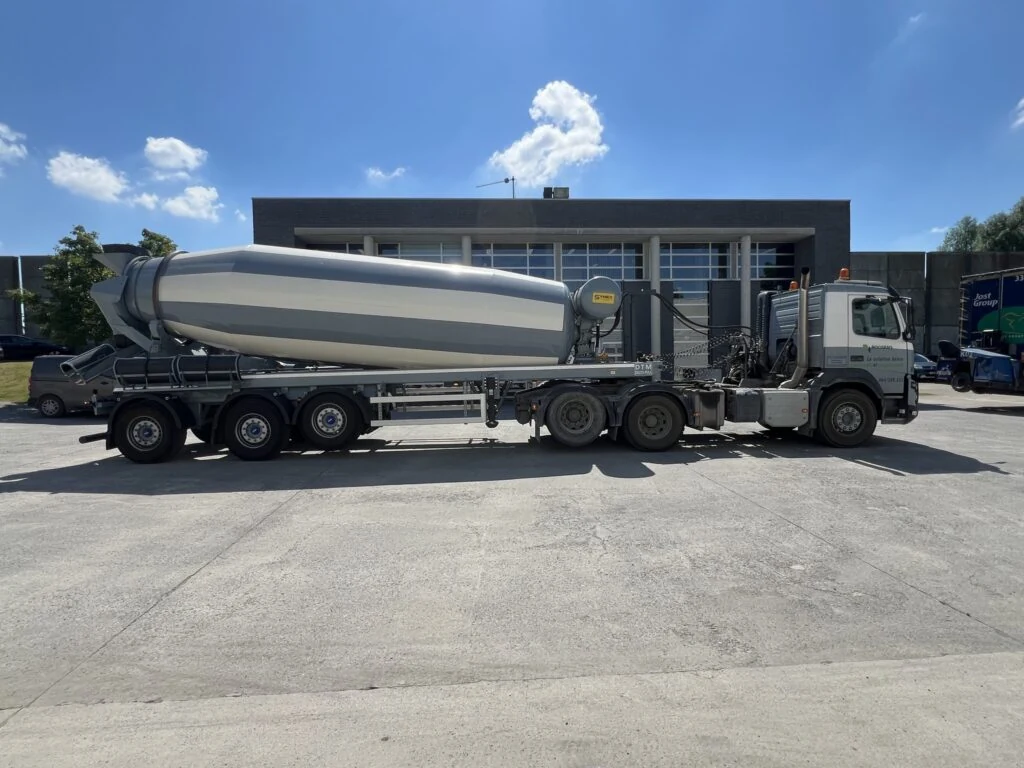
Roosens Bétons is a Belgian manufacturer of ready-mixed concrete, masonry blocks, paving blocks and floor elements, based at Familleureux, in Hainaut. The company has been certified carbon neutral since 2014 on the basis of a carbon footprint assessment, its remaining operational emissions being offset by tree planting.
It develops Clayton, a loadbearing block with 100% recycled aggregates from construction waste and a low-carbon binder, as well as EcoFix blocks with a reduced carbon footprint.
Technical performance
Applicable standards: NBN EN 771-3 and PTV 21-001 (concrete masonry units). BENOR certification and European Technical Assessment in progress; no DoP published to date.
Life cycle
The block's mixed aggregates are 100% recycled from Belgian construction waste, in place of virgin quarry aggregates. They are bound by a low-carbon binder, formulated to reduce the footprint compared with a standard concrete block.
Clayton is manufactured in Belgium by Roosens Bétons and distributed by Milton, in a 1200 × 200 mm format, 90, 140 or 190 mm thick. As each block weighs several tens of kilos, it is laid with a mini crane, with the structural design included in the supply-and-install service.
The masonry can be deconstructed, and Roosens Bétons takes the blocks back at 10% of their value for projects that have entered its scheme, then crushes them into aggregates for new production. Each block laid is registered in a Madaster materials passport.
FAQ
How are 1200 × 200 mm blocks handled?
With this format and a density above 1,600 kg/m³, each block weighs several tens of kilos. They are laid with a mini crane or suitable lifting equipment, as laying by hand alone is not practicable. Assembly remains that of conventional masonry with a compatible mortar.
What does the Roosens Bétons supply-and-install service include?
It includes the structural design for the wall and the associated floor, the as-built drawing and registration of the blocks in a Madaster materials passport. The block is distributed by Milton.
What mechanical strength does the block offer?
Based on its own tests, Roosens Bétons states a normalised compressive strength fb of about 12 MPa. The three thicknesses, 90, 140 and 190 mm, cover internal loadbearing walls, cross walls and external walls. BENOR certification and the European Technical Assessment of the block are in progress.
Does Roosens Bétons take the blocks back after deconstruction?
For projects that enter its scheme, Roosens Bétons states that it takes the blocks back at 10% of their value, indexed annually. The blocks taken back are crushed and turned back into aggregate for new production.
Can the block be left exposed?
Yes. It can be finished with lime plaster or render or left exposed, depending on the appearance sought, and takes common finishes without any specific prior treatment.
Alongside
Same layer, same use · materials to compare.