
Ecoschelp seashells for
floor insulation and drainage
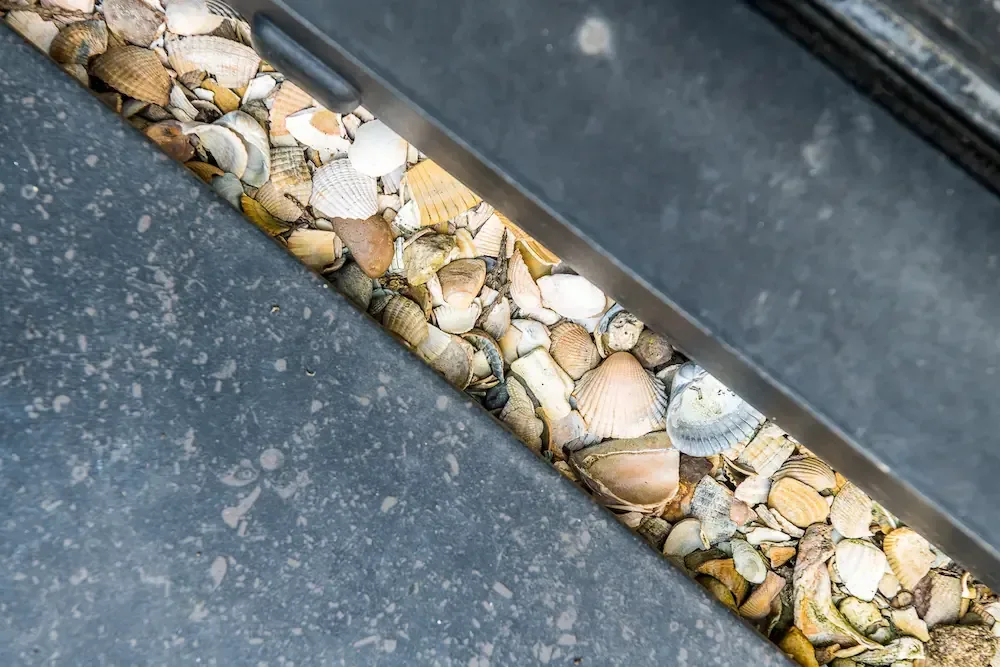
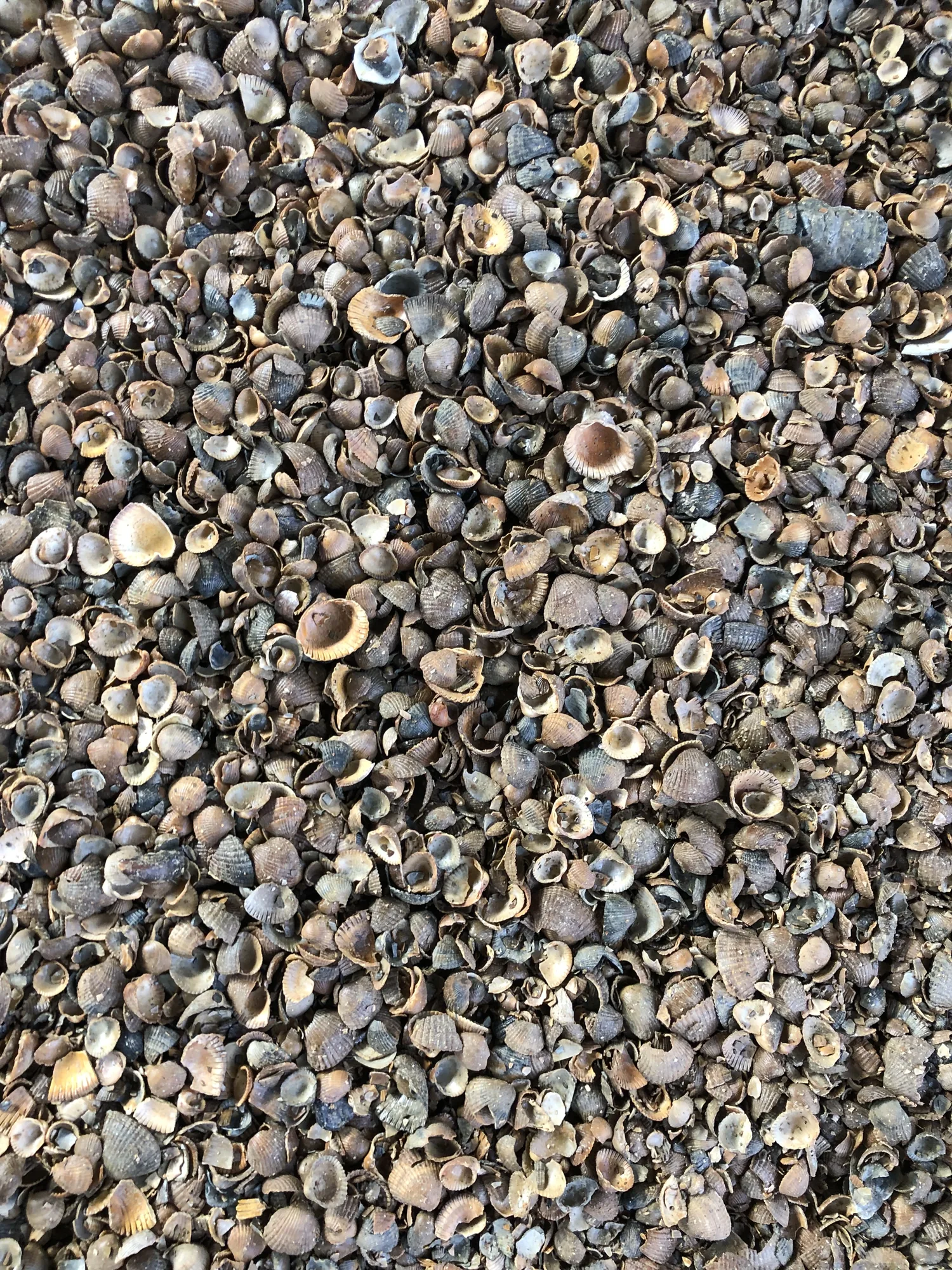
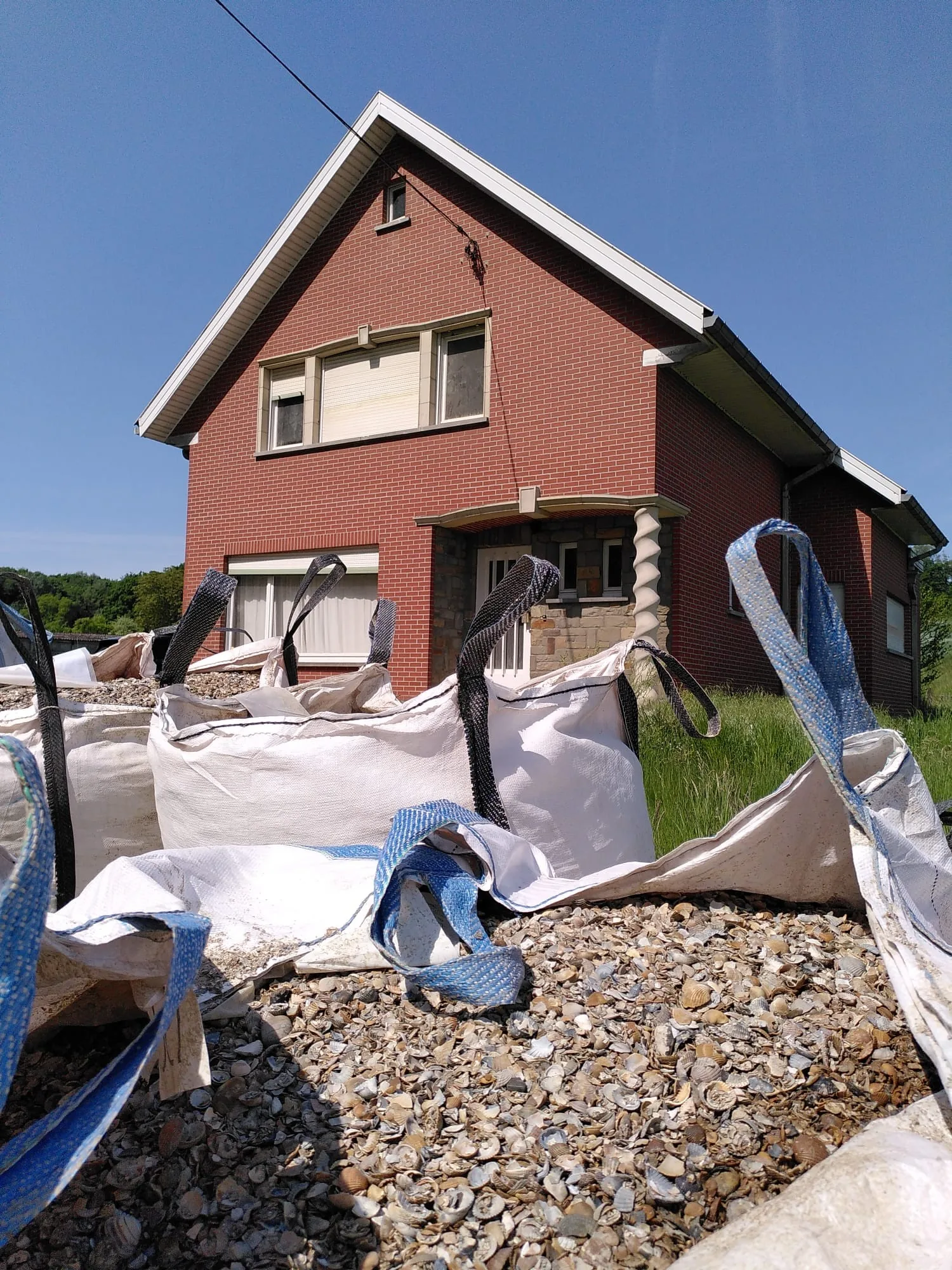
Ecoschelp washed and graded seashells in two sizes: whole 15-35 mm shells, sold under the ISOschelp brand, to insulate and drain crawl spaces and ground-bearing floors, and crushed 3-15 mm shells for levelling, drainage and paths. They are laid loose, without binder or additives.
What are Ecoschelp seashells?
Ecoschelp seashells are marine shells collected by boat in the North Sea, the Wadden Sea and the Eastern Scheldt. Screened and washed on board, they are screened and washed again in fresh water on shore, up to three times, which removes salt residues. They receive no additives or chemical treatment.
The whole 15-35 mm shells, sold under the ISOschelp brand, weigh 600 to 650 kg/m³. Their shape leaves voids between them that let water drain away and hold air: the layer drains, stops rising damp and provides additional insulation, with a λ of 0.106 W/(m·K) measured by TNO (0.145 and 0.155 W/(m·K) according to other laboratories). This is the grading for crawl spaces, ground-bearing floors and drainage trenches.
The crushed 3-15 mm shells are denser, at 800 to 1,000 kg/m³, and withstand about 122 kPa in compression, compared with 61 to 88 kPa for the whole shells. No insulation value is declared for them: they serve as a levelling layer above the whole shells, as a drainage finish and as a path surface.
Because the insulating value of the shells remains modest and requires a large volume, the insulation of a ground-bearing floor is completed by insulation boards laid above the layer. On the other hand, the calcium carbonate of the shells does not rot or degrade in contact with water, so it can be laid at the bottom of a damp excavation and recovered at end of life.
Installation & uses
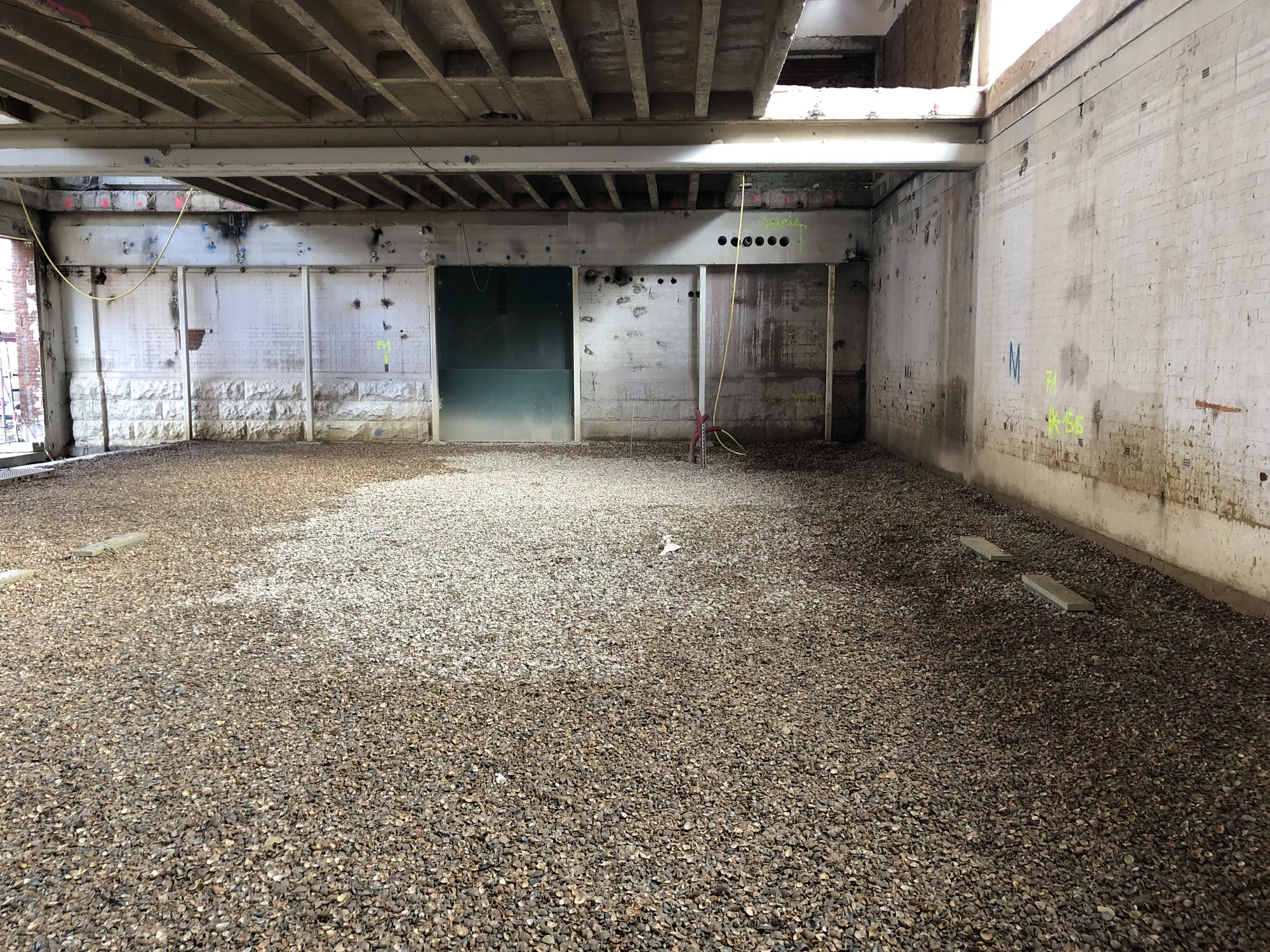
For a ground-bearing floor, the producer describes a typical build-up: an excavation of about 50 cm below finished floor level, 30 cm of whole shells with no damp-proof membrane, then about 5 cm of lightly pressed crushed shells for levelling. Next come a perimeter board against the walls, compression-resistant, vapour-open insulation boards, with cork recommended, then a dry screed and the floor finish.
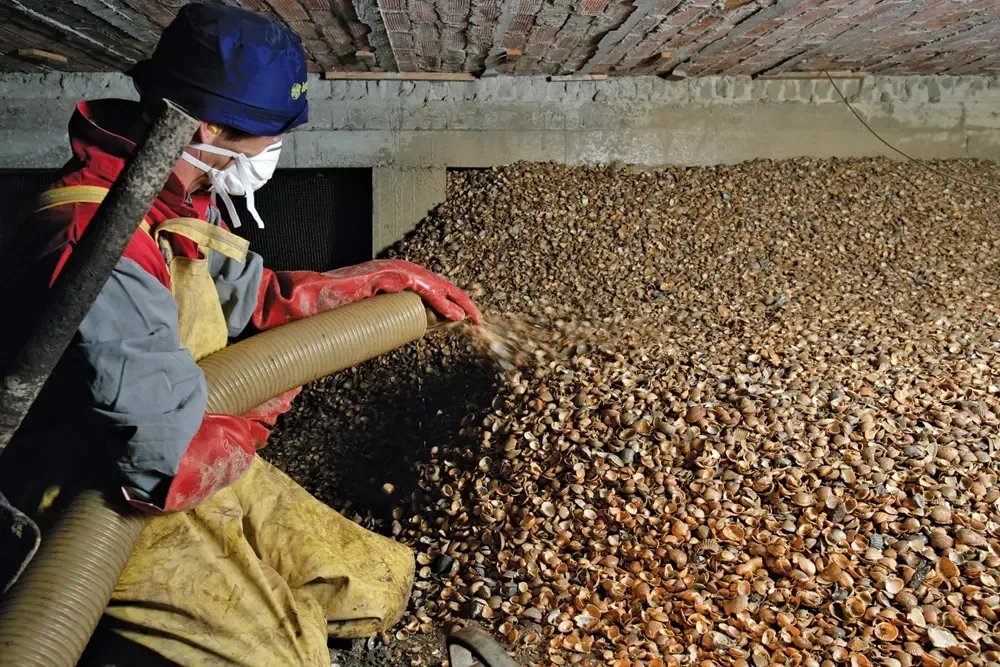
In a crawl space, the whole shells are blown in to a depth of at least 25 to 30 cm. The openings are closed during installation and reopened after four weeks to let the layer dry. Blowing reaches up to 60 m, with a volume loss of about 25% beyond 40 m; a space of about 30 m must be allowed for the truck. Quantities are measured before blowing and allow for slight settlement, of the order of 35 cm blown for 33 cm after compaction.
For drainage around a building, a trench about 40 cm wide, dug to foundation depth, is filled with whole shells, with drainage pipes in flood-prone areas. A layer of about 15 cm of crushed shells can serve as a finish; to lay lawn up to the facade, a geotextile and a growing medium are added.
Both gradings can also be laid by hand, from bulk bags or, for the crushed shells, from 20-litre sacks.
About the producer
Ecoverbo is an Antwerp-based bio-ecological renovation company which, under the name Ecoschelp, supplies and installs seashells for construction and gardens in Belgium. It is the Belgian representative of the Dutch brand ISOschelp, whose marine shells are taken from shell banks, washed and graded.
The shells are delivered blown in, or in bulk bags or sacks, for insulating, free-draining sub-bases in crawl spaces or beneath screeds, for drainage around buildings and for soakaways.
Technical performance
No harmonised standard, DoP or CE marking declared. Checks cited by the technical data sheet for the whole shells: TNO, CSTC, Kiwa and VIBE reports, CAP'EM LCA. Bearing capacity of the crushed shells checked by CSTC.
Life cycle
The shells are collected by boat in the North Sea, the Wadden Sea and the Eastern Scheldt. The molluscs produce new ones every year.
Screened and washed on board, then again in fresh water on shore, the shells are graded to 15-35 mm (whole) or 3-15 mm (crushed), with no additives. Ecoschelp delivers and installs them in Belgium from Antwerp.
Laid without binder, the shells can be dug out and reused on another site. They do not rot, and the service life of the whole shells is estimated at 75 years.
FAQ
Which grading should I choose?
The whole 15-35 mm shells to insulate and drain: crawl space, ground-bearing floor, drainage trench. The crushed 3-15 mm shells to level above the whole shells, finish a drainage layer or lay a path; no insulating value is declared for them. For a ground-bearing floor, the producer combines the two: 30 cm of whole shells, then about 5 cm of crushed shells.
What thickness of whole shells should be allowed for?
The technical data sheet gives a minimum of 20 cm on an open floor and 25 cm in a crawl space; the producer describes 30 cm for a ground-bearing floor and at least 30 cm in a crawl space. With a λ of 0.106 W/(m·K), 30 cm represents a thermal resistance of about 2.8 m²·K/W.
Can the layer carry an occupied floor or traffic?
The whole shells withstand about 61 to 88 kPa in compression, the crushed shells about 122 kPa. The producer considers these values sufficient for most ground-bearing floors (rooms, car parks, terraces, paths) and advises a higher density for industrial loads.
Do the shells contain salt?
They are screened and washed on board, then washed again in fresh water on shore, up to three times, to remove salt residues.
What is the difference between Ecoschelp and ISOschelp?
Ecoschelp is the name under which Ecoverbo, in Antwerp, supplies and installs the seashells in Belgium. The whole 15-35 mm shells are sold under the Dutch brand ISOschelp; the crushed 3-15 mm shells carry the name Ecoschelp.
Alongside
Same layer, same use · materials to compare.
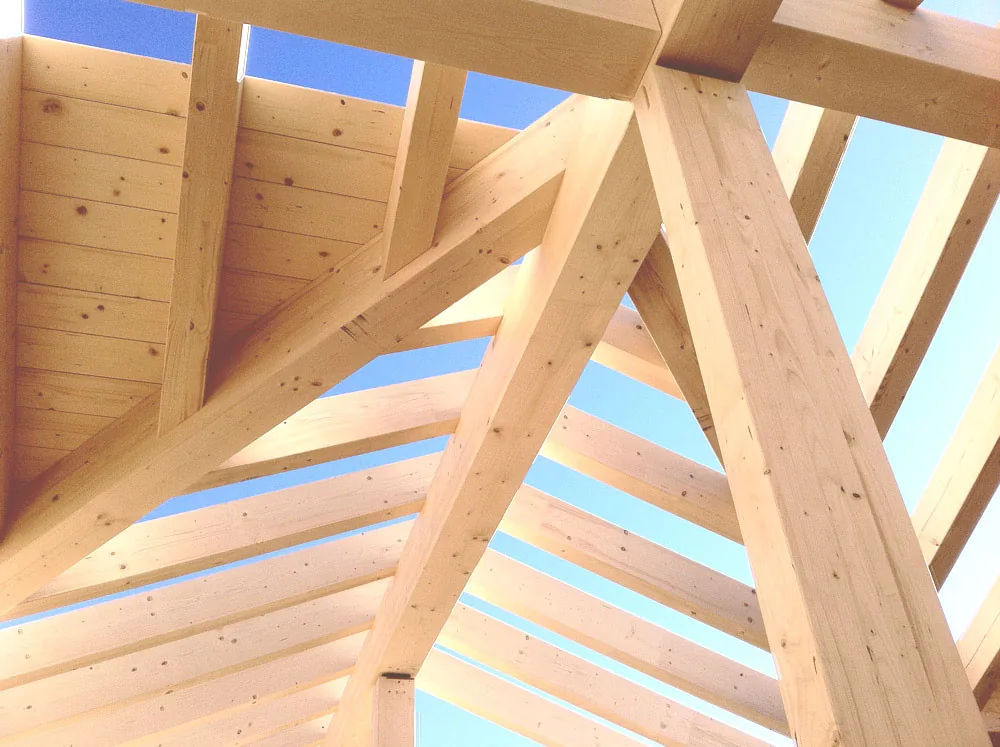
Spruce, glue-laminated or finger-jointed solid. Best Wood SCHNEIDER · Eberhardzell.
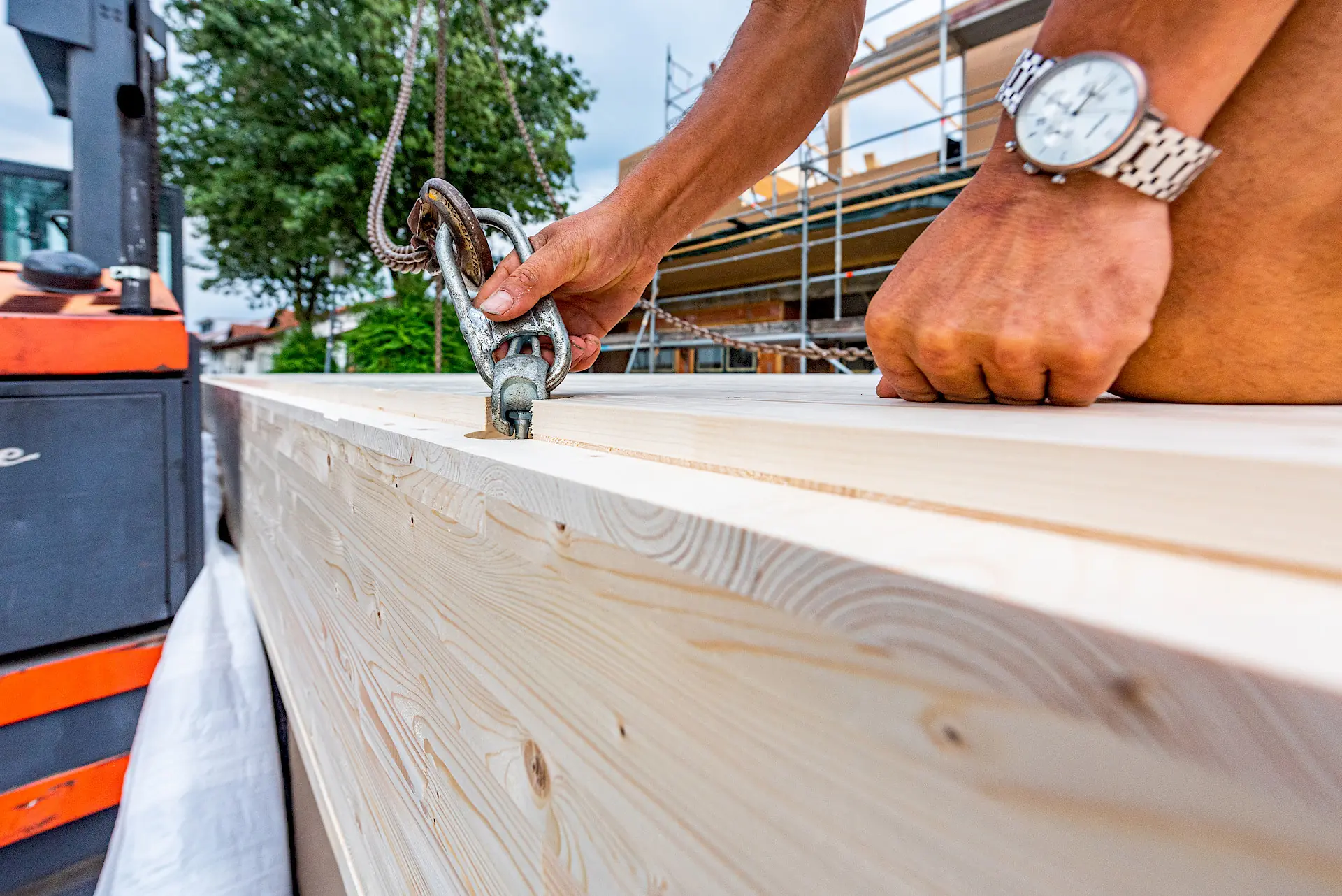
Cross-laminated spruce, glued box element. Best Wood SCHNEIDER · Eberhardzell.
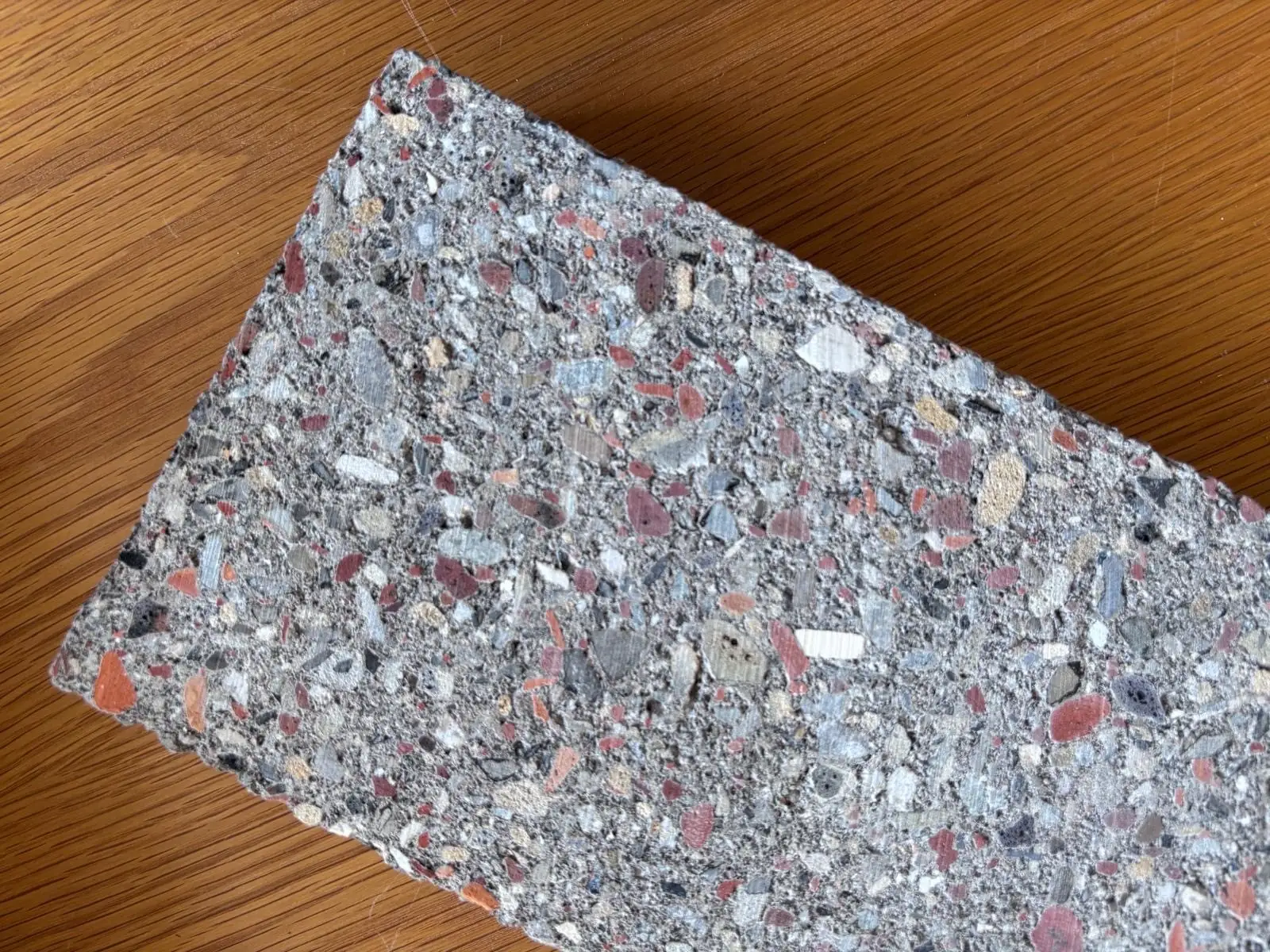
Recycled demolition aggregates and low-carbon binder, masonry block. Roosens Bétons · Familleureux.