
Structural
timber
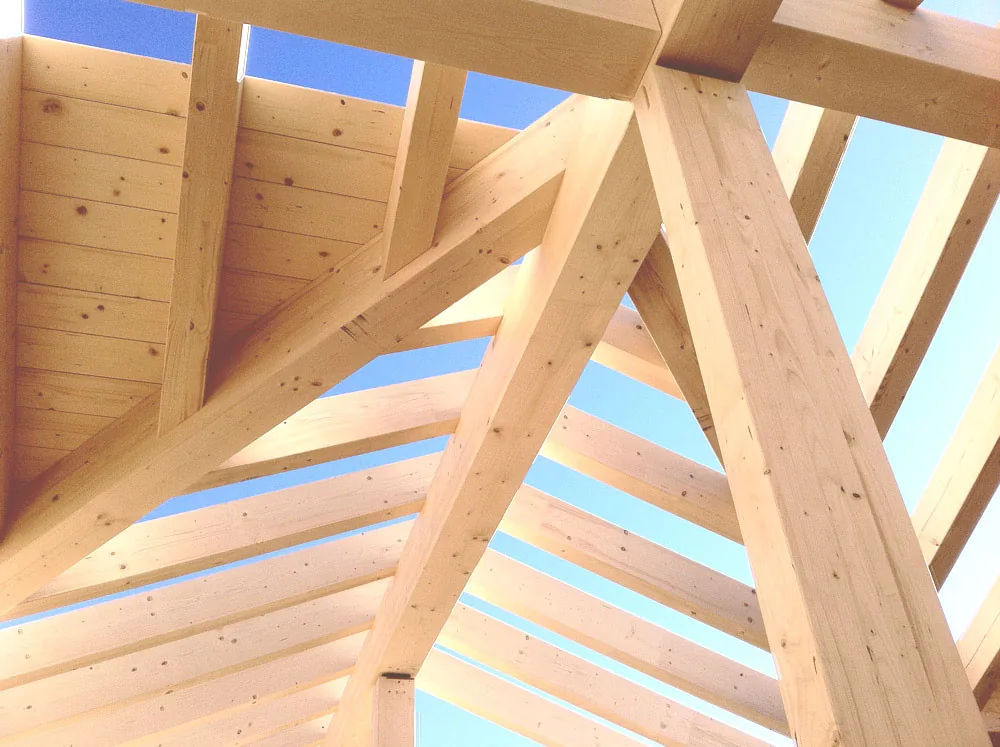
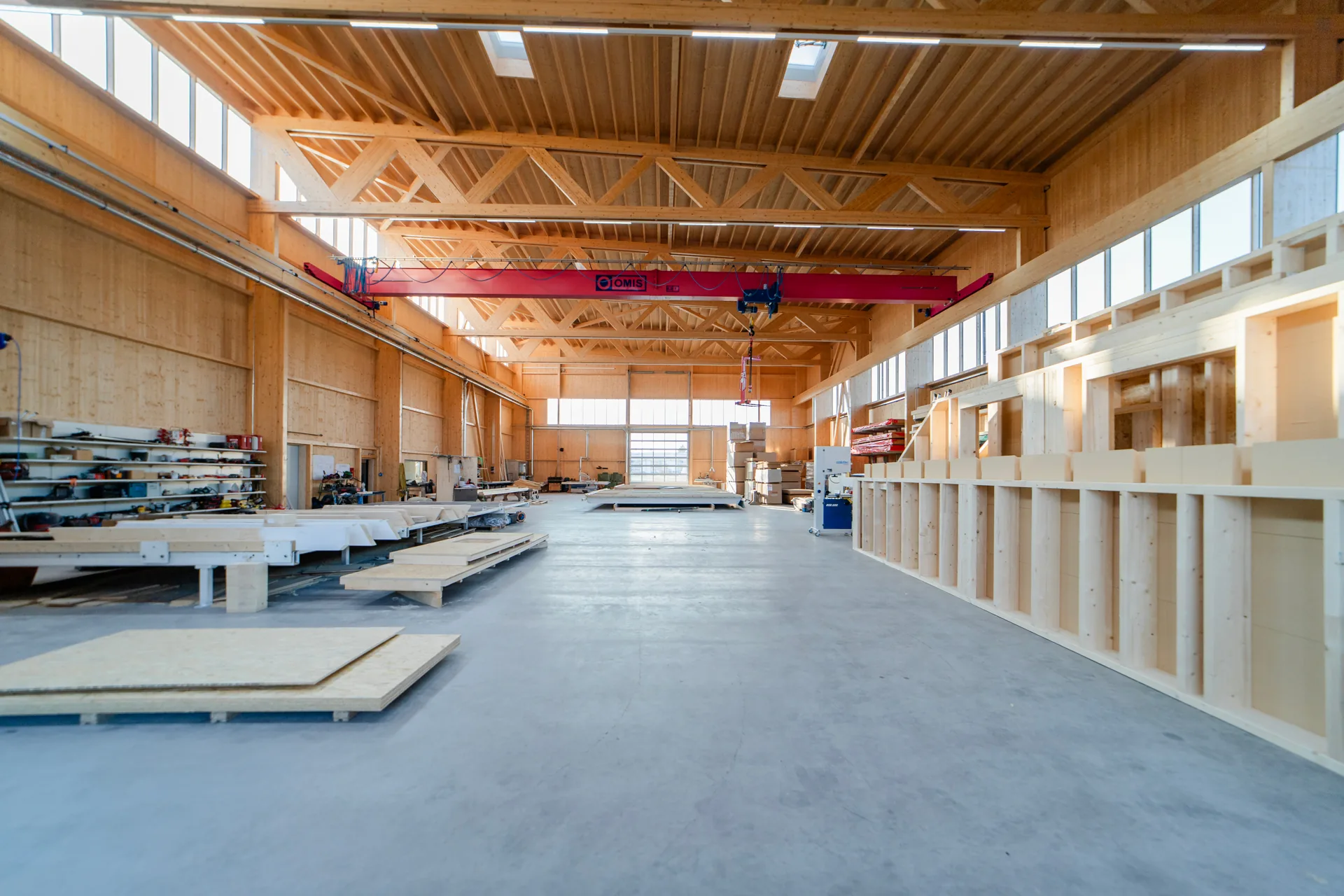
Structural timber range in PEFC-certified spruce: CLT cross-laminated panels, BLC glulam beams, KVH finger-jointed solid timber and DUO/TRIO/QUATTRO laminated timber. They form loadbearing walls, floors and roofs, indoors or under cover; KVH in Douglas fir is also used for balcony, deck and footbridge structures, out of ground contact.
What is structural timber?
The range brings together four families of loadbearing products made from the same timber, spruce, sawn at Best Wood SCHNEIDER's sawmills, then dried, graded and assembled. Depending on the assembly, the timber becomes a panel, a beam or a column.
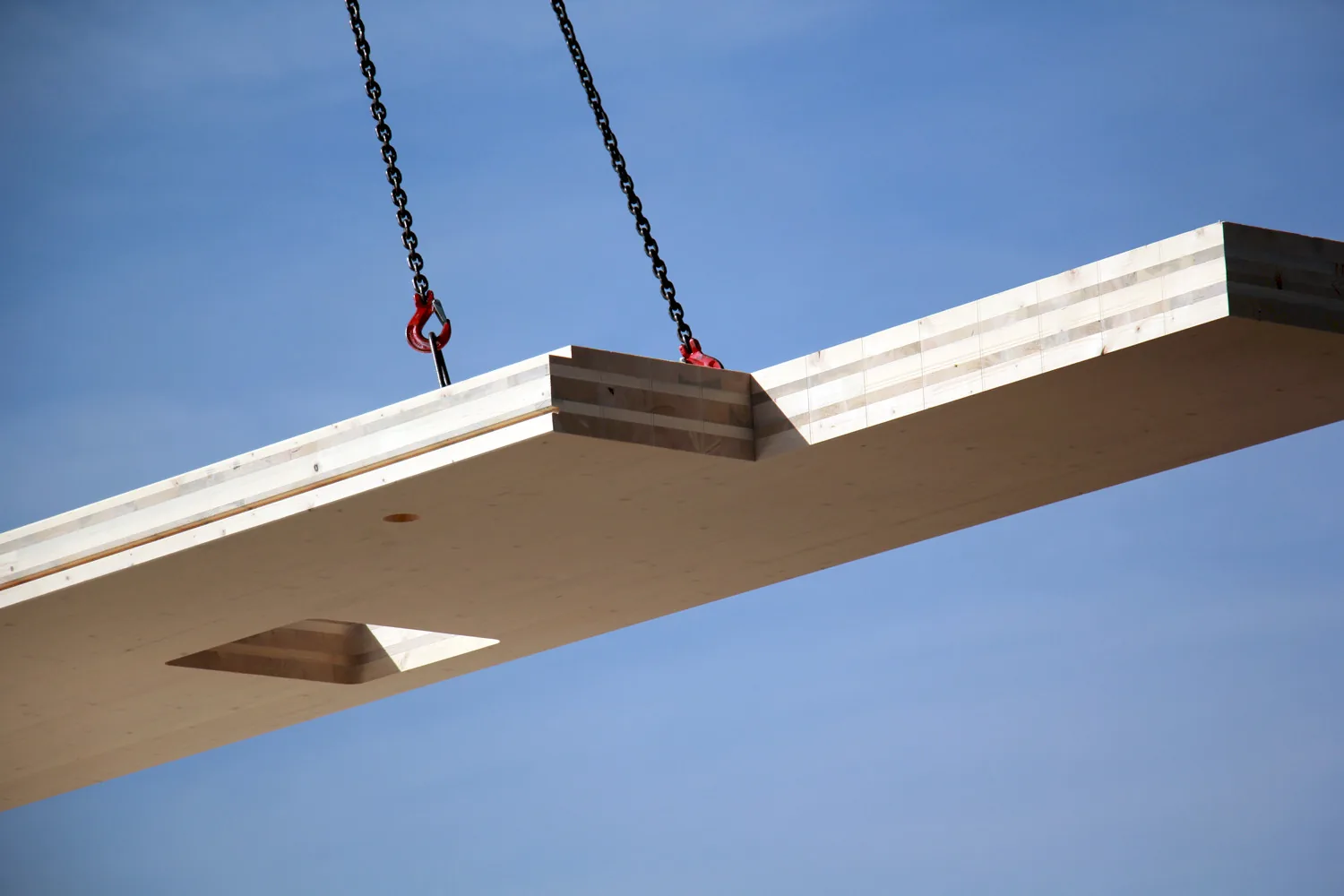
CLT, or cross-laminated timber, stacks three to ten layers of lamellas glued at 90° to one another. This crossing restrains the shrinkage and swelling of the timber in the plane and allows the panel, 60 to 280 mm thick in standard format and up to 360 mm in XL format, to span in two directions: it serves as both structure and enclosure.
BLC glulam assembles at least three finger-jointed lamellas, glued with the grain parallel. Spreading the natural defects of the timber over several lamellas stabilises the section, up to 1,000 mm deep and 18 m long, in classes GL 24h to GL 30h. DUO/TRIO/QUATTRO laminated timber joins only two, three or four lamellas: with a minimum of glue lines, it keeps the look of solid timber, in classes C24 and GL 24h.
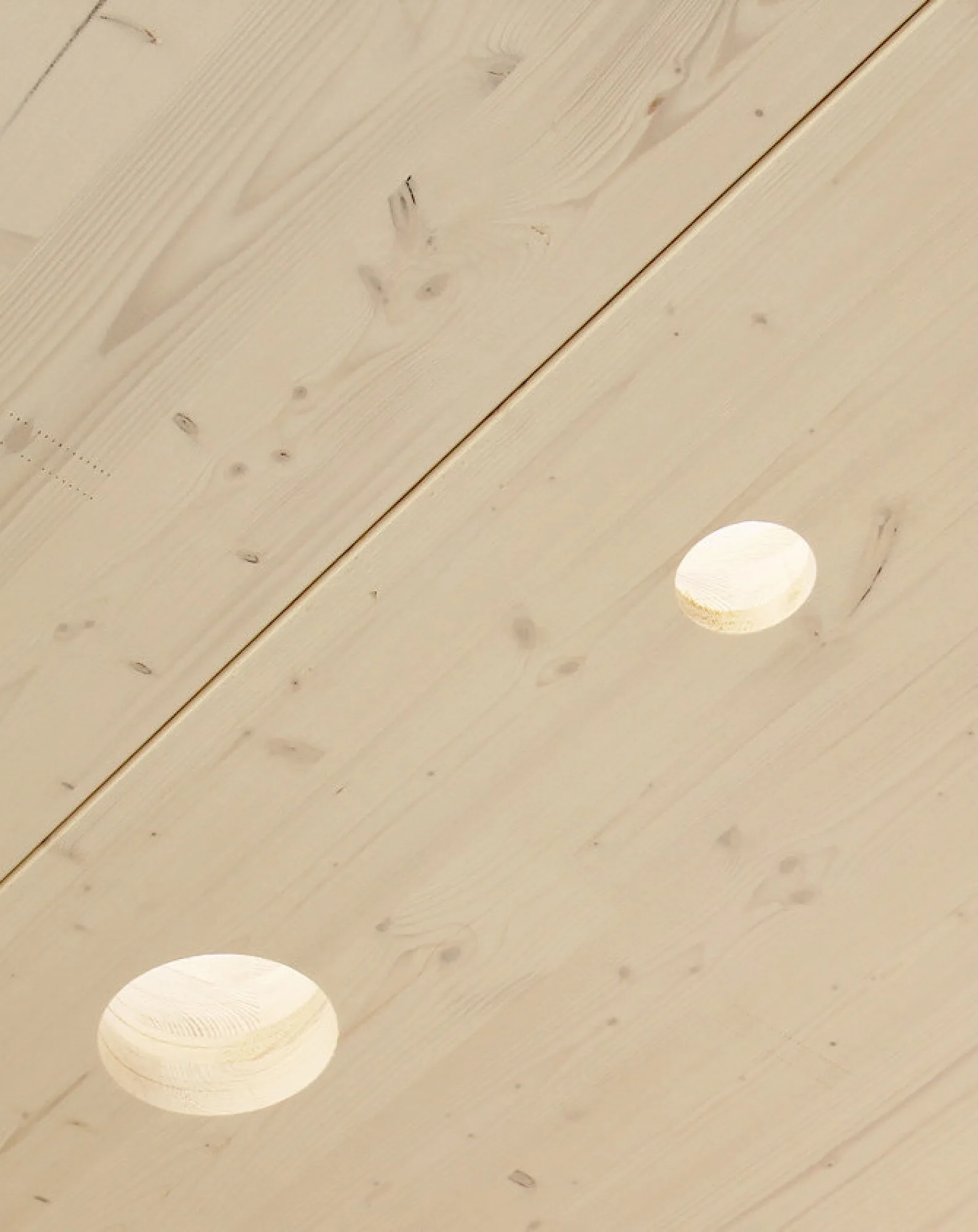
KVH, finger-jointed solid structural timber, remains a solid piece: dried to no more than 18% moisture content, finger-jointed and planed on four faces, it is graded C24. It is available in spruce and Douglas fir.
The glued products are bonded with formaldehyde-free polyurethane adhesive. CLT and glulam are classed D-s2 d0 for reaction to fire. The timber is PEFC-certified; in production (A1-A3), the EPDs give −492 kgCO₂eq/m³ for CLT, −563 for glulam and −600 for KVH in spruce, stored carbon included, and this carbon is released again at end of life.
Installation & uses
The choice of product depends on the element to be built. CLT forms floor slabs, walls and roofs, in panels produced up to 16 m long and, in XL format, up to 2.50 m wide in visual grade and 3.50 m in industrial grade; it is cut in the factory to the drawings, openings included. Glulam and DUO/TRIO/QUATTRO form beams, columns and purlins; KVH, in standardised sections, is used for timber frames, floor joists and roof structures. In Douglas fir, the producer also intends it for balconies, decks and footbridges.
All are joined with the usual means of timber construction: carpentry joints, metal hangers, dowels, bolts or structural screws. Structural design follows Eurocode 5; Best Wood SCHNEIDER provides free preliminary sizing software, best wood STATICS. The 16 m quoted for CLT is a production length, not a span: the span is set by the structural design.
Use is intended in service classes 1 and 2, that is, indoors or under cover. Delivered at no more than 15% moisture content, DUO/TRIO/QUATTRO needs no preventive chemical protection if the construction rules of DIN 68800-2 are followed.
For floors, the range is completed by the CLT BOX, a CLT box floor element presented on a separate page.
About the producer
best wood SCHNEIDER is a German family business founded in 1911 at Eberhardzell, where it still has its head office. It processes softwood into structural products (glulam, CLT, CLT BOX box elements, KVH solid timber) and into wood fibre insulation.
At the head office, production runs in a closed loop: the residues from timber processing are used to make the insulation and to produce energy. A second site, at Meßkirch, combines a sawmill with large-format CLT production; a subsidiary at Märstetten, in Switzerland, handles distribution.
Technical performance
Glulam and DUO/TRIO/QUATTRO: EN 14080:2013 · KVH: EN 15497:2014 · CLT: ETA-21/0568 · service classes 1 and 2 to EN 1995-1-1 · INIES EPDs for glulam (20240337244), CLT (20240337245) and KVH (20240337243).
Life cycle
Most products are made from regional spruce from local PEFC-certified forests; Scandinavian timber is used for some visual grades. The lorries that deliver the finished products can bring logs back to the factory.
Best Wood SCHNEIDER saws its own logs in Germany, about 600 km from Brussels, and processes them into glulam, CLT, KVH and DUO/TRIO/QUATTRO; large-format CLT comes from the Meßkirch site. The chips go into its wood fibre insulation, the sawdust into its pellets, and the bark feeds the biomass plant that supplies the energy for production.
After selective deconstruction, glulam and CLT elements can be reused; failing that, they are recycled into chipboard or recovered as energy. The EPDs for glulam, CLT and KVH use the average French end-of-life scenario for timber: 43.2% recycled, 49.1% recovered as energy, 7.7% landfilled.
Projects and publications
The projects that use it and the publications that discuss it.
FAQ
What is the difference between CLT and glulam?
In CLT, the layers of lamellas are crossed at 90°: the panel spans in two directions and forms floor slabs, walls and roofs. In glulam, the lamellas are glued with the grain parallel: the member spans along its length and forms beams and columns, up to 18 m.
When should KVH or DUO/TRIO/QUATTRO be chosen rather than glulam?
KVH, finger-jointed solid timber in class C24, covers the standardised sections of timber frames, floor joists and roof structures. DUO/TRIO/QUATTRO, two to four glued lamellas in classes C24 and GL 24h, offers high dimensional stability and the look of solid timber. Glulam goes up to a depth of 1,000 mm and to classes GL 28h and GL 30h.
Do the adhesives contain formaldehyde?
No. Glulam, CLT and DUO/TRIO/QUATTRO are bonded with formaldehyde-free polyurethane; the adhesive accounts for about 1% of the mass of glulam and 1.5% of that of CLT. In KVH, it is limited to the finger joints, about 0.1% of the mass.
Can these timbers be exposed outdoors?
They are intended for service classes 1 and 2 of Eurocode 5, that is, indoors or under cover. Glulam and CLT receive no preservative treatment. In Douglas fir, the producer also intends KVH for balconies, decks and footbridges.
What is their embodied carbon?
Over A1-A3, the EPDs give −492 kgCO₂eq/m³ for CLT, −563 kgCO₂eq/m³ for glulam and −600 kgCO₂eq/m³ for KVH in spruce, carbon stored in the timber included. This carbon is released again at end of life: over the full life cycle, the figure is +336 kgCO₂eq/m³ (CLT), +263 kgCO₂eq/m³ (glulam) and +223 kgCO₂eq/m³ (KVH).
Alongside
Same layer, same use · materials to compare.
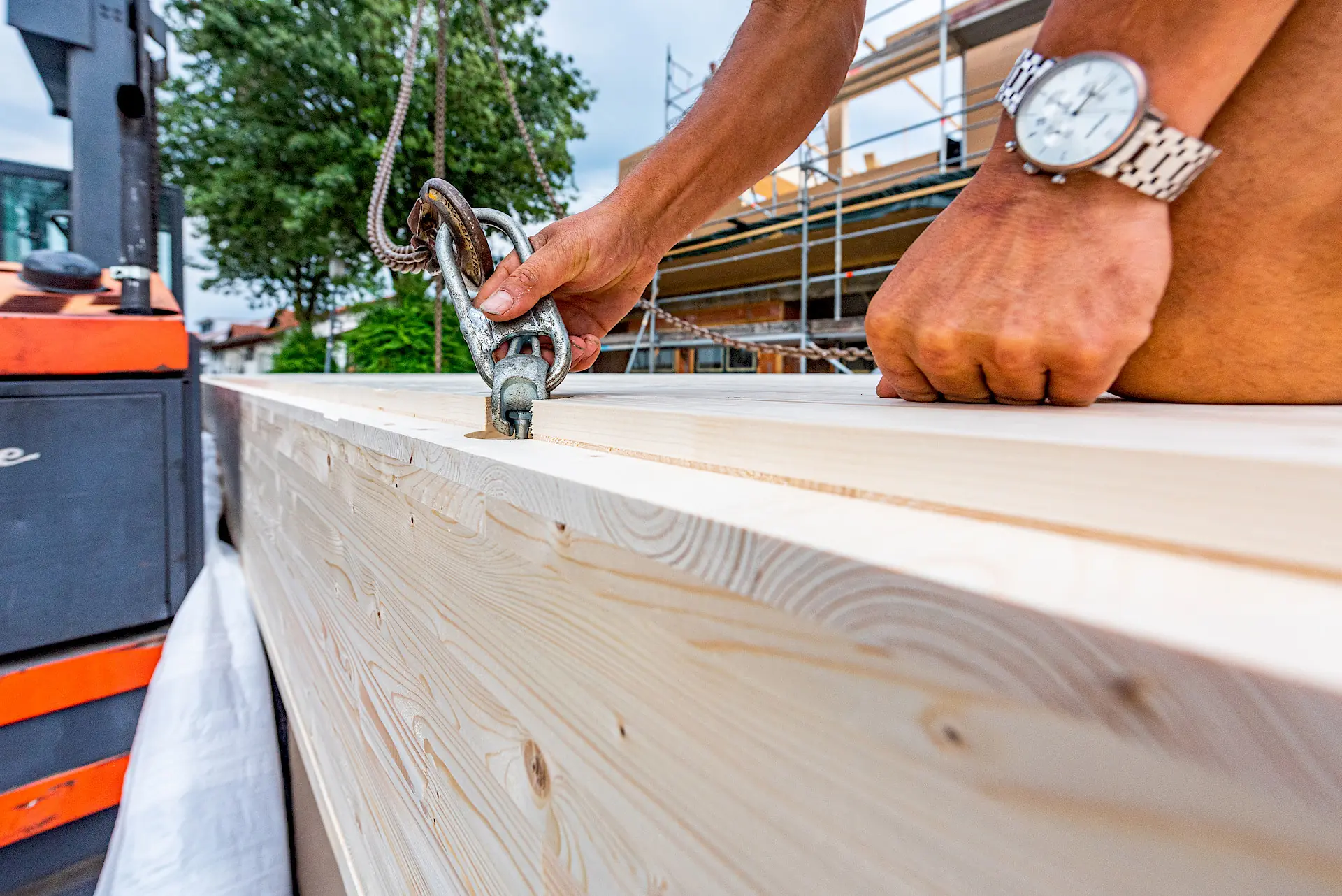
Cross-laminated spruce, glued box element. Best Wood SCHNEIDER · Eberhardzell.
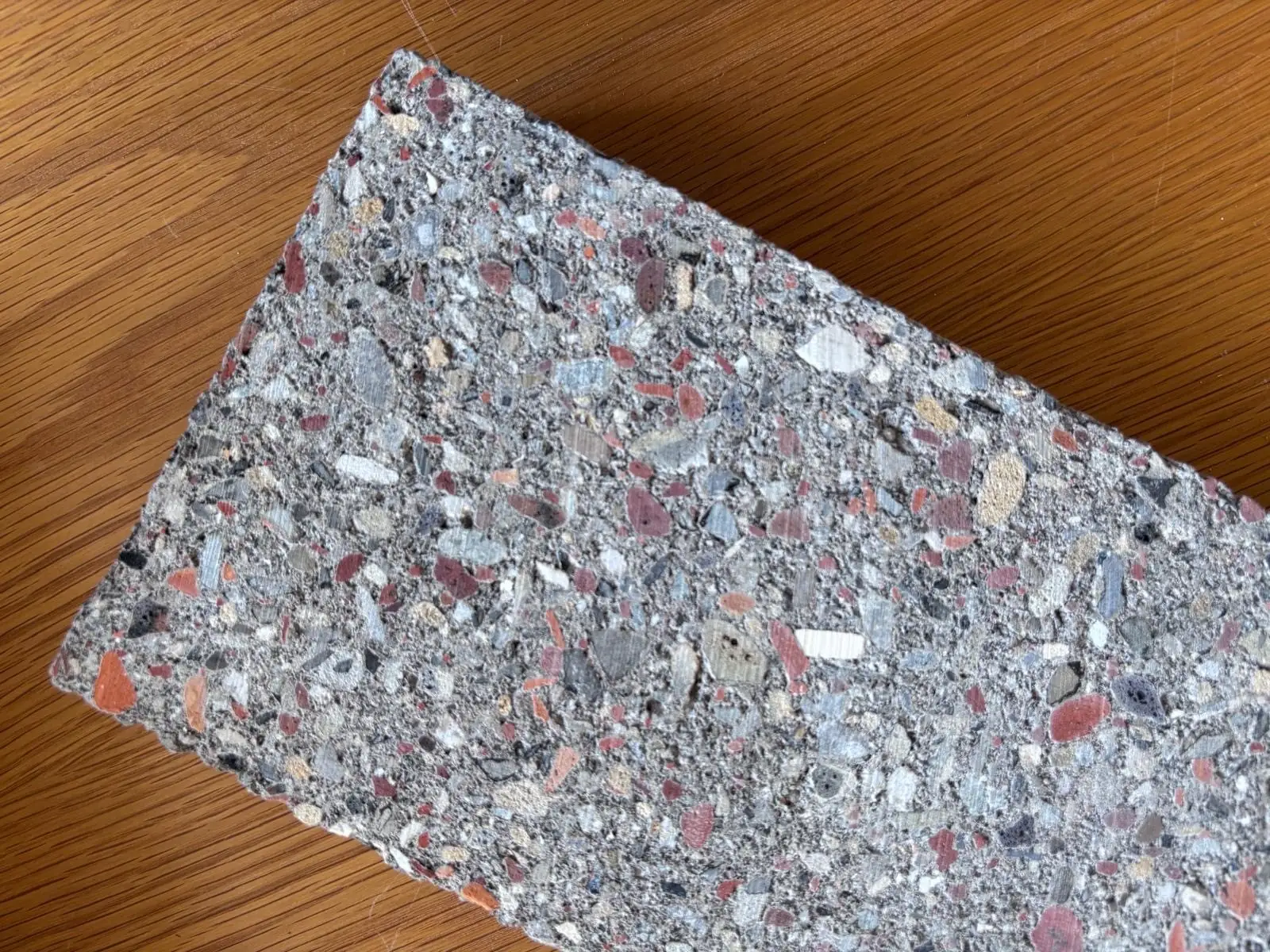
Recycled demolition aggregates and low-carbon binder, masonry block. Roosens Bétons · Familleureux.
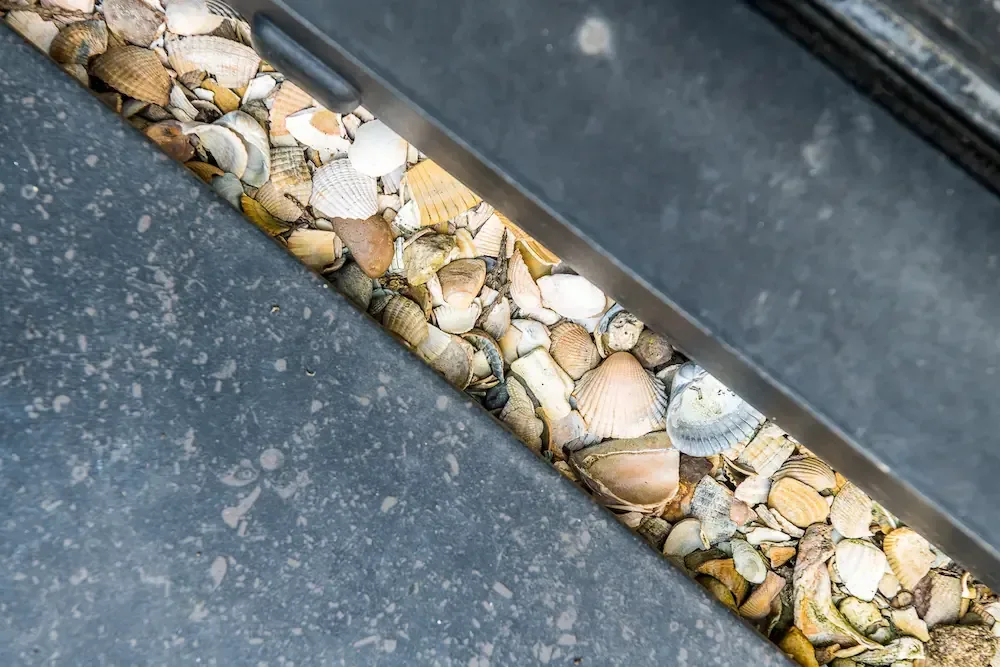
Seashells, washed and graded. Ecoschelp · Antwerp.