Shell
sub-base
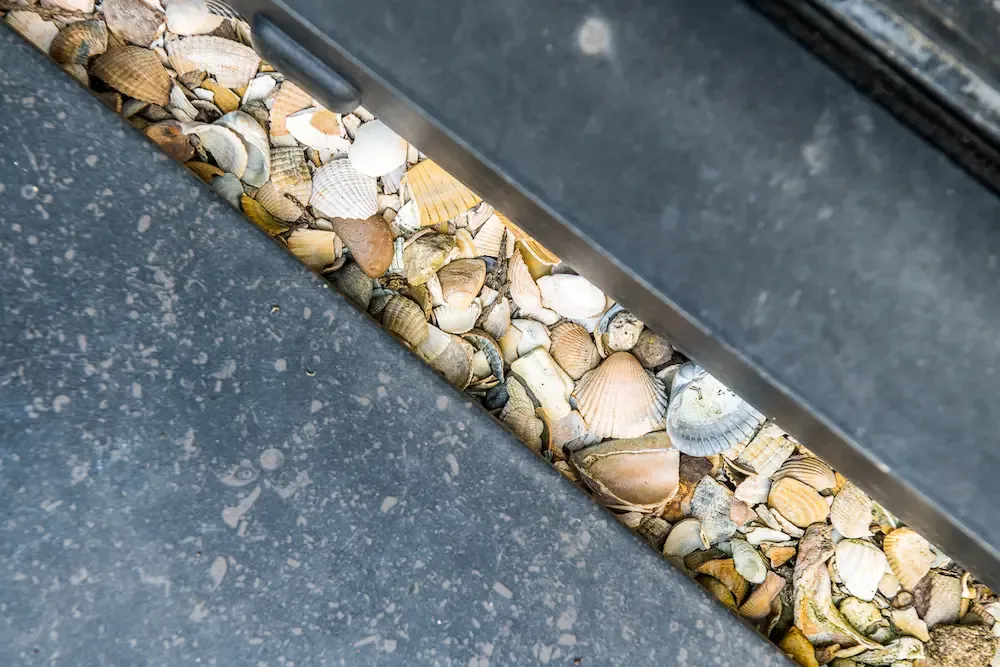
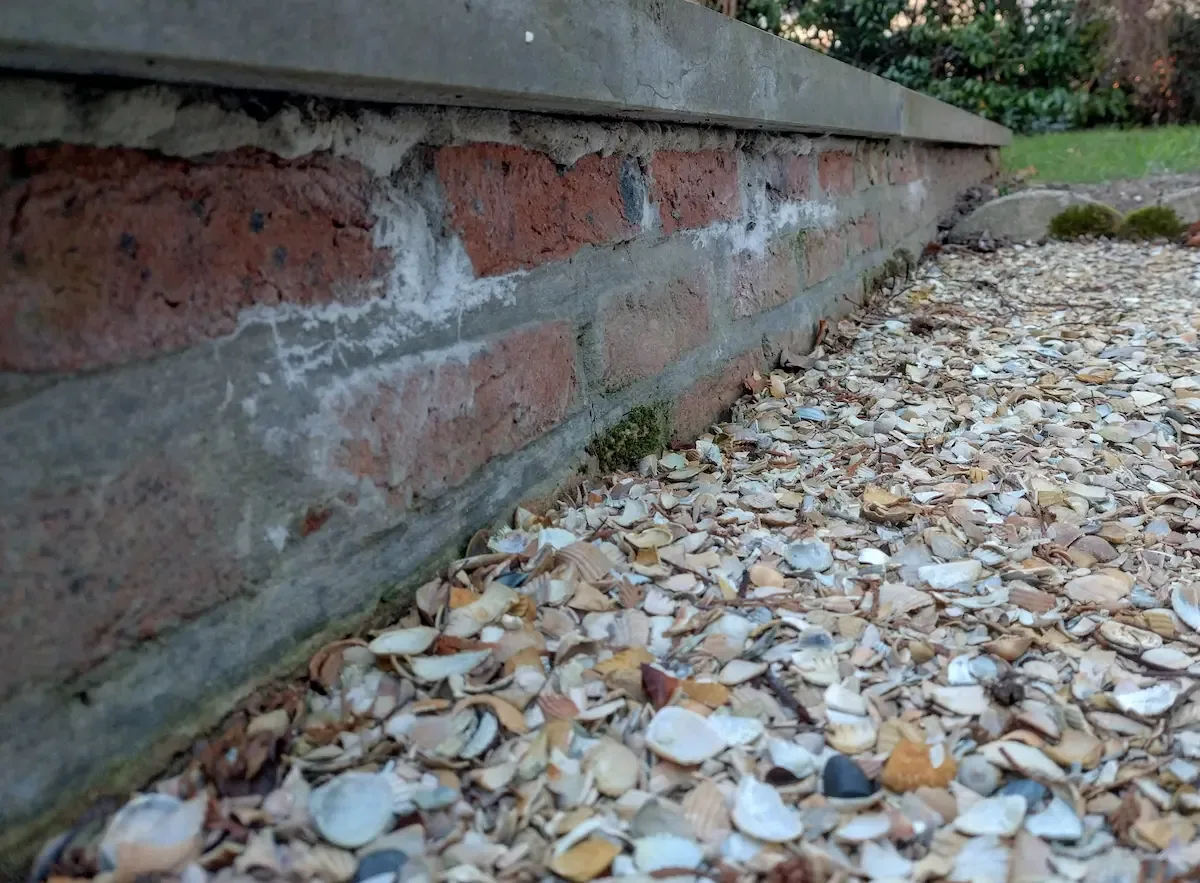
ISOschelp whole marine shells, 15-35 mm, washed and graded with no additives, for a draining, insulating sub-base that breaks capillary rise, in crawl spaces, under screeds or as perimeter drainage. The shells can be dug out and reused on another site.
What is a shell sub-base?
The draining shell sub-base is a loose fill of dead marine shells, mostly cockles, taken from shell banks in the North Sea, the Wadden Sea and the Eastern Scheldt, in the Netherlands. They are washed and graded, with no additives or chemical treatment.
Whole shells do not compact into a dense mass, and this geometry gives the fill its draining function, while the inert biogenic limestone breaks capillary rise. The air trapped between the shells adds thermal insulation, with a λD of 0.106 W/(m·K) measured by TNO.
The material does not degrade in contact with water, which keeps the fill durable even at the bottom of an excavation exposed to wetting and drying cycles. It is intended for the base of crawl spaces, for use under screeds, for perimeter drainage around the building and for filling a soakaway.
ISOschelp is a Dutch brand; delivery and installation in Belgium are handled by Ecoschelp, in Antwerp. At end of life, the fill can be dug out and redistributed to another site.
Installation & uses
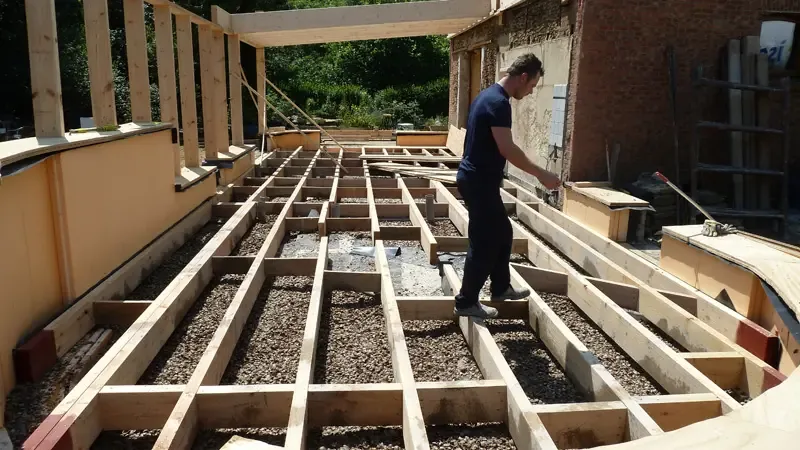
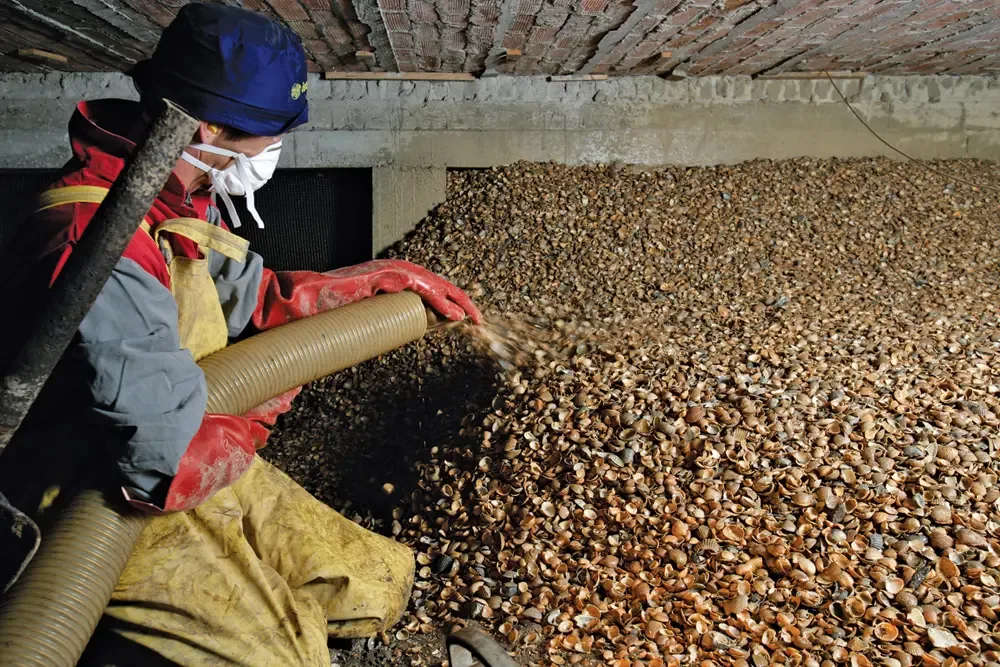
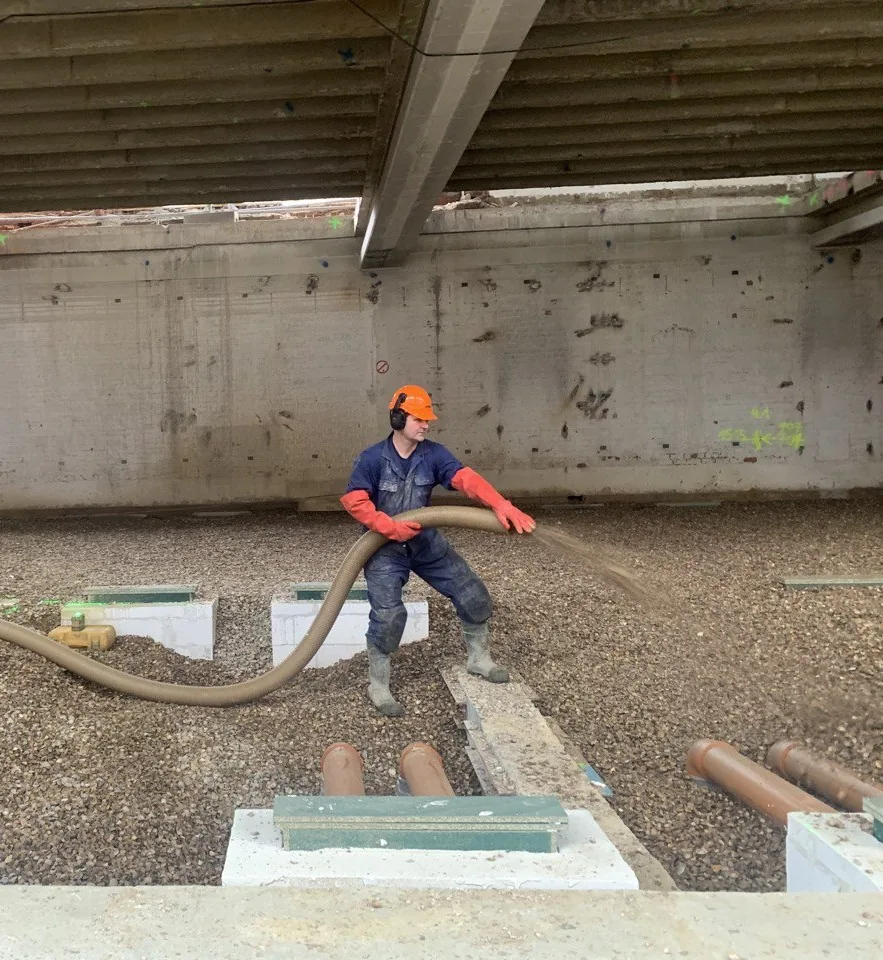
The shells are tipped directly into the excavation, by hand on small areas or by mechanical blowing on larger sites. The blowing distance is limited to around 60 m, with a loss of compaction of around 25% beyond 40 m.
The edges are retained by stop-ends or temporary edging, to prevent the fill from slumping sideways. A geotextile can be laid at the interface with the ground to keep the fill clean over time. No anchoring or binder is needed.
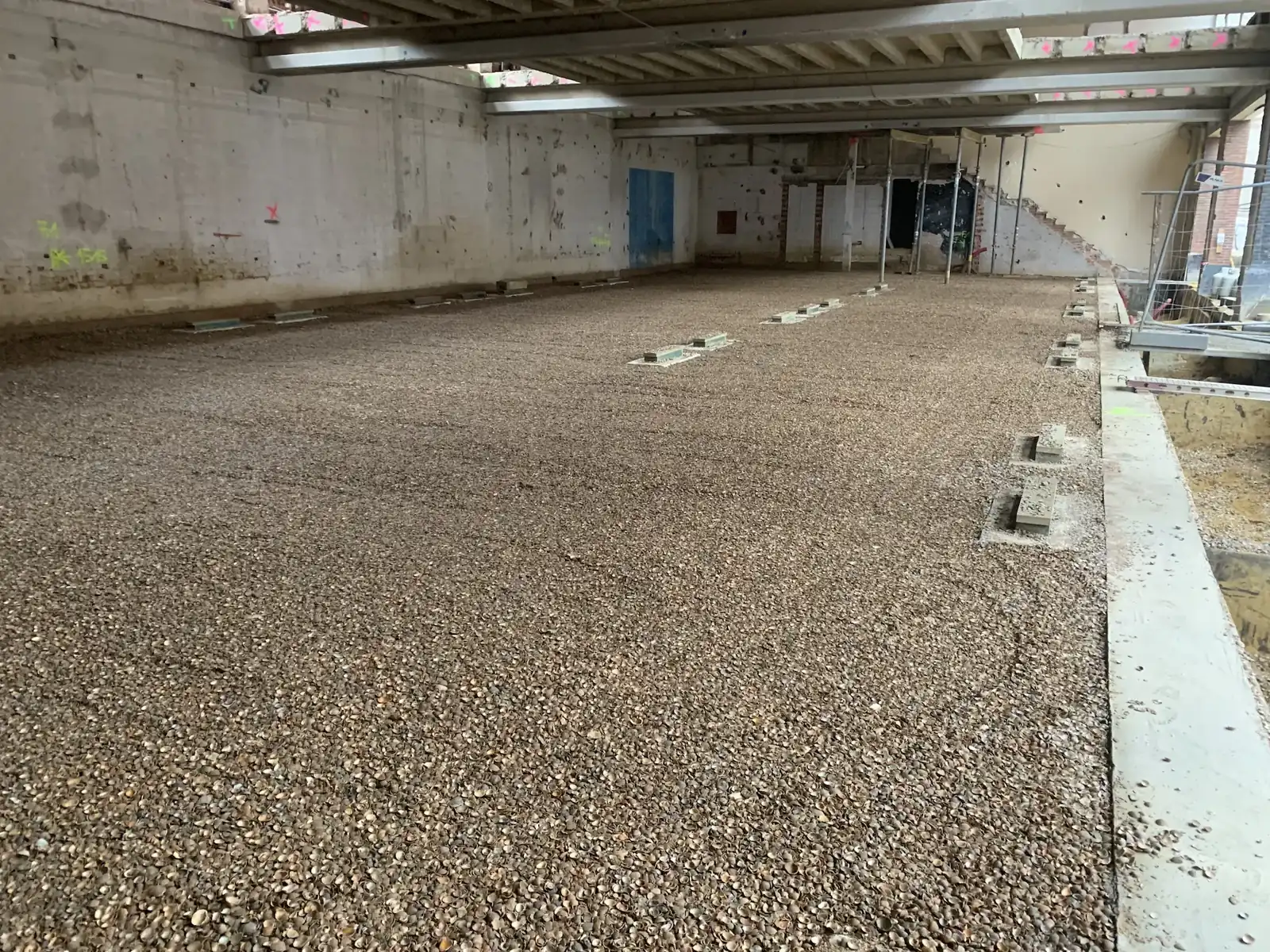
The recommended minimum thicknesses are 20 cm for an open floor and 25 cm at the base of a crawl space. With a λ of 0.106 W/(m·K), each 10 cm layer provides a thermal resistance of around 0.9 m²·K/W.
At end of life, the shells can be recovered and redistributed to another site.
About the producer
Ecoverbo is an Antwerp bio-ecological renovation company that delivers and installs shells for construction and gardens in Belgium, under the name Ecoschelp. It is the Belgian representative of the Dutch brand ISOschelp, whose marine shells are taken from shell banks, washed and graded.
The shells are delivered blown in, in bulk bags or in sacks, for insulating and draining sub-bases in crawl spaces or under screeds, drainage around buildings and soakaways.
Technical performance
No harmonised European standard, DoP or CE marking for this product. Properties measured by independent laboratories: λ by TNO, CSTC/WTCB and KU Leuven; failure strength 61-88 kPa.
Life cycle
The shells, mostly cockles, are collected dead from shell banks in the North Sea, the Wadden Sea and the Eastern Scheldt, in the Netherlands. Their calcium carbonate is 100% biological in origin.
The whole shells are washed and graded to 15-35 mm, with no additives or chemical treatment, under the Dutch brand ISOschelp. Ecoverbo, in Antwerp, delivers and installs them in Belgium under the name Ecoschelp, by hand or by mechanical blowing.
Laid without binder or anchoring, the shells can be dug out of an excavation and redistributed to another site. They do not rot or go mouldy, and their service life is estimated at 75 years.
FAQ
Do the shells settle like an ordinary aggregate?
No: the shape of whole shells prevents them from compacting into a dense mass. The voids that remain provide drainage and trap the air that gives the insulation, with no anchoring or binder.
What thickness is needed in a crawl space?
The recommended minimum is 25 cm at the base of a crawl space and 20 cm for an open floor. With the λD of 0.106 W/(m·K) measured by TNO, each 10 cm layer provides around 0.9 m²·K/W; other laboratories have measured 0.145 and 0.155 W/(m·K).
How far can the shells be blown?
Mechanical blowing, available from 10 m³, is limited to a length of around 60 m, with a loss of compaction of around 25% beyond 40 m. Small areas are filled by hand, and the edges are retained by stop-ends or temporary edging.
What is the difference between ISOschelp and Ecoschelp?
ISOschelp is a Dutch brand of whole 15-35 mm shells, taken from cockle banks in the North Sea, the Wadden Sea and the Eastern Scheldt. Ecoverbo, an Antwerp company, delivers and installs them in Belgium under the name Ecoschelp, and also offers a crushed-shell variant, 3-15 mm, for drainage only.
Alongside
Same layer, same use · materials to compare.