Hemp block
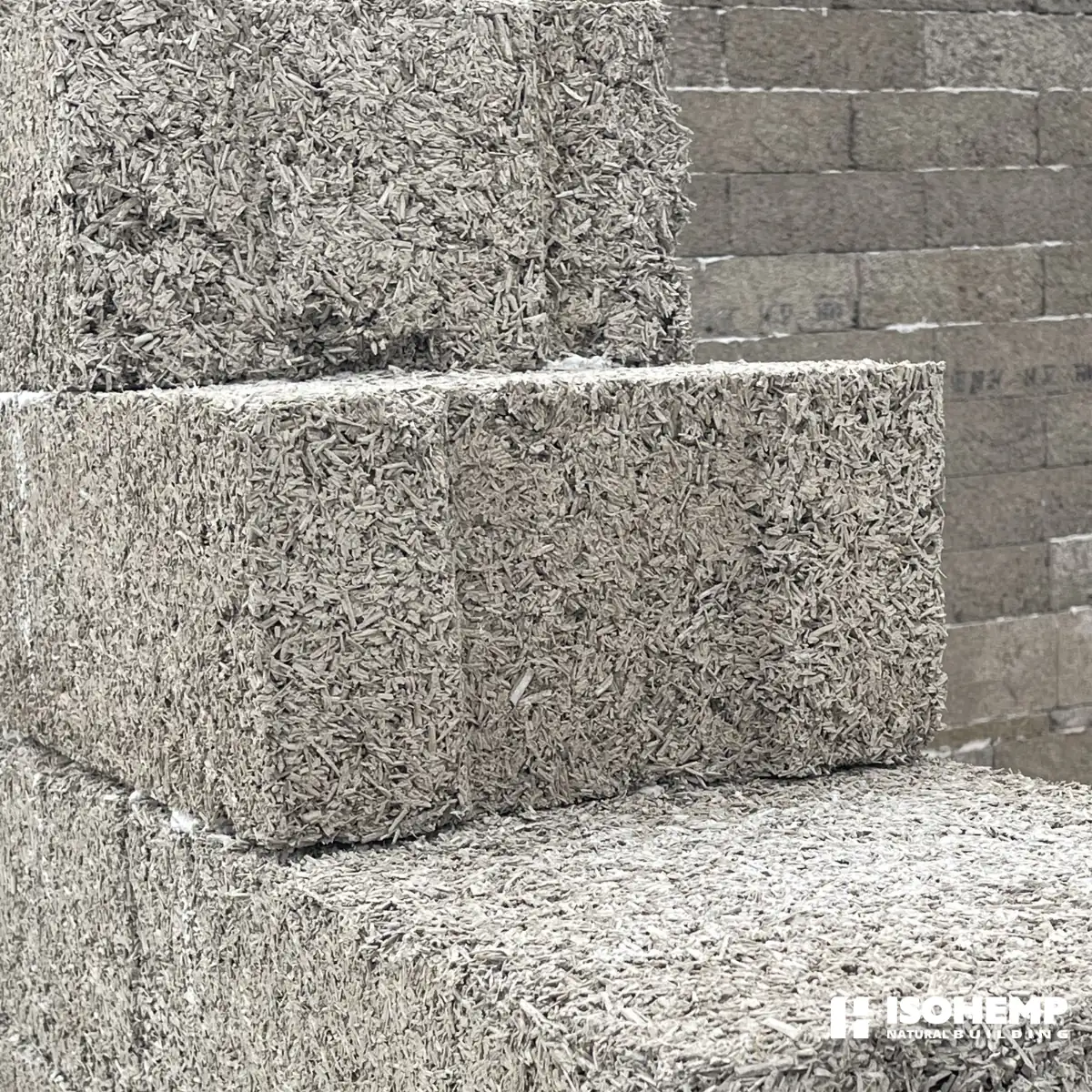
Non-loadbearing masonry block in hemp shiv and lime, air-dried without firing. It insulates through its mass, regulates humidity and dampens sound. Eight thicknesses from 7.5 to 36 cm. Manufactured by IsoHemp at Fernelmont (Belgium).
What is a hemp block?
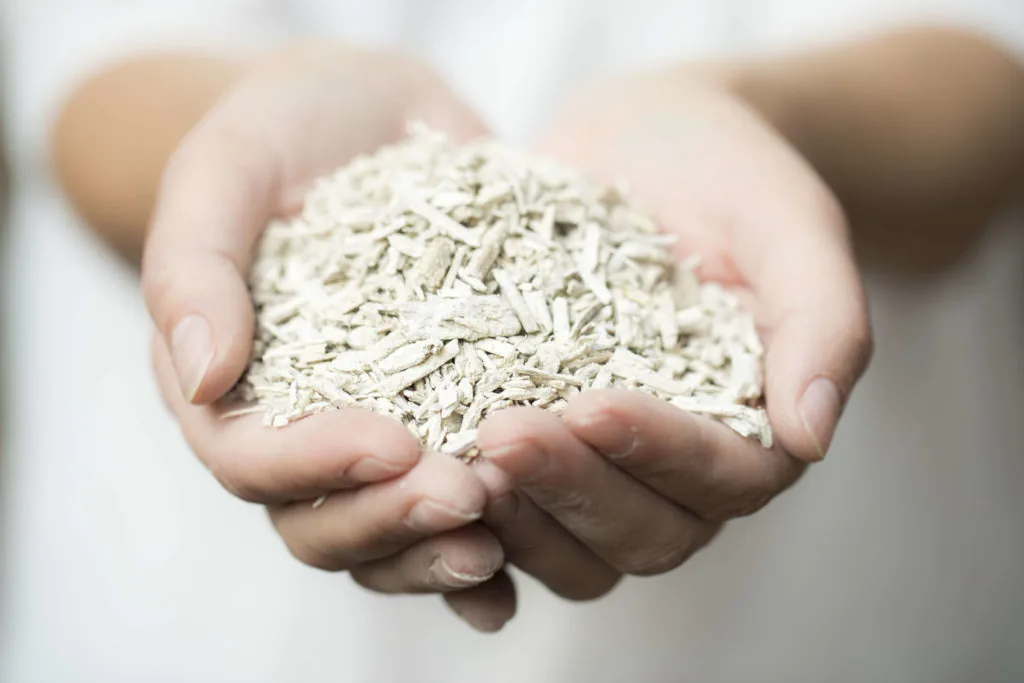
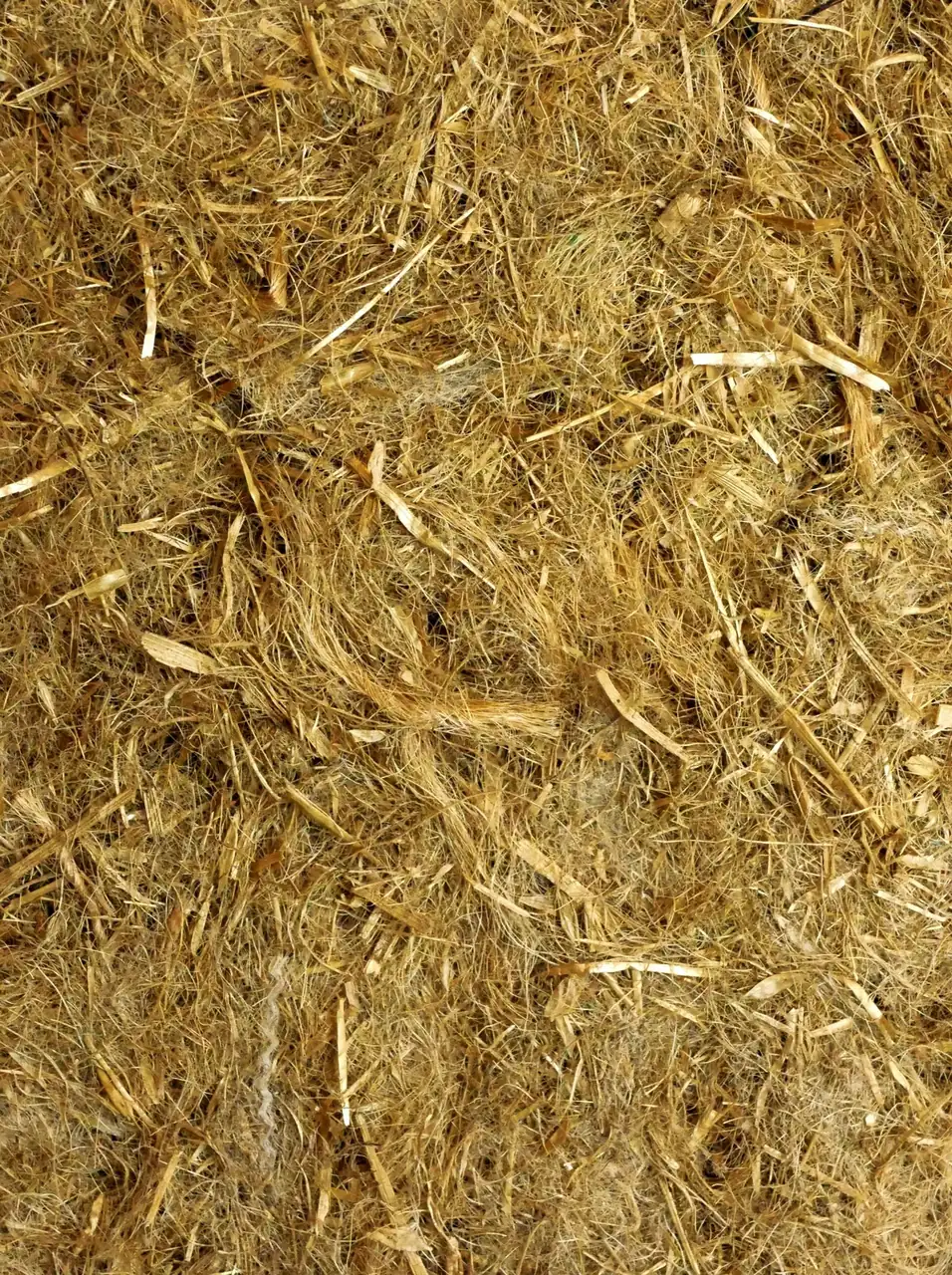
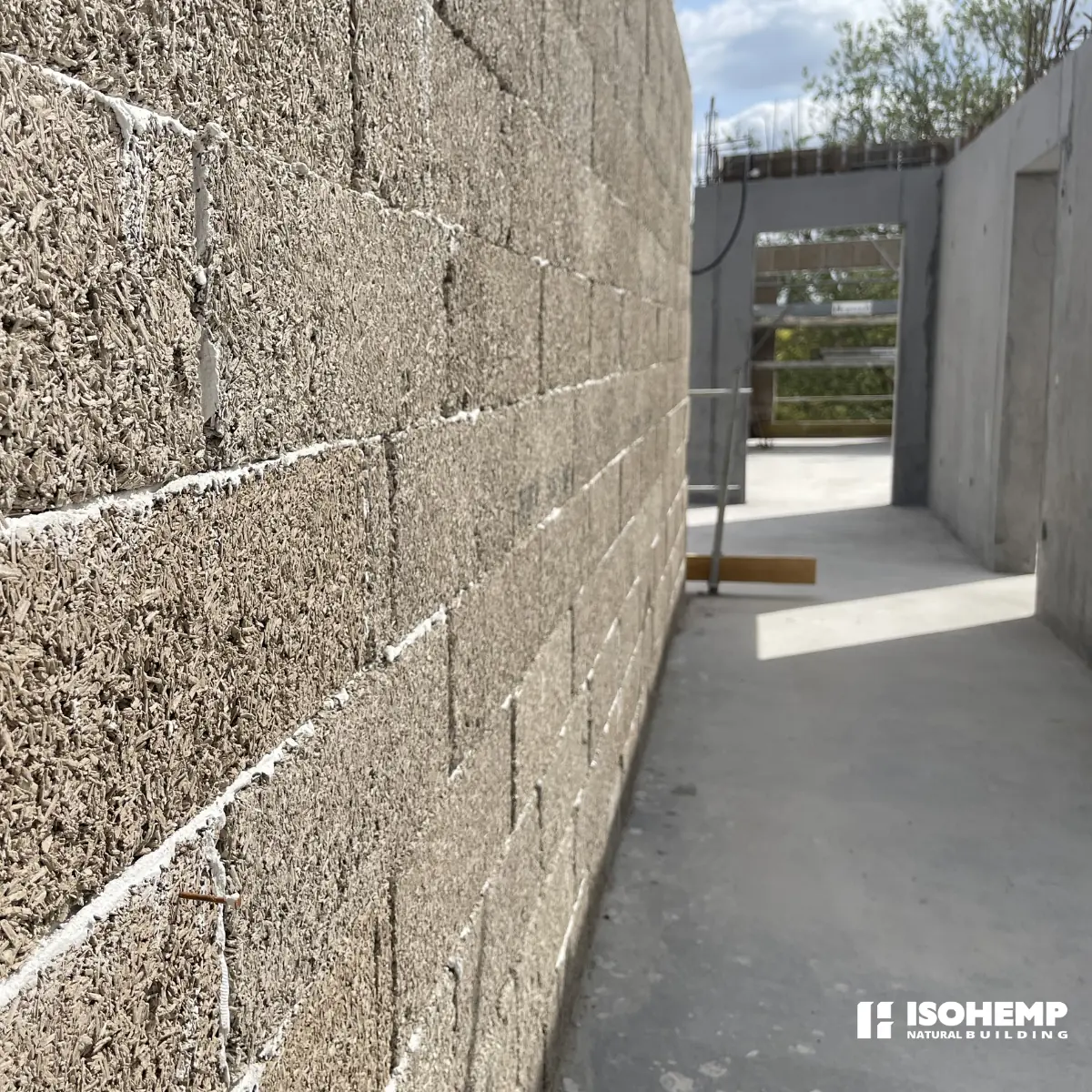
The hemp block is a non-loadbearing thin-joint masonry unit. It is made of hemp shiv, the chips from the woody core of the hemp stem, bound with air lime and natural hydraulic lime. It is laid like a brick, except that the insulation is distributed through its mass rather than added to the wall.
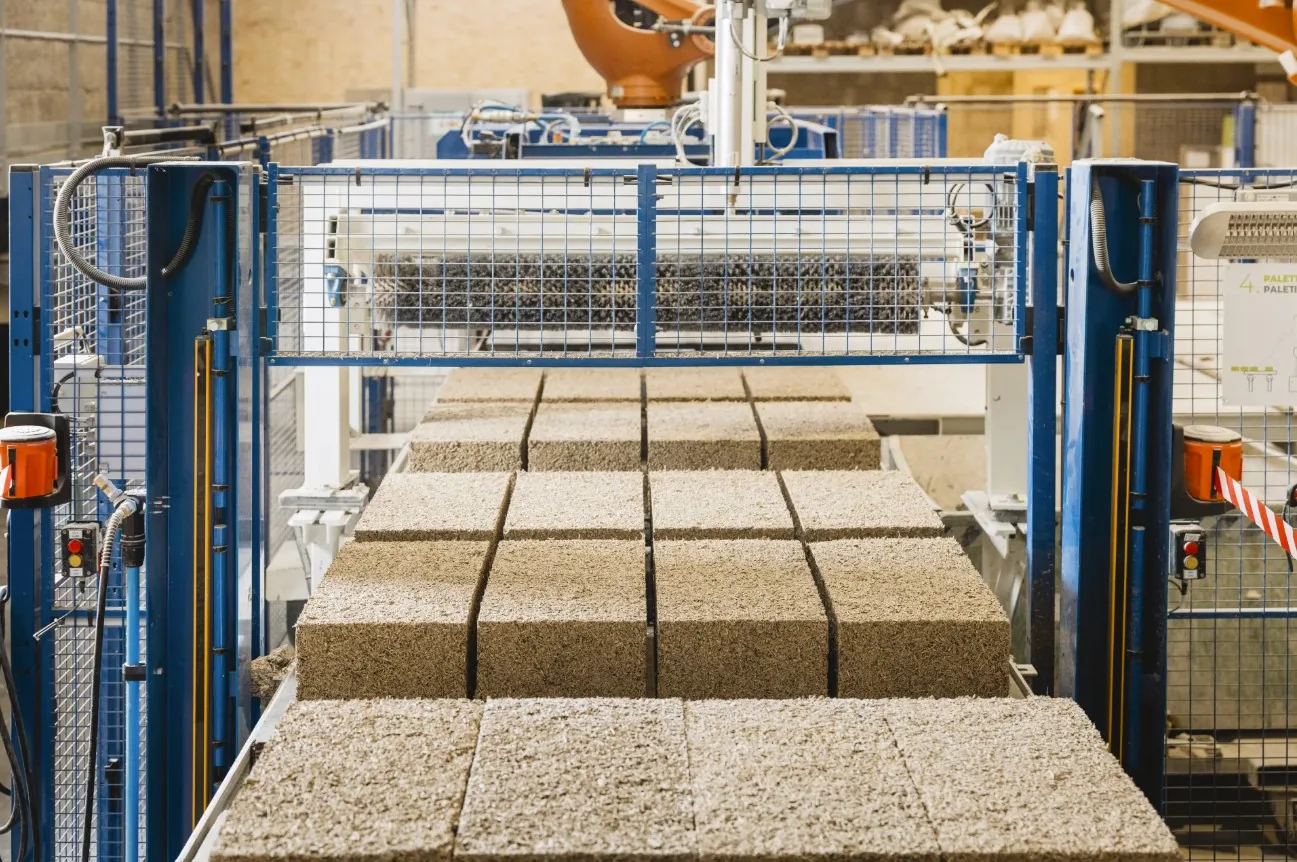
The mix is moulded, pressed, then cured and dried in the open air, without firing or added heat, at the IsoHemp plant in Fernelmont. This low-energy process and the carbon stored by the hemp explain a negative A1-A3 figure: −17.4 kgCO₂eq per m² of wall at 36 cm, biogenic carbon included. As this carbon is released again at end of life, the figure for the full life cycle comes to +58.9 kgCO₂eq/m².
Its density, around 320 kg/m³, gives it useful thermal mass. It contributes to summer comfort by damping outdoor temperature swings, which lightweight insulation does not offer.
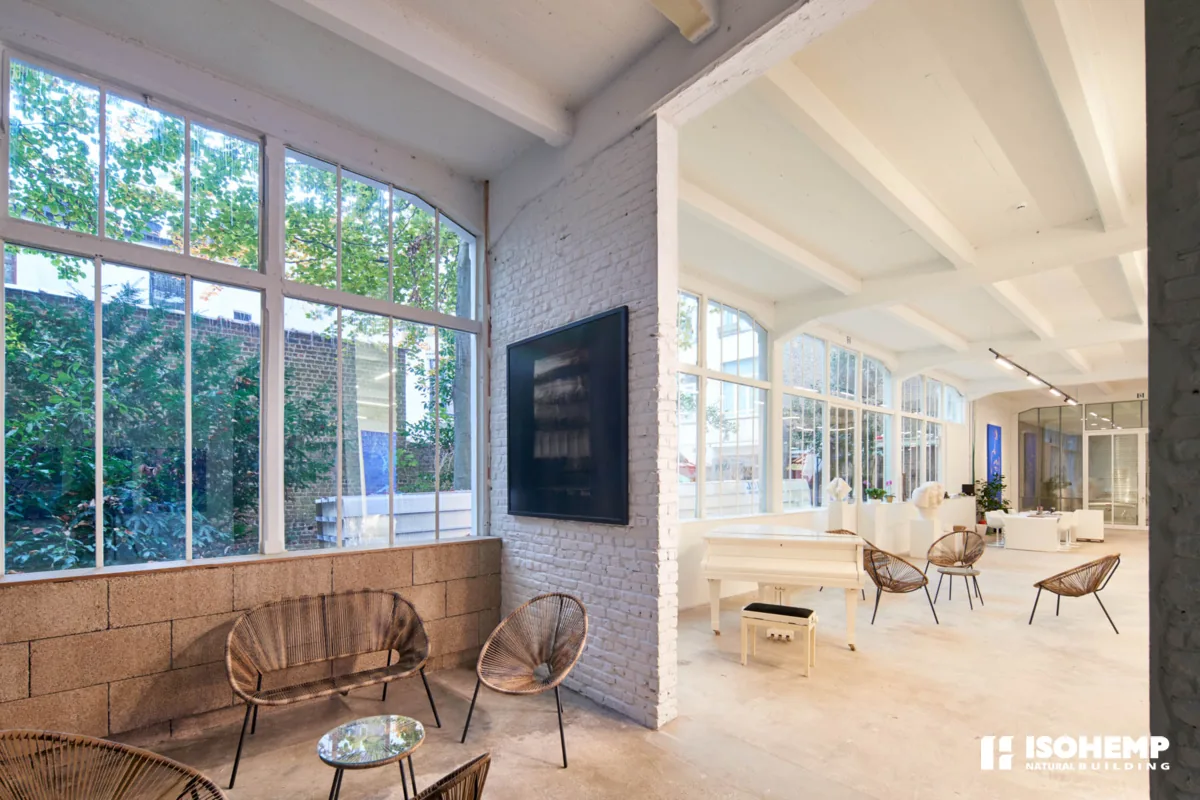
Vapour-permeable, it regulates indoor humidity and allows an old stone or rammed earth wall to be lined from the inside without sealing it in.
It replaces infill masonry combined with added insulation: the insulating wall is built in a single operation.
Installation & uses
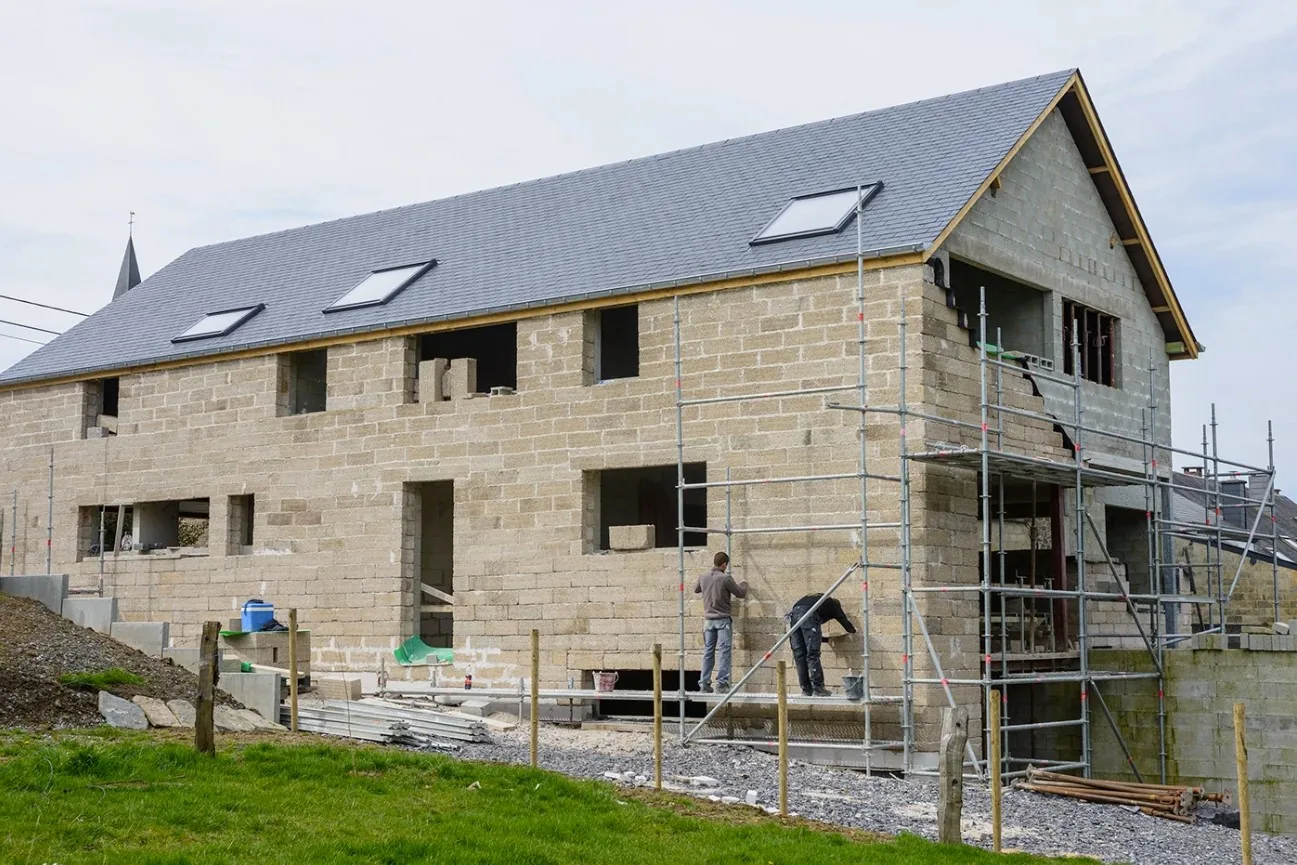
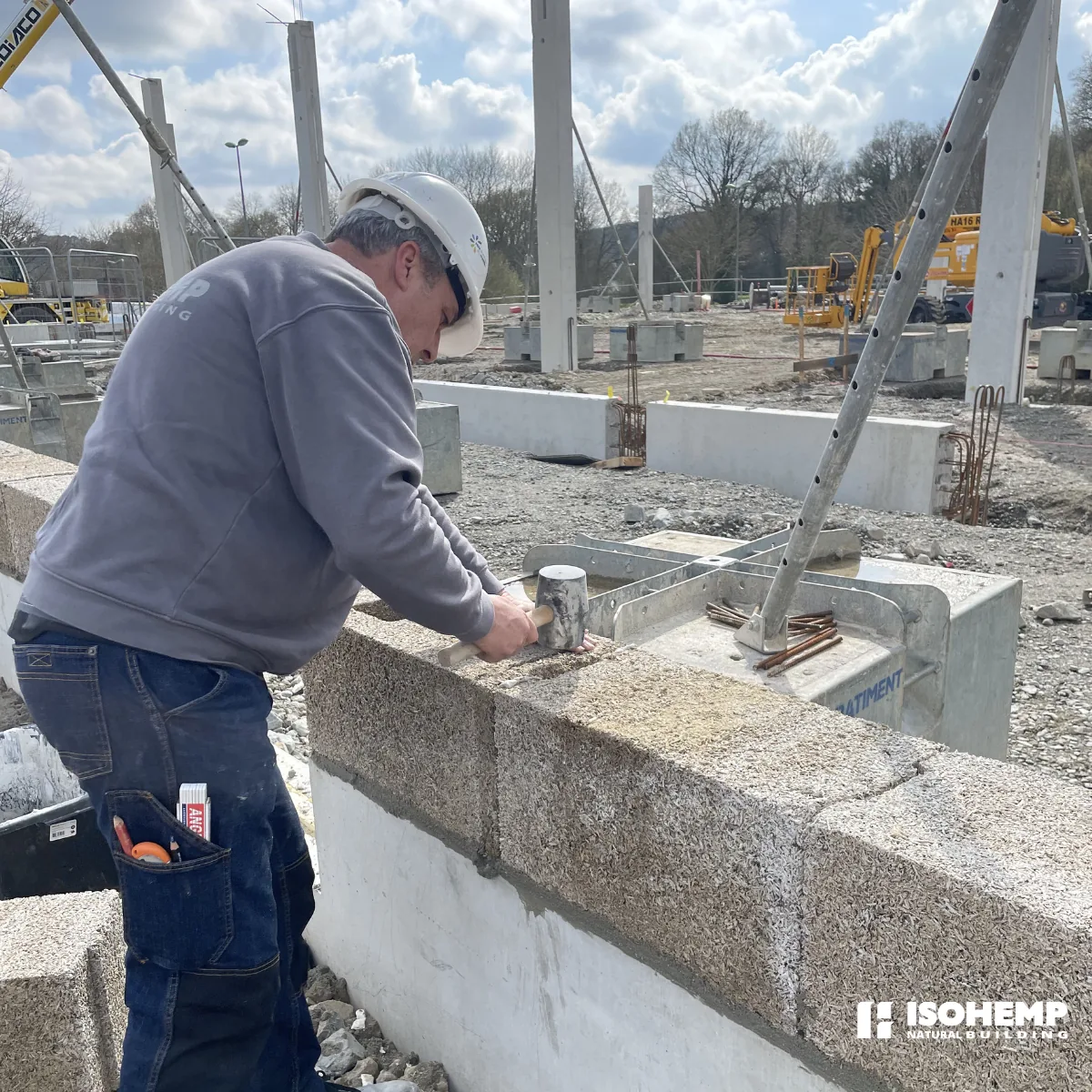
The blocks are laid as thin-joint masonry, with 3 mm joints, using IsoHemp adhesive mortar. They are cut with a saw and remain light to handle. To line an existing wall, ties or angle brackets provide the mechanical connection.
IsoHemp offers several Syst'HEMP systems, covering internal or external lining, timber frame infill, partitions in housing or offices, and new build. In the Syst'HEMP Pro system, P and U blocks act as permanent formwork for a reinforced concrete post-and-beam frame that carries the building's loads; the blocks themselves remain non-loadbearing.
As for finishes, the block can take a clay or lime plaster, or the manufacturer's PCS plaster. Outside, it must be protected from moisture by a suitable facing: mineral render, cladding, brick or stone.
A few precautions govern installation. The masonry must be protected from rising damp and start at least 20 cm above ground level outside, and it is built at temperatures between 5 and 30 °C, avoiding rain and frost.
About the producer
IsoHemp is a Belgian manufacturer of hemp blocks, based at Fernelmont, in the province of Namur. Its non-loadbearing masonry blocks combine hemp shiv and lime; they are moulded then air-dried, without firing. The range is completed by an insulating aggregate, a hempcrete for placing on site, an adhesive mortar and an interior plaster.
The manufacturer organises its products into Syst'HEMP construction systems, for lining, frame infill, partitions and new build. Its site offcuts can go to RecyHemp, its recycling scheme.
Technical performance
ATG 3169 (UBAtc, Belgium) · ATEx case a No. 3211_V2 (CSTB, France, Syst'HEMP Pro / HEMPRO system), valid from 11 December 2023 to 11 December 2026 · abZ Z-256747-25 (DIBt, Germany) · INIES EPD No. 20251046948 (EN 15804+A2) · Label Produit Biosourcé.
Life cycle
The block combines hemp shiv, the chips from the woody core of the hemp stem, with air lime and natural hydraulic lime. Hemp makes up about a third of the block's mass and stores biogenic carbon in it.
IsoHemp makes the block at its plant in Fernelmont, about 70 km from Brussels. The mix is moulded, pressed, then cured and dried in the open air, without firing or added heat.
Construction and demolition offcuts are taken back by RecyHemp, IsoHemp's recycling scheme, then ground and fed back into production at Fernelmont. The EPD scenario releases the stored biogenic carbon at end of life.
Projects and publications
The projects that use it and the publications that discuss it.
FAQ
How can a new building be built with a non-loadbearing block?
With the Syst'HEMP Pro system, P and U blocks act as permanent formwork for a reinforced concrete post-and-beam frame, which carries the loads. The blocks remain non-loadbearing, within the scope of use defined by ATEx 3211_V2.
Can an old stone or rammed earth wall be lined from the inside?
Yes: vapour-permeable (μ = 2.8), the block regulates humidity without sealing in the existing wall. The mechanical connection to the substrate is made with ties or angle brackets, and the blocks are bonded with 3 mm thin joints using IsoHemp adhesive mortar.
What precautions apply outside?
The block must be protected from moisture by a suitable facing: mineral render, cladding, brick or stone. The masonry starts at least 20 cm above ground level, protected from rising damp, and is built between 5 and 30 °C, avoiding rain and frost.
What does its mass bring to summer comfort?
At around 320 kg/m³, the block damps outdoor temperature swings: the thermal phase shift reaches 23.6 h at 36 cm and 13.1 h at 20 cm. Its thermal conductivity remains 0.071 W/(m·K) at 50% relative humidity.
Are site offcuts taken back?
Yes, by RecyHemp, IsoHemp's recycling scheme. Offcuts from construction and demolition are ground and fed back into production at Fernelmont.
Alongside
Same layer, same use · materials to compare.