
Wood fibre
insulation
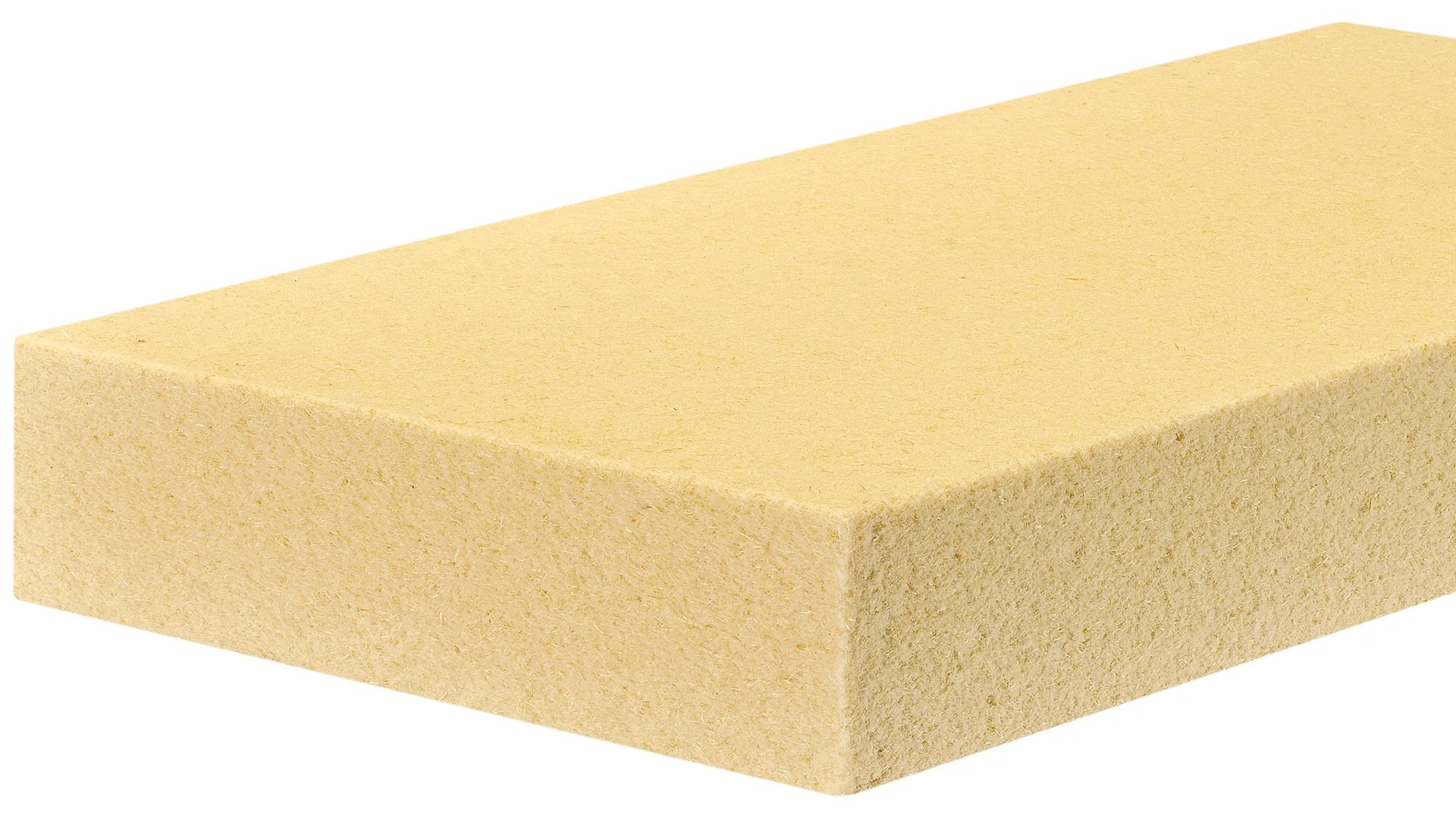
Range of softwood fibre insulation made in Eberhardzell: MULTITHERM, TOP, WALL and FLOOR rigid boards, FLEX 50 flexible boards and FIBRE loose fill for blowing. They insulate roofs, walls and floors in vapour-open assemblies.
What is wood fibre insulation?
Best Wood SCHNEIDER's wood fibre insulation products are made at Eberhardzell from softwood chips produced at its sawmills. The fibre makes up 91 to 94% of the mass of each product; depending on how it is bound, it becomes a rigid board, a flexible board or loose-fill insulation.
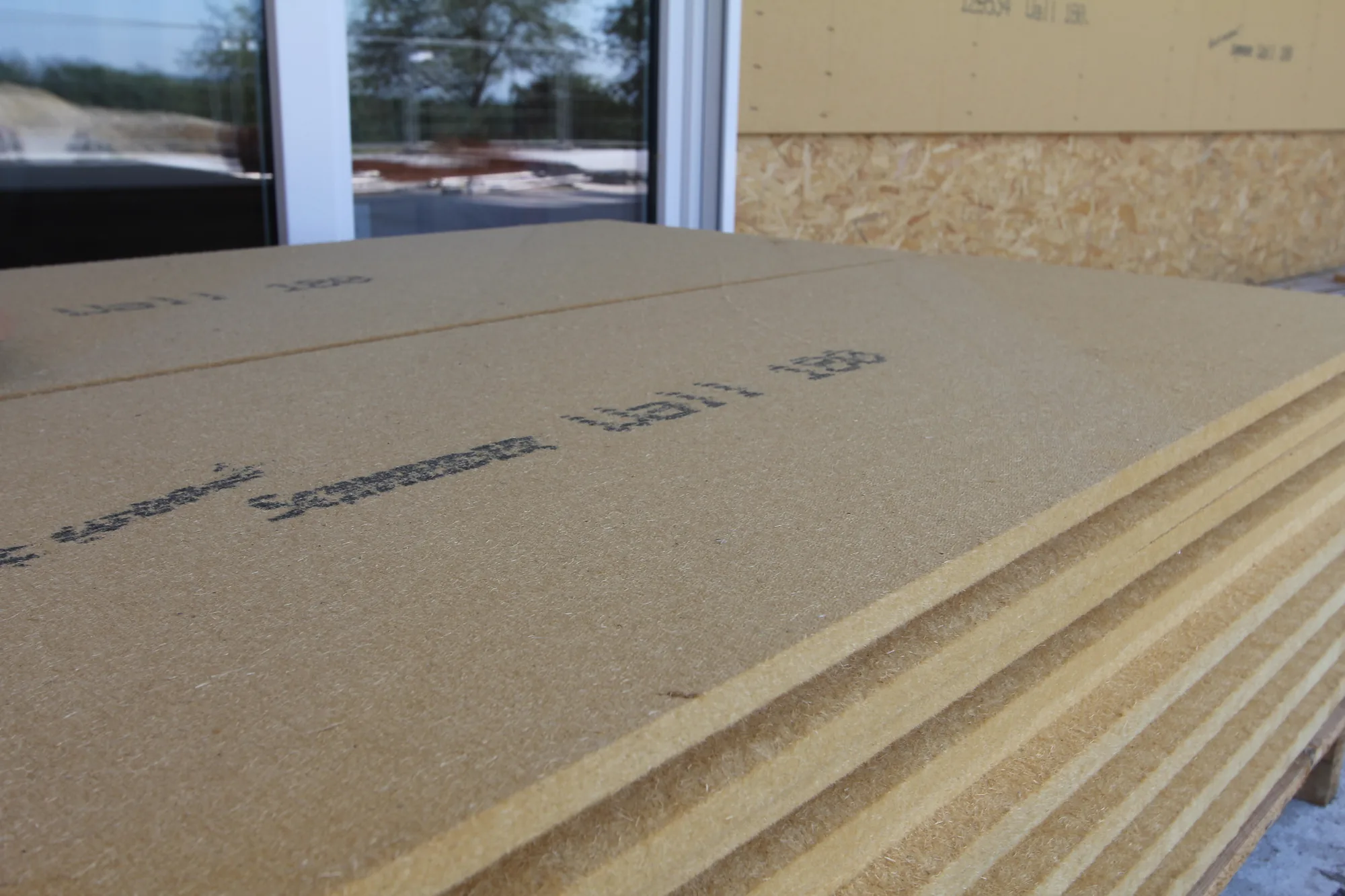
The rigid boards, made by a dry process, combine the fibre with a formaldehyde-free binder and paraffin, which makes them water-repellent. Their density depends on their role: MULTITHERM (110 or 140 kg/m³) insulates roofs and walls; TOP (140 to 220 kg/m³) is laid over the rafters and serves as a sarking layer; WALL (140 or 180 kg/m³) takes an external render, and is available pre-rendered; FLOOR (160 or 220 kg/m³) carries the screed.
At the other end of the range, FLEX 50, at 50 kg/m³, is held together by bicomponent fibres and stays flexible, and FIBRE, with no binder, is blown into cavities. Conductivity varies with density: from 0.037 W/(m·K) for FLEX 50 to 0.047 W/(m·K) for the 220 kg/m³ boards; FIBRE reaches 0.038 W/(m·K) blown in at 38-45 kg/m³ in a closed cavity.
The whole range shares a specific heat capacity of 2,100 J/(kg·K): combined with the mass of the dense boards, it slows the passage of heat, which is useful for summer comfort under a roof. The products remain vapour-open (μ of 1 to 5 depending on the product). All, pre-rendered version included, are classed E for reaction to fire.
With the exception of the pre-rendered version, they are covered by a verified EPD: the carbon stored in the fibre is counted in production, then released again at end of life.
Installation & uses
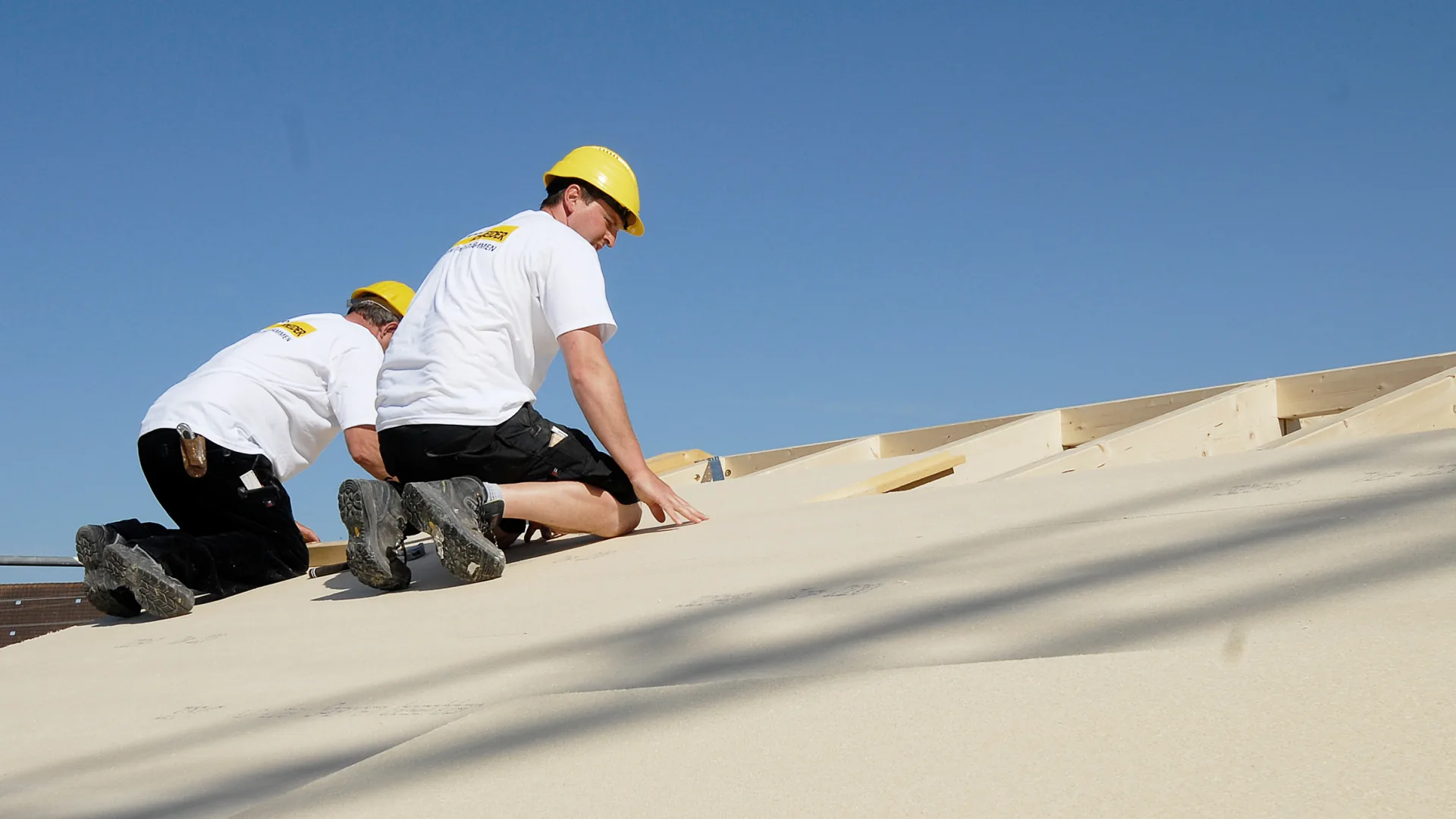
The range covers the whole building envelope. On roofs, TOP or MULTITHERM are laid over the rafters, held by counter-battens screwed through the insulation; from a pitch of 15°, TOP can remain exposed to the weather for up to 12 weeks. Between the rafters, FLEX 50 is friction-fitted, without fixings, and FIBRE is blown into closed cavities.
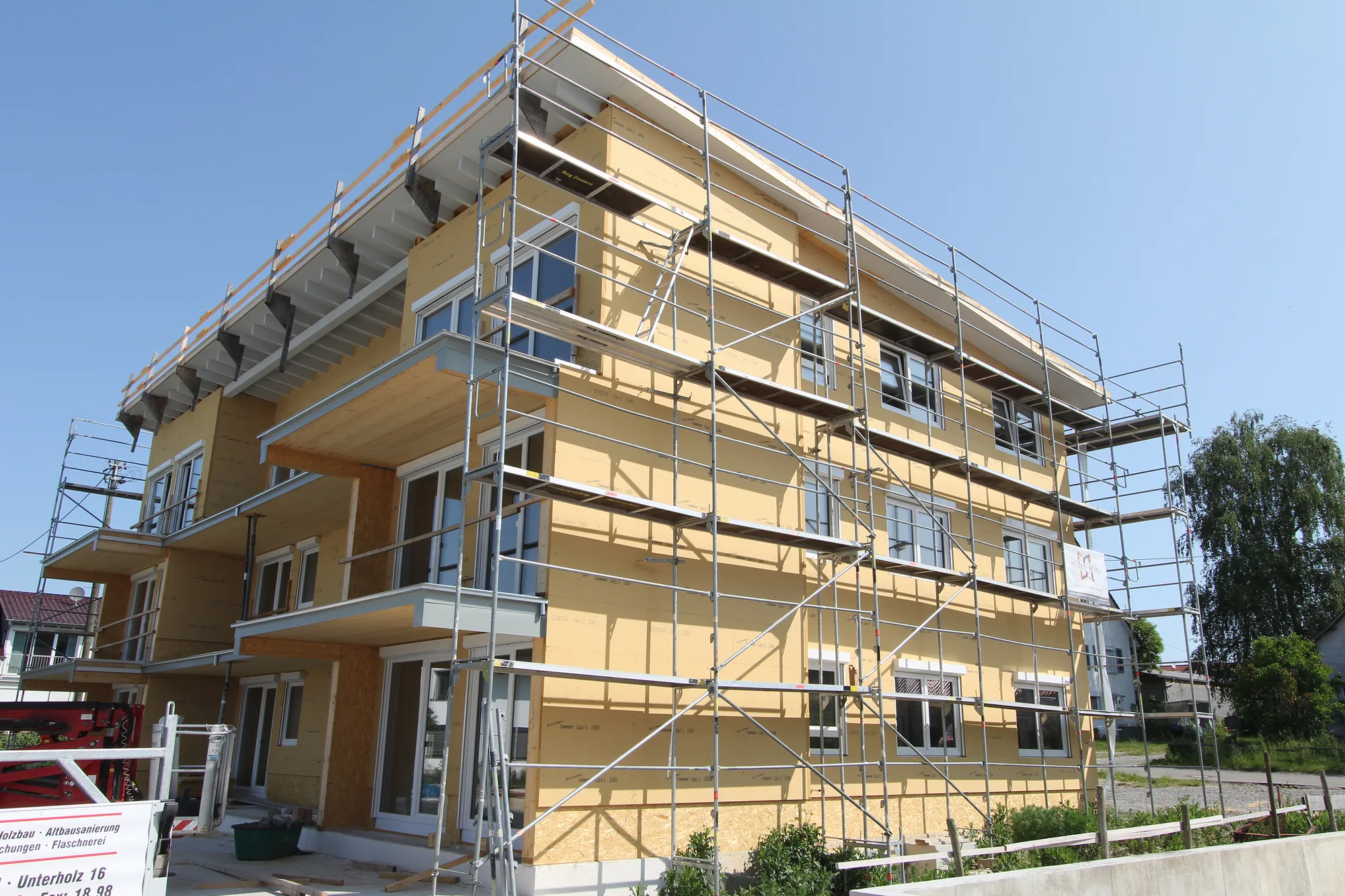
On facades, WALL is bonded and then anchored to a solid substrate, solid timber or masonry, and takes an approved render system: reinforcing mortar, mesh, finish coat. The pre-rendered version does away with filling the joints and drying the first coat; it is fixed mechanically and can remain exposed for five months before finishing. Indoors, MULTITHERM 140 can take a clay or lime plaster.
On floors, FLOOR is laid with tight joints under a dry, flowing or cement screed, in 40, 60 or 80 mm for FLOOR 160; FLOOR 220, which is denser, in 22, 35 or 40 mm, is presented above all as an underlay for dry screed. With FLOOR 160, timber battens available as an accessory allow wood flooring or floorboards to be fixed directly, with no screed.
The blowing of FIBRE is restricted to contractors trained by the producer, which also hires out its machine. The boards are cut with standard wood saws, FLEX 50 with a serrated-blade saw and the pre-rendered version with carbide blades.
About the producer
best wood SCHNEIDER is a German family business founded in 1911 at Eberhardzell, where it still has its head office. It processes softwood into structural products (glulam, CLT, CLT BOX box elements, KVH solid timber) and into wood fibre insulation.
At the head office, production runs in a closed loop: the residues from timber processing are used to make the insulation and to produce energy. A second site, at Meßkirch, combines a sawmill with large-format CLT production; a subsidiary at Märstetten, in Switzerland, handles distribution.
Technical performance
MULTITHERM, FLEX 50, TOP, WALL, pre-rendered WALL and FLOOR boards: EN 13171:2012+A1:2015 (WF) · FIBRE: ETA-16/0954 of 10 January 2025 · external wall insulation systems on WALL: ETA-16/0997 (timber substrate, WALL 140 and 180) and ETA-15/0731 (mineral substrate, WALL 140) · reaction to fire E (EN 13501-1) for all products, pre-rendered version included · IBU EPDs to EN 15804+A2: EPD-HWS-20230344-IBA2-DE (MULTITHERM, TOP, WALL, FLOOR), EPD-HWS-20230343-IBA3-DE (FLEX 50), EPD-HWS-20230342-IBA2-DE (FIBRE).
Life cycle
The insulation products are made from wood chips from Best Wood SCHNEIDER's sawmills, which mainly process regional spruce from PEFC-certified forests.
The chips are turned into fibre and then into insulation at Eberhardzell, about 600 km from Brussels, on a continuous line and using a low-energy drying process. The heat that dries the fibres comes from the site's biomass plant, fuelled by bark and wood residues.
After selective removal, the products can be reused or returned to the manufacturing process; failing that, they are recovered as energy, the scenario used in the EPDs. The producer also takes back clean site offcuts of the boards, collected in bulk bags when its lorries make a delivery. The pre-rendered version, which combines fibre and mortar, counts as mixed construction waste.
Projects and publications
The projects that use it and the publications that discuss it.
FAQ
Which product should be chosen to insulate a roof?
Over the rafters, TOP serves as both insulation and a temporary sarking layer; MULTITHERM is also laid over rafters or on a frame. Between the rafters, FLEX 50 is friction-fitted and FIBRE is blown into cavities. TOP is not intended for insulation between rafters; it is combined with one of the two.
Can the boards stay exposed to the weather during construction?
Yes, for a limited time: up to 12 weeks for TOP laid at a pitch of at least 15°, four months for MULTITHERM behind ventilated cladding, five months for pre-rendered WALL before finishing.
Can you install FIBRE blow-in insulation yourself?
No. It may only be installed by contractors trained in blowing by Best Wood SCHNEIDER. The density is set according to the construction: 35 to 45 kg/m³ in closed wall and sloping roof cavities (38 to 45 kg/m³ recommended), 25 to 45 kg/m³ in floors and laid loose on a loft floor (about 28 kg/m³ recommended).
What is the embodied carbon of the range?
Three IBU EPDs to EN 15804+A2 cover the range. Over A1-A3, stored carbon included: −174 kgCO₂eq/m³ for the rigid boards, a value declared at 160 kg/m³; −50.3 kgCO₂eq/m³ for FLEX 50; −1.30 kgCO₂eq/kg for FIBRE. This carbon is released again at end of life. The pre-rendered version is not covered.
Alongside
Same layer, same use · materials to compare.
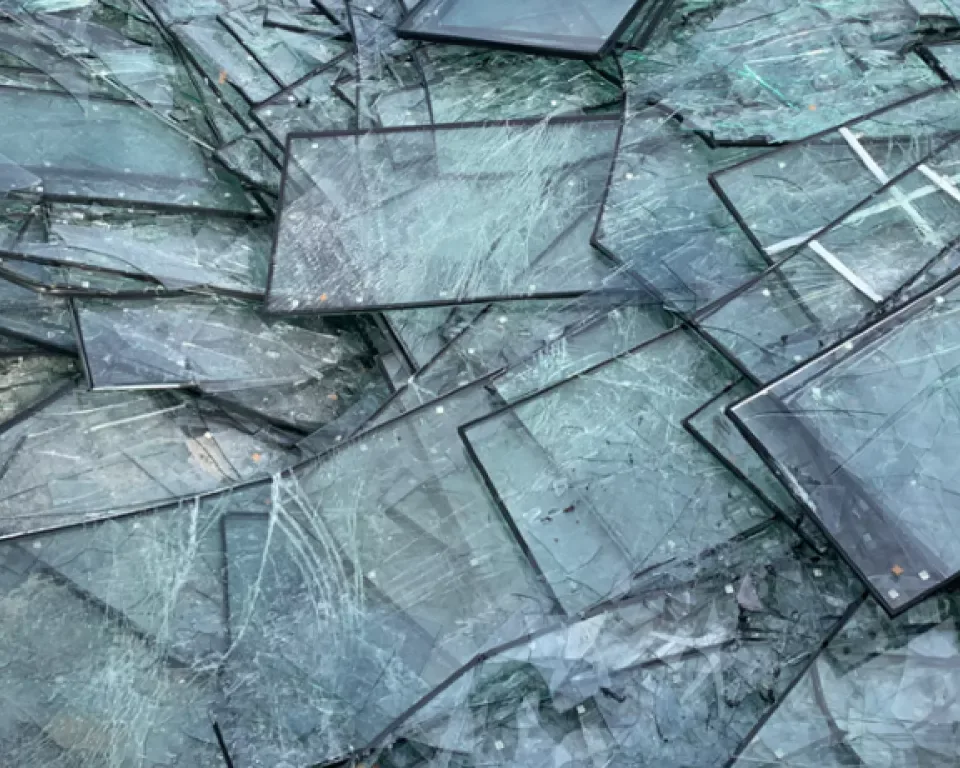
Float glass with a high recycled glass content. AGC · Louvain-la-Neuve.
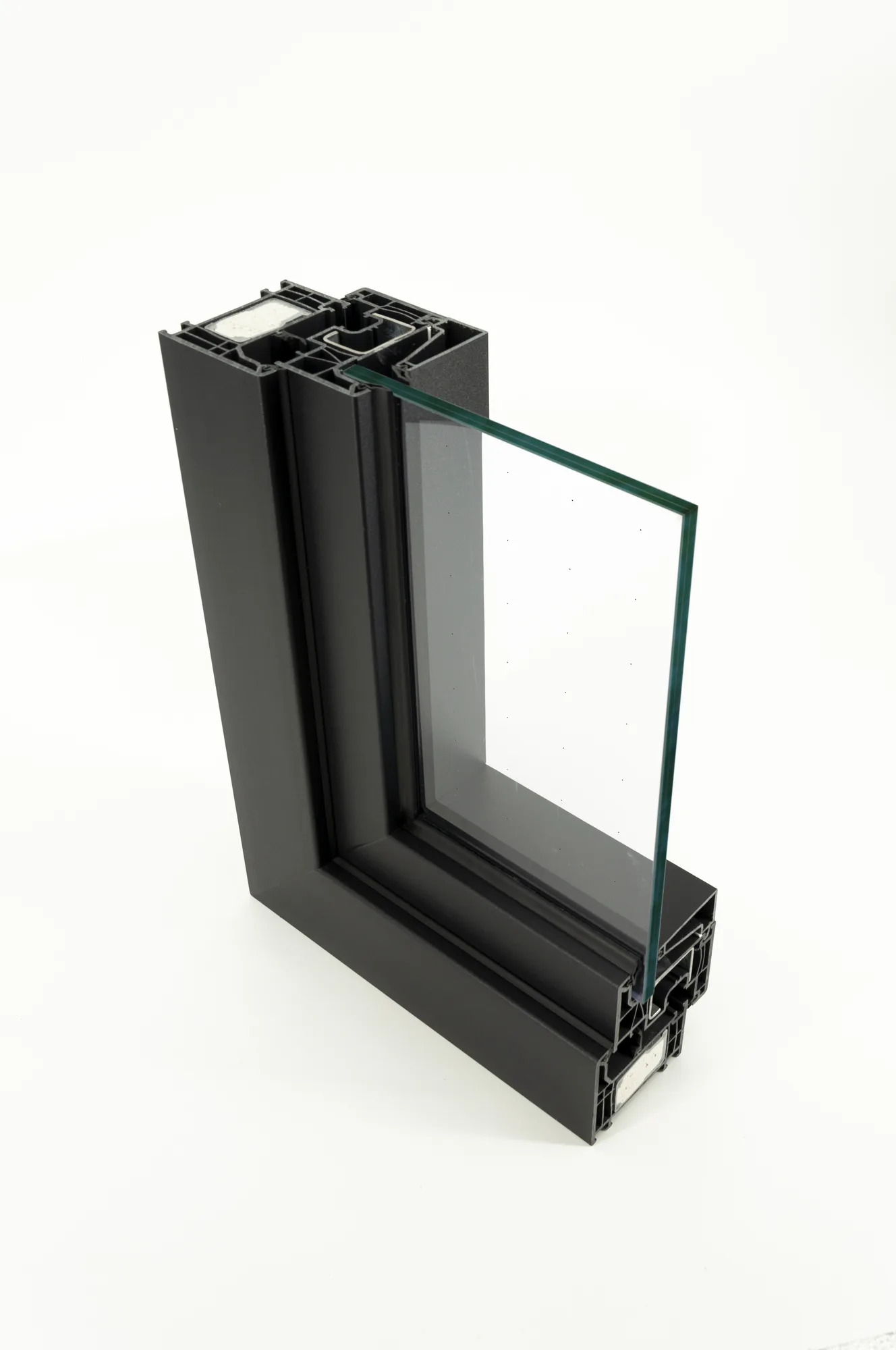
100% recycled PVC, extruded profiles. Deceuninck · Hooglede-Gits.
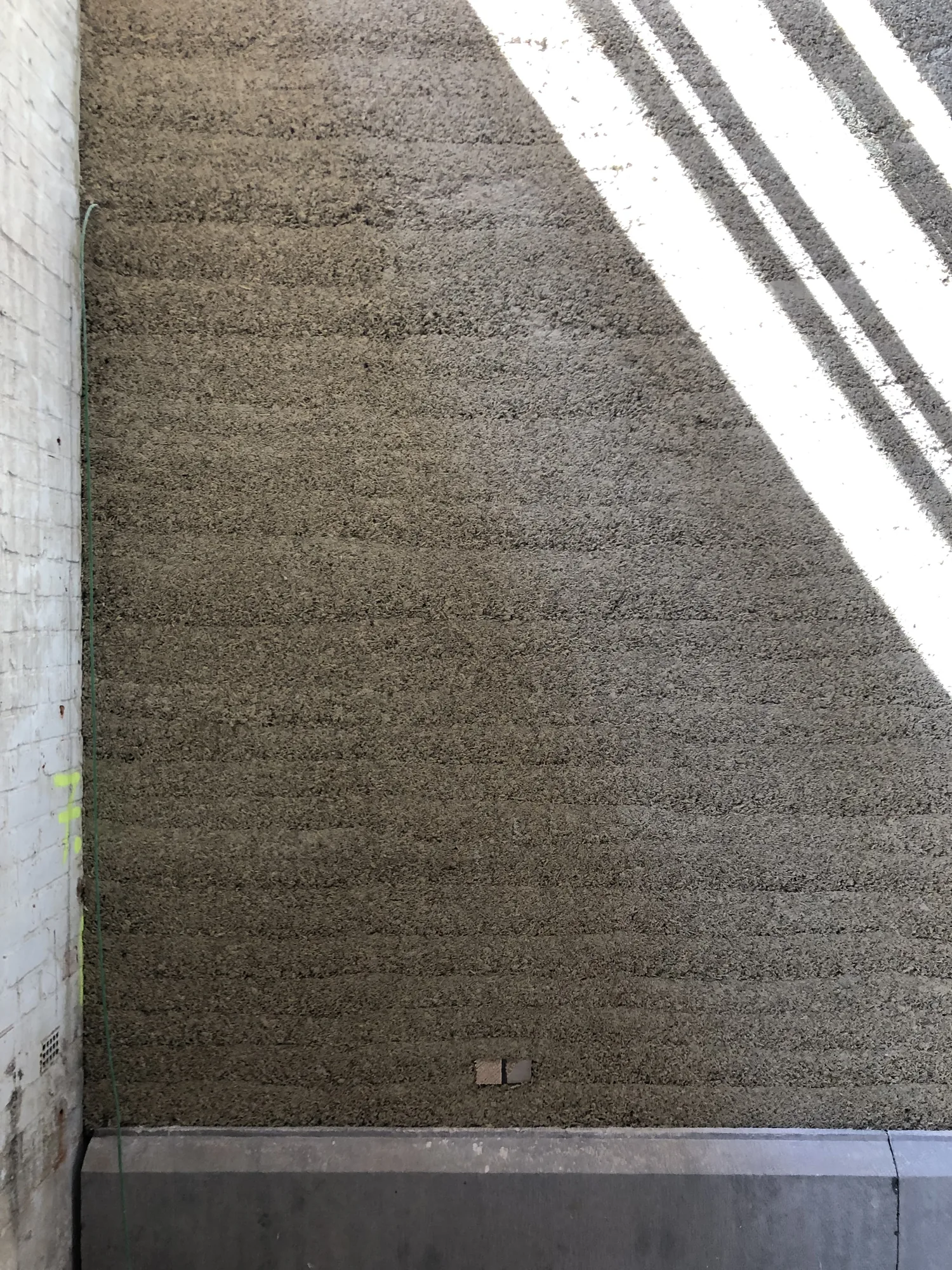
Hemp shives and lime, wet mix poured into formwork. Exie · Herzele.