Low-carbon
glazing
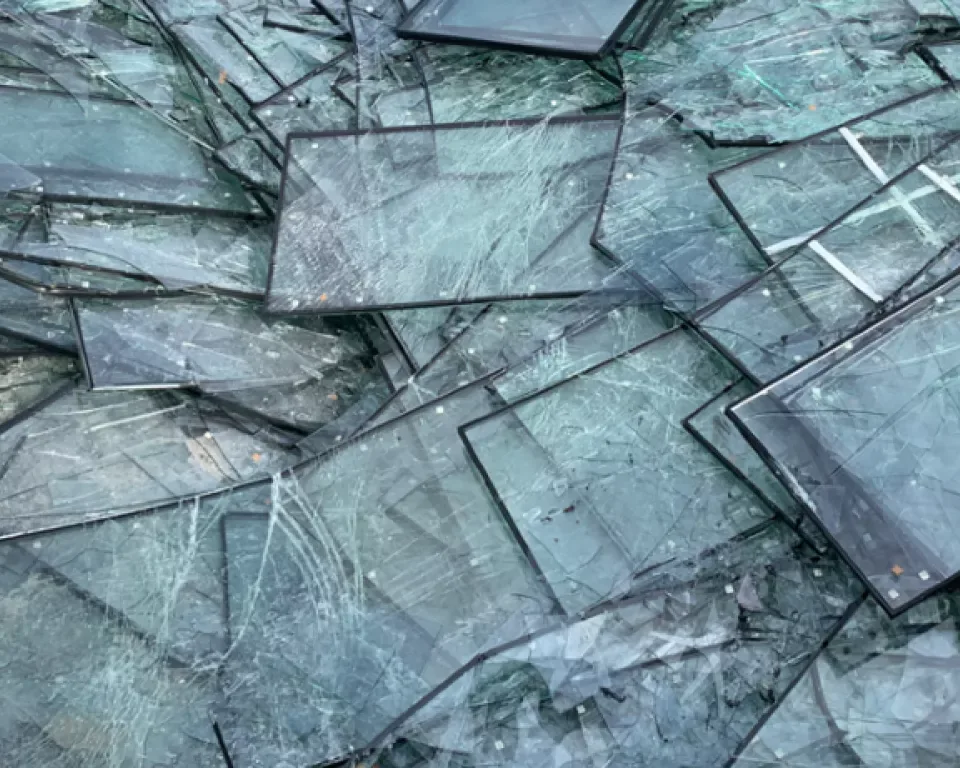
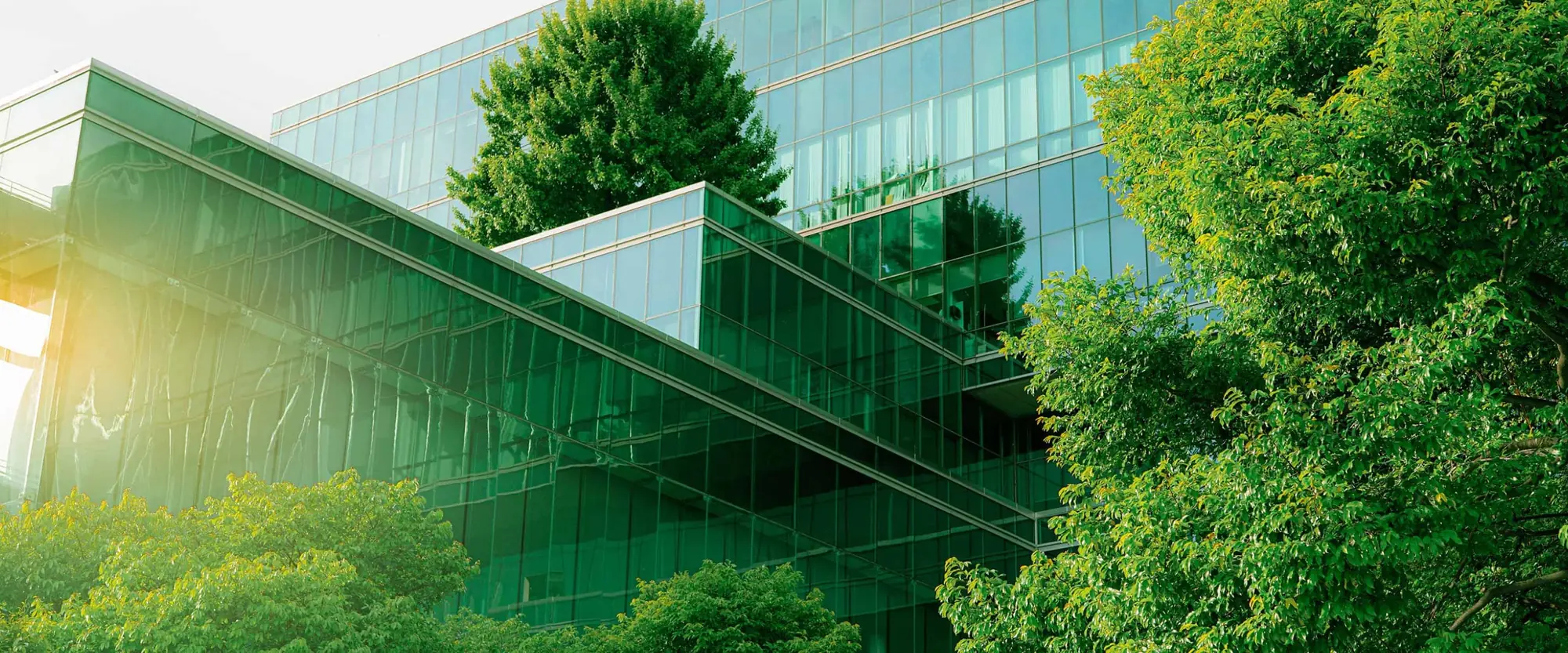
Flat float glass with a carbon footprint around half that of standard AGC float, thanks to high-efficiency furnaces, more than 50% recycled glass and renewable electricity. Its optical and mechanical performance is that of standard Planibel Clearlite, for facades, partitions, wall cladding and furniture.
What is low-carbon glazing?
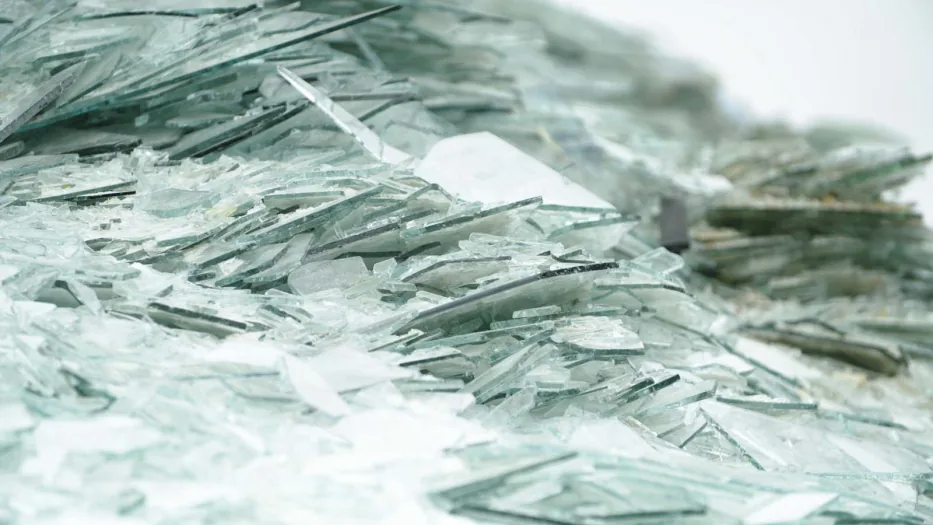
Low-carbon soda-lime flat glass is a float glass made from silica sand, soda ash, limestone and cullet, manufactured with a high proportion of recycled glass. The cullet acts as a remelted secondary raw material, while the sand and soda ash provide the vitrification. The composition remains that of a standard float glass, which preserves its optical and mechanical performance.
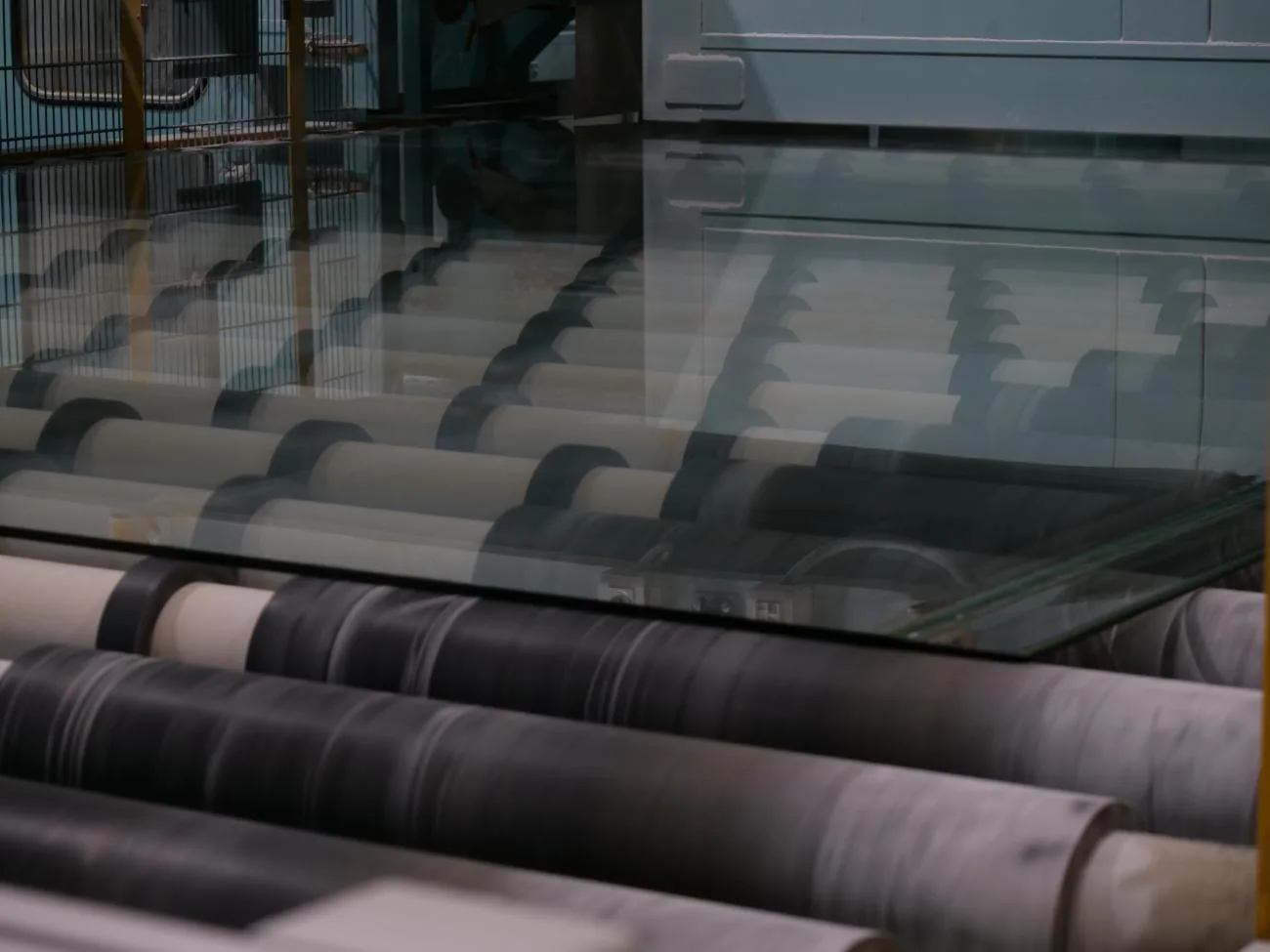
This chemical similarity allows all the usual processing. The glass can be cut, toughened, laminated or coated using the same processes, and built into double or triple glazing without adaptation.
Because it behaves identically, low-carbon glass can replace standard glass with no change to installation or thermal calculations. The glass also remains recyclable without loss of quality.
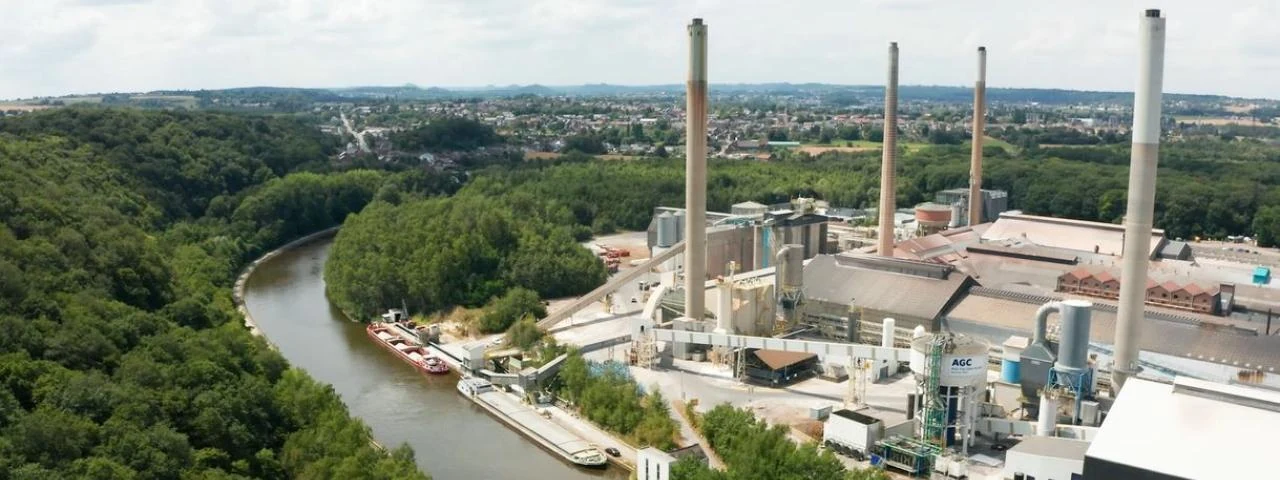
Manufacture relies on high-efficiency furnaces, electricity purchased with renewable guarantees of origin and a cullet content above 50%. Low-Carbon glass is produced in Moustier in Belgium, Seingbouse in France and Osterweddingen in Germany; the group's European headquarters is in Louvain-la-Neuve.
It has all the uses of standard float glass, in facades, interior partitions or wall cladding, with a carbon footprint around half as large.
Installation & uses
The glass is installed following the same rules as standard float glass. It can be held by a sealant bead or by an aluminium, timber or steel frame, and fitted into the usual facade or interior partition framing systems. Subframes, setting blocks and through-glazing apply unchanged compared with virgin glass.
The product is available annealed, toughened or laminated, and lends itself to the same double or triple glazing assemblies. The surfaces can take a solar control or thermal coating. This flexibility in processing covers every application of the glazed envelope, including configurations with high thermal or acoustic performance.
Because it behaves identically in the processing chain, low-carbon glazing can be used as a direct substitute in new-build projects as well as in the renovation of existing envelopes. Standard stock sheet sizes allow cutting to size by the usual glass processors, with no specific minimum order.
At end of life, the producer organises the take-back of offcuts or removed glass through its Recycle Glass service, case by case depending on volume and logistics. The glass then returns to the furnaces as cullet to be remelted, without loss of optical or mechanical quality.
About the producer
AGC Glass Europe is the European arm of the AGC group, one of the world's leading glassmakers, with its European headquarters in Louvain-la-Neuve, Belgium. The company produces flat glass for construction, automotive and electronics, and has for several years been developing products with a reduced carbon footprint.
Its Low-Carbon range relies on high-efficiency furnaces, a high recycled cullet content and the use of renewable electricity, with no compromise on the performance of the standard product.
Technical performance
EN 572-1, EN 572-2, EN 572-9 (soda-lime silicate float glass, CE marking) · Cradle to Cradle certified · INIES EPD 20240940455-FC, valid until 31 December 2029.
Life cycle
The soda-lime float glass combines silica sand, soda ash and limestone with more than 50% cullet, that is, recycled glass, according to the INIES EPD. AGC states more than 60% cullet in its Sustainability Update 2026.
AGC melts this glass in Moustier, Seingbouse and Osterweddingen, in Belgium, France and Germany, with high-efficiency furnaces and renewable electricity backed by guarantees of origin. According to AGC's EPD, these sites are on average 502 km from their direct customers, the glass processors.
The glass can be remelted without loss of optical or mechanical quality and returns to the furnaces as cullet. AGC takes back flat glass from sites or at end of life through its Recycle Glass service, case by case, in 2 m³ containers.
FAQ
Can this low-carbon glazing replace standard float glass without redoing the thermal calculation?
Yes. Its composition remains that of a standard float glass, with the same optical and mechanical performance as standard Planibel Clearlite. It can be substituted with no change to installation or thermal calculations, in new build and renovation alike.
Can it be toughened, laminated or coated?
Yes, it is available annealed, toughened or laminated, and can take a low-e or solar control coating. It is assembled into double or triple glazing using the same processes, by the usual glass processors, with no specific minimum order.
For which thicknesses is the carbon footprint declared?
The INIES EPD and AGC's separate EPD cover 4 mm annealed and 8 mm toughened glass; other thicknesses are available on request from AGC. For 4 mm glass, the footprint is 5.5 kgCO₂eq/m² over A1-A3, against 10.3 kgCO₂eq/m² for standard AGC float, around half.
Where does the lower footprint come from?
From high-efficiency furnaces, a cullet content of more than 50% and electricity purchased with renewable guarantees of origin. The glass is produced in Moustier in Belgium, Seingbouse in France and Osterweddingen in Germany.
How can glass offcuts from site be taken back?
AGC organises the take-back of flat glass from sites or at end of life through its Recycle Glass service, case by case depending on volume and logistics, with 2 m³ containers. The glass returns to the furnaces as cullet, without loss of optical or mechanical quality.
Alongside
Same layer, same use · materials to compare.