Loose-fill
hemp-lime
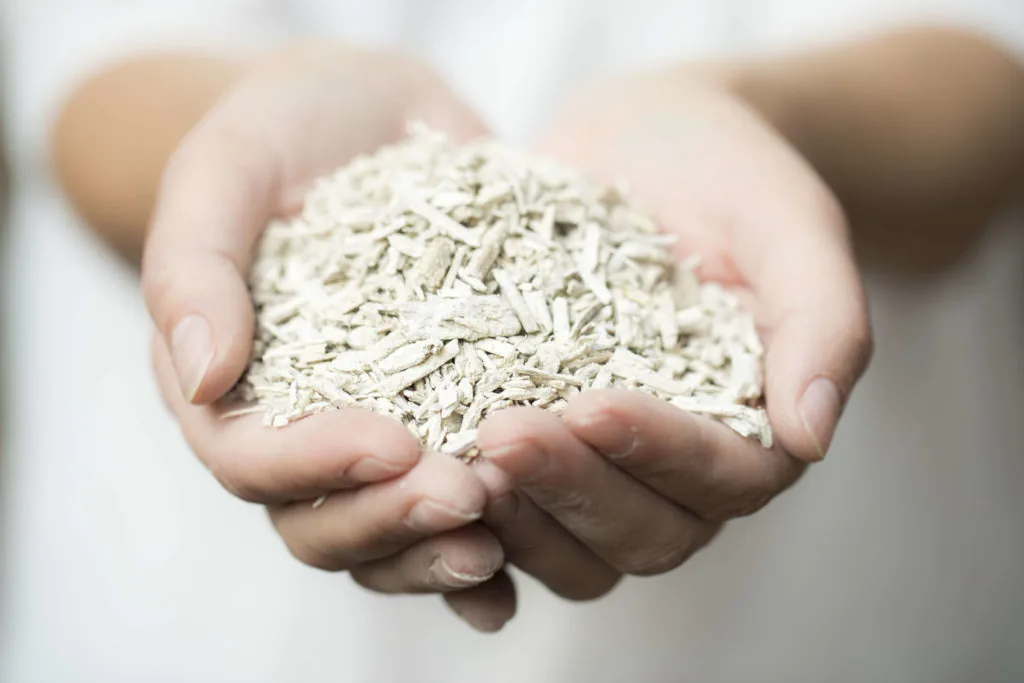
CaNaDry® is a dry hemp-lime mix, installed dry by pouring into formwork and then compacting. Applications: floor insulation under screed, loft filling, roofs and walls. It is made of hemp shiv from hemp grown locally in East Flanders and a lime-based binder.
What is loose-fill hemp-lime?
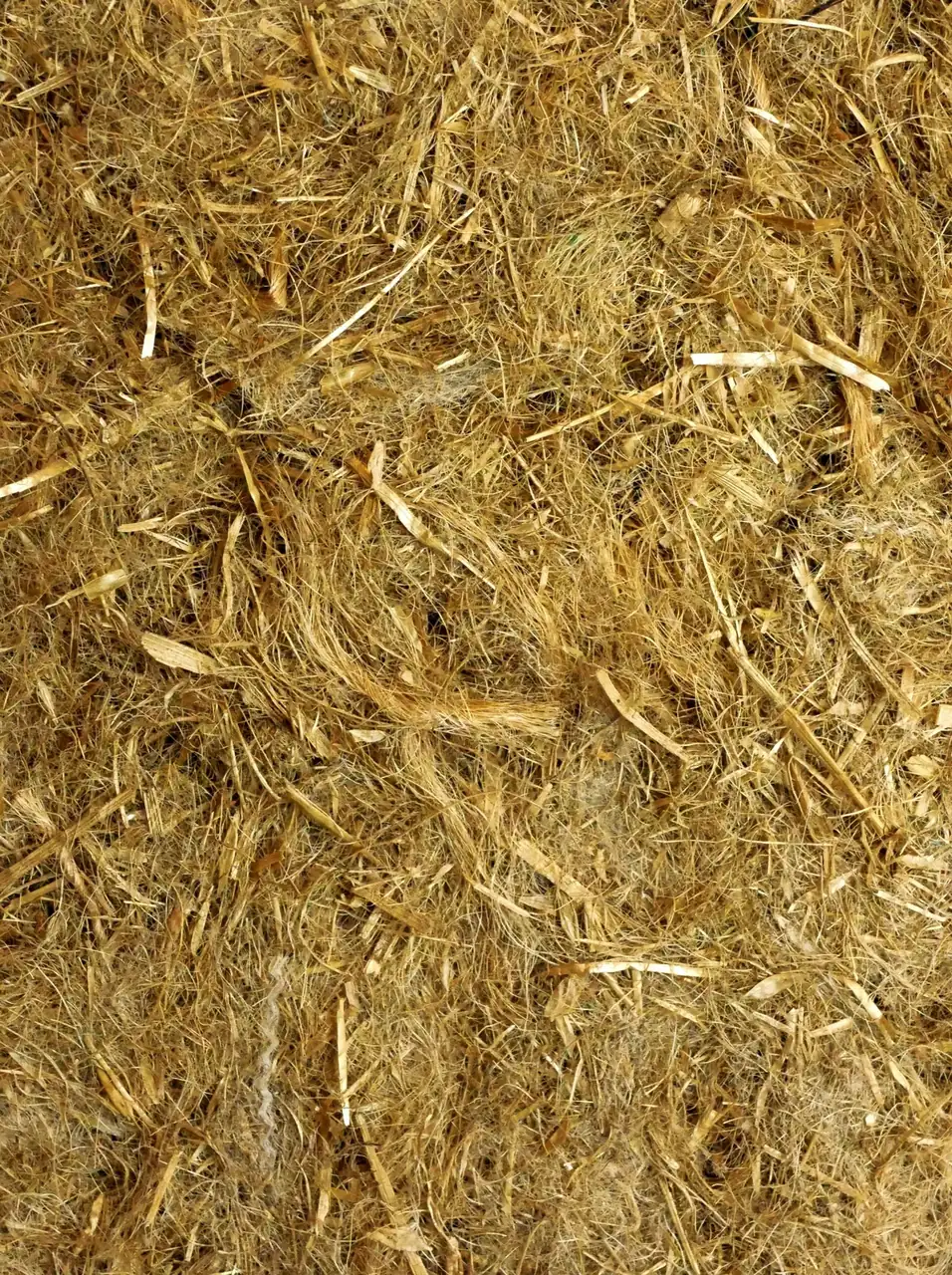
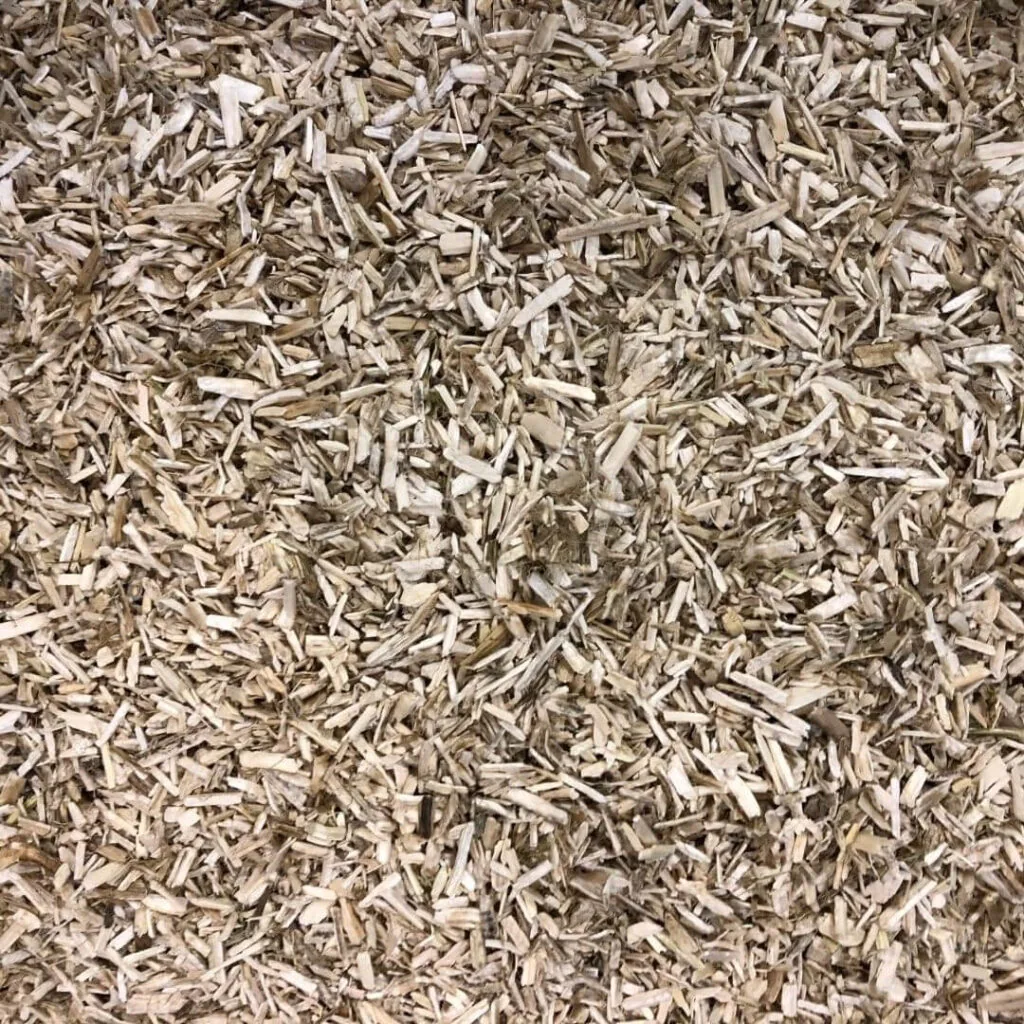
CaNaDry® is a dry hemp-lime mix, delivered loose and patented by Exie. It combines hemp shiv, the woody core of the hemp stem, with hydrated lime and a binder: each particle is coated with lime. The shiv acts as a light, porous aggregate, while the lime protects the plant matter and fixes CO₂ as it carbonates over the years.
This airy, granular structure explains its thermal performance: λd of 0.054 W/(m·K) for a density of 175 kg/m³. The mass of the material also slows the passage of heat, with a thermal phase shift of 16 hours for 24 cm, which matters for summer comfort under a roof.
Lime and hemp exchange water vapour with the indoor air (μ = 1.6): the material buffers humidity and is installed without a vapour control layer in walls and roofs. Its reaction to fire is classed B-s1 d0.
Unlike wet hemp-lime, CaNaDry® contains no mixing water: it needs no drying time, and the construction can be closed up as soon as installation is finished.
According to its B-EPD, the A1-A3 figure is −20.8 kgCO₂eq per m² insulated at 24 cm, biogenic carbon included; this carbon is released again at end of life in the standard scenario. CaNaDry® is produced by Exie at Herzele, in East Flanders, from locally grown hemp.
Installation & uses
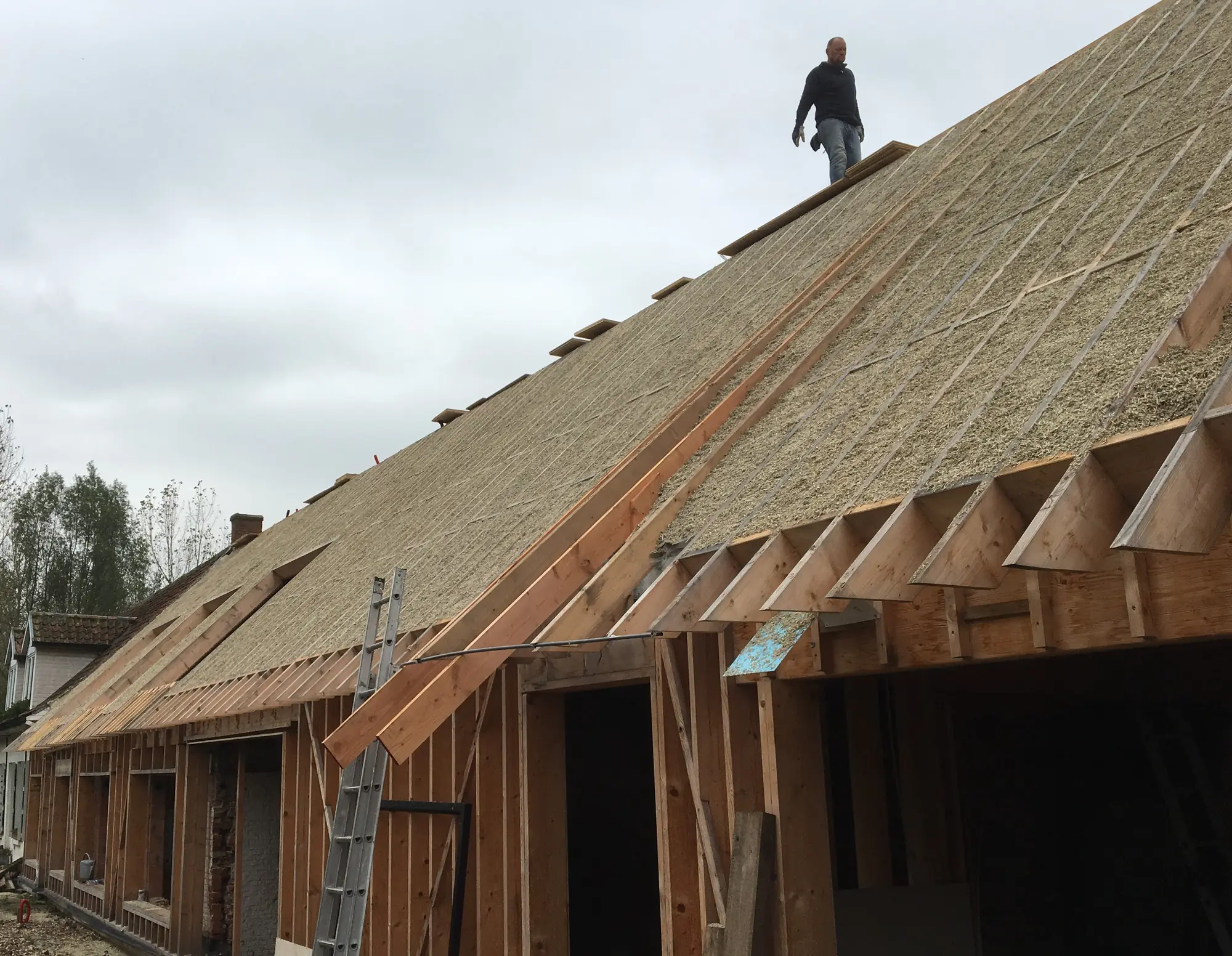
CaNaDry® insulates floors, internal walls, facades, roofs, ceilings and loft floors, in new build, renovation and restoration. Being non-loadbearing, it is always poured into formwork or onto a support that takes the loads: timber frame, joists or slab.
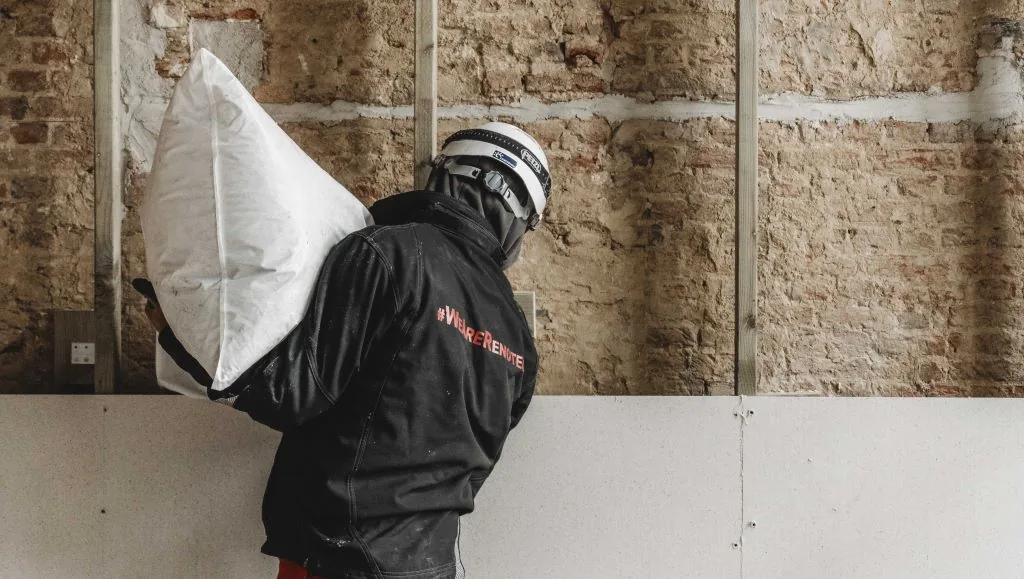
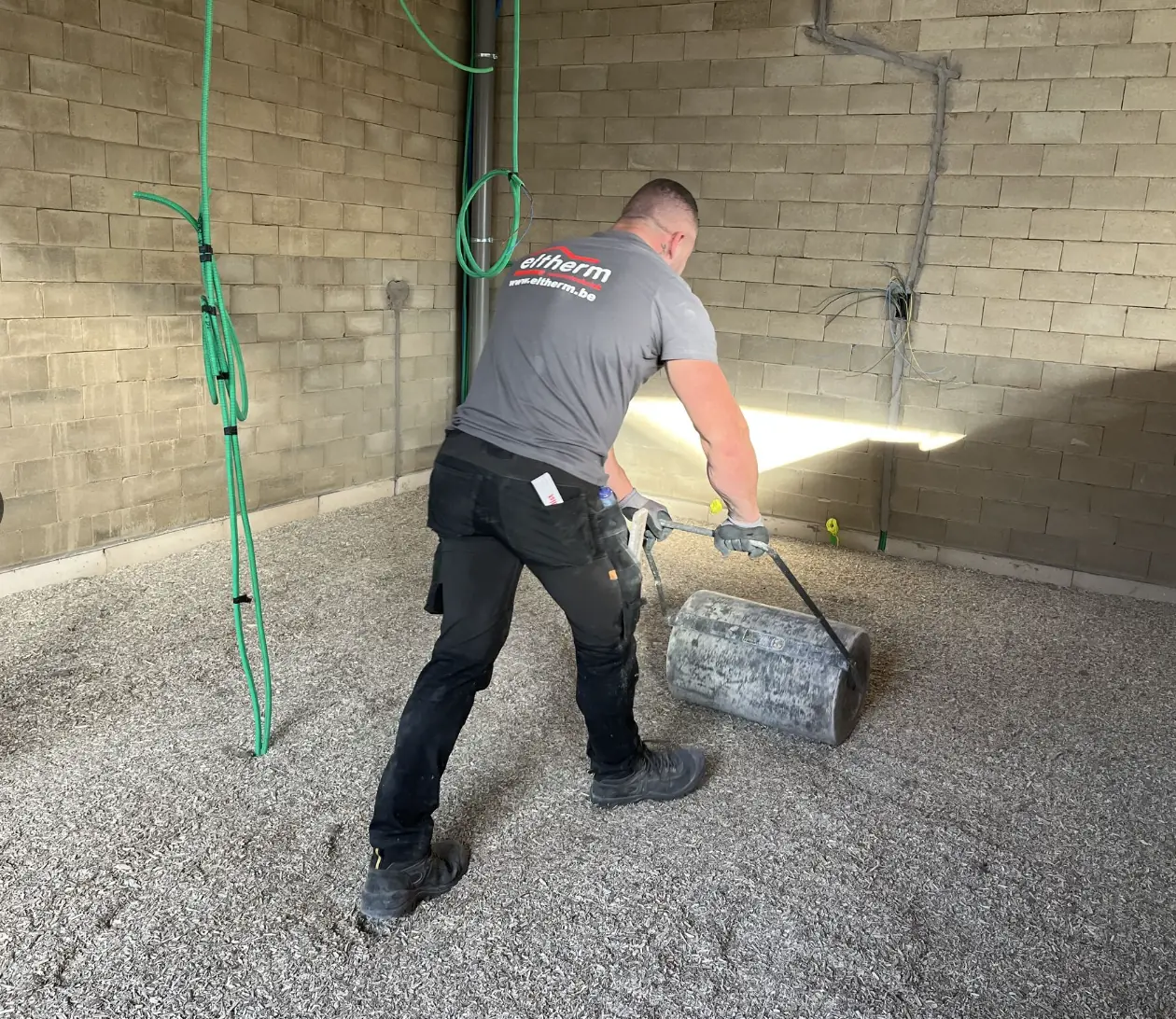
Installation is dry and by hand. The mix is poured in layers of no more than 10 cm, each compacted by about 10% with a garden roller of at least 45 kg, never with a plate compactor, until the required thickness is reached. The material is delivered in 55 L bags or in 1.2 m³ bulk bags.
On floors, CaNaDry® can be laid on a bed of crushed shells that stops rising damp, then take a screed. A vapour-open membrane (sd below 2 m) separates the insulation from the screed, except with a lime screed and a vapour-permeable floor finish. Underfloor heating is possible in this build-up.
In walls and roofs, it is installed without a vapour control layer, in use class 3 timber formwork whose base stays dry; finishes must remain vapour-open and airtight. The material is stored dry and installed within 12 months of production.
About the producer
Exie is a Belgian producer of hemp-lime insulation, based at Herzele, in East Flanders. The company processes locally grown hemp into two mixes: CaNaDry®, a dry hemp-lime laid loose in floors, walls and roofs, and CaNaCrete, a premixed wet hemp-lime for wall insulation.
Exie supports installation with installation guides specific to each application and with technical advice before work starts on site. CaNaDry® has a B-EPD environmental declaration.
Technical performance
EN 12667:2001 (λ) · EN 13501-1:2018 (fire) · EN ISO 10140-2:2010 + EN ISO 717-1:2013 (acoustics) · EN 826:2013 (compression) · DIN EN 1602:2013-05 (density) · EN 15804+A2 (embodied carbon)
Life cycle
Hemp shiv, the woody core of the hemp stem, is a co-product of local hemp growing in East Flanders. It makes up most of the mix, each particle being coated with hydrated lime and a binder.
Exie produces the mix at Herzele, in East Flanders, about 50 km from Brussels. Delivered in 55 L bags or 1.2 m³ bulk bags, it is poured dry into formwork and compacted in 10 cm layers, with no water and no drying.
Exie takes back site surplus under certain conditions and says it can reprocess hemp-lime from demolition into new insulation. Its B-EPD describes an alternative scenario in which 75% of the material is recovered at end of life.
FAQ
Does the construction need to dry before it is closed up?
No. CaNaDry® is installed dry, without mixing water, and hardens by carbonation. Unlike wet hemp-lime, the construction can be closed up as soon as installation is finished.
How is the mix compacted in the formwork?
The mix is poured in layers of no more than 10 cm, each compacted by about 10% with a garden roller of at least 45 kg. A plate compactor must not be used. The operation is repeated until the required thickness is reached.
Can a screed be poured directly onto CaNaDry®?
No: a vapour-open membrane (sd below 2 m) separates the insulation from the screed. It is not needed with a lime screed and a vapour-permeable floor finish. Underfloor heating is possible in this build-up.
Is a vapour control layer needed in walls or roofs?
No. With a μ of 1.6, the material exchanges water vapour with the indoor air and is installed without a vapour control layer. Finishes must remain vapour-open and airtight, in use class 3 timber formwork whose base stays dry.
How is it delivered and how long does it keep?
CaNaDry® is delivered in 55 L bags or in 1.2 m³ bulk bags. It is stored dry and installed within 12 months of production.
Alongside
Same layer, same use · materials to compare.