Paper
partition stud
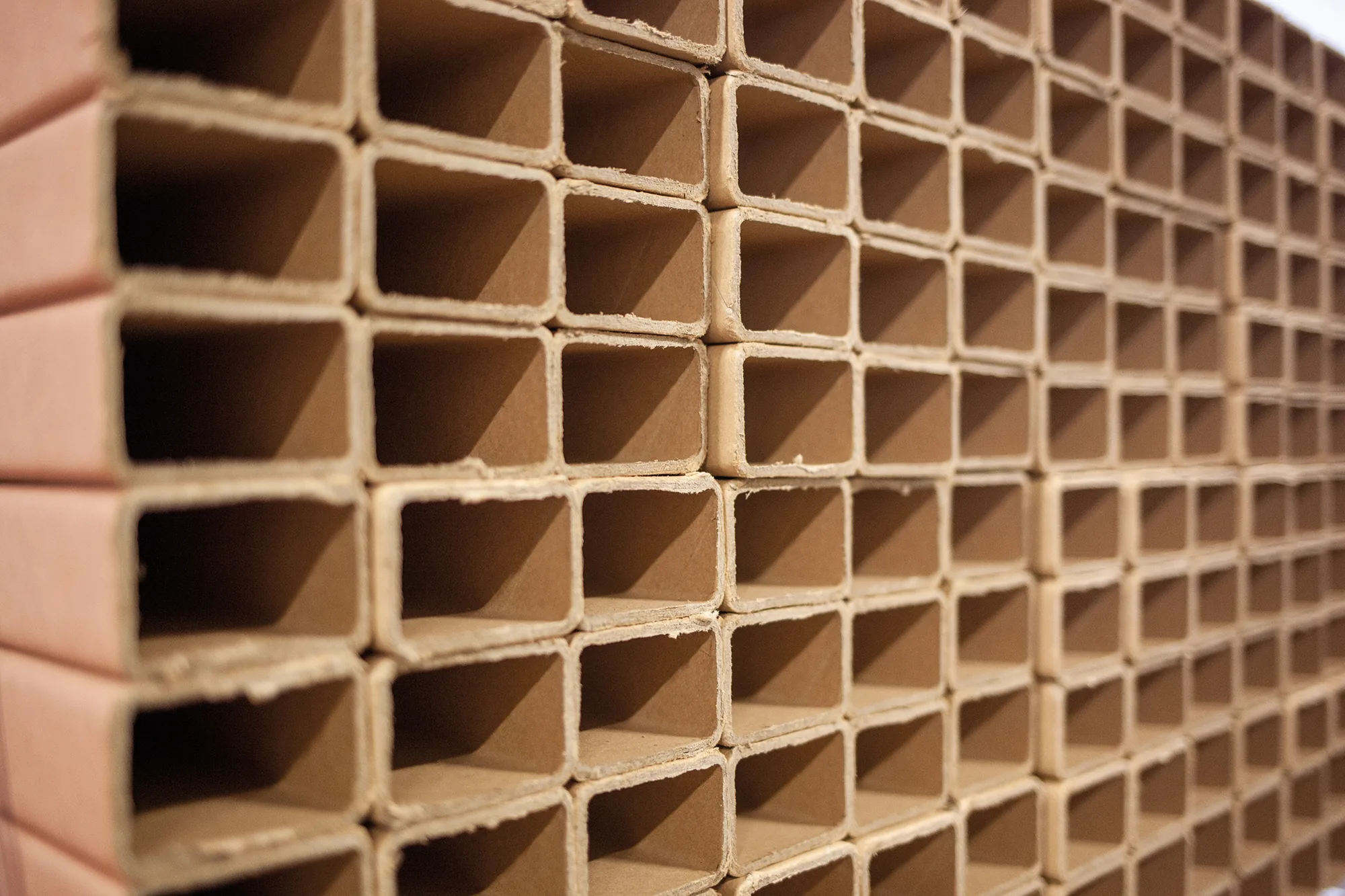
Hollow tubular stud in post-consumer recycled paper (around 91%) and glue (around 9%). A biobased alternative to steel studs in non-loadbearing partitions. Sections 45 × 70 and 45 × 95 mm, lengths made to measure. Embodied carbon (A1-A3): -0.1 kgCO₂eq/m.
What is a paper partition stud?
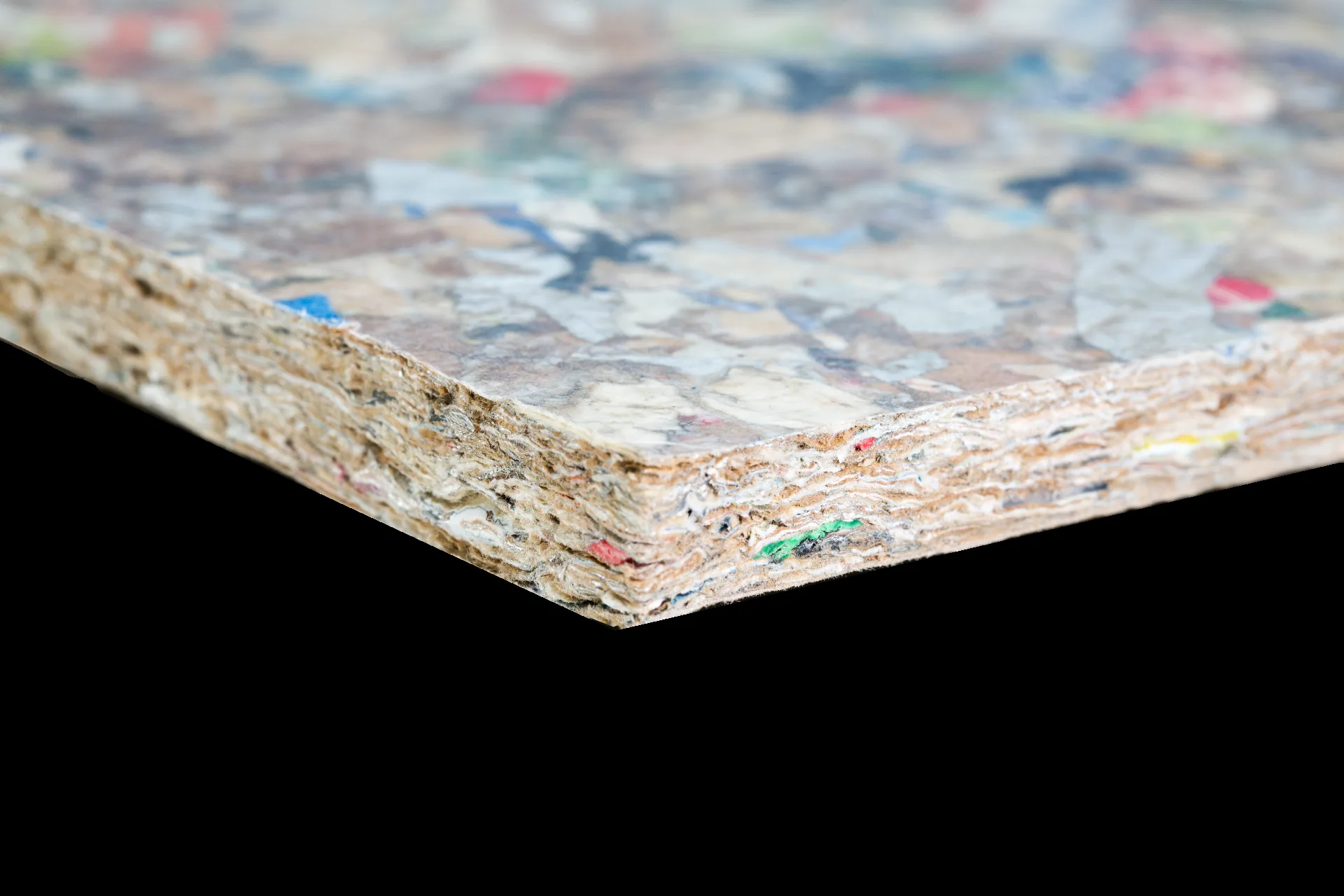
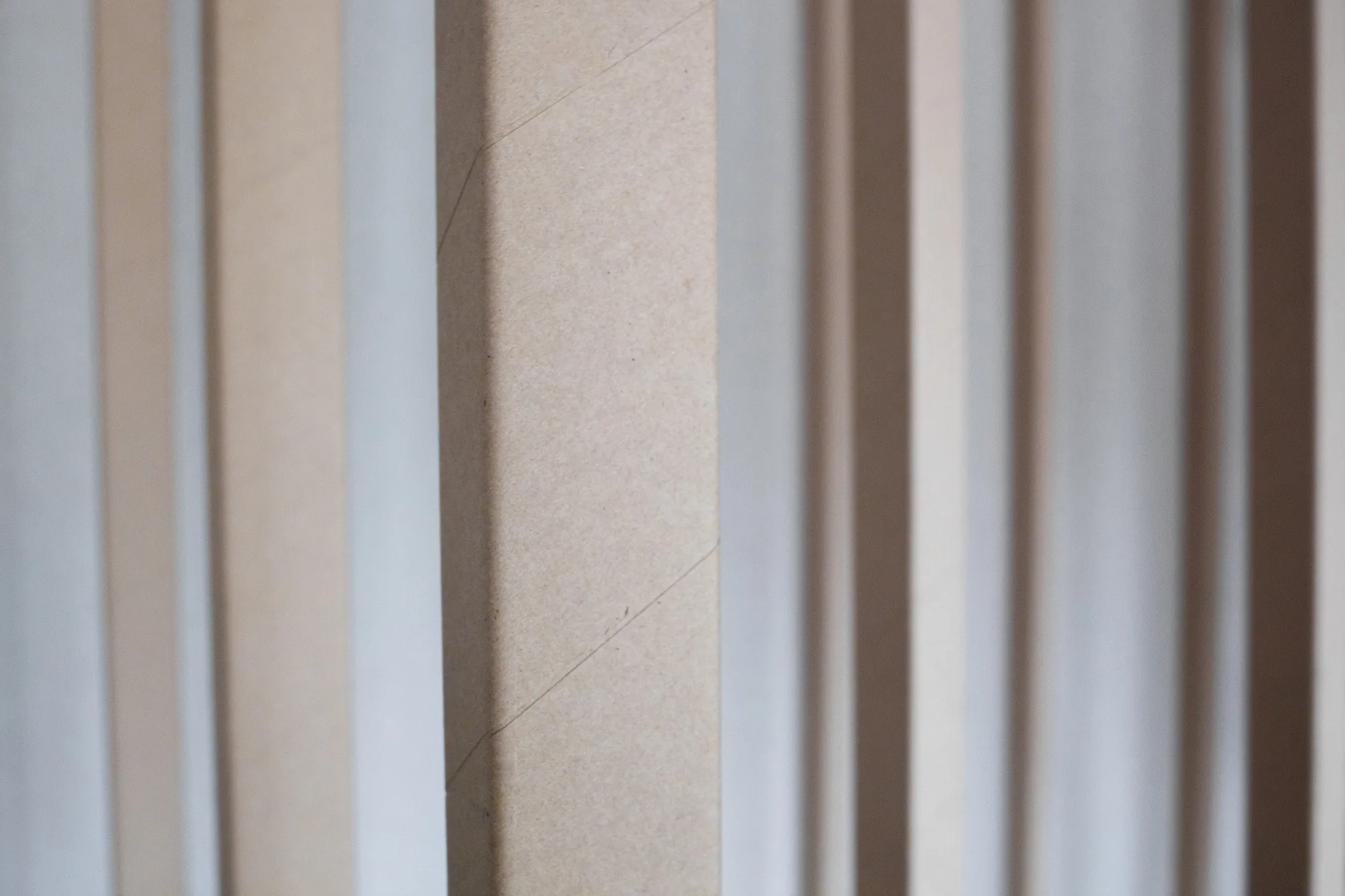
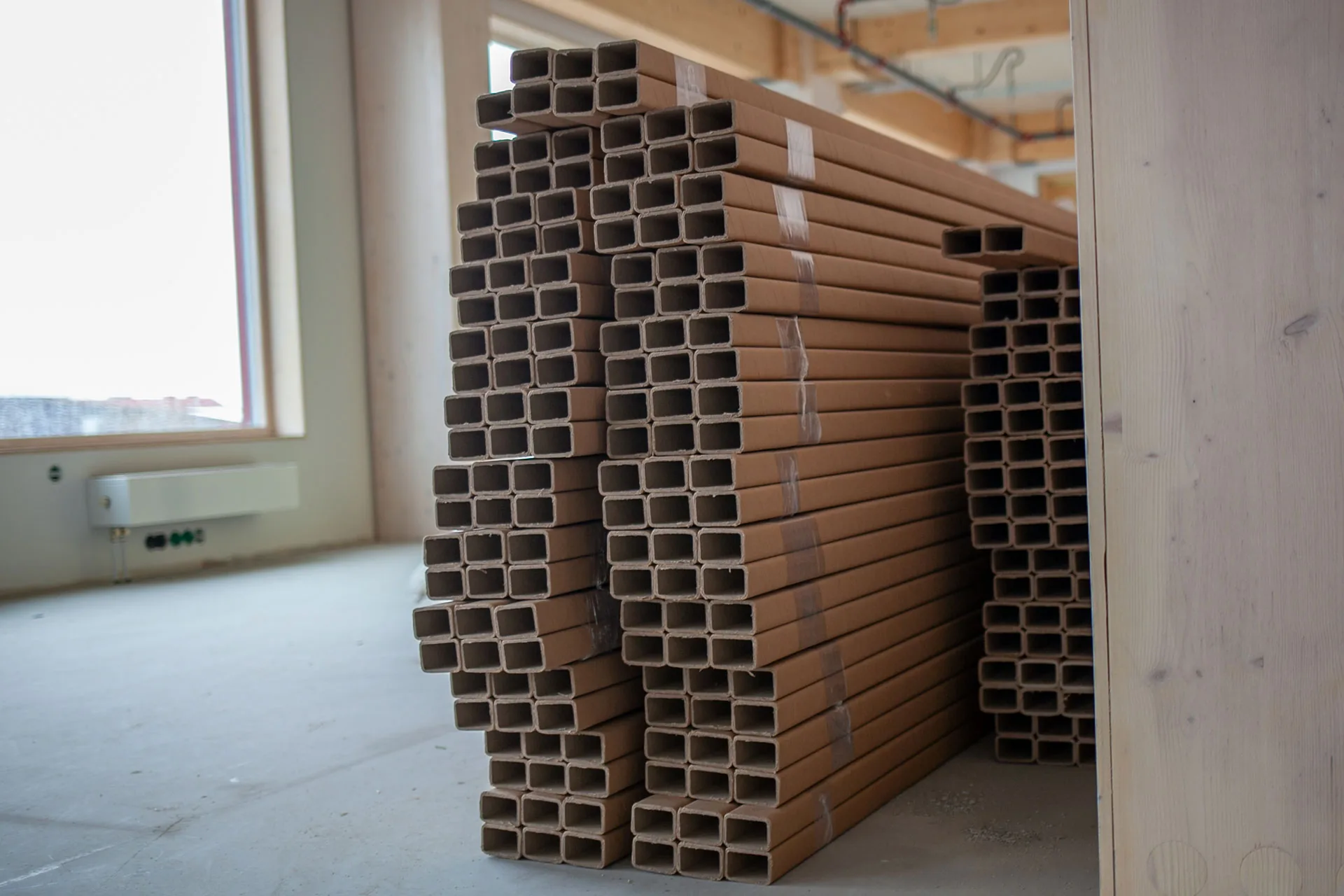
The recycled paper stud is a hollow tubular profile made of ≈ 91% post-consumer paper from packaging waste and ≈ 9% glue. The recycled paper forms the wall of the profile, and it is the tubular section that gives the stud its strength, within the limits of use in a non-loadbearing partition.
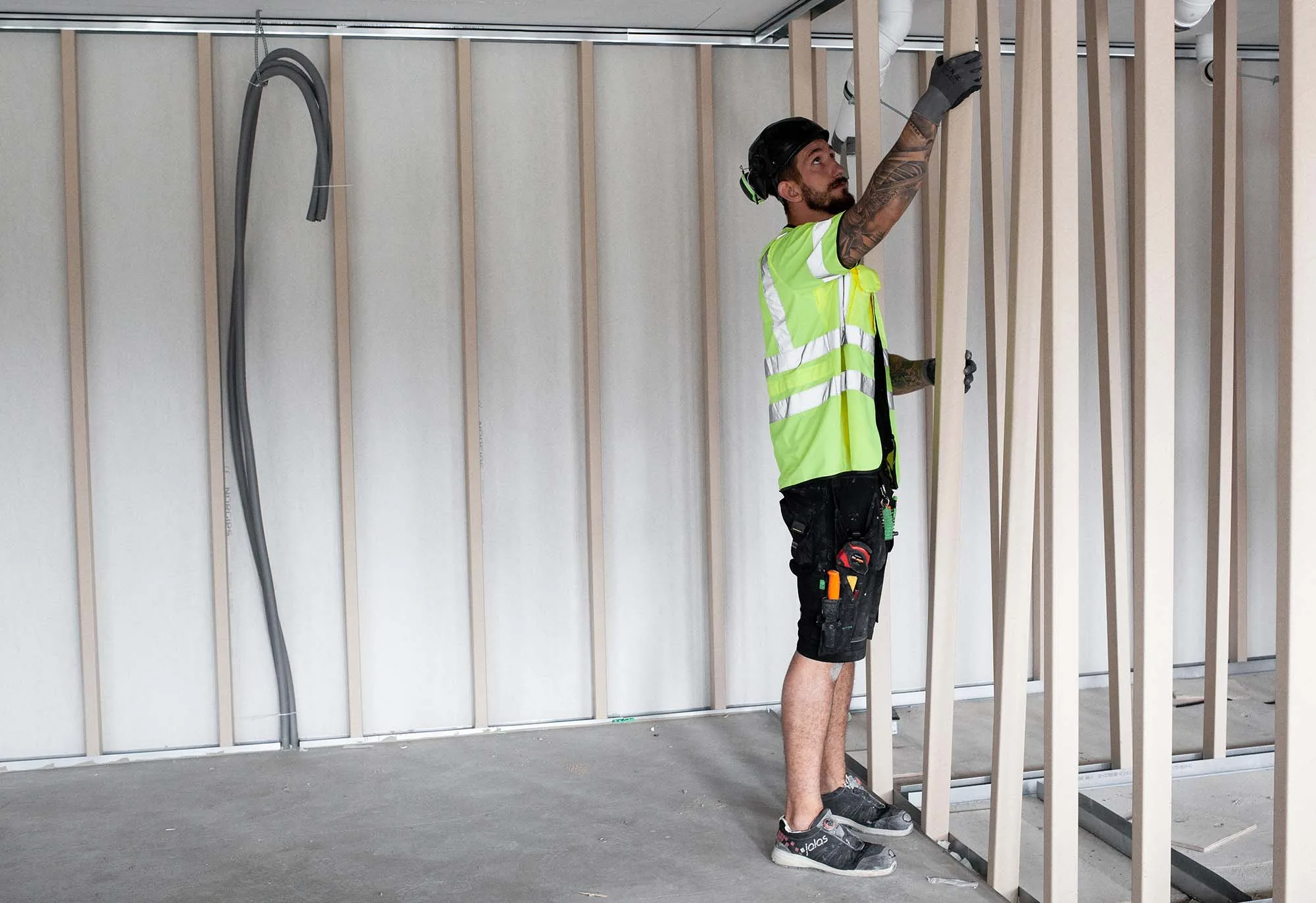
The stud replaces the vertical steel profile of a non-loadbearing stud partition, keeping the horizontal tracks and the whole board and insulation build-up. Its light weight (0.685 kg/m) makes handling easier, and the absence of sharp edges reduces the risk of cuts on site.
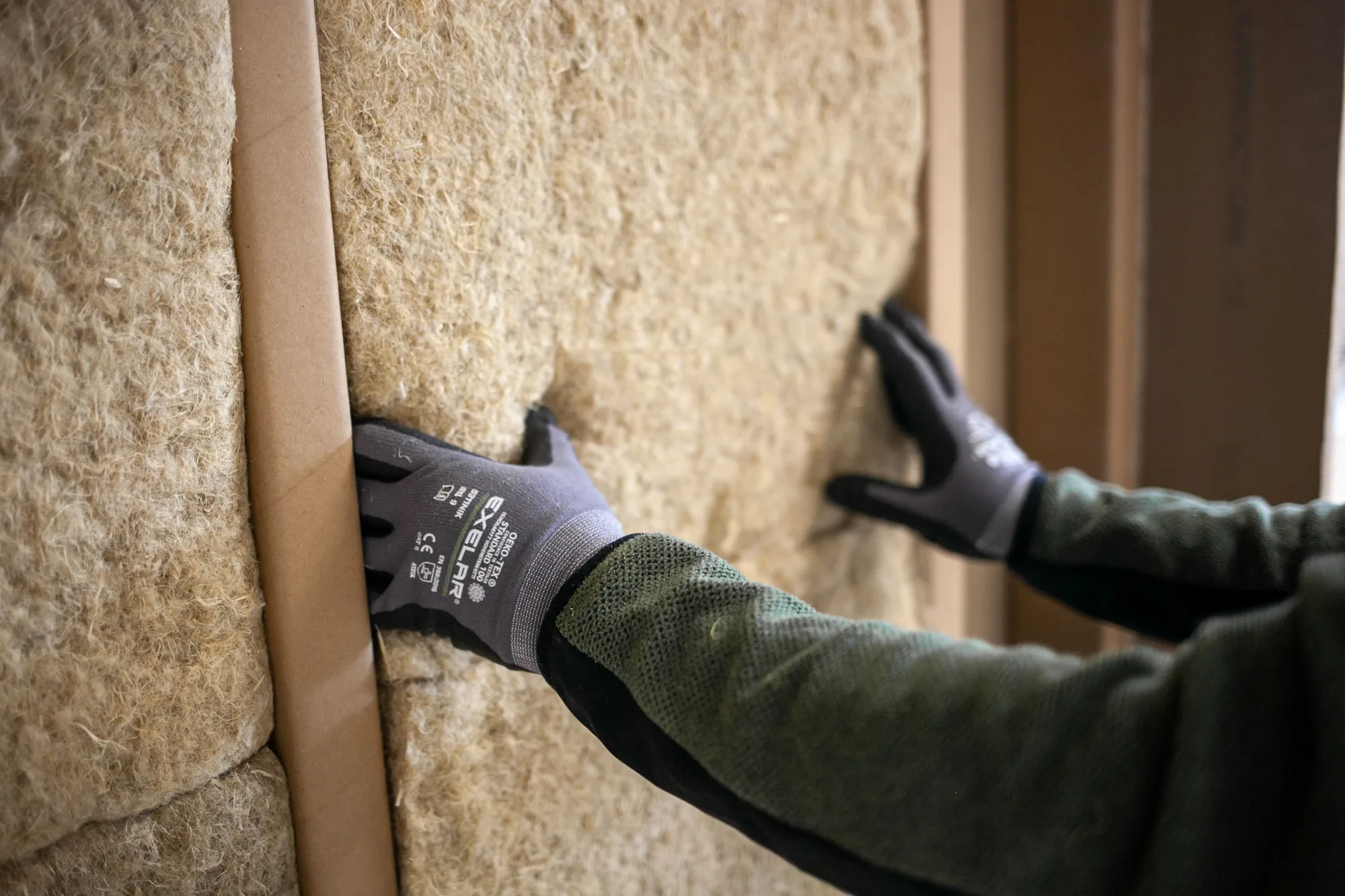
It is used in framed interior partitions, in offices, housing and the fit-out of existing buildings. It can form part of the ERW GreenWALL system, which combines it with Recoma boards and biobased insulation for a fully circular partition.
It is manufactured in Sweden by Wood Tube in Säffle (Värmland). The stud is FSC Recycled certified and, at end of life, returns to the standard paper or cardboard recycling stream.
Installation & uses
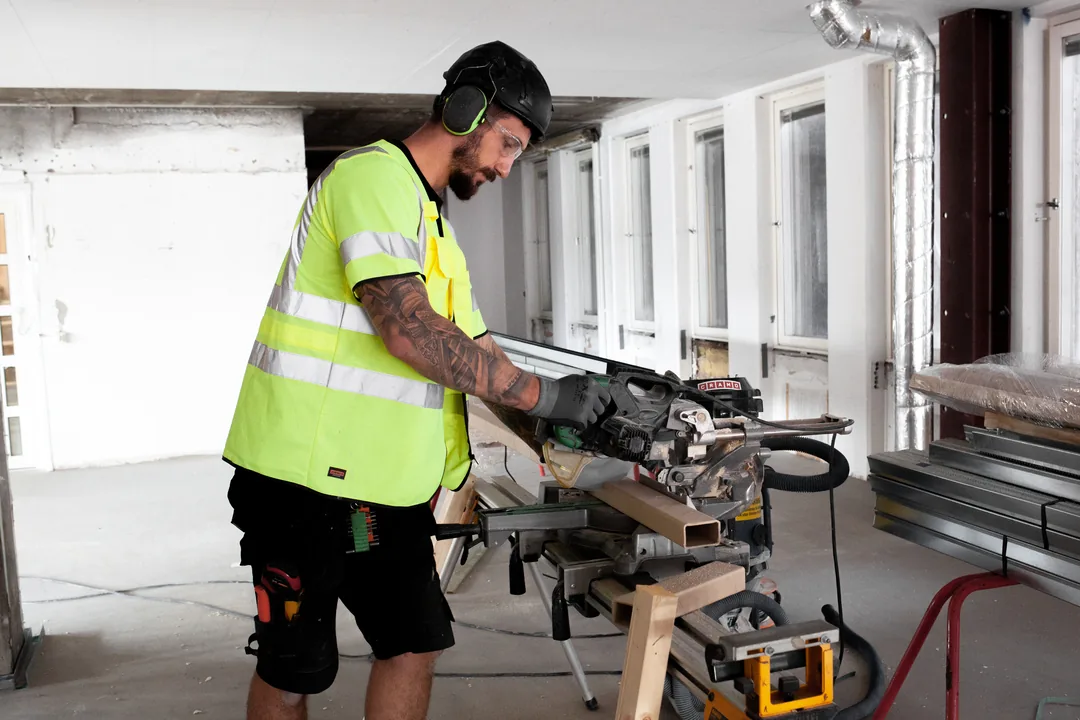
The stud is fitted into a steel track at floor and head, like a conventional vertical profile. The boards are fixed with standard screws, driven directly into the thickness of the stud. Electrical conduits are run through holes drilled directly in it.
Stud centres follow the producer's recommendations, adjusted case by case according to the weight of the boards and the use of the partition. An official assembly guide covers the common configurations.
Paper does not tolerate water: the studs are stored away from any direct contact with water, in intact packaging if stored temporarily outdoors, and are only installed on a dry floor. In damp conditions, they are cut 5 to 10 mm shorter, which leaves a gap between the stud and the floor track and protects it from rising water.
At end of life, the stud goes into the standard paper and cardboard recycling stream, or to energy recovery.
About the producer
Wood Tube is a Swedish producer of recycled paper framing studs, based in Säffle in Värmland. The company offers an alternative to vertical steel profiles in non-loadbearing partitions, made from post-consumer recycled paper.
Its tubular profiles form part of the ERW GreenWALL system, a partition combining paper studs, Recoma boards and biobased insulation, used in timber buildings, offices and housing in Scandinavia.
Technical performance
No harmonised European standard or ETA covers this product. Swedish national approval (typgodkännande, RISE), with no recognised equivalent in Belgium. EPD S-P-10277 (EPD International).
Life cycle
The stud is made of 91% post-consumer recycled paper, from packaging waste, and 9% glue. This FSC Recycled certified paper forms the wall of a hollow tubular profile that replaces the steel stud.
Wood Tube manufactures the stud in Säffle, in the Swedish province of Värmland, around 1,550 km from Brussels. The recycled paper is glued there into a hollow profile of 45 × 70 or 45 × 95 mm, in lengths made to measure from 2 to 4 m.
The stud is recycled in the standard paper and cardboard stream, or sorted as fuel for energy recovery. The stored biogenic carbon is then released: from −0.1 kgCO₂eq/m over A1-A3, the figure rises to around +0.2 over the full cycle.
FAQ
How are electrical conduits run through a paper stud?
Electrical conduits are run through holes drilled directly in the stud. The boards are screwed directly into the stud with standard screws.
What stud centres should be allowed for with Wood Tube?
The producer's documentation gives 600 mm, to be reduced according to the load and the lining build-up; 450 mm is commonly used. The Wood Tube assembly guide covers the common configurations.
How high can the partition go?
The studs are made to measure from 2,000 to 4,000 mm, giving a maximum height of 4 m, in 45 × 70 or 45 × 95 mm sections. They fit into the usual metal floor and head tracks.
What precautions are needed regarding water?
The producer asks for the studs to be protected from any direct contact with water, kept in intact packaging if stored temporarily outdoors and installed only on a dry floor. In damp conditions, it recommends cutting the studs 5 to 10 mm shorter, to leave a gap between the stud and the floor track and protect it from rising water.
Does the negative carbon figure hold over the whole life cycle?
No. EPD-IES-10277 gives -0.1 kgCO₂eq/m over A1-A3, thanks to the biogenic carbon stored in the paper. This carbon is released again at end of life: over the full A1-C4 cycle, the figure is around +0.2 kgCO₂eq/m.