Straw facade
insulation
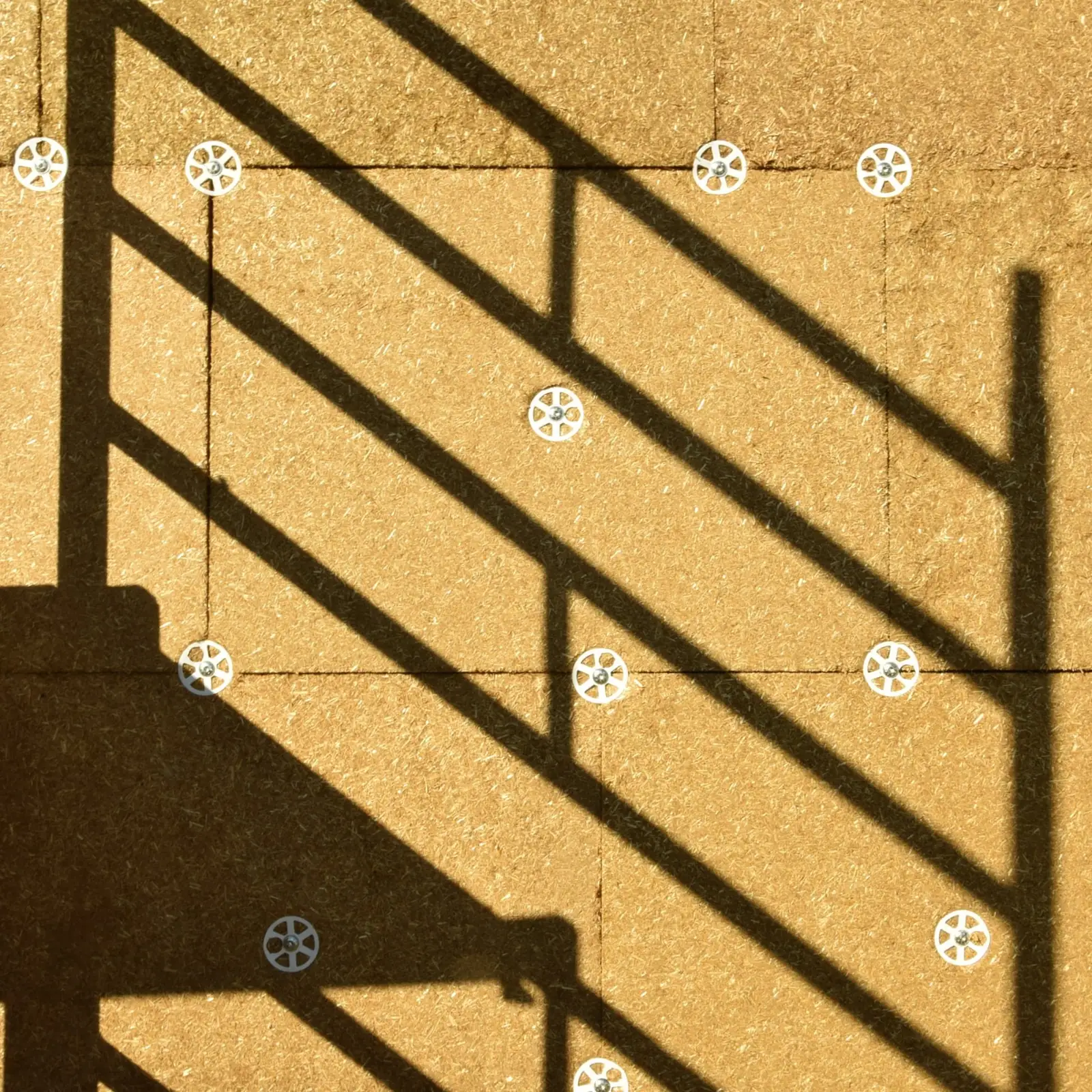
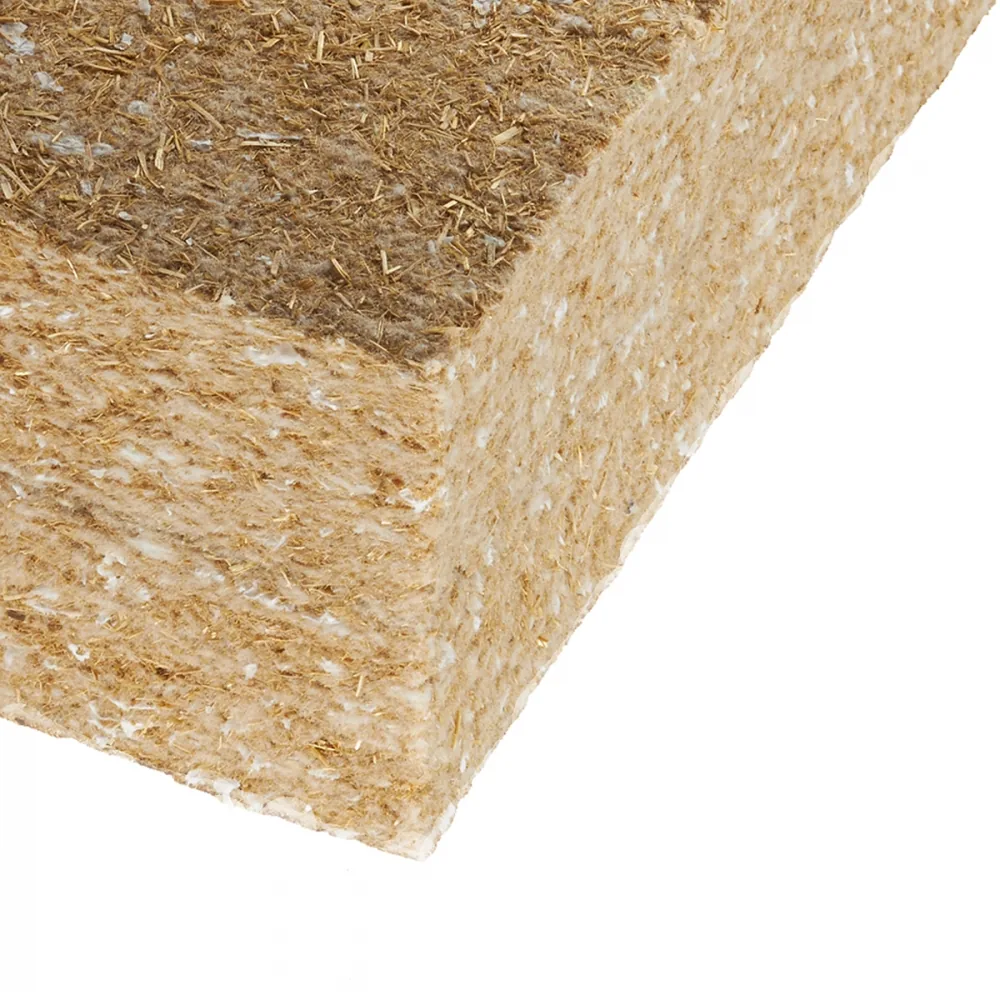
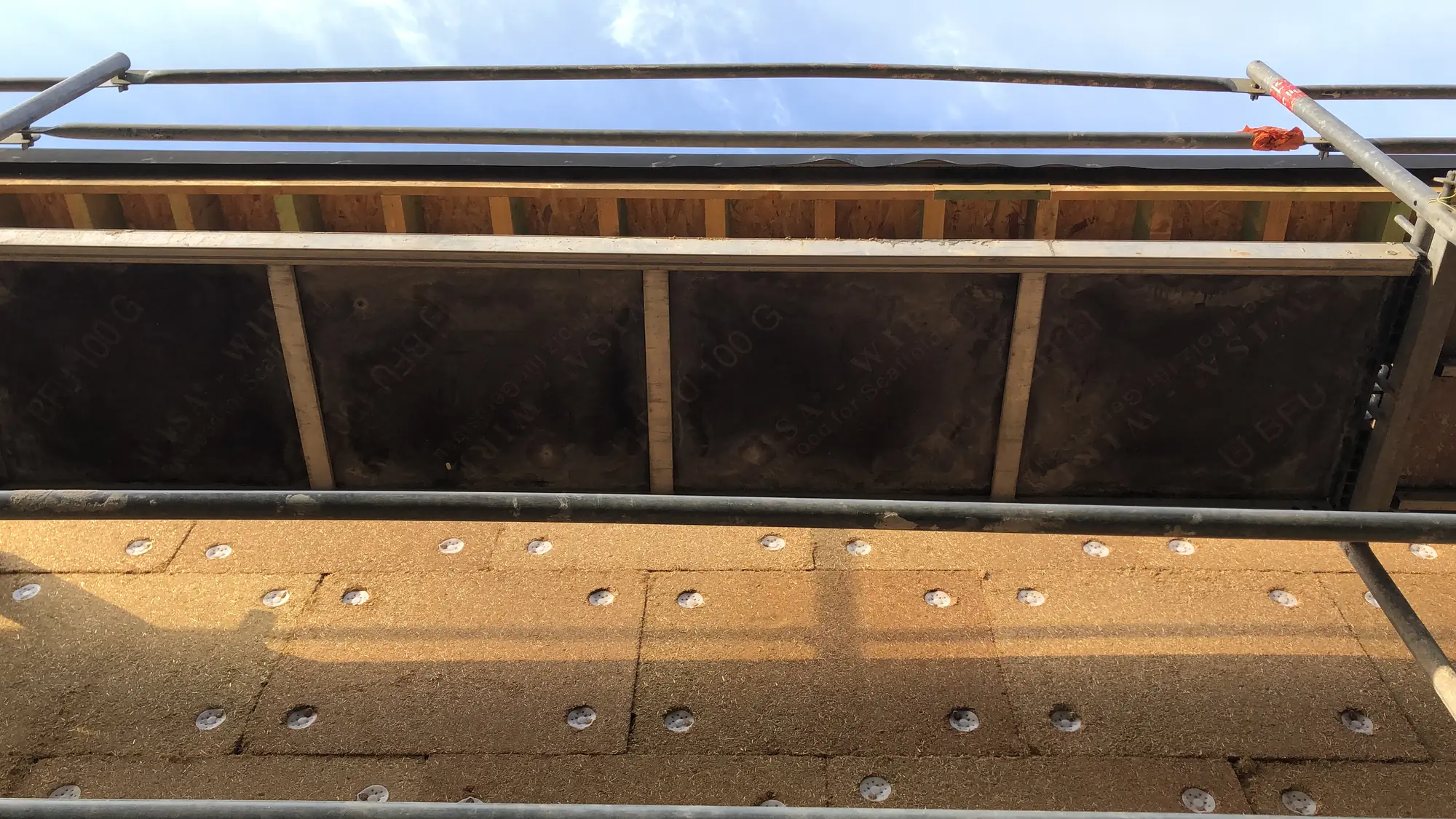
A rigid insulation board of straw and cellulose fibres, bound by thermobonding fibres. It insulates masonry walls from the outside, under a vapour-open external render, and comes in four thicknesses from 80 to 200 mm.
What is straw facade insulation?
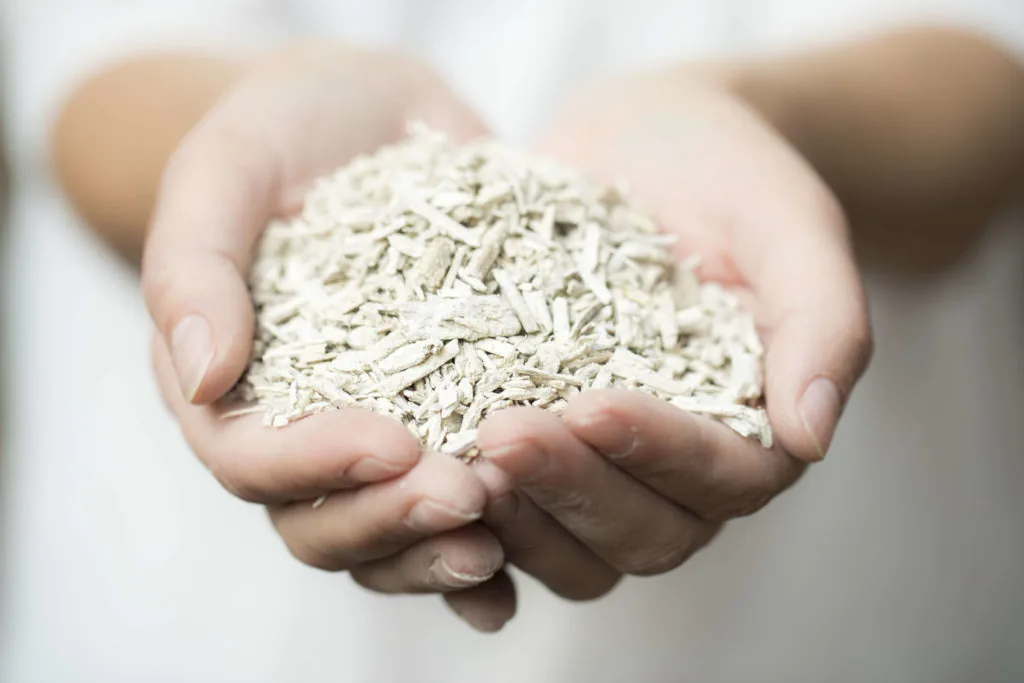
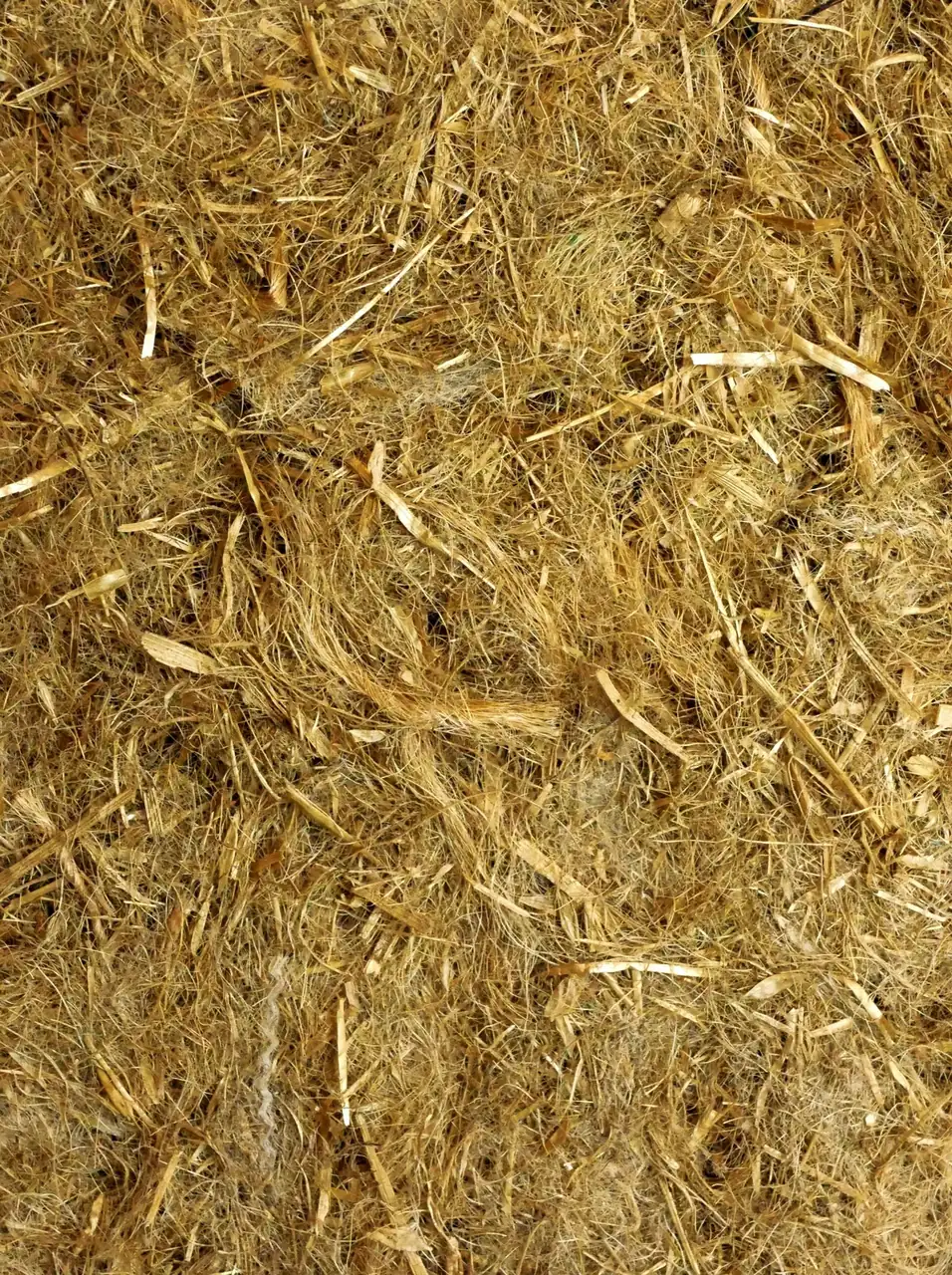
VestaEco WALL is a rigid insulation board made from lignocellulosic straw fibres, cellulose fibres and BICO thermobonding fibres. The straw fibres form the insulating skeleton, the cellulose completes the fibre network, and the BICO fibres, activated by heat, bind the whole into a board that can be handled. The fibres are produced by DefibraTech 1.0, a defibration process patented by the manufacturer.
This fibre network traps air: at a density of around 100 to 110 kg/m³, the board achieves a thermal conductivity λD of 0.039 W/(m·K). Its specific heat capacity of 2,100 J/(kg·K) also slows the passage of summer heat, in addition to insulating in winter.
The board remains very open to water vapour (μ = 3). Fitted on the outside of a masonry wall, it lets moisture in the masonry migrate towards a render that is also vapour-open: the manufacturer therefore recommends it above all for new build, when the walls still have a lot of construction moisture to release.
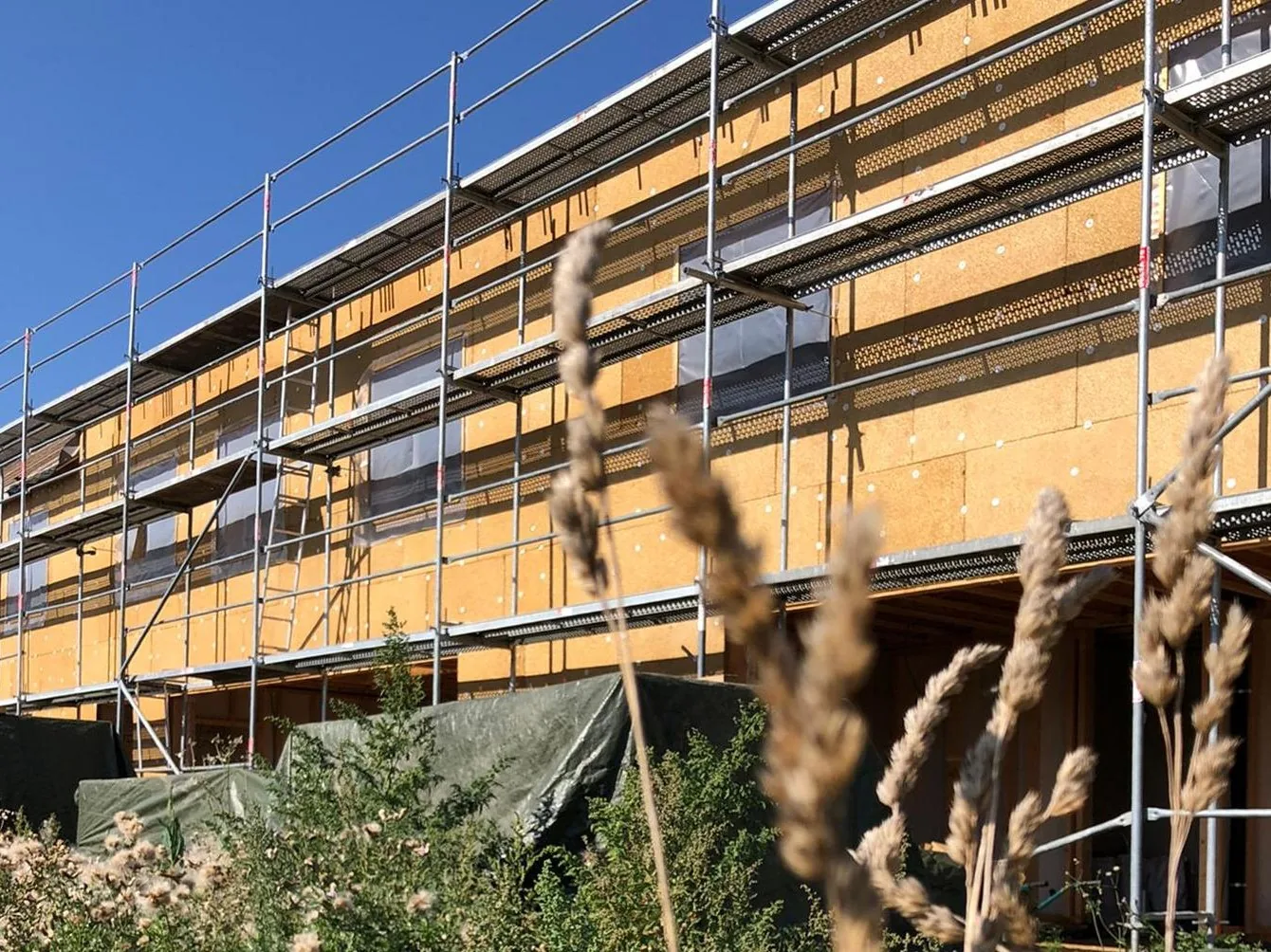
Rigid and impact-resistant, it serves as a render carrier. It is manufactured to PN-EN 13171, in a 600 × 800 mm format and in four thicknesses from 80 to 200 mm. Classed E for reaction to fire, it is always installed under render.
The board is DIN biobased certified. VestaEco declares a carbon footprint of -68.0 kgCO₂eq/m³ for modules A1-A3, a negative value that reflects the biogenic carbon contained in the straw fibres.
Installation & uses
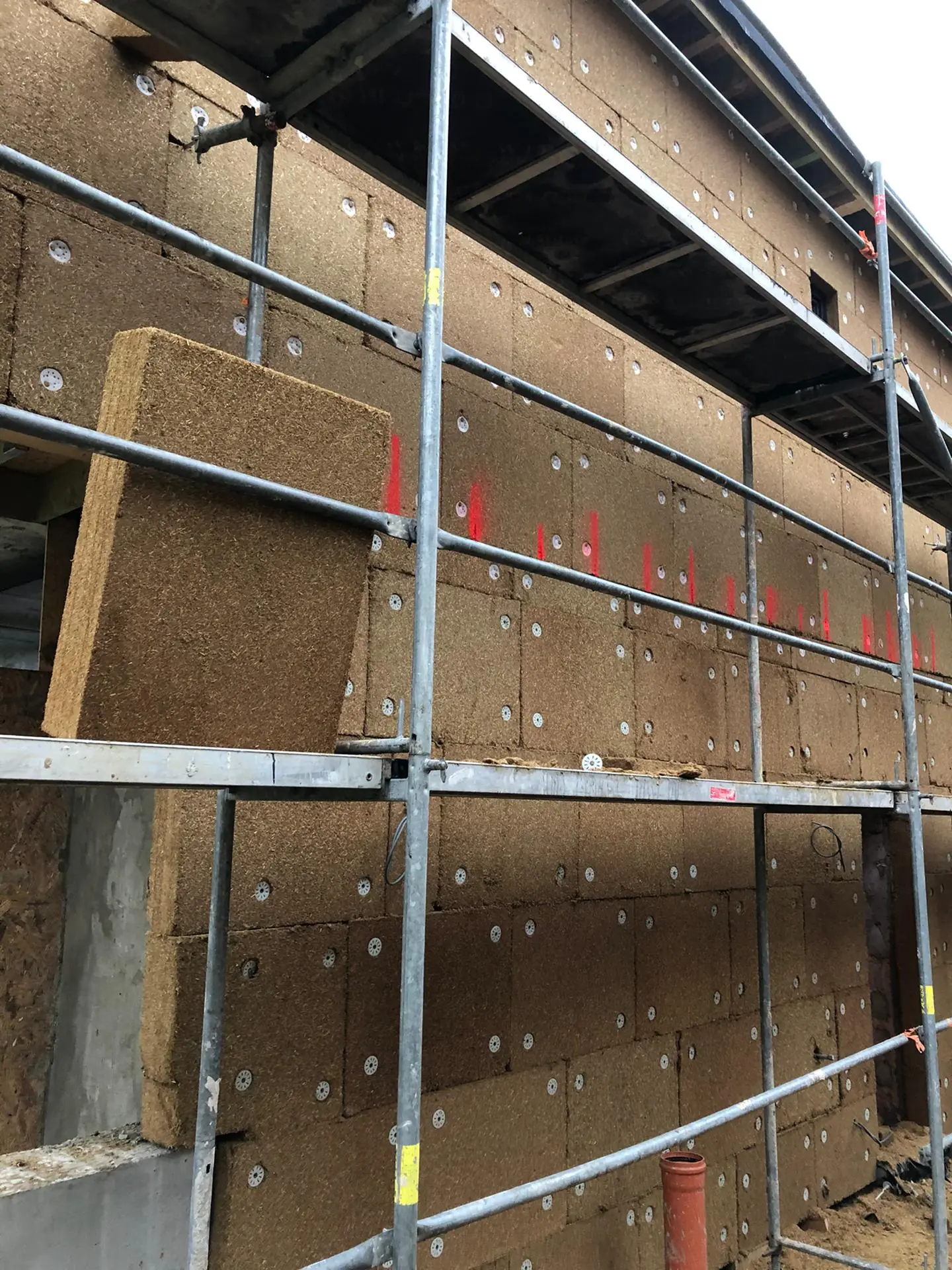
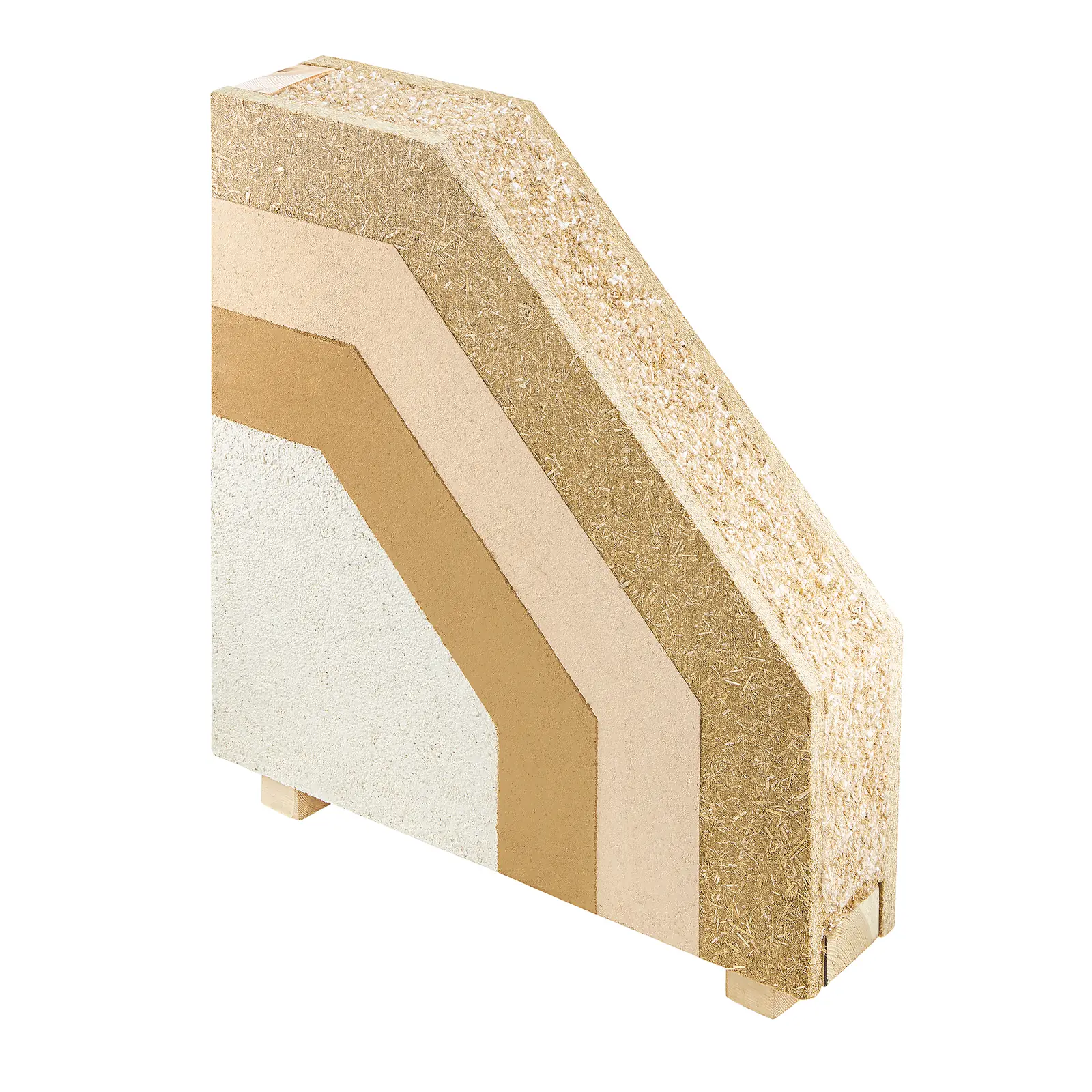
For external insulation of a masonry wall, VestaEco describes a so-called “light wet” method: the WALL board is bonded to the masonry with adhesive mortar and then fixed with screws, around six per m² in the manufacturer's reference system. It then receives a lime-sand render reinforced with glass fibre mesh, a lime finish and a silicate paint: the wall build-up stays vapour-open throughout.
A dry variant consists of laying two layers of VestaEco boards with no adhesive and no wet mortar. The WALL board is also used to insulate cavity walls, between the inner masonry leaf and the brick facing, keeping the ventilated cavity, and on flat roofs, combined with LDF boards laid on the slab.
In the manufacturer's system, the base of the facade receives XPS insulation over a height of 50 cm. According to VestaEco, waterlogged straw does not dry out and deteriorates: a wetted area must be replaced. The boards are therefore stored dry, and the wall stays protected from rain until it is rendered.
For timber-frame walls, VestaEco points to other products in its range (THERM, LDF UNI, FLEX). The WALL board is intended as much for new build as for insulating existing masonry walls.
About the producer
VestaEco is a Polish manufacturer of insulation boards and straw-based fibreboards, headquartered in Warsaw. Its patented DefibraTech 1.0 process turns straw into fibres, bound, depending on the product, by thermobonding fibres or by a PMDI resin.
The range covers the insulation of walls, roofs and floors, as well as low-density boards for partitions, ceilings and interior fit-out. The products are DIN biobased certified, and two board densities have a published EPD.
Technical performance
PN-EN 13171 (thermal insulation products made of wood fibre)
Life cycle
The board is based on lignocellulosic straw fibres, which form the insulating skeleton, complemented by cellulose fibres. The biogenic carbon contained in the straw gives it a negative footprint of -68.0 kgCO₂eq/m³ for modules A1-A3.
VestaEco makes the board in Wielki Łęck, in Warmia-Masuria (Poland), around 1,300 km from Brussels, using its patented DefibraTech 1.0 defibration process. BICO thermobonding fibres, activated by heat, bind the whole.
The board is DIN biobased certified, but it contains BICO thermobonding fibres mixed with the plant fibres. VestaEco has not yet published an EPD specific to the WALL board describing an end-of-life scenario.
FAQ
Can it be fitted on a timber frame?
WALL is designed for masonry walls: for timber frames, VestaEco points to other products in its range (THERM, LDF UNI, FLEX). WALL is also used in cavity walls, keeping the ventilated cavity behind the facing, and on flat roofs combined with LDF boards.
Which render system should be applied to the board?
In the manufacturer's “light wet” method, the board is bonded with adhesive mortar and then screwed to the masonry, with around six screws per m². It receives a lime-sand render reinforced with glass fibre mesh, a lime finish and a silicate paint, giving a wall build-up that is vapour-open throughout (μ = 3).
What if the boards get rained on during construction?
According to VestaEco, waterlogged straw does not dry out and deteriorates: a wetted area must be replaced. The boards are stored dry and the wall stays protected from rain until it is rendered; the base of the facade receives XPS insulation over a height of 50 cm.
Is there a method without adhesive or mortar?
Yes, VestaEco describes a dry variant in two layers of boards, with no adhesive and no wet mortar. The reference method remains bonded and screwed installation under render.
Alongside
Same layer, same use · materials to compare.