Straw roof and
floor insulation
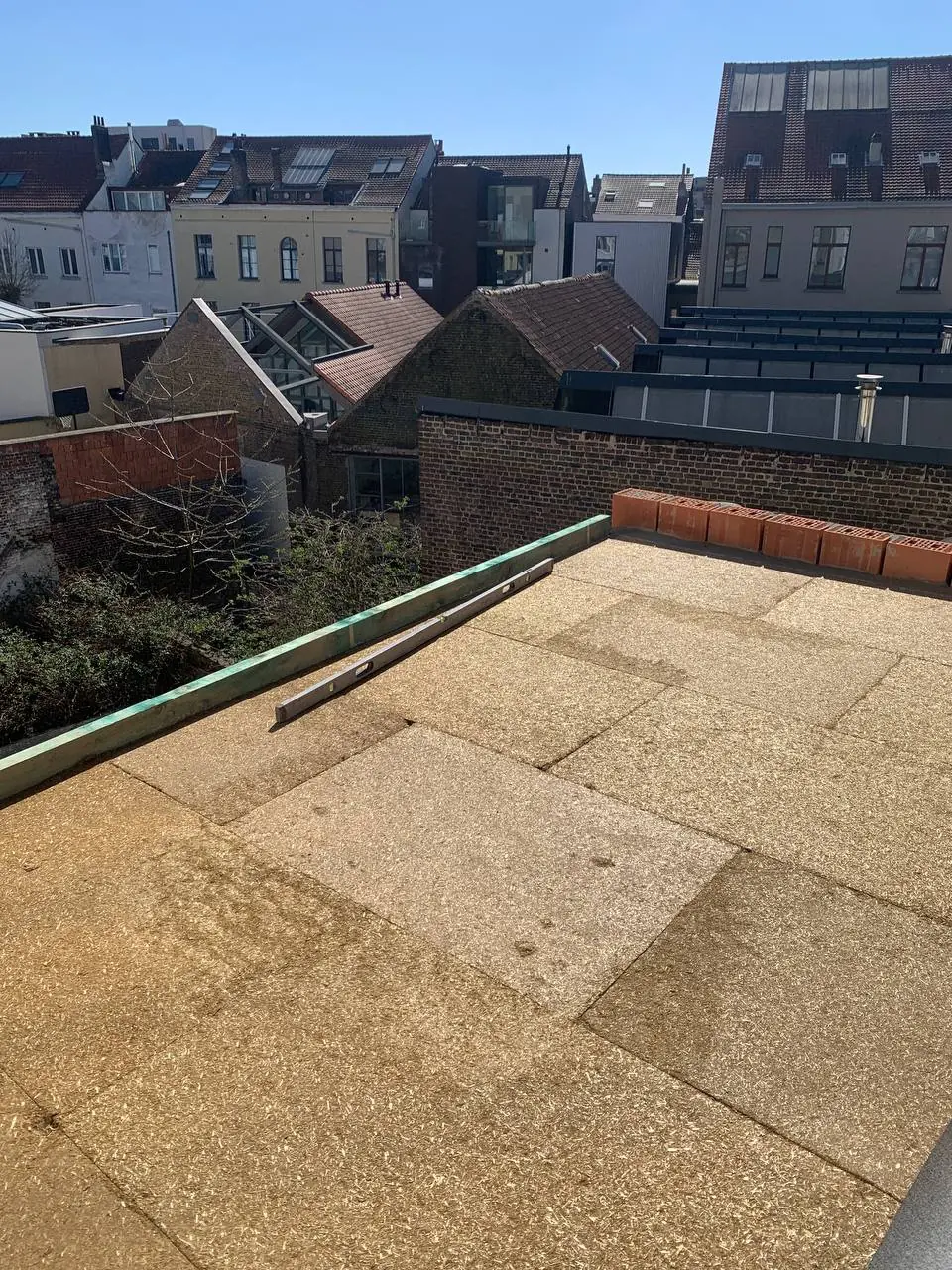
Rigid straw fibre insulation boards for roofs and floors: THERM is laid over the rafters of pitched roofs, THERM MULTI insulates flat roofs and floors under screed, and the 30 mm LDF board supplements them on floors. Vapour-open, they also limit summer overheating.
What are straw fibre insulation boards for roofs and floors?
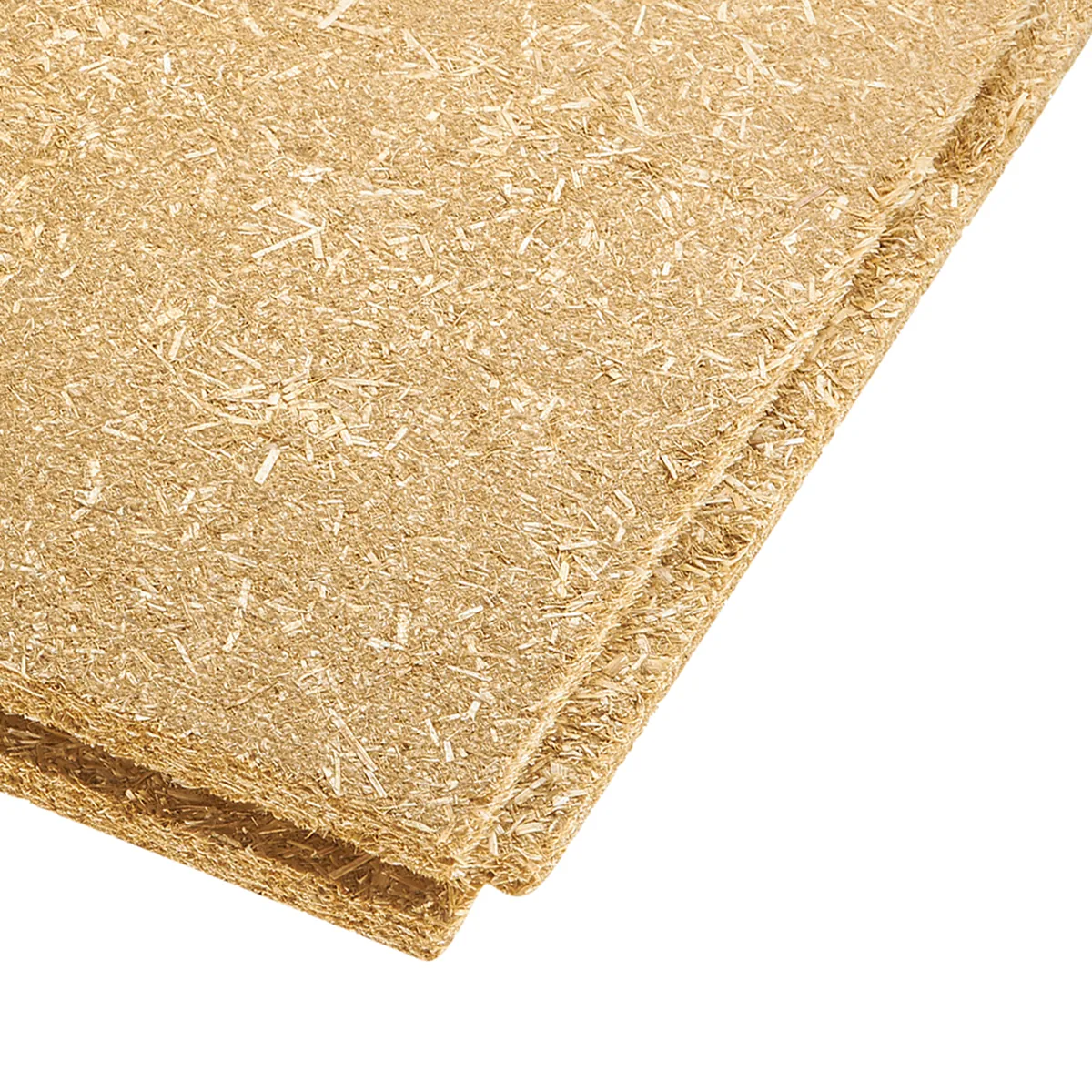
VestaEco manufactures rigid insulation boards in Poland from lignocellulosic straw fibres, defibrated by its patented DefibraTech 1.0 process and bound with a PMDI resin. For roofs and floors, the manufacturer recommends three boards, each for a specific layer.
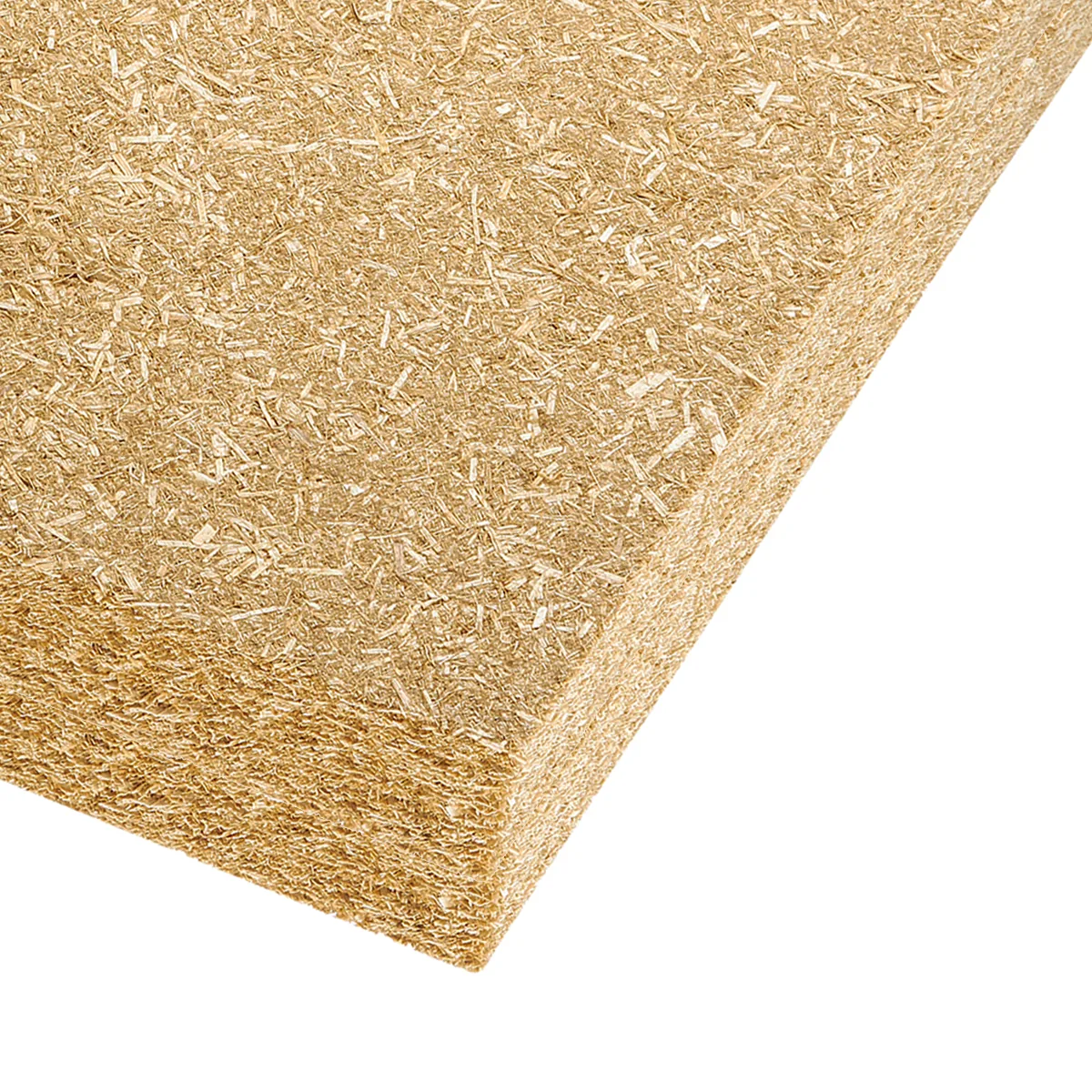
THERM, at around 240 kg/m³, is the pitched-roof board. Its thermal conductivity λD of 0.049 W/(m·K) and its compressive strength of 150 kPa allow it to insulate over the rafters and carry the roof covering. It comes in 60, 90 and 120 mm, with tongue-and-groove edges, and in a large 600 × 2400 mm format for fixing over rafters.
THERM MULTI offers the same thermal and mechanical performance, with cellulose fibres added to the straw. Its rigidity makes it the board for horizontal surfaces: flat roofs, which can be walked on, and floors under screed. It comes in 800 × 1200 mm, in 60, 90 and 120 mm.
LDF, which is denser (around 320 kg/m³, λD 0.057 W/(m·K)), is laid in 30 mm on floors and flat roofs, instead of or in addition to THERM MULTI. Its mass gives it a sound reduction index Rw of 32 dB.
All three boards share a heat capacity of 2,100 J/(kg·K), which slows summer heat, and a vapour-open structure (μ = 5) that absorbs less than 1 kg/m² of water in the short term. Manufactured to PN-EN 13171, they are classed E for reaction to fire.
Installation & uses
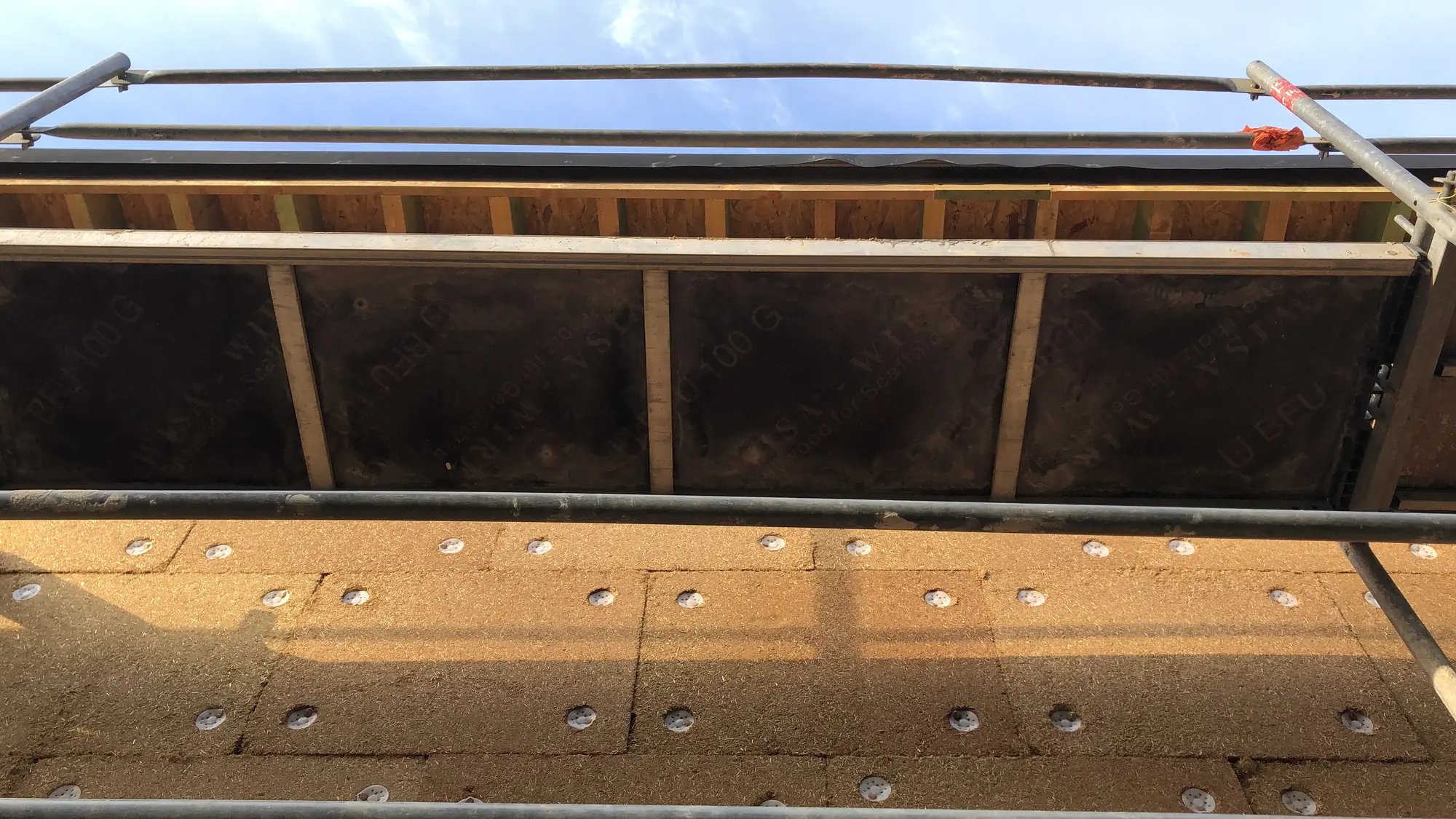
On pitched roofs, VestaEco fills the space between the rafters with FLEX or FIBRA wool, then covers the rafters with large-format 600 × 2400 mm THERM boards, fixed with timber screws every 60 cm beneath counter-battens, a sarking layer and the roof covering; a vapour control layer closes the build-up on the inside. The continuous layer removes thermal bridges at the rafters, and the reference system achieves U = 0.15 W/(m²·K).
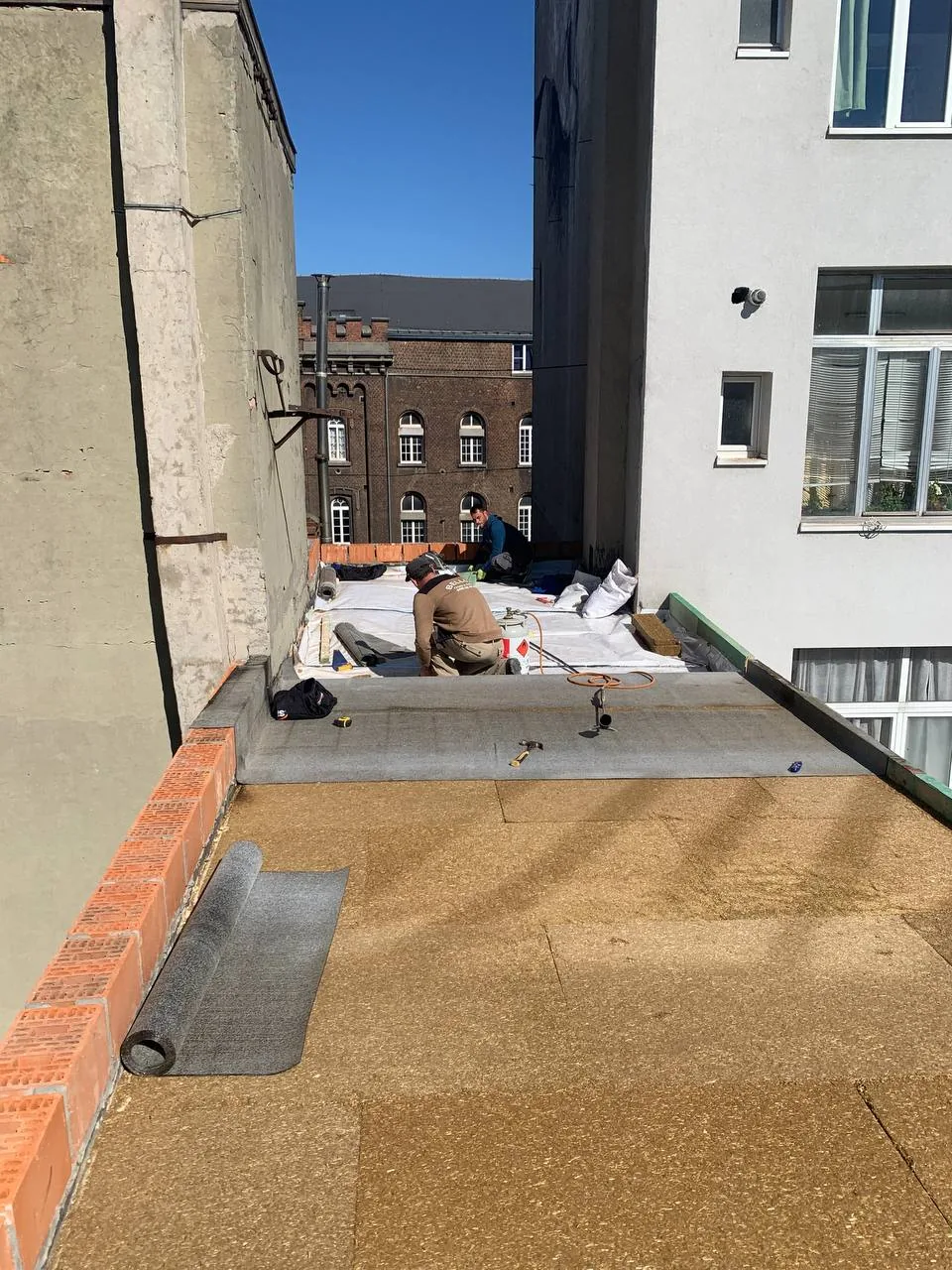
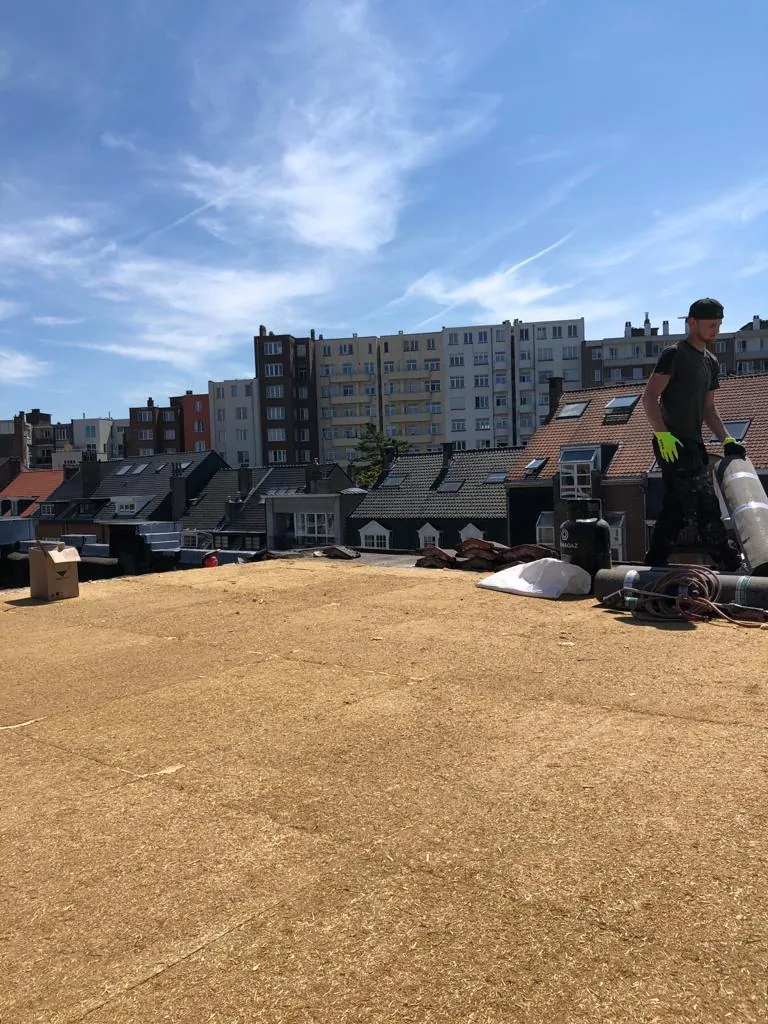
On timber-structure flat roofs, 60 mm of THERM MULTI is laid on a structural deck, above the wool placed between the joists, and beneath an EPDM membrane; this system also achieves U = 0.15 W/(m²·K). The rigid boards make the roof walkable.
On floors, under a cement screed or a dry screed, VestaEco lays a 60 mm THERM MULTI or a 30 mm LDF on the concrete slab, then a 15 mm LDF. LDF 15 edge strips decouple the screed from the walls, and a moisture film protects the insulation under a poured screed.
The boards can be cut with standard tools. Like any straw-based product, they are stored dry and kept protected from rain during construction: according to VestaEco, waterlogged straw does not dry out and degrades.
About the producer
VestaEco is a Polish manufacturer of straw-based insulation boards and fibreboards, headquartered in Warsaw. Its patented DefibraTech 1.0 process turns straw into fibres, bound, depending on the product, by thermobonding fibres or by a PMDI resin.
The range covers the insulation of walls, roofs and floors, as well as low-density boards for partitions, ceilings and interior fit-out. The products are DIN biobased certified, and two board densities have a published EPD.
Technical performance
PN-EN 13171
Life cycle
All three boards are based on lignocellulosic straw fibres from annual crops, bound with a PMDI resin; THERM MULTI adds cellulose fibres.
VestaEco makes the boards in Wielki Łęck, in Warmia-Masuria (Poland), around 1,300 km from Brussels, using its patented DefibraTech 1.0 process. According to the manufacturer, the low-temperature hydrothermal treatment of the fibres uses less energy than defibrating wood or minerals.
VestaEco publishes no current EPD describing the end of life of these boards. The carbon stored in the straw stays in place for the life of the building and returns to the atmosphere if the board is burned or decomposes.
Projects and publications
The projects that use it and the publications that discuss it.
FAQ
Which board should I choose?
Over the rafters of a pitched roof: THERM, preferably in the large 600 × 2400 mm format. On flat roofs and on floors under screed: THERM MULTI, alone or combined with a 30 mm LDF. THERM MULTI insulates better (λD 0.049 against 0.057 W/(m·K)); LDF adds mass and sound reduction (Rw 32 dB).
Which thicknesses are available?
THERM and THERM MULTI come in 60, 90 and 120 mm, LDF in 30 mm. On floors, the manufacturer's system adds a 15 mm LDF under the screed and LDF 15 strips along the walls.
Can you walk on a flat roof insulated with these boards?
Yes: rigid and resistant to compression (150 kPa for THERM MULTI), the boards laid on a structural deck and under an EPDM membrane allow people to walk on the roof.
Are the boards sensitive to moisture?
They absorb less than 1 kg/m² of water in the short term, and their vapour-open structure lets moisture migrate. They must nevertheless be stored dry: according to VestaEco, waterlogged straw does not dry out and degrades.
What is their reaction to fire?
All three boards are classed E: the material is combustible but withstands a small flame for a limited time. The build-up is designed with the fire requirements of the building in mind.
Alongside
Same layer, same use · materials to compare.
Float glass with a high recycled glass content. AGC · Louvain-la-Neuve.
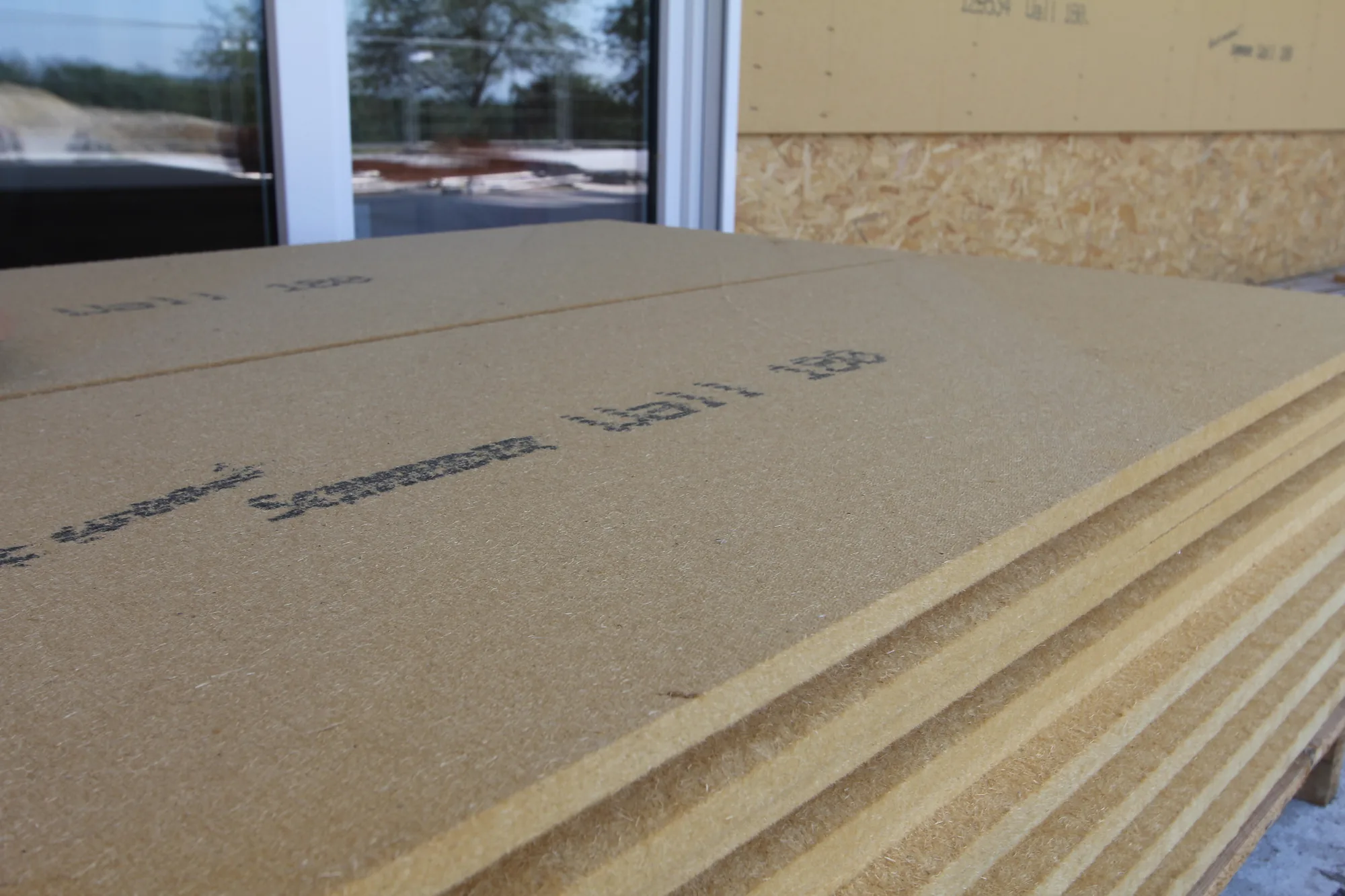
Softwood fibre, boards and blown-in loose fill. Best Wood SCHNEIDER · Eberhardzell.
100% recycled PVC, extruded profiles. Deceuninck · Hooglede-Gits.