
Low-density straw
fibre board LDF
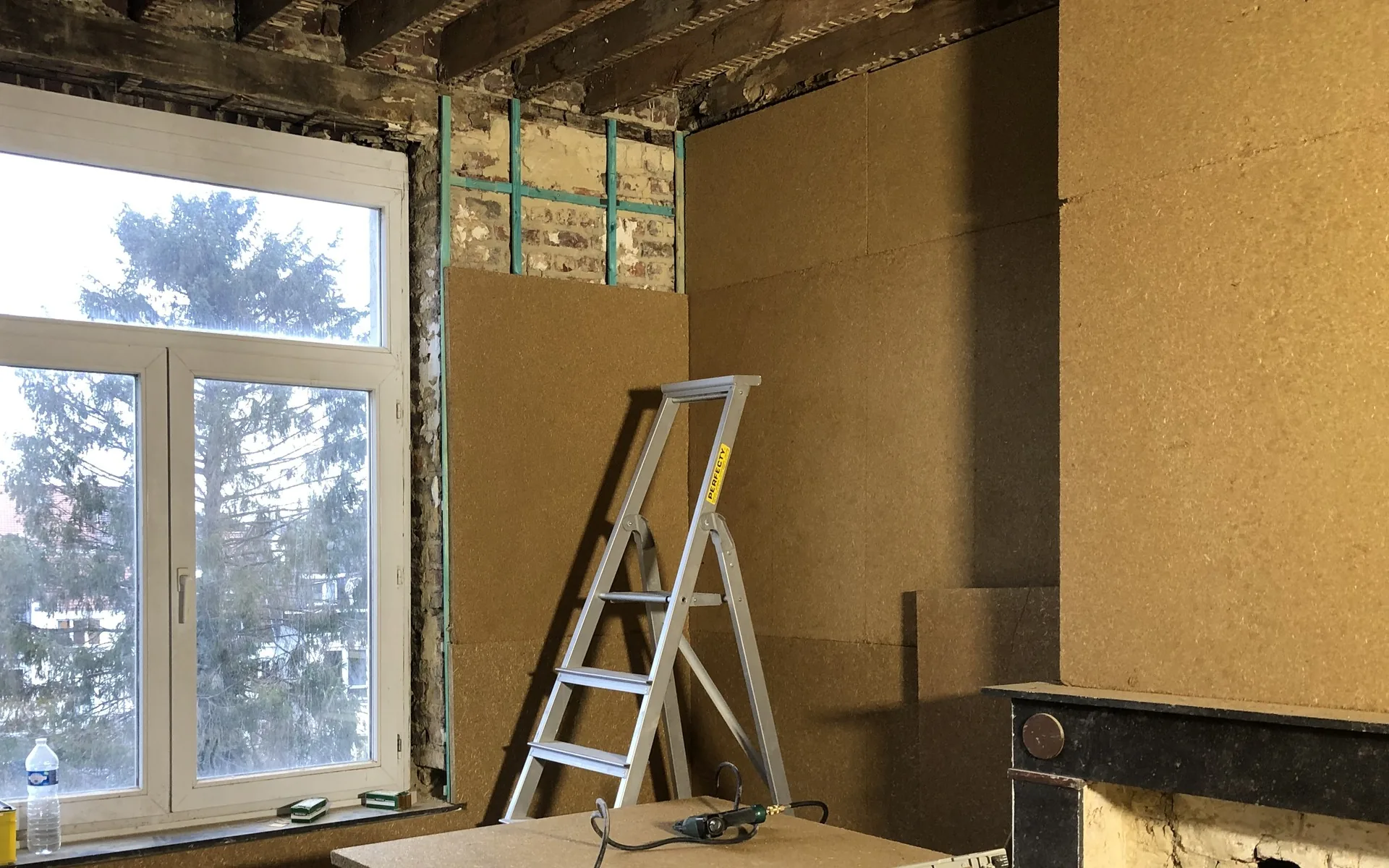
Rigid 30 mm board made of straw fibres bound with a formaldehyde-free PMDI resin. A versatile board, it serves as a partition and ceiling lining, as under-screed insulation or as a substrate for interior fit-out, with a sound reduction index Rw of 32 dB.
What is a low-density straw fibre board?
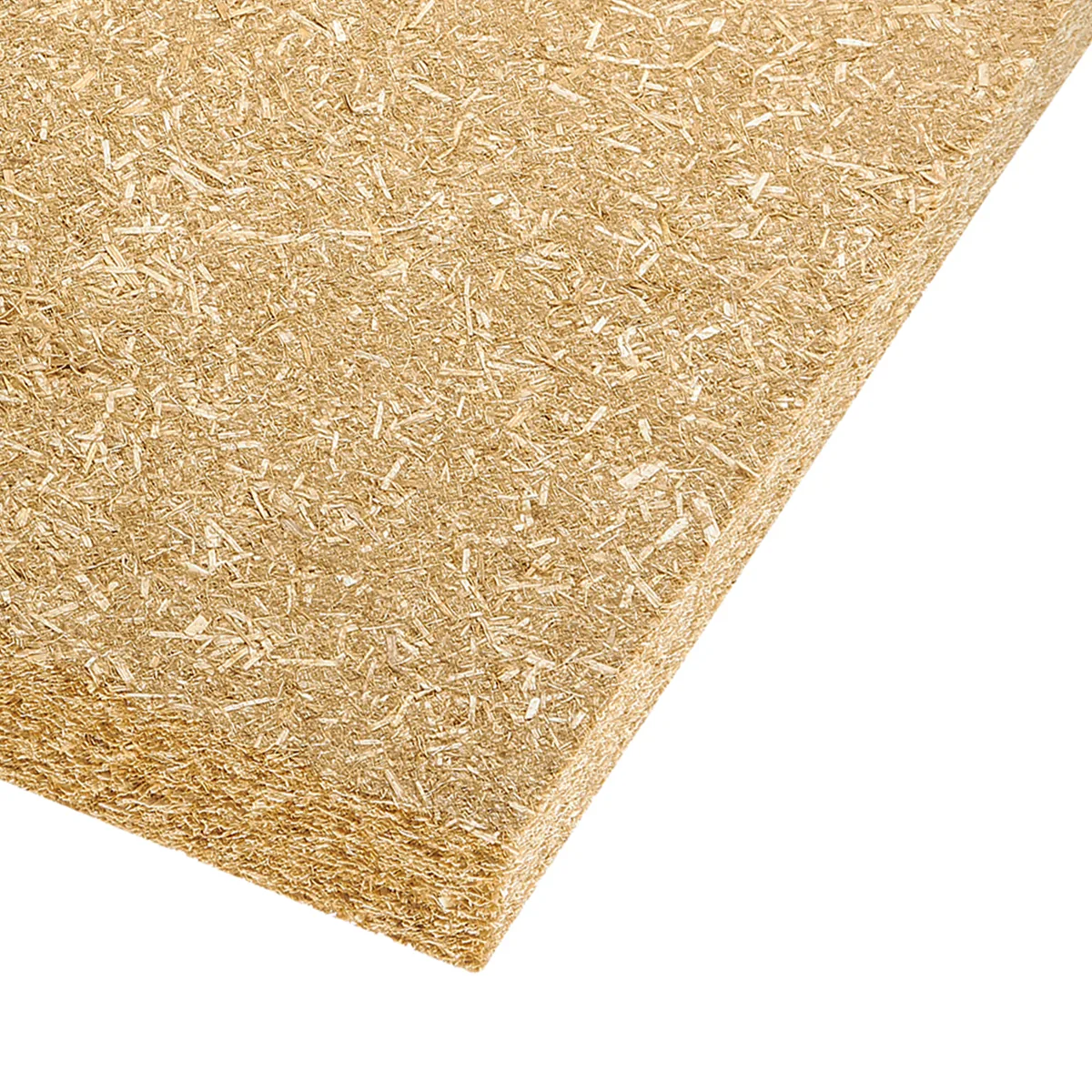
VestaEco LDF is a low-density fibreboard made from lignocellulosic straw fibres, bound with a formaldehyde-free PMDI resin. The straw fibres give the board its structure and lightness, and the resin holds it together. Defibration relies on the DefibraTech 1.0 process, patented by the manufacturer.
With a density of about 320 kg/m³, the 30 mm board weighs 9.6 kg/m². This mass, distributed through a porous network of fibres, gives it a sound reduction index Rw of 32 dB: it is a lining that contributes to the acoustic comfort of partitions and ceilings. Its thermal conductivity λD of 0.057 W/(m·K) makes it a supplement to the insulation rather than the main insulation layer.
The board is rigid and stable: bending strength of 1.4 N/mm², swelling below 6% in 24 hours, short-term water absorption below 1 kg/m², and a holding capacity of 21 kg per plasterboard anchor. It can easily be cut, drilled and routed, which also makes it suitable for interior fit-out and furniture.
It is manufactured to PN-EN 13171 and classed E for reaction to fire. DIN biobased certified, it stores the biogenic carbon absorbed by the straw as it grows; this carbon returns to the atmosphere if the board is burned or decomposes at end of life.
Installation & uses
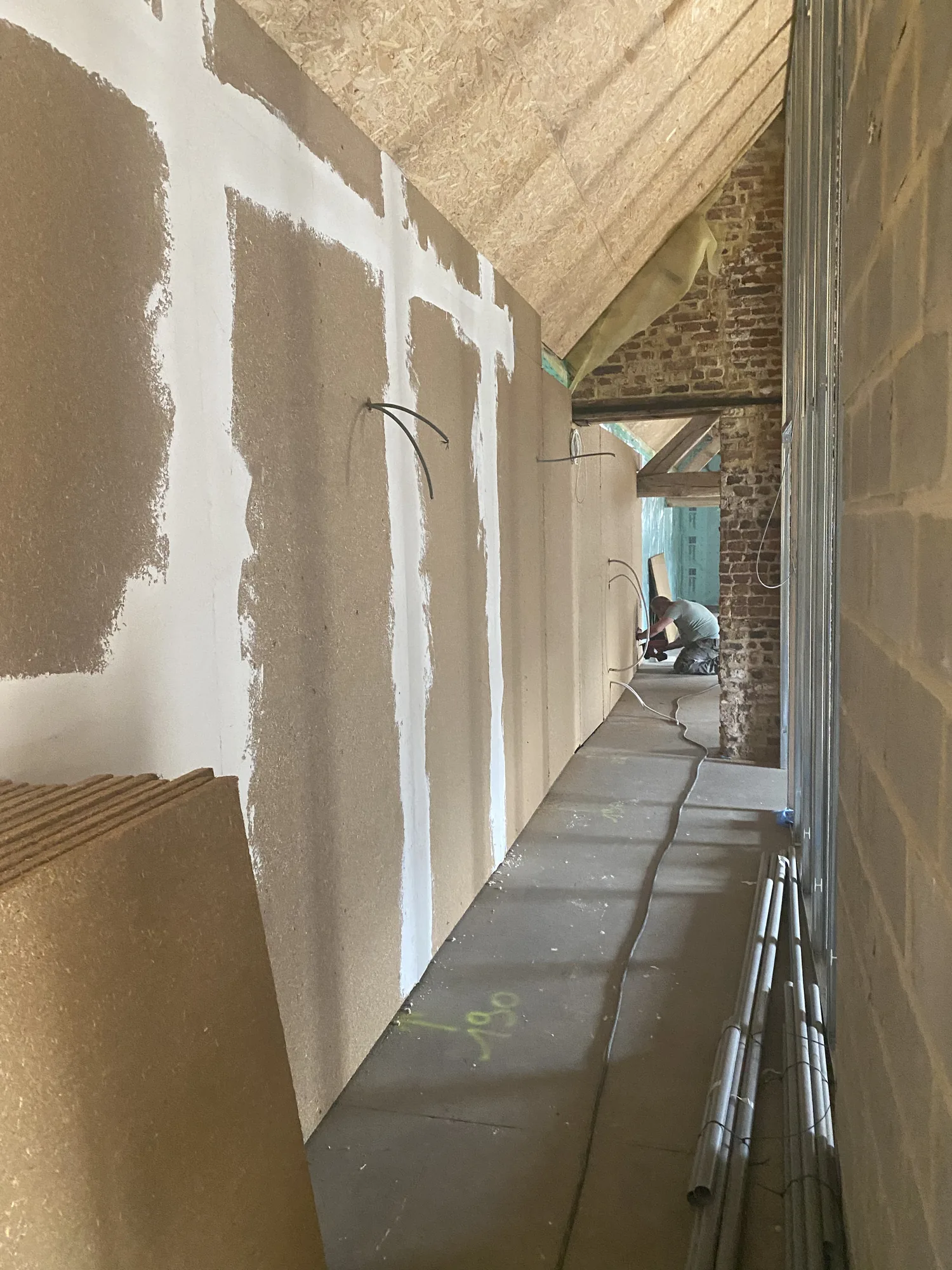
In partitions, wall linings or ceilings, the board is fixed with screws or staples to a frame. It can take a thin-coat clay plaster reinforced with mesh, as in the partition systems described by VestaEco, for a vapour-open wall.
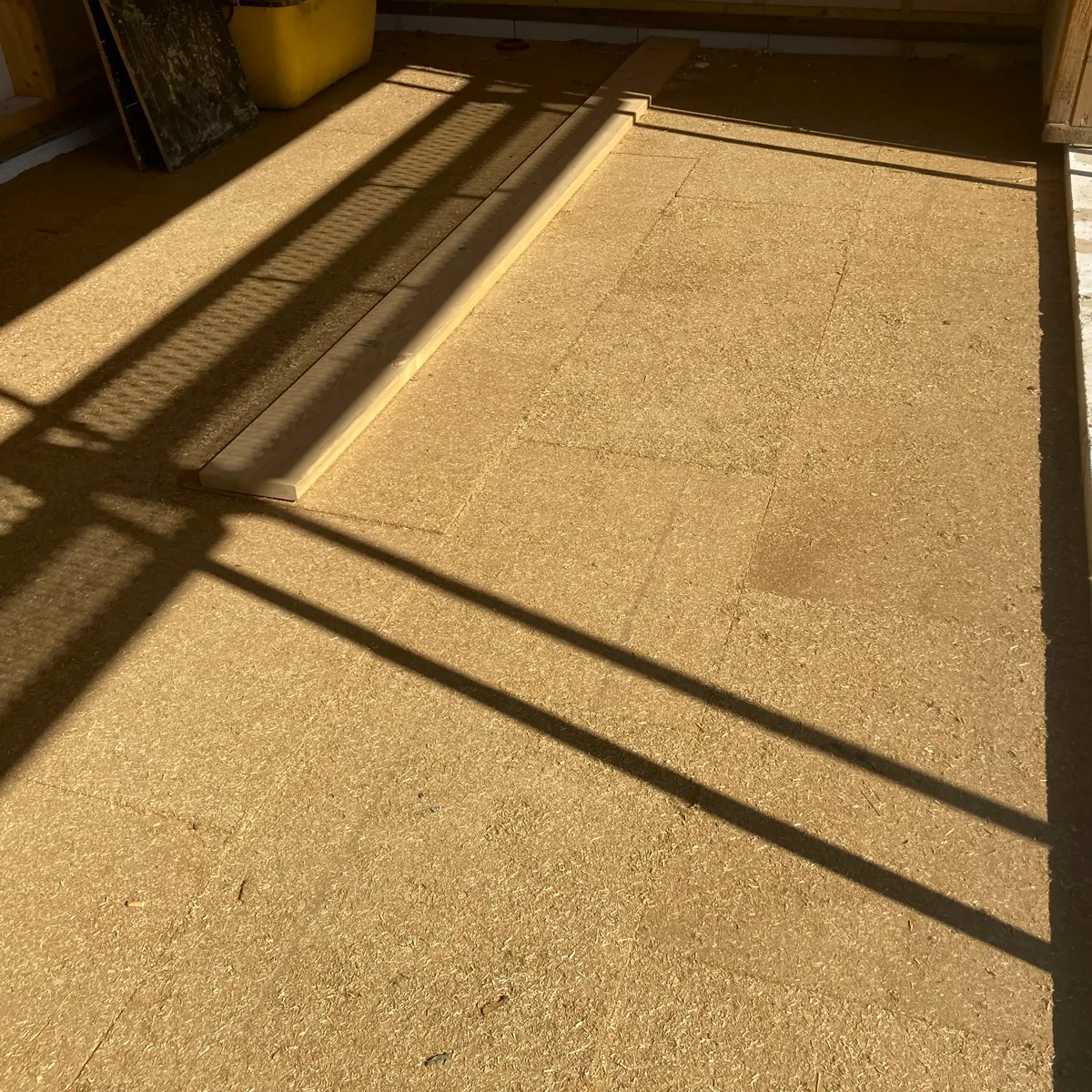
On floors, the 30 mm board is laid on the concrete slab as under-screed insulation, beneath a poured or dry screed. The manufacturer's system provides LDF 15 perimeter strips along the walls and, under a concrete screed, a moisture protection film laid over the boards.
On flat roofs, VestaEco combines LDF boards with WALL insulation boards laid on the slab. In interior fit-out, the board serves as a substrate for veneers, laminates or other finishes, and as an infill for internal doors to improve their sound insulation.
Like any straw-based product, it is stored dry and kept protected from water ingress: according to the manufacturer, waterlogged straw does not dry out and degrades. Classed E for reaction to fire, it is specified with the requirements of the room in mind; its low weight makes handling on site easier.
About the producer
VestaEco is a Polish manufacturer of straw-based insulation boards and fibreboards, headquartered in Warsaw. Its patented DefibraTech 1.0 process turns straw into fibres, which are bound, depending on the product, by thermal bonding fibres or by a PMDI resin.
The range covers the insulation of walls, roofs and floors, as well as low-density boards for partitions, ceilings and interior fit-out. The products are DIN biobased certified, and two board densities have a published EPD.
Technical performance
PN-EN 13171
Life cycle
The board is made of lignocellulosic straw fibres, from annual crops, bound with a formaldehyde-free PMDI resin. As it grows, the straw absorbs carbon, which remains stored in the board.
VestaEco defibrates the straw using its patented DefibraTech 1.0 process, then forms and hot-presses the boards, in a dry process, at its plant in Wielki Łęck, in Warmia-Masuria (Poland), about 1,300 km from Brussels.
VestaEco publishes no current EPD describing the end of life of the present board. The carbon stored in the straw stays in place for the life of the building and returns to the atmosphere if the board is burned or decomposes.
Projects and publications
The projects that use it and the publications that discuss it.
FAQ
Can the LDF board serve as the main insulation?
No: with a λD of 0.057 W/(m·K), it supplements insulation rather than replacing it. Above all it adds mass and sound reduction, with an Rw of 32 dB at 30 mm.
How is it laid under a screed?
On the concrete slab, under a poured or dry screed. The manufacturer's system provides LDF 15 perimeter strips along the walls and, under a concrete screed, a moisture protection film laid over the boards.
Can it be used in interior fit-out or furniture?
Yes. It can be cut, drilled and routed with standard tools, serves as a substrate for veneers or laminates, and as an infill for internal doors to improve their sound insulation.
Is it sensitive to moisture?
It absorbs less than 1 kg/m² of water in the short term and swells by less than 6% in 24 hours. It must nevertheless be stored dry: according to VestaEco, waterlogged straw does not dry out and degrades.
Alongside
Same layer, same use · materials to compare.
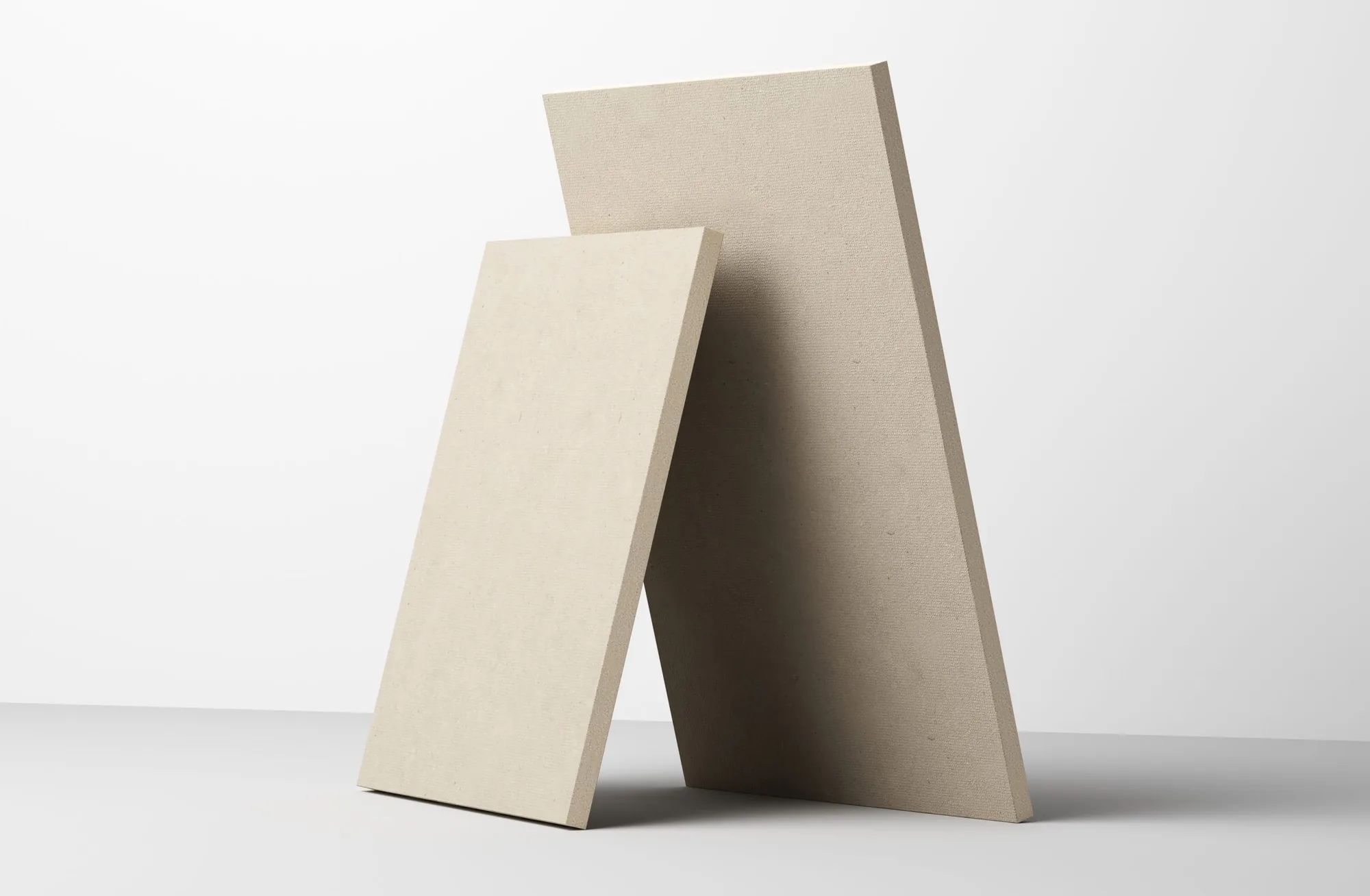
Paper mill sludge and recycled cardboard, resin-free. Honext · Barcelona.
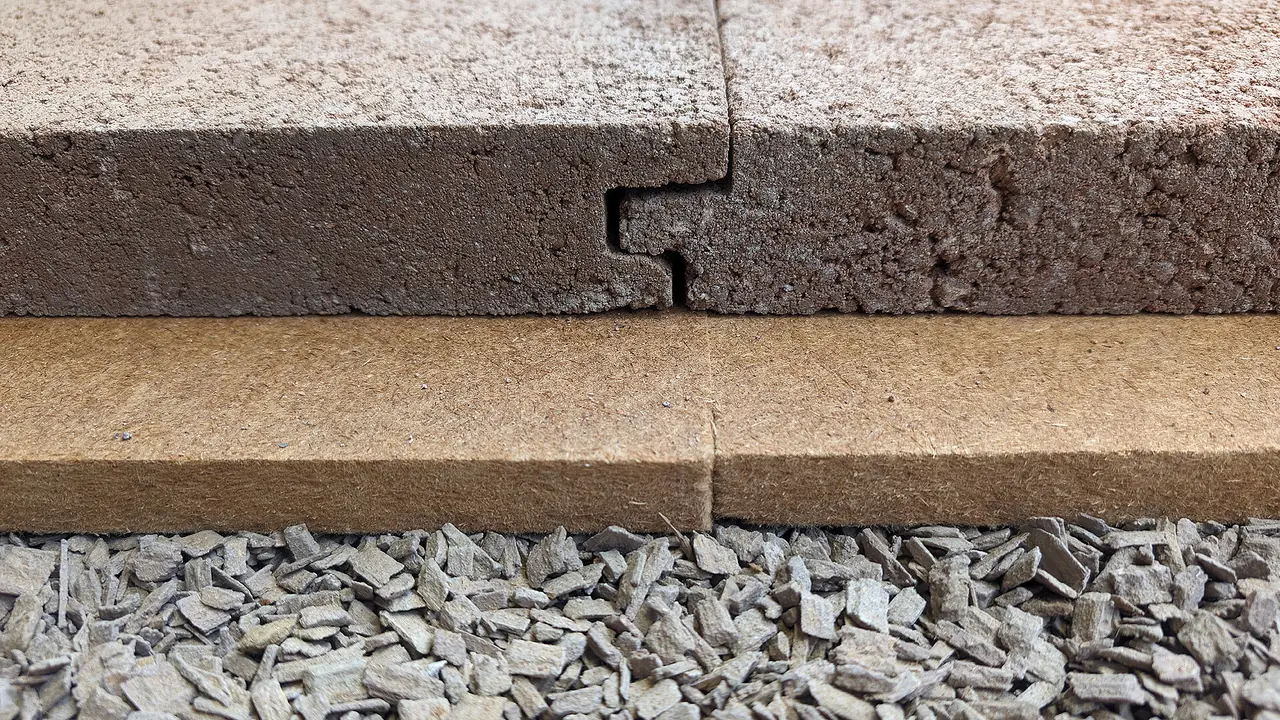
Mineral aggregates and cement, prefabricated panels laid dry. Lithotherm · Bad Kreuznach.
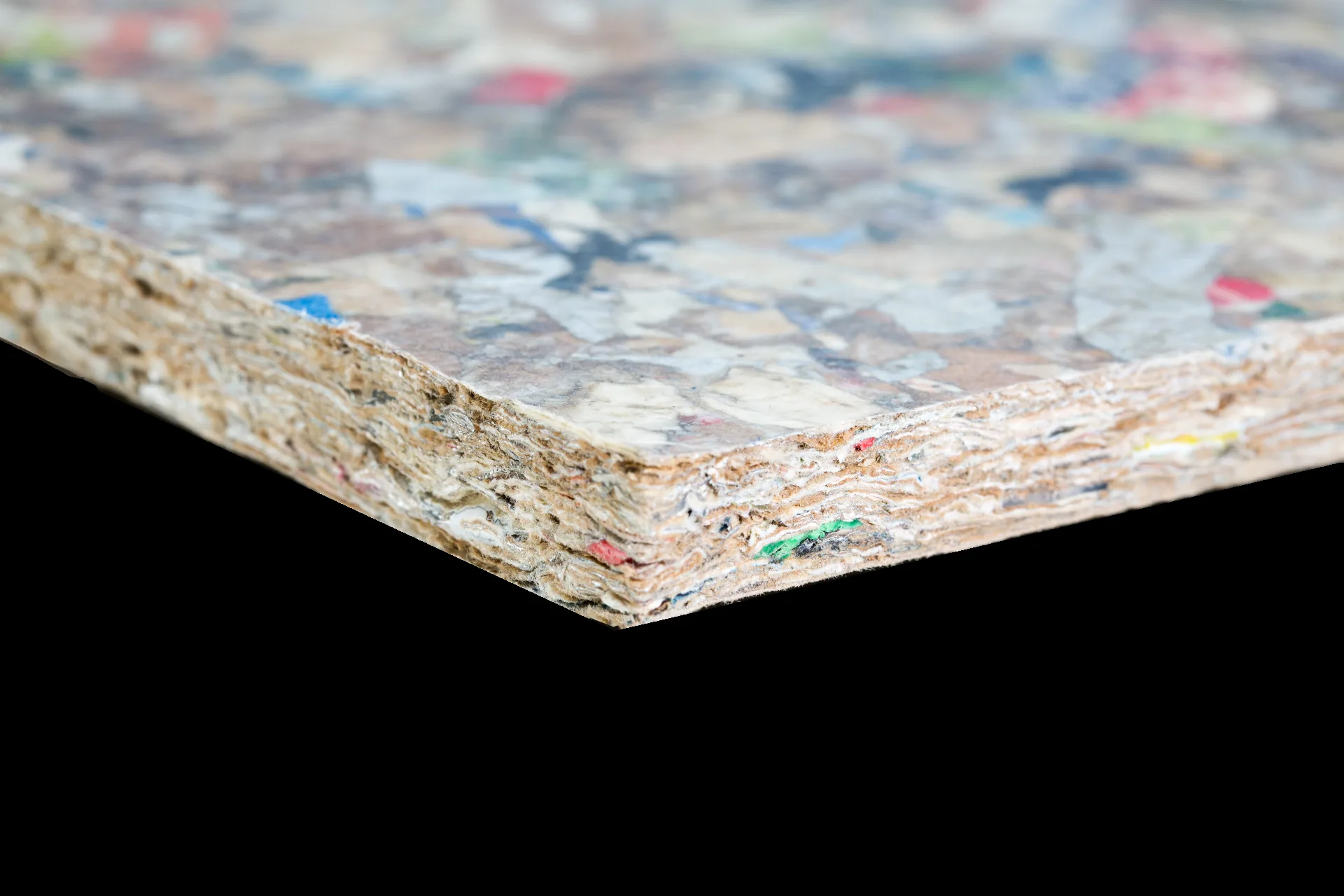
Recycled composite food packaging, remelted with no added binder. Recoma · Hässleholm.