
Announced on 6 October, the TOTEM update brings the study period down from 60 to 50 years. This is good news for project teams, since a single model of the building now serves the authorities, the certifier and the investor, and it comes fifteen months before carbon enters the EPB certificate.

TOTEM is the Belgian reference tool for the LCA (life cycle assessment) and impact calculation of buildings. Launched in 2018 by OVAM, Brussels Environment and the Public Service of Wallonia, it is free and identical for all three Regions, which, in Belgium, is already worth pointing out. It calculates the environmental impact of a building over its whole life cycle, from the production of the materials to their end of life, including transport, installation, maintenance and replacements. To do so, it follows the European standard EN 15978 and relies primarily on EPDs, the environmental product declarations drawn up by manufacturers, or, failing that, on the generic data in its library.
All these impacts are then brought together in a TOTEM score, a single value expressed in millipoints, of which climate change, measured by GWP (global warming potential), is one component. Beyond the permit, the tool is also used at design stage, where it lets you compare aluminium cladding with timber cladding, or brickwork laid in mortar with thin-joint brickwork, and see quickly whether there is a big difference in impact between the two.
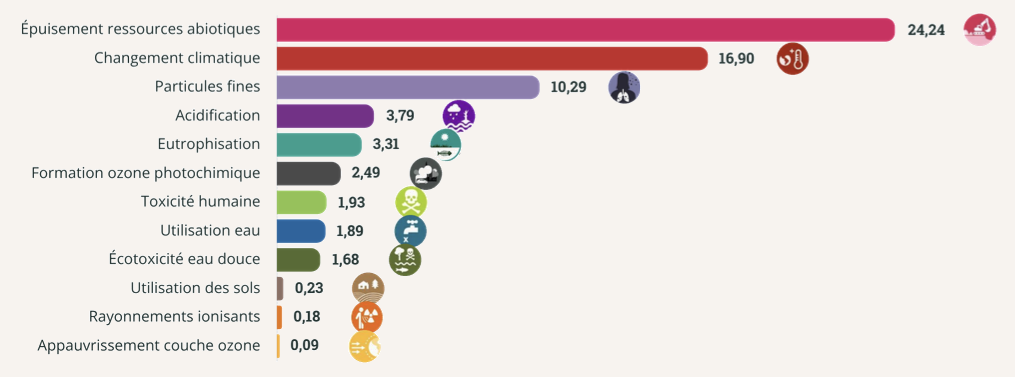
The single score of a building in a Natura Mater TOTEM report, in millipoints per square metre: climate change is only the second of the twelve indicator categories.
The biggest change in this update concerns the study period, which goes from 60 to 50 years. Until now, everyone worked to their own timescale and the results could not be compared. Europe eventually confirmed 50 years, BREEAM aligned with it, and TOTEM was one of the last tools still calculating over 60.
In practice, aligning a project with the EU Taxonomy meant running the LCA in One Click LCA, a commercial software package, then running it again in TOTEM to obtain the permit. The same building was modelled twice, in two pieces of software, and it is precisely this duplicated work that the update removes.
From now on, a single TOTEM study covers the building permit, BREEAM certification, the Taxonomy alignment that investors look at, a client's ambitions and internal benchmark, and preparation for the mandatory 2028 LCA framework. Each of these frameworks takes from it the indicator it requires, and TOTEM thus becomes the central hub for LCA in Belgium.
Global warming potential over the life cycle, required by the EPB certificate from 2028 and by the EU Taxonomy.
The results presented for issue Mat 01 of BREEAM certification, which now calculates over the same 50-year period.
TOTEM's single score, which aggregates all its indicators and is used by GRO, the sustainable construction tool of the three Regions.
EPB covers the energy consumed while the building is in use, whereas LCA adds the carbon embodied in the materials. The two complement each other, since TOTEM takes the operational energy module from EPB and calculates all the others itself. In fact, it is through EPB that the 2028 requirement comes in. The revised European Energy Performance of Buildings Directive requires a common method for calculating life cycle GWP, which must appear in the EPB certificate of new buildings over 1,000 m² from 1 January 2028, and then in the certificate of all new buildings from 1 January 2030, this time with limit values.
Brussels is leading the way by integrating GWP into the EPB requirements of COBRACE, the Brussels Code of Air, Climate and Energy Management. There, the calculation covers the whole building, whereas EPB is calculated unit by unit, and the rest of the country will follow under a Belgian roadmap.
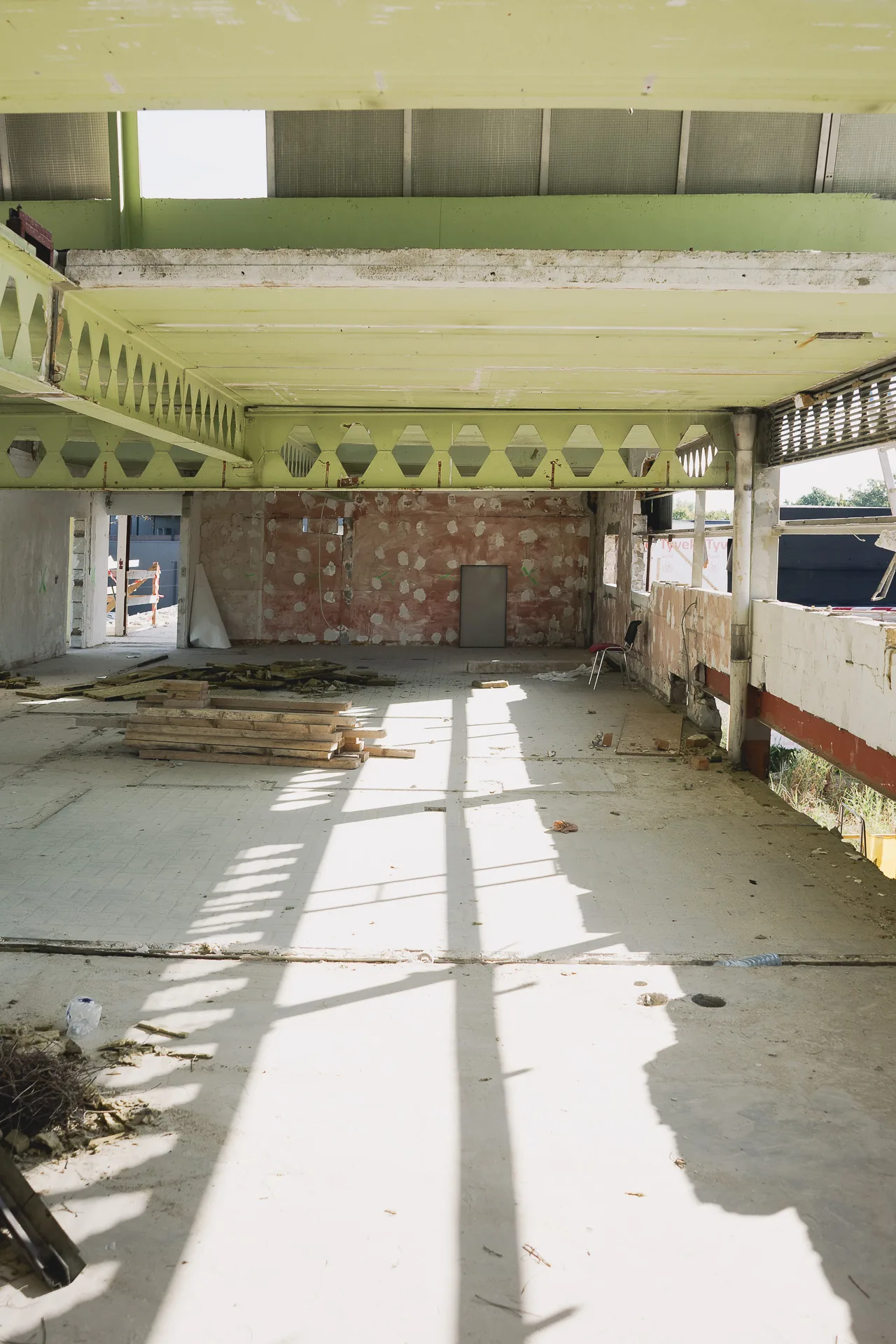
A building of more than 1,000 m² at sketch stage today will most often be certified after 1 January 2028, and that is best not discovered at certification. Since embodied carbon is determined by design choices, that is, the structure, the facade, the insulation and the finishes, it is at design stage that the calculation carries the most weight. On heavyweight construction projects, for example, concrete is among the largest contributors to the materials impact, and cement substitution can reduce it.
In other words, a score calculated at the end of a project mostly serves to fill in a report, whereas one calculated at design stage helps you choose. And from 2030, finding out at the last minute that the limit values are exceeded will leave no room at all to redesign.
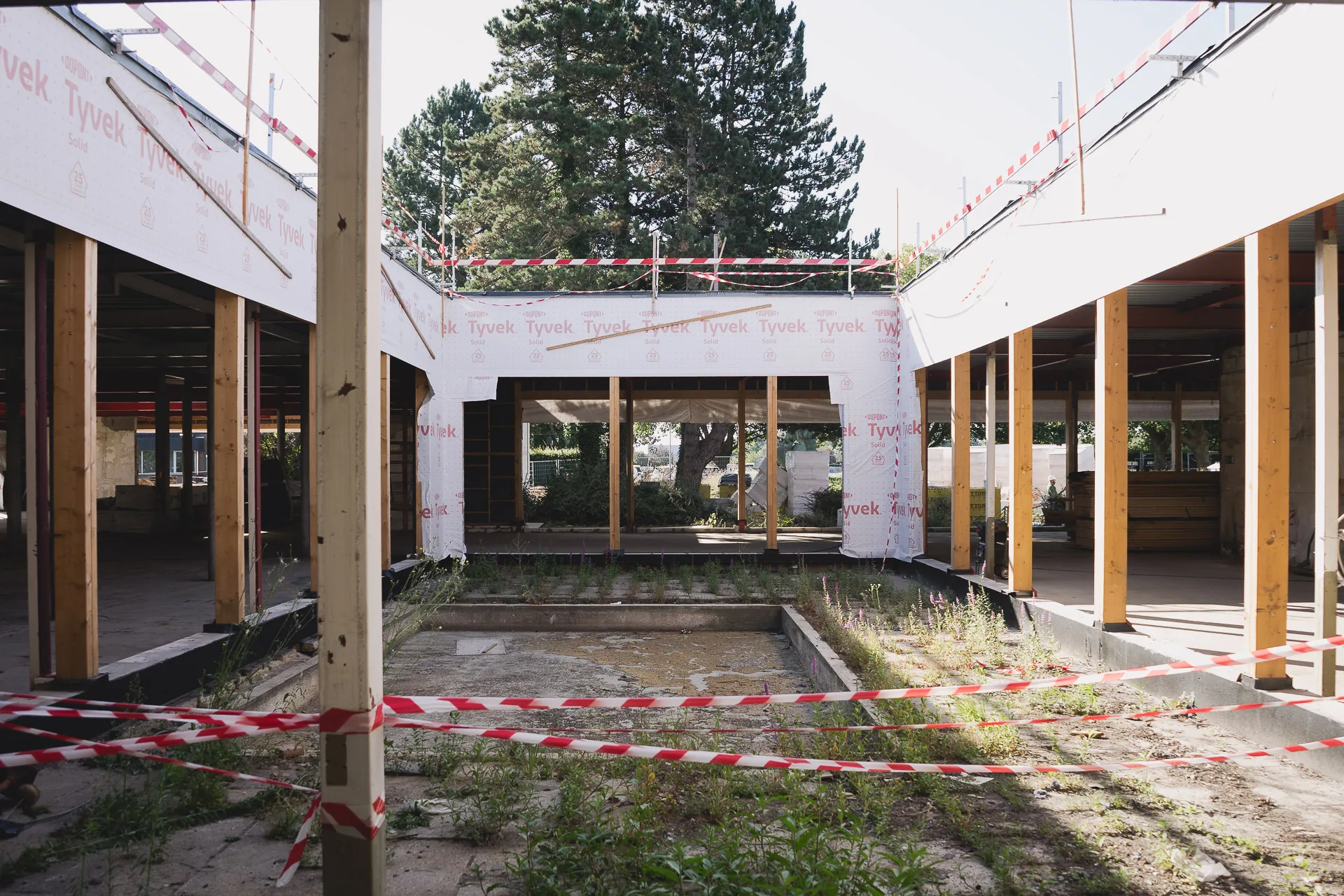
To benefit from this update, a project team does not need to become TOTEM experts. That is our job: we carry out complete impact calculations for a whole building, a building element or a material, and we have followed the tool since its beginnings, to the point of attending its stakeholder committee in 2025. We therefore prepared this service well before the announcement, so that it would be ready the day TOTEM finally covered all of a project's LCA needs.
Depending on the project stage and the question asked, the study serves a different decision:
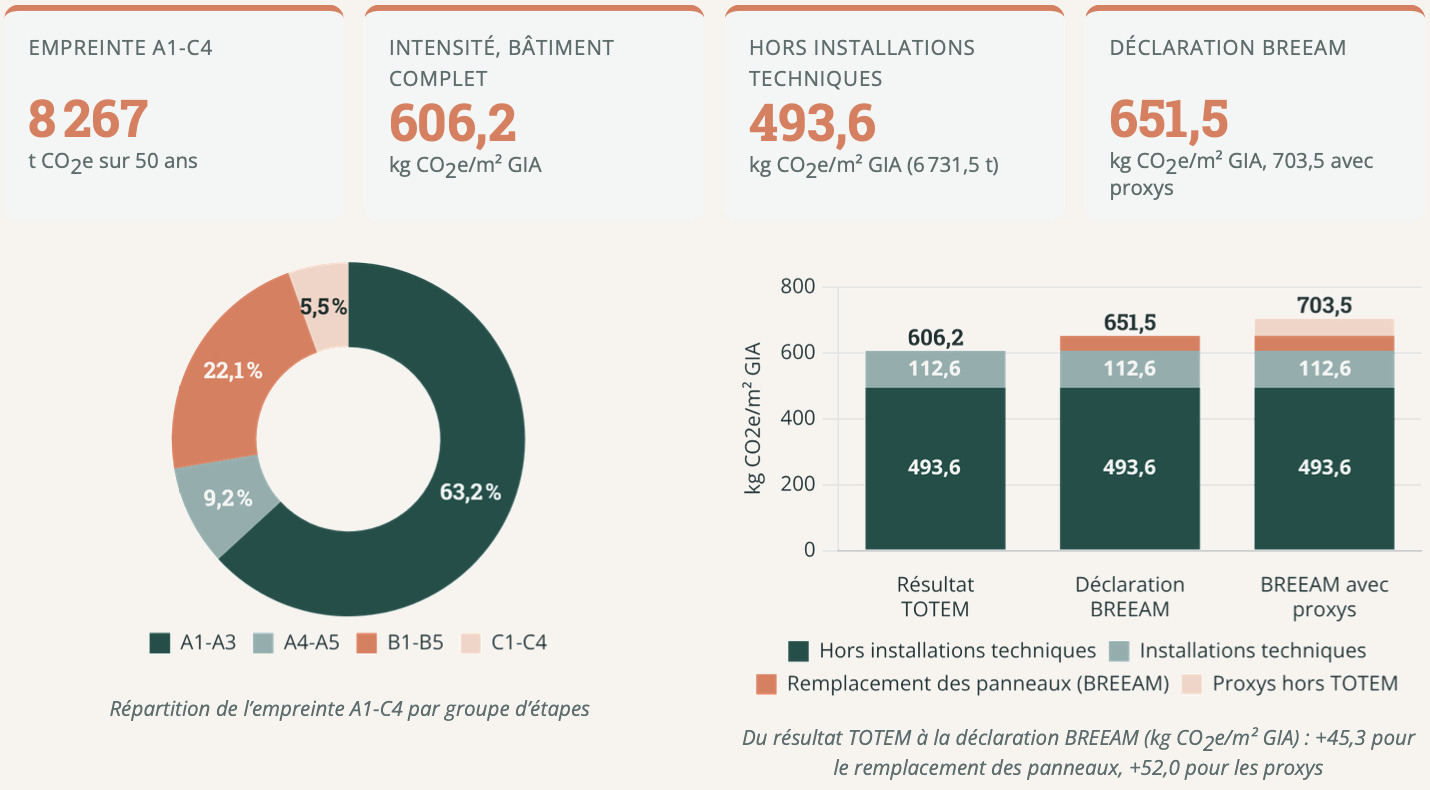
The executive summary of a Natura Mater TOTEM report: the footprint over 50 years, its breakdown by life cycle stage, and the step from the TOTEM result to the value declared for BREEAM.
For your part, all you need to do is send us the tender documents or the project documents: drawings, bill of quantities, specification and EPB files. You never have to open TOTEM, which, it has to be said, is rather tedious to get to grips with when you do not use it every day.
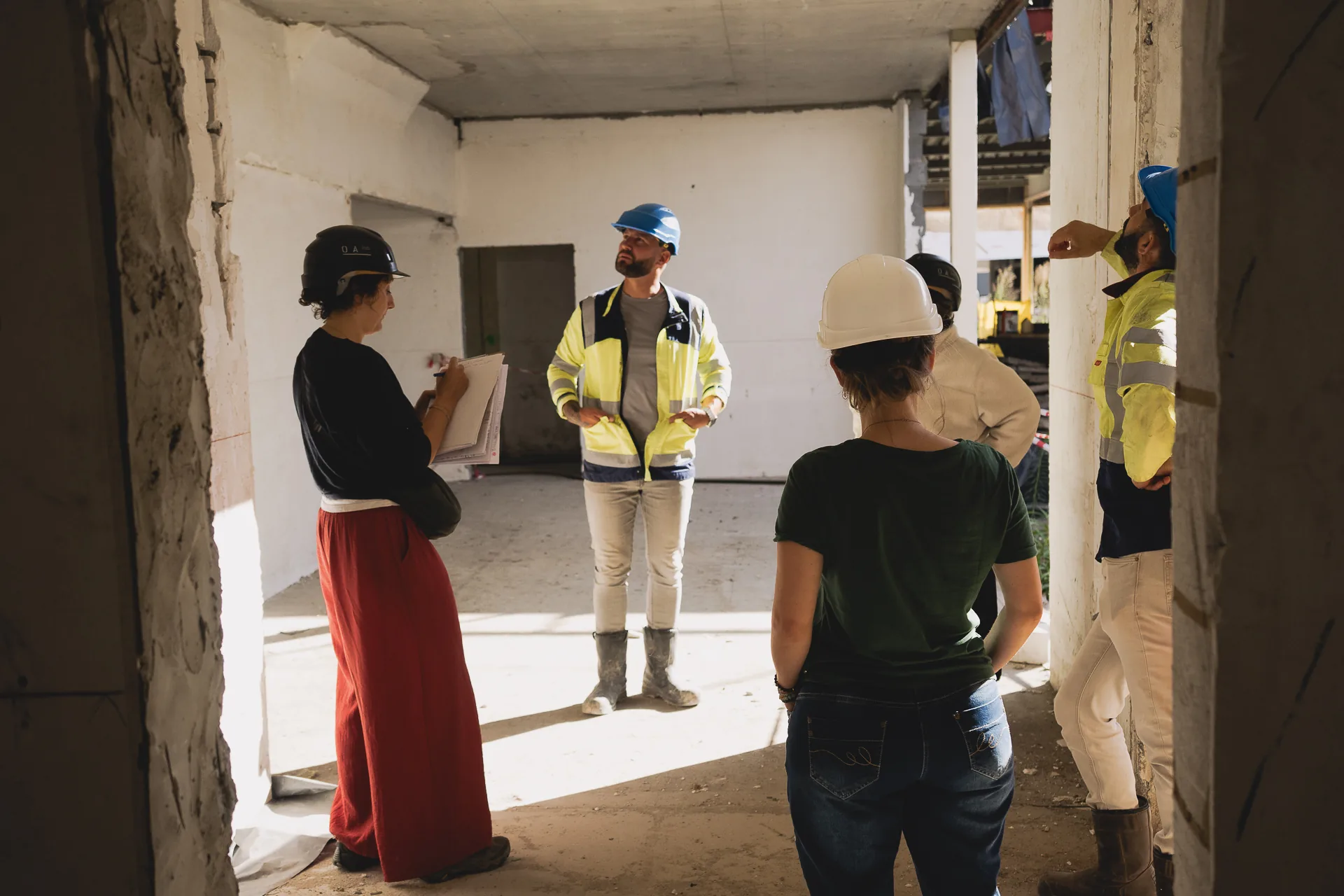
In return, you receive a report that first shows where the largest impacts lie, which building elements contribute most and how these impacts are distributed over the life cycle, with the quantified results (GWP, millipoints, embodied energy) and their interpretation. Then come concrete design recommendations, followed by the method used, so that the report reads like an EPB report pointing to the key strategies, and we deliver it in the format of each use: permit, BREEAM, GRO, Taxonomy or internal benchmark.
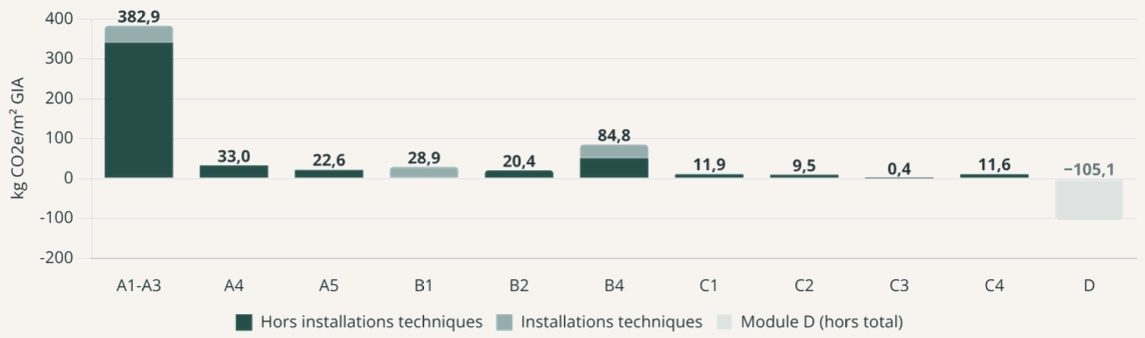
The impact by life cycle module in a TOTEM report, in kg CO₂e per square metre: material production (A1-A3) alone accounts for 63% of the footprint.
This is where our core work makes the difference. Day to day, we source, study and specify biobased, geobased, circular and reclaimed materials, and we keep more than 300 samples of them at the Materatek. When the study shows that one item carries too much weight, our recommendations therefore rest on alternatives we know, with their performance, their supply chain and their installation. And if you want to go further in choosing materials and writing the specifications, our Project study takes over.
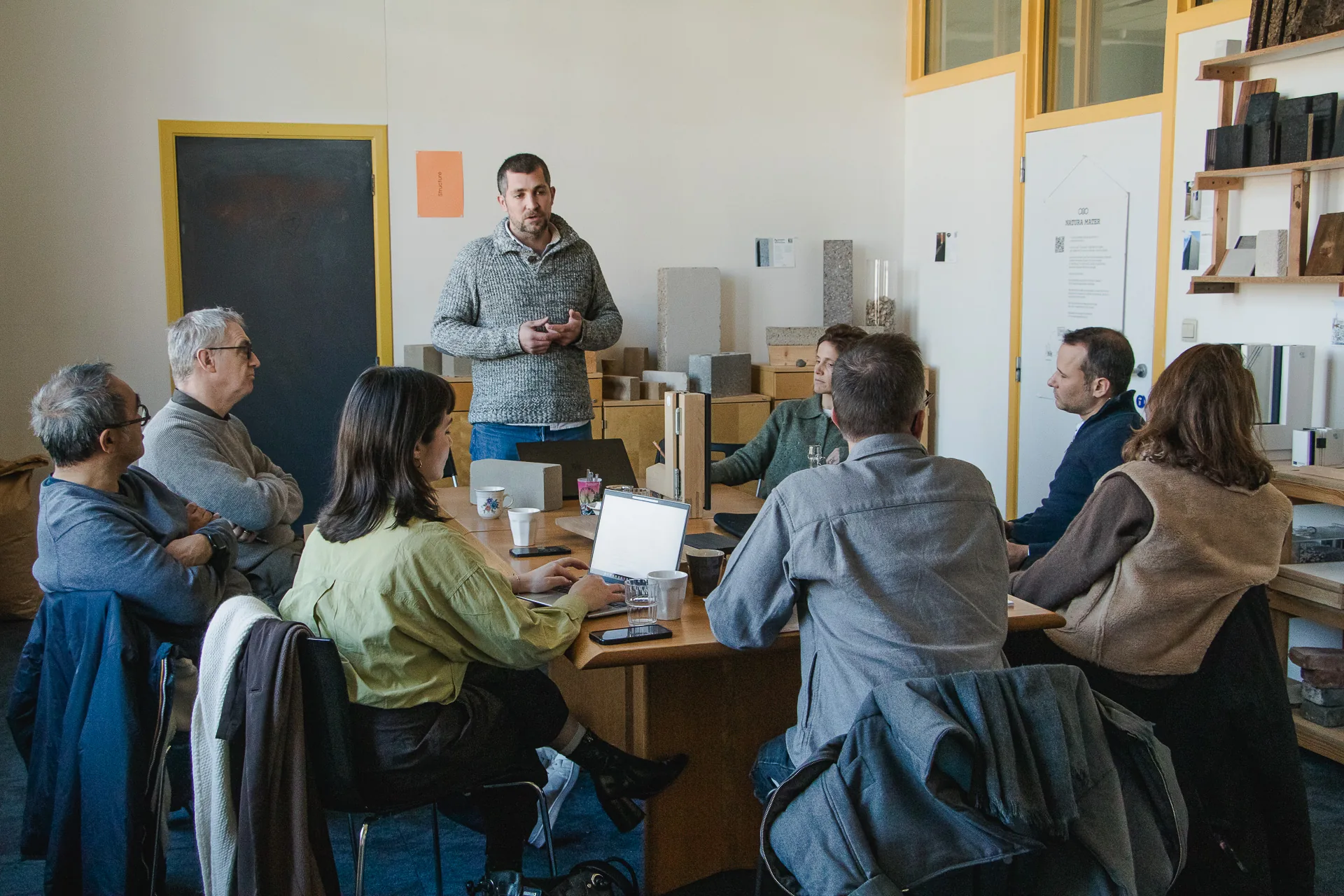
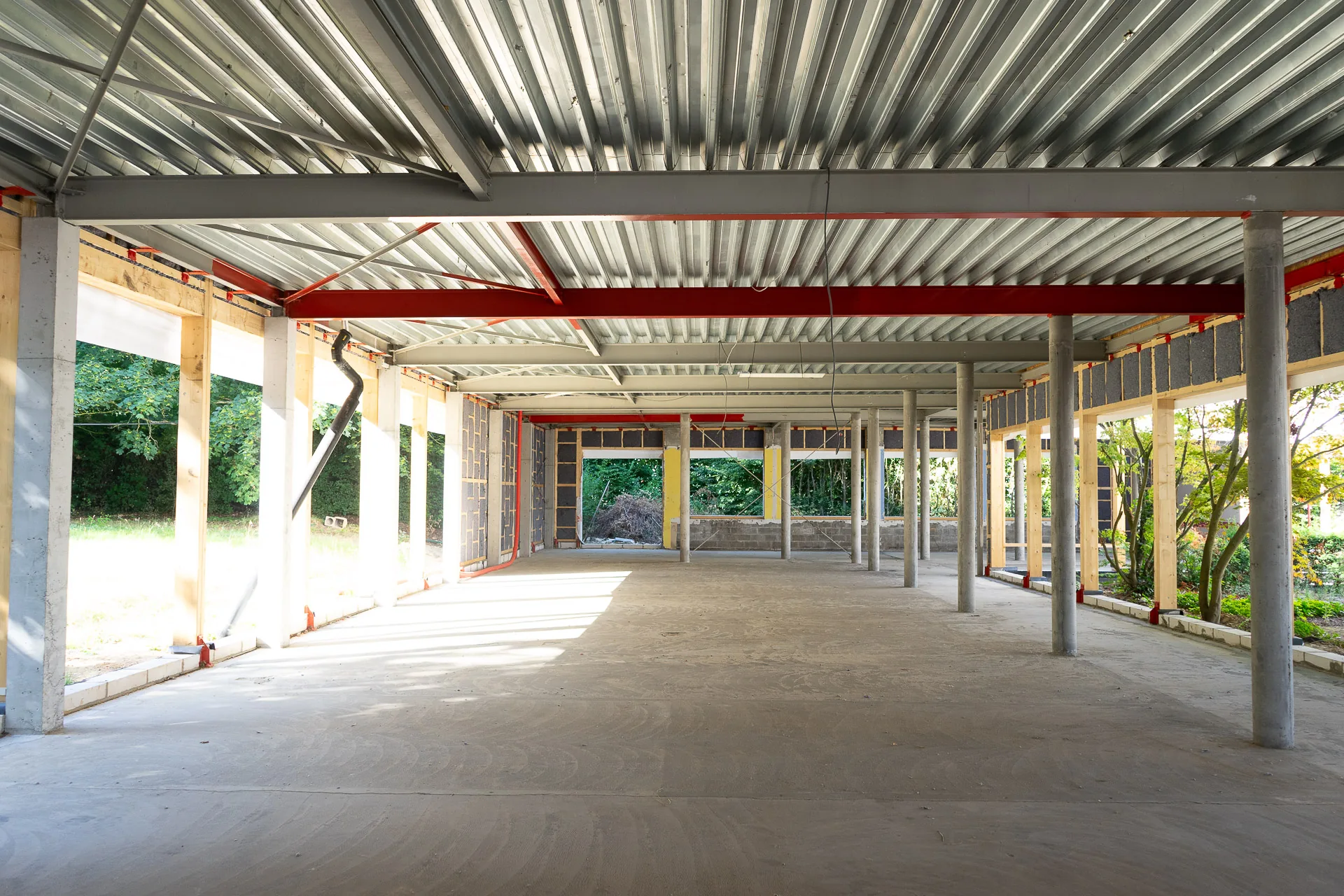
The study period is not the only change in this update. TOTEM's library of materials, on which every calculation rests, has also changed. We are currently analysing how these changes move the results, both what they improve and the questions they raise, and we will soon devote a more technical article to the subject.
Photos: Odoo site, Louvain-la-Neuve · Architect: Chouettes Architectes · © Natura Mater. Charts: extracts from a Natura Mater TOTEM report.
Three pieces from the Magazine on materials already in place.
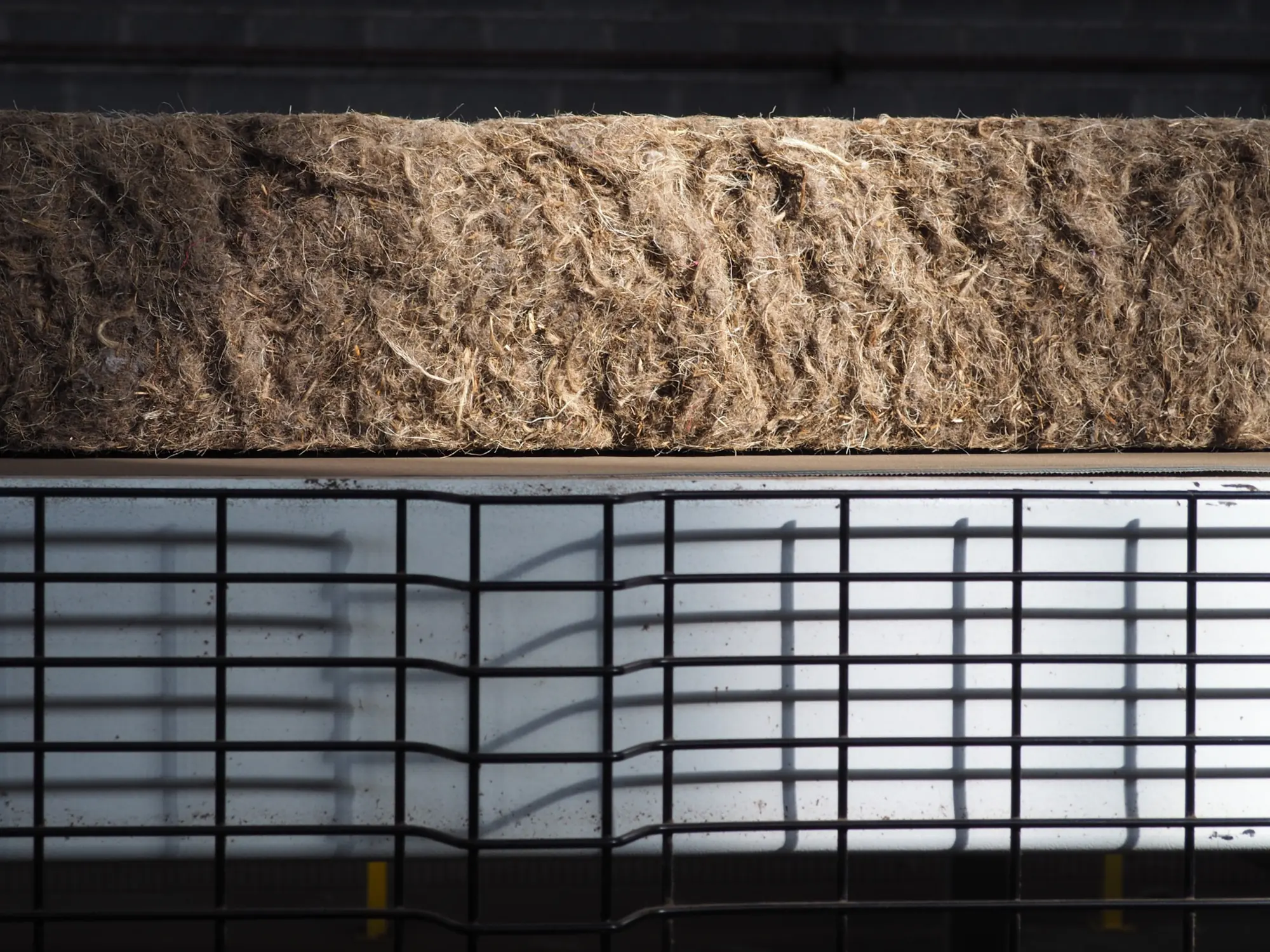
From roadside grass to insulation: 180,000 m³ a year produced in Auvelais.
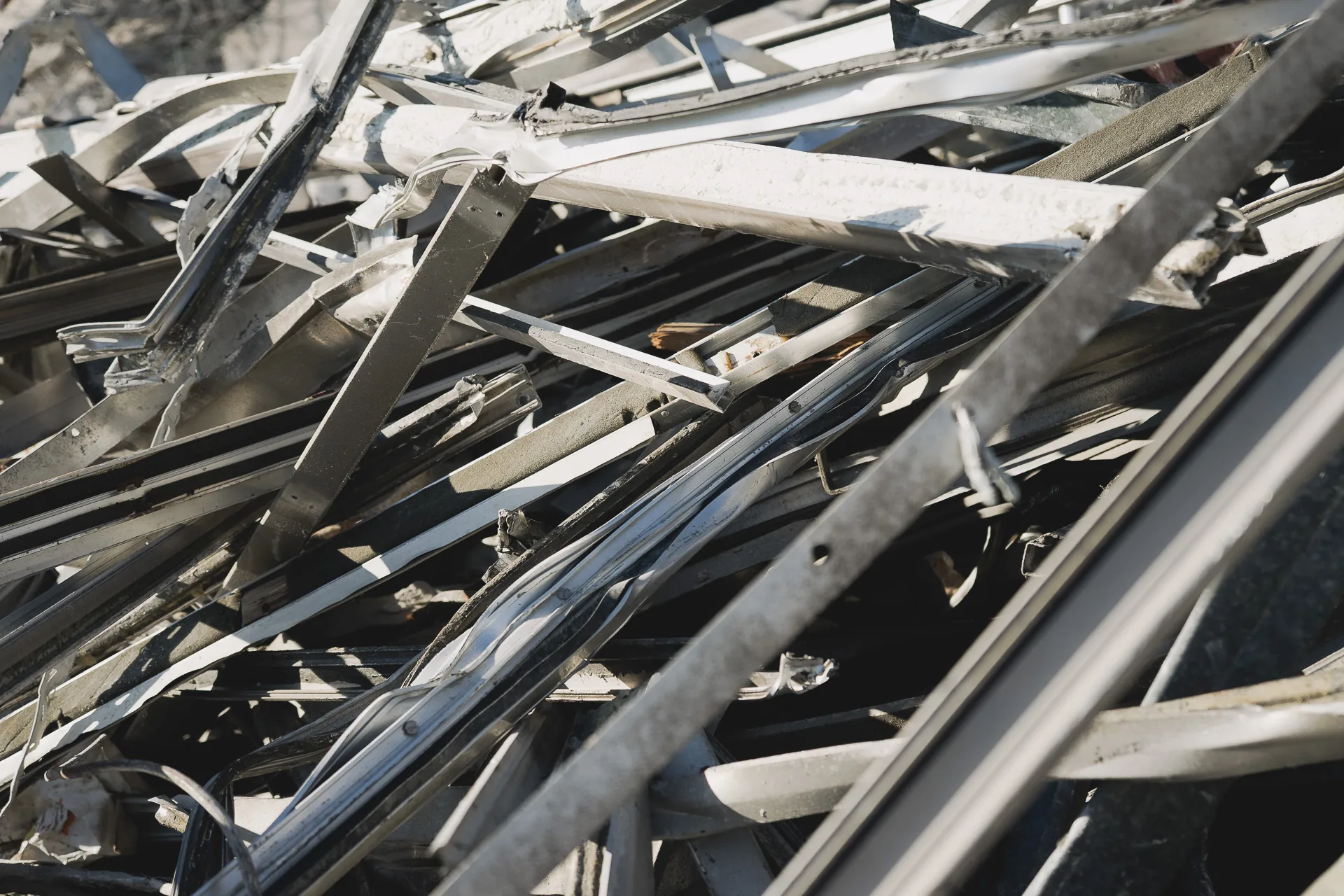
Steel, bricks and glazing removed on site go back into the renovated project.
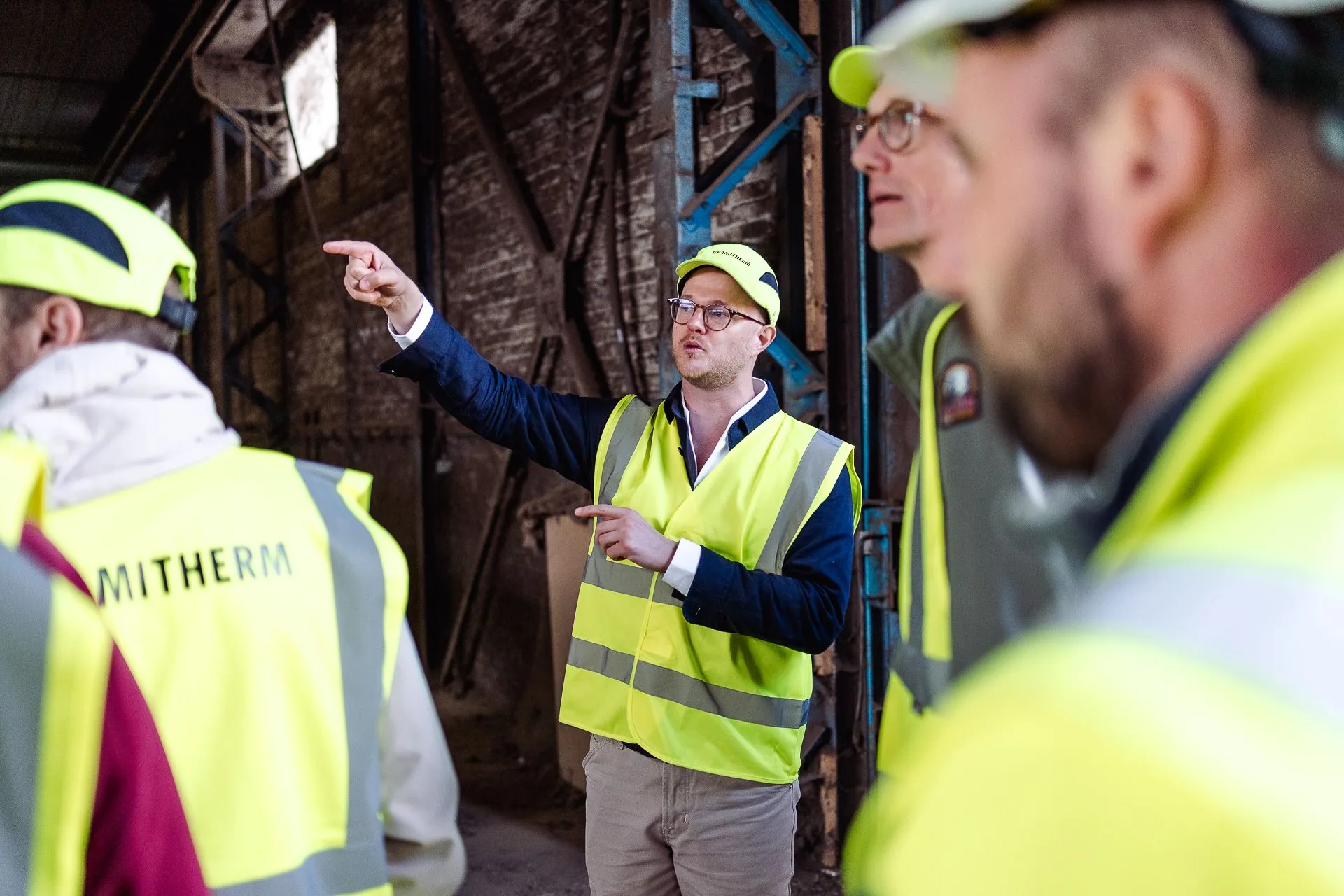
Gramitherm, IsoHemp and the Cluster Eco-construction: lines that are already running.